


Categories: interviews
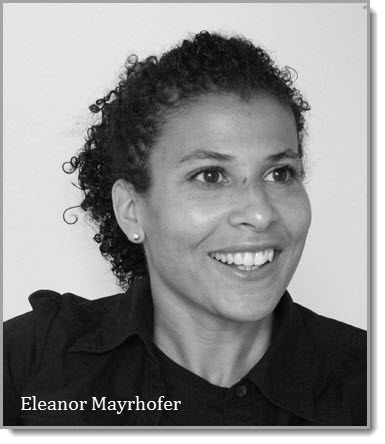 Today I'm interviewing Eleanor Mayrhofer, who has built a project management methodology specifically for small, indie businesses. Steal This Process (STP) is designed to save creative, independent businesses time and money by helping them do more, more effectively. The business ethic fits perfectly with this month’s Gantthead theme of doing things on a budget! Eleanor has her roots in large IT projects, and now runs her own small creative business, so she knows what works in both situations and has been able to translate the techniques used by large companies into language that makes sense to those with no project management experience.
Eleanor, how did you come up with the idea of the toolkit?
My last role at my corporate job was on the methodology team, developing how-to guides and templates for the company’s global creative practice. Many of these templates had to be used in conjunction with or integrated with templates for enterprise level technology implementation projects. By necessity some of the tools like the WBS, estimation and scope matrices were complex, but the concepts behind them were simple. I figured that a bare-bones, less-complex set of tools for people doing creative work or running very small businesses would be helpful.
You say in the toolkit that you learned a lot from working for The Man. What was the most important project management lesson The Man taught you?
Scope! Everything comes back to properly defining scope and then managing it consistently (and sometimes ruthlessly!). It seems to me whether on large scale IT projects or a small business making crochet patterns, delivery issues can almost always be traced back to problems in scope definition and management.
The design of STP is beautiful.
Thank you!
Did you enjoy putting your web and print design skills to good use on this project? Why was that important?
I did very much. It was important to create content that was in a visual language that my target audience would understand. Project management is a very analytical, left-brained and mechanistic subject, but I heartily believe that it is something that right-brained creative people can not only benefit from but can easily grasp and excel at.
A large part of the battle is just presenting it right. I still vividly remember how intimated I was by Excel, Gantt charts and the like when I only did graphic design. One look at this type of documentation sends all kind of symbolic messages to the creative brain such as: Math! Rigidity! Rules! Mechanism! Constraints! All of this creates an immediate instinctive aversion to the content.
However if you can present the same content in a compelling visual way, defences go down and the concepts can be absorbed. Witness the popularity that beautifully designed informational graphics are getting. When analytical information is beautifully presented it can be quite sexy.
How do you feel good project management helps small businesses be more effective?
Small business owners tend to wear multiple hats and have to carry out more than one role. This can cause a lot of overwhelm which good project management can alleviate. In my own business working with defining scope and converting it into tracks (marketing, continuous improvement, product development, operations, etc.) really has helped me get realistic about what I can accomplish as well as get focused on certain projects. In some ways it’s not so much about finishing on time and on budget, since you are your own client, but rather structuring all of the work, projects and activities that are part of running a small business.
Reusable templates can help with structuring the work, and you provide these in the toolkit. They must save companies a lot of time, and, if you are working for yourself, time is money. You’d be surprised at how many non-indie businesses don’t have a suite of templates. How much time do you think they saved you when you were setting up your print and design company em.papers?
It’s hard to know because by the time I had started e.m.papers planning was second nature and I just re-purposed templates that I had from my old days on the job. It was only after talking to crafters and folks with creative businesses that I realized that defining scope, estimating work and doing high, mid and low level planning wasn’t ‘normal’for most indie businesses. I think it’s fair to say, though, that being able to grab some templates and just run with them probably saved me at least 6 months of churn.
Wow, that's a lot of time! You no doubt learned a lot along the way so what is your top tip for people implementing project management and time management practices in their companies?
To do less better. Everyone –including myself –is usually too ambitious about what can realistically be accomplished. Overly aggressive scope and planning will only lead to discouragement. It’s all about setting achievable goals and projects, then executing well against them.
Thanks, Eleanor!
You can download the Steal This Process project and time management kit from Eleanor's website, here.


