What is Appropriate Contracting?
From the The Money Files Blog
by Elizabeth Harrin

A blog that looks at all aspects of project and program finances from budgets, estimating and accounting to getting a pay rise and managing contracts.
Written by Elizabeth Harrin from RebelsGuideToPM.com.
Recent Posts
When projects get serious: what changes after the “easy” phase
How to run a retrospective that isn’t awful
A practical guide to stakeholder influence mapping
Why Your Project Forecast Keeps Changing (and What to Do About It)
Invisible progress: how to show value when nothing big has launched yet
Categories
accounting,
agile,
ai,
appraisals,
Artificial Intelligence,
audit,
Backlog,
Benchmarking,
benefits,
Benefits Management,
Benefits Realization,
Bias,
books,
budget,
Business Case,
business case,
business case,
Career Development,
Career Development,
carnival,
case study,
Change Management,
checklist,
collaboration tools,
communication,
Communications Management,
competition,
complex projects,
Conferences,
config management,
consultancy,
contingency,
contracts,
corporate finance,
corporate finance,
cost,
Cost Management,
cost management,
credit crunch,
CRM,
data,
data security,
debate,
Decision Making,
delegating,
digite,
earned value,
Education,
Energy and Utilities,
Estimating,
events,
FAQ,
financial management,
financial management,
forecasting,
future,
GDPR,
general,
Goals,
Governance,
green,
Information Technology,
Innovation,
insurance,
interviews,
it,
Knowledge Management,
Leadership,
Lessons Learned,
measuring performance,
Mentoring,
merger,
methods,
metrics,
multiple projects,
negotiating,
Networking,
news,
Olympics,
organization,
Organizational Culture,
outsourcing,
personal finance,
Planning,
pmi,
PMO,
PMO,
Portfolio Management,
portfolio management,
presentations,
privacy policy,
process,
procurement,
product management,
productivity,
Program Management,
project closure,
project data,
project delivery,
Project Success,
project testing,
prototyping,
qualifications,
Quality,
quality,
Quarterly Review,
records,
recruitment,
reports,
requirements,
research,
resilience,
Resource Management,
resources,
risk,
Risk Management,
ROI,
salaries,
Schedule Management,
Scheduling,
scope,
Scope Management,
security,
small projects,
Social Impact,
social impact,
social media,
software,
software,
software,
Stakeholder Management,
stakeholders,
Strategy,
success factors,
supplier management,
team,
Teams,
testing,
testing,
timesheets,
tips,
training,
transparency,
trends,
value management,
vendors,
video,
virtual teams,
workflow
Date
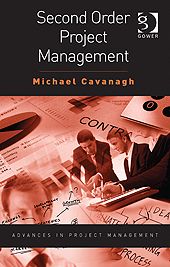 Appropriate Contracting is a term used by Michael Cavanagh in his book Second Order Project Management (Gower, 2012). He defines it as “the application of common sense to a commercial relationship”. In other words, it’s not really about money, but it is about making sure that the contracts you enter into with suppliers are fit for purpose and will help you achieve your objectives.
Consider a project where you buy software from a vendor. You go out to tender and you receive pitches from a number of companies. You choose the cheapest. The contract is tied up, with tight clauses around payment terms and schedules. You shake hands, everyone is pleased, and the project starts.
Six months in, you realise that the project scope needs a significant change in order to be able to accommodate the needs of the users. At the time of signing the contract with the software supplier, you hadn’t finished the requirements analysis and were not exactly sure how they would be using the project’s deliverables. Now you know, and you want to change the scope.
The vendor says no.
This is an example of inappropriate contracting – where the money side of things takes so much emphasis over a trusting, working relationship where both parties are working successfully together to achieve the end goal.
A trusting relationship does not mean that you don’t have a contract at all. Of course not. You should always enter a legally binding contract with suppliers on projects, as this gives you both additional protection should the worst happen. But as Cavanagh says in his book, “major contractual issues rarely occur between parties who have long experience in dealing with each other”. Trust is built up over a long time (and this goes for project managers with their teams too – in fact trust is one of the major attributes of a good project leader).
The better your relationship with the vendor, the more likely it is that you can work effectively together. This starts with the bid process. How the vendor operates at this point will give you an insight into what they will be like to work with when the real work starts.
So what is an appropriate contract?
Cavanagh says that an appropriate contract has the following attributes:
-
It establishes consensus between both parties
-
It establishes consent between both parties
-
It provides clarity about the intent of the project/work and reduces ambiguity
-
It defines and allocates roles and responsibilities relating to the work and performance
-
It agrees how the parties will work together to create trust and confidence
-
It documents any processes and principles related to managing success or failure.
For this last point, any processes can be included as a contract schedule.
“First and foremost,” writes Cavanagh, “the contract should be establishing a framework for success.” He says that in order to achieve this the contract should cover these four areas:
1. Scope and goals (what the contract is about)
2. Responsibilities
3. Performance indicators
4. Rights and remedies (what happens when things go wrong and what options both parties have if performance targets are not met).
Cavanagh says that the ‘meat’ of the contract is in the first three points, but project managers (when they are involved in negotiations) and legal teams spend a lot longer on negotiating point 4. This is counter-productive. If you skip over the scope and goals, who does what, and how success will be measured, you have every chance of needing those rights and remedies because it won’t be at all clear about what the vendor is supposed to actually do. “Rather than managing the risk,” Cavanagh says, “the contracting process itself becomes a source of risk.”
How appropriate are your contracts?
Posted on: August 05, 2012 06:56 AM |
Permalink
Comments (2)
Please login or join to subscribe to this item

Jon Toothill
Client Services Director| Lightbox Learning
Stockport, United Kingdom
Really interesting article which show's it success in that it stimulates me in wanting to go and read the full section of the book !
As someone who has moved from project management more into the programme and commercial side it is a situation that I recognise and have experienced. As Elizabeth (and Michael in his book) highlight - it is easy to get drawn into the legal and protective side of the contracts and overlook the purpose - to document the agreement between the parties, which should be about achieving mutual success.
It reminds me of a situation I was in a while ago - negotiating the details of a contract, where both myself and client had our legal / commercial advisors involved and they were debating a particular clause. This looked to be a sticking point and I was getting truly lost in the debate taking place and the implications of this. So I asked the obvious, nagging question... what are the circumstances by which we get to the position where this takes effect - long silence... and then both sides conceded that other parts of the contract meant this could never been invoked !!!
So why are we arguing about it then, take it out.
Jon, sounds like it was lucky you were there to be the voice of reason! Sometimes these contracts are just too complicated for their own good and they end up not being able to server the needs of either party (but the lawyers benefit just fine).
Please Login/Register to leave a comment.
|
"There are painters who transform the sun into a yellow spot, but there are others who, with the help of their art and their intelligence, transform a yellow spot into the sun."
- Pablo Picasso
|




