Predictive Software: The Next Step for Collaboration Tools
From the The Money Files Blog
by Elizabeth Harrin

A blog that looks at all aspects of project and program finances from budgets, estimating and accounting to getting a pay rise and managing contracts.
Written by Elizabeth Harrin from RebelsGuideToPM.com.
Recent Posts
When projects get serious: what changes after the “easy” phase
How to run a retrospective that isn’t awful
A practical guide to stakeholder influence mapping
Why Your Project Forecast Keeps Changing (and What to Do About It)
Invisible progress: how to show value when nothing big has launched yet
Categories
accounting,
agile,
ai,
appraisals,
Artificial Intelligence,
audit,
Backlog,
Benchmarking,
benefits,
Benefits Management,
Benefits Realization,
Bias,
books,
budget,
Business Case,
business case,
business case,
Career Development,
Career Development,
carnival,
case study,
Change Management,
checklist,
collaboration tools,
communication,
Communications Management,
competition,
complex projects,
Conferences,
config management,
consultancy,
contingency,
contracts,
corporate finance,
corporate finance,
cost,
Cost Management,
cost management,
credit crunch,
CRM,
data,
data security,
debate,
Decision Making,
delegating,
digite,
earned value,
Education,
Energy and Utilities,
Estimating,
events,
FAQ,
financial management,
financial management,
forecasting,
future,
GDPR,
general,
Goals,
Governance,
green,
Information Technology,
Innovation,
insurance,
interviews,
it,
Knowledge Management,
Leadership,
Lessons Learned,
measuring performance,
Mentoring,
merger,
methods,
metrics,
multiple projects,
negotiating,
Networking,
news,
Olympics,
organization,
Organizational Culture,
outsourcing,
personal finance,
Planning,
pmi,
PMO,
PMO,
Portfolio Management,
portfolio management,
presentations,
privacy policy,
process,
procurement,
product management,
productivity,
Program Management,
project closure,
project data,
project delivery,
Project Success,
project testing,
prototyping,
qualifications,
Quality,
quality,
Quarterly Review,
records,
recruitment,
reports,
requirements,
research,
resilience,
Resource Management,
resources,
risk,
Risk Management,
ROI,
salaries,
Schedule Management,
Scheduling,
scope,
Scope Management,
security,
small projects,
Social Impact,
social impact,
social media,
software,
software,
software,
Stakeholder Management,
stakeholders,
Strategy,
success factors,
supplier management,
team,
Teams,
testing,
testing,
timesheets,
tips,
training,
transparency,
trends,
value management,
vendors,
video,
virtual teams,
workflow
Date

How much time do you spend doing routine tasks? Just think about how long it takes you to type things like your company name or location details when they get mentioned in an email.
For a long time, Outlook (and I expect other tools) have had autocorrect functions that allow you to type something and have it ‘autocorrect’ to something else. It’s a text expander feature – and you get tools that lay on top of your normal suite of applications that just do text expanding. I even have that function built into my iPad, which is handy when it comes to typing out my email address every time. Now I just type a shortcode and the whole email address populates.
Predictive text takes this one step further by working out what you are going to type before you type it. Predictive apps use passive data, for example, emails, to suggest tasks and updates. Think predictive text when you are trying to type a message on your phone, and scale it up so that the app sends suggestions to your To Do list about what activities you should be working on that day or flags which deliverables are likely to be late because of software defects logged in your testing system.
Many tools are already embedding AI into them to help users have less to do. I was looking at one retrospective meetings management tool the other day and it used AI to automatically name the groupings of sticky notes we created in the meeting, based on the common content of those notes. Clever. It wasn’t always grammatically correct, but it saved us the job of typing a name for each group (although we could edit them if we wanted).
Predictive software sounds like it’s taking the thinking and professional judgement out of being a project manager, but it’s just crunching data for you. For example, you can’t hold information in your head about how accurate each individual team member has been in estimating their workload on this project and the last five projects they have worked on. Predictive software could sift through estimates and actuals, and then flag the three team members with the worst record for getting their estimates right so that you can appropriately challenge them.
This kind of system requires a particular leap of faith as it scours other systems for data. As a community, we’re going to have to go a long way before we are all comfortable with the idea of an app reading our emails and digging through personal files, even if it does predict who isn’t going to hit their deadlines that week.
Whatever collaboration tools you adopt at work, and however you use them, keep in mind that they should be compatible with and reflect what is going on outside the walls of your company. Technology and workplace cultures will continue to evolve and the key is going to be keeping up and staying relevant while making sure your teams have the tools they need to do their jobs productively. That might mean embracing AI and predictive functionalities of tools, even if it feels a teeny bit uncomfortable to do so.
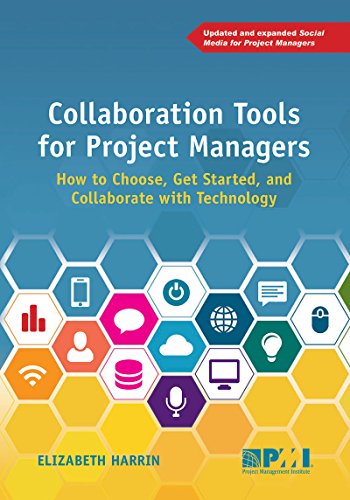 The future is in flatter, more informal working cultures supported by unified organizational collaborative technologies. We might not refer to the tools that way (or even be using the term social and collaborative media) in ten years’ time, but the principles that underpin this revolution in working practices are here to stay.
This article includes a few points that were made in my PMI book: Collaboration Tools for Project Managers. Given what we’ve been going through and seeing so far this year, it felt appropriate to try to pick out some comments on tech for teams and where that might be taking us – because it seems to me that virtual working is here to stay.
Pin for later reading
Posted on: December 21, 2020 08:00 AM |
Permalink
Comments (6)
Please login or join to subscribe to this item

Tiago Romao
Project Manager - PfMP | PgMP | PMP | ACP | PBA | CBAP | CSM | MSc.| Altice Portugal | Meo
Sobreda, Setubal/Almada, Portugal
Hello,
interesting article.
Software designers, architects and developers, build better problams while exploring hardware advances, enhanced by faster networks.
"Artificial intelligence" enabling "predictive software", and even other more complex use cases, such as, voice to text, plus language recognition, plus translation to foreign languages, has more than 20 years.
Since Microsoft Office 2007 onwards, anyone could program macros using a "simple" language, VBA.
The point is that at that time there were much fewer people with the knowledge to implement such programs and there wasn't a network "backbone" to enhance the "system".
Better hardware, faster networks, more information and larger number of knowledgable people, collaborating worldwide, will accelerate software use-cases
Thanks for sharing this good Article
Perfect. Thanks for sharing
Interesting, thanks for sharing.

XinXin Wang
asiainfo| asiainfo
Hohhot, Bj, China, Mainland
Please Login/Register to leave a comment.
|
"The higher up you go, the more mistakes you are allowed. Right at the top, if you make enough of them, it's considered to be your style."
- Fred Astaire
|




