

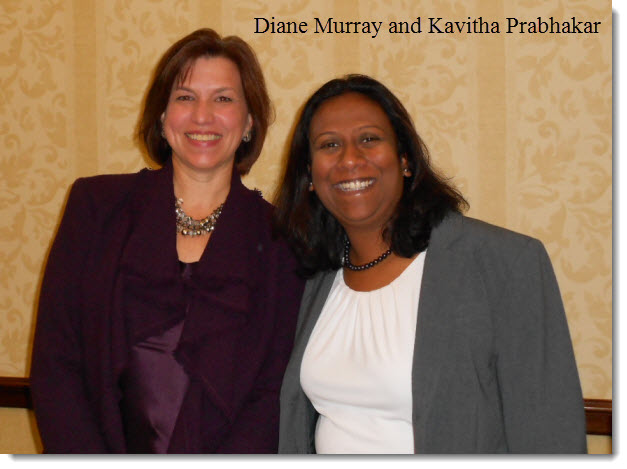
 "What we’re finding in today’s fast-paced environment is that the definition of success has changed,” said Diane Murray from Deloitte Consulting, at a presentation at PMI’s Global Congress North America in Dallas, Texas, earlier this week. “Today’s project managers have a lot more challenges on their hands. Programs and projects are getting more complex.”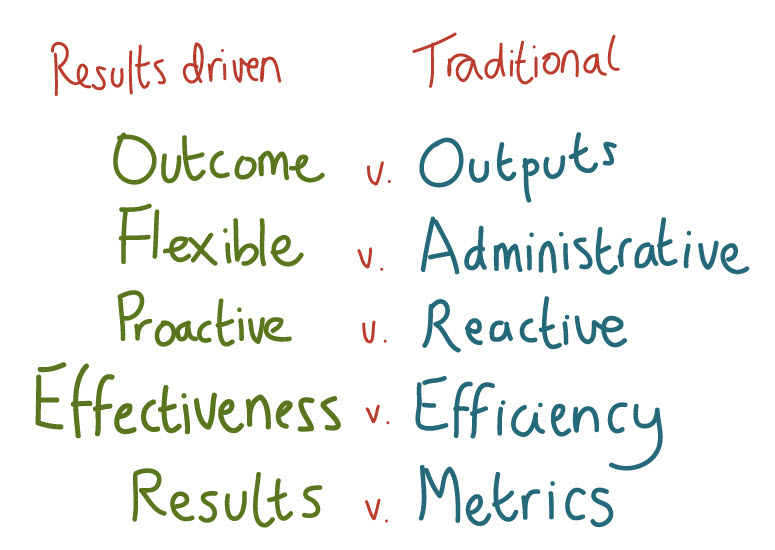
 The OGC’s Portfolio, Programme and Project Office (P3O) guidance includes some information about project management maturity. Maturity is measured on a 5 point scale from Level 1 (not very mature) to Level 5 (very mature) against 7 areas – in P3O speak, ‘perspectives’.
 Level 5
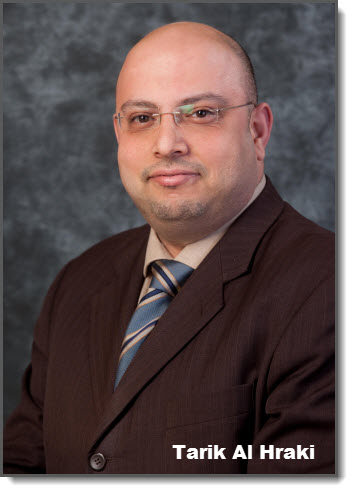 I met Tarik at the PMI EMEA Congress this year. Tarik travelled to Dublin from Dubai, where he is Assistant PMO Director at


Guessing is not a strategy: How to build decision velocity with AI and real-time data
June 10, 2026 | Live Webinar

Who really owns the project budget? Clarifying financial accountability
How to learn AI the sensible way
Making sense of project cost reports
How real PM mentoring actually works
The Accidental Product Manager: What project managers need to know
accounting, agile, ai, appraisals, Artificial Intelligence, audit, Backlog, Benchmarking, benefits, Benefits Management, Benefits Realization, Bias, books, budget, Business Case, business case, business case, Career Development, Career Development, carnival, case study, Change Management, checklist, collaboration tools, communication, Communications Management, competition, complex projects, Conferences, config management, consultancy, contingency, contracts, corporate finance, corporate finance, cost, Cost Management, cost management, credit crunch, CRM, data, data security, debate, Decision Making, delegating, digite, earned value, Education, Energy and Utilities, Estimating, events, FAQ, financial management, financial management, forecasting, future, GDPR, general, Goals, Governance, green, Information Technology, Innovation, insurance, interviews, it, Knowledge Management, Leadership, Lessons Learned, measuring performance, Mentoring, merger, methods, metrics, multiple projects, negotiating, Networking, news, Olympics, organization, Organizational Culture, outsourcing, personal finance, Planning, pmi, PMO, PMO, Portfolio Management, portfolio management, presentations, privacy policy, process, procurement, product management, productivity, Program Management, project closure, project data, project delivery, Project Success, project testing, prototyping, qualifications, Quality, quality, Quarterly Review, records, recruitment, reports, requirements, research, resilience, Resource Management, resources, risk, Risk Management, ROI, salaries, Schedule Management, Scheduling, scope, Scope Management, security, small projects, Social Impact, social impact, social media, software, software, software, Stakeholder Management, stakeholders, Strategy, success factors, supplier management, team, Teams, testing, testing, timesheets, tips, training, transparency, trends, value management, vendors, video, virtual teams, workflow


|
Transcript Good morning. I’m Elizabeth Harrin from Gantthead’s blog, The Money Files. I’m standing outside the O2 Arena here in South East London. The building behind me used to be known as The Millennium Dome and it was the first case study that I produced for my book, Project Management in the Real World, back in 2006. I looked at it from a financial perspective as it was a really interesting budgetary case study. The project was widely considered in the press at the time to be a bit of a white elephant. It was overspent and it needed to be bailed out by National Lottery funds. The National Audit Office did a study on the project itself and concluded that projects of that size needed to really be based on a full understanding of cradle to grave costs for the entire initiative. Having said that, the building opened on time, it had over than double the amount of visitors than the next highest UK visitor attraction. 5.5m people came along to see the exhibition inside, and another 1m got in for free. They had worked on the basis that they would get 12m visitors so again their costings were out, but, as you can see, nearly 12 years later the building is still going strong. It is used today as a convention centre and a concert venue and they also have things like tennis there. So, overall, looking back with a historical perspective I think it has been a huge success. |
|
She explained that IT programs really need to focus on business results. “IT for IT’s sake really doesn’t cut it any more,” she added. Diane talked about a $500m IT project that was shut down because the team working on it failed to partner adequately with other business teams. They hit a wall as a result of losing focus on dealing with the business needs. “Focus on business results and make your decision as a program manager with those results in mind,” she explained. “Traditional project and program management is not always enough.” She presented the differences between traditional project management and the vision of results-driven project management, which can be seen in the diagram below.
The focus on results is what led Diane and her colleague Kavitha Prabhakar to develop a new approach for enabling and supporting IT programs. “Today’s PMO must transform into a results management office,” she said. Benefits management and working to ensure projects and programs are aligned with strategies is not new. However, the idea of the RMO – a results management office – is something that takes this idea further and gives some structure to the concept of delivering that woolliest of things, value. “It is important to have a very clear vision of where you’re heading,” Kavitha said. “When you’re chartering a program, you’re looking at where the enterprise is heading and it’s not just at the start but through program execution.” The RMO idea ensures that there is a results focus for the life of the project or program, which in turn should mean that benefits and financial returns are better aligned. This structure means there’s less risk of your project turning into that $500m hole: an RMO would keep checking that the strategic benefits are being achieved with that single-minded focus on results. During the presentation Diane and Kavitha explained that an RMO and a PMO sit happily side by side. You don’t need both. In fact, their suggestion was that the RMO is part of the function of the PMO. The structure, concept and framework that an RMO provides offers the guidance to keep projects and programs on track to continually deliver and improve business results, with fewer pointless and cancelled projects. |
|
One of the perspectives is financial management. Here’s how you should be performing at each of the different levels. Level 1There is a “general lack of accountability” for monitoring what project budgets are spent on. Projects have few, if any, financial controls and generally don’t have formal business cases. This means it is hard for the company to properly assess potential projects and decide where the organisation’s funds should be spent. Level 2There are a few more business cases around, although there is no standard template. The best business cases will explain the rationale for the project but not necessarily have a lot of financial information in. Still, it is something to go on when deciding what investment decisions to make. Project managers are applying financial controls haphazardly, depending on their previous experience and skill level. Contingency planning and risk management are done without much consideration of costs. For example, contingency budgets are just made up, instead of being calculated on the basis of likely risk. Level 3There are standards for business cases and how to get business cases approved. Business cases have one owner. Project managers manage cost and expenditure – and there are corporate guidelines that show how to get these done. There will be links to the Financial department or other teams who carry out financial controls. Level 4 (this is where you should be aiming, if you aren’t already here)There are processes in place to enable the organisation to prioritize investment decisions. In other words, the financial information available prior to a project starting is good enough to work out whether it is a strategically important project, given the available funds and resources. Project budgets are managed well by project managers, and there are tools in place to enable tracking and comparison of financial information.
|
| As this month's theme is global projects, I thought I'd share with you this video about PRINCE2 and The PMBOK® Guide. When you work with people from different countries, especially across the Atlantic divide, you'll often find that they gravitate to one or the other way of working. As this video shows, the two approaches are equally valid and work well together. So that's one less international conflict to have to worry about when working on projects across borders.
|
|
Tarik, you started out managing construction projects. How did you move into your current role? The opportunity came to me when I was nominated to be part of the team who founded the PMO in Ajman University of Science & Technology in UAE. My role was there is simply to take part in designing the project management processes. This step took me to another important stage in my professional career through moving to strategic project management in matrix organizations. The PMP certificate played a vital role in transferring me to a strategic position. OK, so your role at the university involves setting up project management processes. How did you go about this? In matrix organizations the most important thing is to involve everyone in designing the processes, especially the processes related to cost control. One of the most important concepts to do that is moving the projects from the project level to an organizational level; this concept impacted the designed processes a lot. Another important concept in designing financial and cost control processes in matrix organizations is to engage the finance people, because usually they control the project costs, leaving the project managers without any authority. This could be implemented by designing a customized process that balances the power between the finance team and the project managers. You are also responsible for producing strategic reports. What financial information do you recommend that project managers include in strategic reports? Usually at certain points, we ask for a complete EVM analysis and a complete forecast for the remaining period of the project. In addition, when we have long projects we usually look after trends just to control the funds in future. The most important thing in the financial strategic reports is to stay aligned as much as you can with the project budget. Usually higher management worries about the unjustifiable use of the contingency and management reserves.
One of your other responsibilities at the PMO is to deliver a lot of the training to the projects managers at the University. What financial/cost control/budget training do you offer them? Are they keen to learn? Another important training session is the EVM workshops to learn the EVM technique for the control of costs on their projects. All project managers can keep developing themselves, not necessarily through formal education but through informal education like workshops, forums and training such as PMI Congresses. This gives you the chance to learn from the experts about practical project management. Project managers might be very strong in their technical field but weak in practical project management and this would be enough for their projects to fail. You have managed some large projects What are your 3 top tips for managing project budgets?
You can find Tarik on Facebook and LinkedIn. |
|
"Failure is unimportant. It takes courage to make a fool of yourself." - Charlie Chaplin |