A practical guide to stakeholder influence mapping
From the The Money Files Blog
by Elizabeth Harrin

A blog that looks at all aspects of project and program finances from budgets, estimating and accounting to getting a pay rise and managing contracts.
Written by Elizabeth Harrin from RebelsGuideToPM.com.
Recent Posts
Decision debt: the hidden cost of “we’ll decide later”
Budget confidence vs budget optimism
When projects get serious: what changes after the “easy” phase
How to run a retrospective that isn’t awful
A practical guide to stakeholder influence mapping
Categories
accounting,
agile,
ai,
appraisals,
Artificial Intelligence,
audit,
Backlog,
Benchmarking,
benefits,
Benefits Management,
Benefits Realization,
Bias,
books,
budget,
Business Case,
business case,
business case,
Career Development,
Career Development,
carnival,
case study,
Change Management,
checklist,
collaboration tools,
communication,
Communications Management,
competition,
complex projects,
Conferences,
config management,
consultancy,
contingency,
contracts,
corporate finance,
corporate finance,
cost,
Cost Management,
cost management,
credit crunch,
CRM,
data,
data security,
debate,
Decision Making,
delegating,
digite,
earned value,
Education,
Energy and Utilities,
Estimating,
events,
FAQ,
financial management,
financial management,
forecasting,
future,
GDPR,
general,
Goals,
Governance,
green,
Information Technology,
Innovation,
insurance,
interviews,
it,
Knowledge Management,
Leadership,
Lessons Learned,
measuring performance,
Mentoring,
merger,
methods,
metrics,
multiple projects,
negotiating,
Networking,
news,
Olympics,
organization,
Organizational Culture,
outsourcing,
personal finance,
Planning,
pmi,
PMO,
PMO,
Portfolio Management,
portfolio management,
presentations,
privacy policy,
process,
procurement,
product management,
productivity,
Program Management,
project closure,
project data,
project delivery,
Project Success,
project testing,
prototyping,
qualifications,
Quality,
quality,
Quarterly Review,
records,
recruitment,
reports,
requirements,
research,
resilience,
Resource Management,
resources,
risk,
Risk Management,
ROI,
salaries,
Schedule Management,
Scheduling,
scope,
Scope Management,
security,
small projects,
Social Impact,
social impact,
social media,
software,
software,
software,
Stakeholder Management,
stakeholders,
Strategy,
success factors,
supplier management,
team,
Teams,
testing,
testing,
timesheets,
tips,
training,
transparency,
trends,
value management,
vendors,
video,
virtual teams,
workflow
Date
Stakeholder influence mapping is always a touchy subject, because in my experience, no one really likes to call out the people who don’t have influence…
However, we have to have an understanding of stakeholders across the project because it’s going to affect how you spend your time on engaging others. These days, especially in cross-functional and matrix teams, influence matters more than titles.
Classic frameworks
I wrote a book about stakeholder engagement (in fact, I’ve written two, one on the niche aspect of communicating change, and one called Engaging Stakeholders on Projects) and the top, classic framework for analysing influence is the power/interest grid. There are also cube-variants of the grid with extra variables.
You can also use the salience model, which looks at power, legitimacy, urgency and I think is a bit better.
Alternative options
Empathy mapping works well as an alternative, and it has the added bonus of being easy to understand. You can map out influence networks (e.g. informal leaders) or even commit to political mapping for large organisations, if you feel like that would help understand how informal knowledge is shared and how you can get things done.
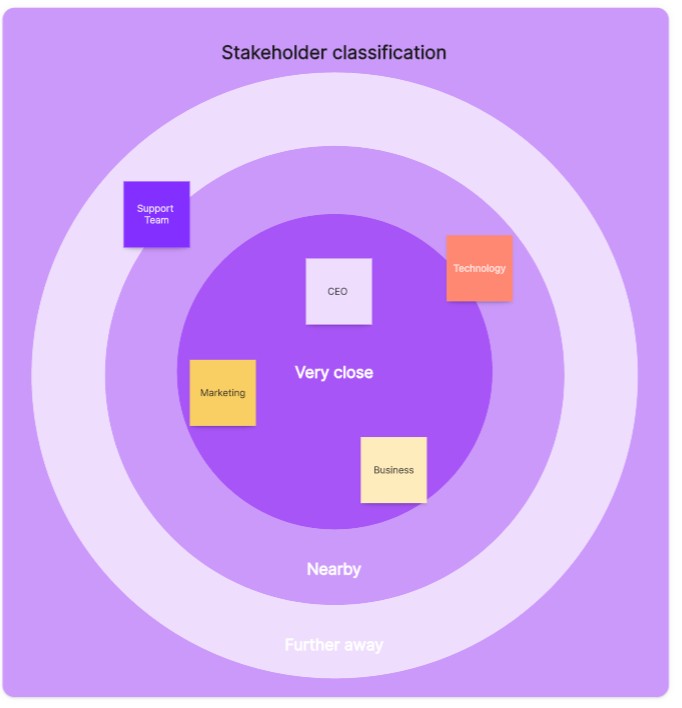
How to use them
Whatever model or tool you decide to use for influence mapping, a good place to start is project initiation. That’s when (or even before) you’ll be identifying stakeholders.
You can also use the frameworks, or revisit what you already done, during major changes or conflicts because it’s important to have an up-to-date version of the truth. People change roles and their influence changes if their team changes and so on, so it’s worth double-checking that your maps and structures still hold true.
Finally, there is value in using tools like these as a comms planning input, when you are working out which groups to engage with and how.
Overall, if you’ve run workshops with your core team, consulted widely, refresh your notes regularly and make sure that you document everything in the most professional and least personal way, you can identify blockers and champions for the project. Then that informs how you are going to go about shifting perception and behaviour so that the can support, or at least not actively detract, from the project.
When you’ve got strong stakeholder insight, you can get a smoother delivery, and fewer surprises. What tools are your favourites when it comes to analysing stakeholder input? Let me know in the comments!
Posted on: September 09, 2026 12:00 AM |
Permalink
Comments (1)
Please login or join to subscribe to this item
Please Login/Register to leave a comment.
|
If Stupidity got us into this mess, then why can't it get us out?
- Will Rogers
|




