How to run a retrospective that isn’t awful
From the The Money Files Blog
by Elizabeth Harrin

A blog that looks at all aspects of project and program finances from budgets, estimating and accounting to getting a pay rise and managing contracts.
Written by Elizabeth Harrin from RebelsGuideToPM.com.
Recent Posts
When projects get serious: what changes after the “easy” phase
How to run a retrospective that isn’t awful
A practical guide to stakeholder influence mapping
Why Your Project Forecast Keeps Changing (and What to Do About It)
Invisible progress: how to show value when nothing big has launched yet
Categories
accounting,
agile,
ai,
appraisals,
Artificial Intelligence,
audit,
Backlog,
Benchmarking,
benefits,
Benefits Management,
Benefits Realization,
Bias,
books,
budget,
Business Case,
business case,
business case,
Career Development,
Career Development,
carnival,
case study,
Change Management,
checklist,
collaboration tools,
communication,
Communications Management,
competition,
complex projects,
Conferences,
config management,
consultancy,
contingency,
contracts,
corporate finance,
corporate finance,
cost,
Cost Management,
cost management,
credit crunch,
CRM,
data,
data security,
debate,
Decision Making,
delegating,
digite,
earned value,
Education,
Energy and Utilities,
Estimating,
events,
FAQ,
financial management,
financial management,
forecasting,
future,
GDPR,
general,
Goals,
Governance,
green,
Information Technology,
Innovation,
insurance,
interviews,
it,
Knowledge Management,
Leadership,
Lessons Learned,
measuring performance,
Mentoring,
merger,
methods,
metrics,
multiple projects,
negotiating,
Networking,
news,
Olympics,
organization,
Organizational Culture,
outsourcing,
personal finance,
Planning,
pmi,
PMO,
PMO,
Portfolio Management,
portfolio management,
presentations,
privacy policy,
process,
procurement,
product management,
productivity,
Program Management,
project closure,
project data,
project delivery,
Project Success,
project testing,
prototyping,
qualifications,
Quality,
quality,
Quarterly Review,
records,
recruitment,
reports,
requirements,
research,
resilience,
Resource Management,
resources,
risk,
Risk Management,
ROI,
salaries,
Schedule Management,
Scheduling,
scope,
Scope Management,
security,
small projects,
Social Impact,
social impact,
social media,
software,
software,
software,
Stakeholder Management,
stakeholders,
Strategy,
success factors,
supplier management,
team,
Teams,
testing,
testing,
timesheets,
tips,
training,
transparency,
trends,
value management,
vendors,
video,
virtual teams,
workflow
Date
Tired of retrospectives that feel like box-ticking exercises? Let’s fix that.
Sometimes it’s nice to fall back into tried-and tested tools, with comfortable conversations, but sometimes you need a bit more.
Refresh the format
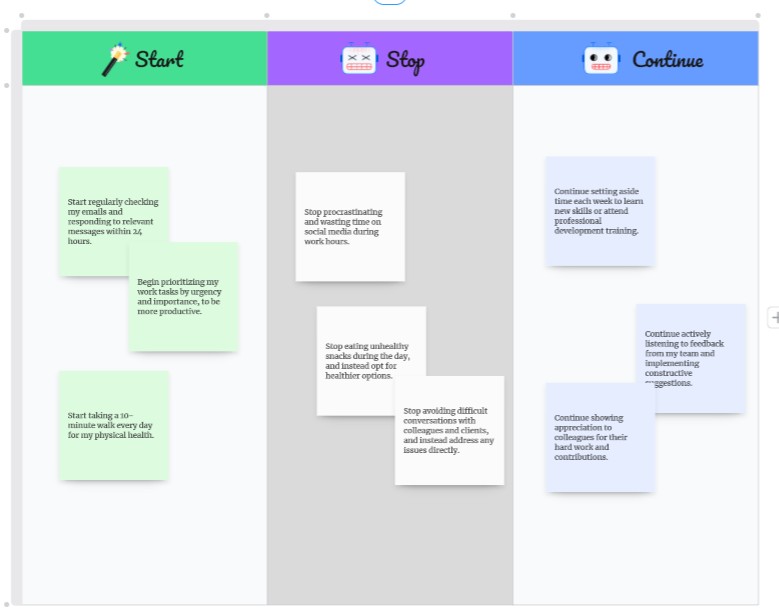
If you have go to formats that you use, try to mix it up a bit. We use Start / Stop / Continue quite a lot, but if you don’t use that, try it out.
The Sailboat is another good one: what helped us, what held us back, what propelled us forward and what hidden risks did we find or might we find in the future as we sail along.

Team awards could be another route in to a different kind of discussion. For example, most improved, unsung hero, or ask people to write award categories for each other (as long as you can guarantee they will be written with kindness.
If you normally do them in-person, try remote. If you normally go remote, try meeting up. If you find people talk a lot, go for speed rounds or sticky note voting to bring a different pace.
Avoid blame and awkwardness
I’m sure your retros don’t have any blame or awkwardness anyway, but just to be on the safe side, use anonymous inputs where you can. We always have the question about whether online forms or silent sticky note gathering really are anonymous when you can trace technical submissions or match handwriting, so if you want to be truly anonymous, you might have to have submissions made before the meeting so no one sees you do it.
Ask reflective rather than evaluative questions, so you get responses based on experiences rather than ‘what we did’. Shifting the facilitator round or taking it in turns to lead a section can also help, it’s just a way to get different voices. And your colleagues will chair in a different way to you, so that’s a very simple way to help them build confidence in running meetings and get a fresh take on what is a regular slot on the calendar for the team.
Normalise saying, “I don’t know,” or, “We need to explore this more,” so people feel comfortable bringing things to the table – psychological safety plays a huge role here so if you don’t have that sorted in the team, you aren’t going to get a lot of properly useful stuff out of your conversations anyway.
Make it human and engaging
What about adding a warm-up, like a team question, quiz, meme of the sprint or something like that? What about ending with a “one word” check-out (like, how do you feel now?) or asking people to bring their own playlist?
What about linking it to food, or doing the conversations while out on a walk, if you’re in a small team? Remove the chairs or put the chairs back in.
Focus on action
Always close with concrete takeaways – that’s not a new technique, it’s something you should be doing anyway. Assign owners and dates for changes, where you have tangible actions that you are going to take as a team.
And also, don’t forget to review what got actioned from the
last retro so you can show everyone that their feedback matters and you are taking steps to do the right thing.
A great retro energises teams and improves delivery, so if you come out of yours feeling a bit flat it’s time to mix up the process! What do you do to keep your retros feeling fresh and useful? Let us know your top facilitation tips in the comments so we can all learn how to keep the momentum going!
Posted on: September 22, 2026 12:00 AM |
Permalink
Comments (3)
Please login or join to subscribe to this item
Like the start, stop, continue - not sure my organization would use the sailboat chart.

Rose Green
Project Management Officer| LJMU
Liverpool, United Kingdom
Some really interesting ideas here. I'm not involved in sprints/retrospectives, but I do a LOT of lessons learned/post-imp's and I can see how both the start/stop/continue and sailboat models would work for us.
Lots to think about :)

Paul Rivet
Manager of Fleet National Programs| Canada Post Corporation
Mississauga, Ontario, Canada
I also like the Start/Stop/Continue - I think that could be great to "impose" group interaction more right from the start of the meeting rather than the tooth-pulling process of dragging details out of people sometimes. Give everyone a stack of post-it notes and have them write out their comments and set up a wall area with the categories. Good times!
Please Login/Register to leave a comment.
|
"Sacred cows make the best hamburger."
- Mark Twain
|





