


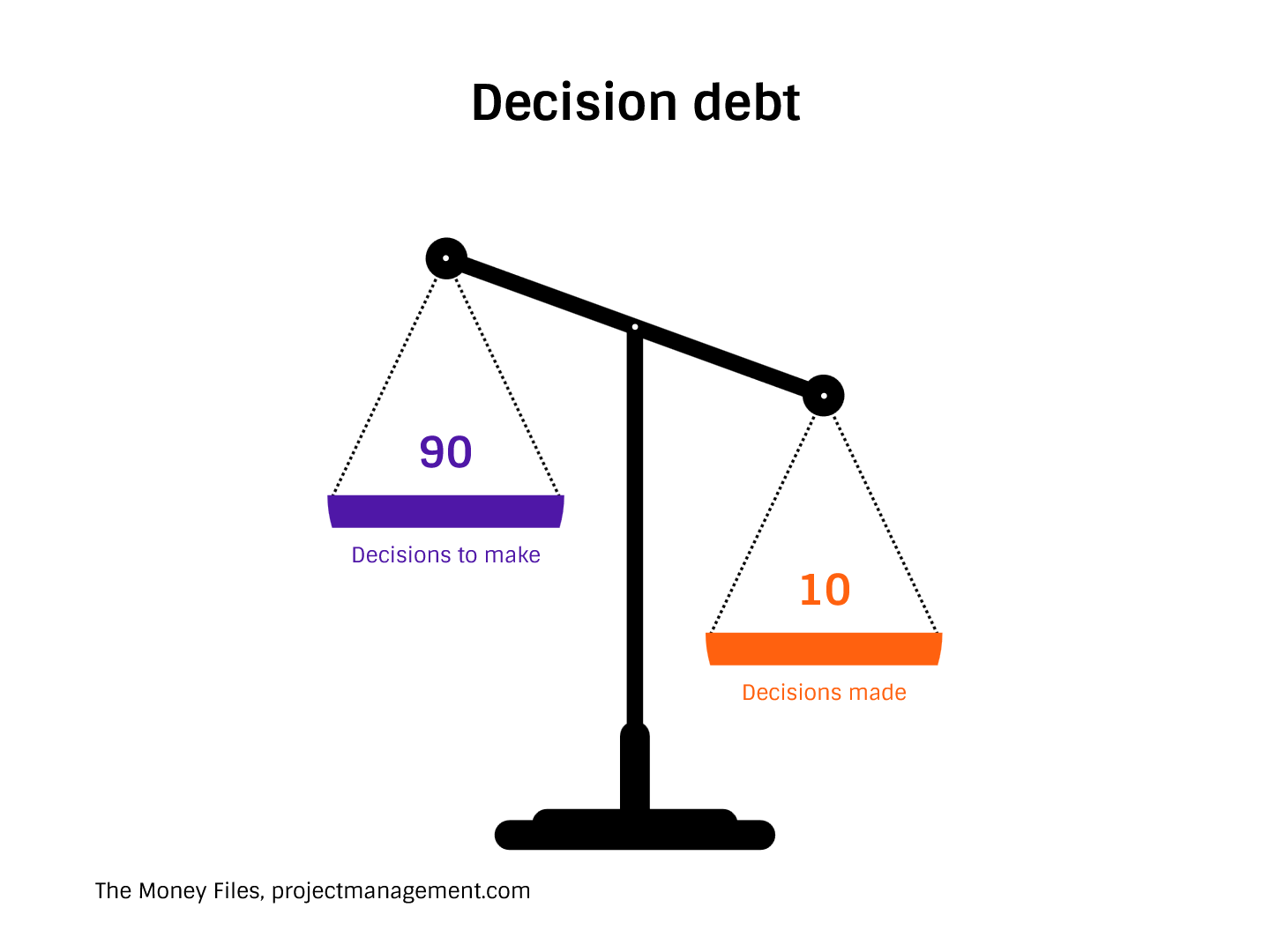
I’ve written before about technical debt, but there isn’t just technical debt on a project. Decision debt is also a thing. This is about the decisions that quietly pile up.
What decision debt looks like
What decisions are outstanding for you at this moment? Maybe unresolved scope questions. Maybe temporary workarounds got put in place and no one has decided what to do about them, and nowthey feel permanent. Maybe you’re going round the same discussion time after time without actually landing on anything.
In practice, any of those, and more can slow down your project team. Because you’ll carry on the work regardless, but just with more uncertainty and less direction, which doesn’t feel good.
Why it happens
Decision debt can happen for lots of reasons.
Maybe the team (or someone higher up) is avoiding a difficult conversation. Maybe your sponsor is overloaded and they just haven’t got the bandwidth to review the decision request yet. And when they do, they’ll forget what it was that prompted the ask in the first place, and need more input from you before they’re comfortable making a pronouncement.
Perhaps the governance forums are busy with year end, or quarterly planning, and your topics haven’t made it to the agenda yet.
Sometimes it’s around the fact that people believe delay doesn’t present a risk so it doesn’t matter if it takes longer to make the ‘right’ decision.
Most of the time, in my experience, it’s that people don’t know who should make the decision, or the person being asked doesn’t really have the authority to make it. Or they want to involve others in the process so it’s not all on them. The lack of clarity on who can decide what really slows everything down. We call it slopey shoulders: decisions just slide off them because they won’t take any accountability.
The cost of deferred decisions
Slow decision making takes its toll on projects. It makes delivery slower and less efficient. It exposes the project to financial loss because decisions are slower. And it affects team morale and confidence because everyone feels like the project is hanging around. You also risk escalations that feel sudden but aren’t, because eventually that decision has to be made and it’s likely you’re going to need a decision quickly at some point.What you can do about it
OK, sometimes there is nothing you can do about it apart from put your project on Red status and keep flagging that a decision is outstanding. Making non-decisions visible is a good starting point.
Another thing that I have found that focuses the mind is calling out the cost of the delay. Don’t just give people a choice, explain what each decision means in cash terms. “If we don’t make this decision by end of November, it will cost us £50k per month in additional resource and storage fees as we’ll have no option but to renew the contract.”
If you need a decision, make sure you’re asking in the best possible way, with clarity and supportive information. Give them what they need to make the call, so you are making it easy for them to get this To Do off their desk.
Decision debt is a leadership issue, not an admin one, because most of the time you can undo decisions if they are really awful. It might cost more and take more time, but on the kinds of projects I work on, mostly we can back out bad decisions if we really have to. However, let’s hope it never comes to that for you (and me)! Addressing the lack of decision early protects delivery and helps with your working relationships.
What do you do to secure decisions? I’d love to hear your stories of how you get senior people to make a call. Share in the comments!
Posted on: October 22, 2026 12:00 AM |
Permalink


