Support to Develop
by Luis Branco

This blog addresses management-related topics and has three areas of focus: 1. Technical skills; 2. Competencies in the field of interpersonal relations and communication (including personal organization and delegation, leadership, teamwork, conflict resolution, conducting meetings, and negotiation); and 3. Strategy (including diagnosis, strategic guidelines, and implementation).4.Technology
Recent Posts
When Sponsorship Meets Ownership: Does PMI's Responsible Sponsorship Guide Close the Governance Gap?
When Does Control Preserve Coherence, and When Does It Constrain Adaptability?
Can Accountability Remain Legitimate When Authority Is Distributed?
When Transformation Is Not the Answer
Does Integration Need an Integrator?
Categories
Agile,
Career Development,
Career Development,
Career Development,
Career Development,
Career Development,
Career Development,
Career Development,
Career Development,
Career Development,
Career Development,
Career Development,
Career Development,
Career Development,
Career Development,
Career Development,
Career Development,
Career Development,
Career Development,
Career Development,
Career Development,
Career Development,
Career Development,
Career Development,
Career Development,
Career Development,
Career Development,
Career Development,
Career Development,
Career Development,
Career Development,
Career Development,
Career Development,
Career Development,
Career Development,
Career Development,
Career Development,
Career Development,
Career Development,
Career Development,
Career Development,
Career Development,
Career Development,
Career Development,
Career Development,
Career Development,
Career Development,
Career Development,
Career Development,
Career Development,
Career Development,
Career Development,
Career Development,
Career Development,
Career Development,
Career Development,
Career Development,
Career Development,
Career Development,
Career Development,
Career Development,
Career Development,
Career Development,
Career Development,
Career Development,
Career Development,
Career Development,
Career Development,
Career Development,
Career Development,
Career Development,
Career Development,
Career Development,
Career Development,
Career Development,
Career Development,
Career Development,
Career Development,
Career Development,
Career Development,
Career Development,
Career Development,
Career Development,
Career Development,
Career Development,
Career Development,
Career Development,
Career Development,
Career Development,
Career Development,
Career Development,
Career Development,
Career Development,
Career Development,
Career Development,
Career Development,
Career Development,
Career Development,
Career Development,
Career Development,
Career Development,
Career Development,
Career Development,
Career Development,
Career Development,
Career Development,
Career Development,
Career Development,
Career Development,
Career Development,
Career Development,
Career Development,
Career Development,
Career Development,
Career Development,
Career Development,
Career Development,
Career Development,
Career Development,
Career Development,
Career Development,
Career Development,
Career Development,
Governance,
Governance,
Governance,
Governance,
Governance,
Governance,
Governance,
In,
Integration Management,
Interpersonal Skills,
Interpersonal Skills,
Interpersonal Skills,
Interpersonal Skills,
Interpersonal Skills,
Interpersonal Skills,
Interpersonal Skills,
Interpersonal Skills,
Interpersonal Skills,
Interpersonal Skills,
Interpersonal Skills,
Interpersonal Skills,
Interpersonal Skills,
Interpersonal Skills,
Interpersonal Skills,
Interpersonal Skills,
Interpersonal Skills,
Interpersonal Skills,
Interpersonal Skills,
Interpersonal Skills,
Interpersonal Skills,
Interpersonal Skills,
Interpersonal Skills,
Interpersonal Skills,
Interpersonal Skills,
Interpersonal Skills,
Interpersonal Skills,
Interpersonal Skills,
Interpersonal Skills,
Interpersonal Skills,
Interpersonal Skills,
Interpersonal Skills,
Interpersonal Skills,
Interpersonal Skills,
Interpersonal Skills,
Interpersonal Skills,
Interpersonal Skills,
Interpersonal Skills,
Interpersonal Skills,
Interpersonal Skills,
Interpersonal Skills,
Interpersonal Skills,
Interpersonal Skills,
Interpersonal Skills,
Interpersonal Skills,
Interpersonal Skills,
Interpersonal Skills,
Interpersonal Skills,
Interpersonal Skills,
Interpersonal Skills,
Interpersonal Skills,
Interpersonal Skills,
Interpersonal Skills,
Interpersonal Skills,
Interpersonal Skills,
Interpersonal Skills,
Interpersonal Skills,
Interpersonal Skills,
Interpersonal Skills,
Interpersonal Skills,
Interpersonal Skills,
Interpersonal Skills,
Interpersonal Skills,
Interpersonal Skills,
Interpersonal Skills,
Interpersonal Skills,
Interpersonal Skills,
Interpersonal Skills,
Interpersonal Skills,
Interpersonal Skills,
Interpersonal Skills,
Interpersonal Skills,
Interpersonal Skills,
Interpersonal Skills,
Interpersonal Skills,
Interpersonal Skills,
Interpersonal Skills,
Interpersonal Skills,
Interpersonal Skills,
Interpersonal Skills,
Interpersonal Skills,
Interpersonal Skills,
Interpersonal Skills,
Interpersonal Skills,
Interpersonal Skills,
Interpersonal Skills,
Interpersonal Skills,
Interpersonal Skills,
Interpersonal Skills,
Interpersonal Skills,
Interpersonal Skills,
Interpersonal Skills,
Interpersonal Skills,
Interpersonal Skills,
Interpersonal Skills,
Interpersonal Skills,
Interpersonal Skills,
Interpersonal Skills,
Interpersonal Skills,
Interpersonal Skills,
Interpersonal Skills,
Interpersonal Skills,
Interpersonal Skills,
Interpersonal Skills,
Interpersonal Skills,
Interpersonal Skills,
Interpersonal Skills,
Interpersonal Skills,
Interpersonal Skills,
Interpersonal Skills,
Interpersonal Skills,
Interpersonal Skills,
Interpersonal Skills,
Interpersonal Skills,
Interpersonal Skills,
Interpersonal Skills,
Interpersonal Skills,
Interpersonal Skills,
Interpersonal Skills,
Interpersonal Skills,
Interpersonal Skills,
Interpersonal Skills,
le,
lea,
Leadership,
Leadership,
Leadership,
Leadership,
Leadership,
Leadership,
Leadership,
Leadership,
Leadership,
Leadership,
Leadership,
Leadership,
Leadership,
Leadership,
Leadership,
Leadership,
Leadership,
Leadership,
Leadership,
Leadership,
Leadership,
Leadership,
Leadership,
Leadership,
Leadership,
Leadership,
Leadership,
Leadership,
Leadership,
Leadership,
Leadership,
Leadership,
Leadership,
Leadership,
Leadership,
Leadership,
Leadership,
Leadership,
Leadership,
Leadership,
Leadership,
Leadership,
Leadership,
Leadership,
Leadership,
Leadership,
Leadership,
Leadership,
Leadership,
Leadership,
Leadership,
Leadership,
Leadership,
Leadership,
Leadership,
Leadership,
Leadership,
Leadership,
Leadership,
Leadership,
Leadership,
Leadership,
Leadership,
Leadership,
Leadership,
Leadership,
Leadership,
Leadership,
Leadership,
Leadership,
Leadership,
Leadership,
Leadership,
Leadership,
Leadership,
Leadership,
Leadership,
Leadership,
Leadership,
Leadership,
Leadership,
Leadership,
Leadership,
Leadership,
Leadership,
Leadership,
Leadership,
Leadership,
Leadership,
Leadership,
Leadership,
Leadership,
Leadership,
Leadership,
Leadership,
Leadership,
Leadership,
Leadership,
Leadership,
Leadership,
Leadership,
Leadership,
Leadership,
Leadership,
Leadership,
Leadership,
Leadership,
Leadership,
Leadership,
Leadership,
Leadership,
Leadership,
Leadership,
Leadership,
Leadership,
Leadership,
Leadership,
Leadership,
Leadership,
Leadership,
Leadership,
Leadership,
Leadership,
or,
Organizational Project Management,
Portfolio Management,
Program,
Program Management,
Strategy,
Strategy,
Strategy,
Strategy,
Strategy,
Strategy,
Strategy,
Strategy,
Strategy,
Strategy,
Strategy,
Strategy,
Strategy,
Strategy,
Strategy,
Strategy,
Strategy,
Strategy,
Strategy,
Strategy,
Strategy,
Strategy,
Strategy,
Strategy,
Strategy,
Strategy,
Strategy,
Strategy,
Strategy,
Strategy,
Strategy,
Strategy,
Strategy,
Strategy,
Strategy,
Strategy,
Strategy,
Strategy,
Strategy,
Strategy,
Strategy,
Strategy,
Strategy,
Strategy,
Strategy,
Strategy,
Strategy,
Strategy,
Strategy,
Strategy,
Strategy,
Strategy,
Strategy,
Strategy,
Strategy,
Strategy,
Strategy,
Strategy,
Strategy,
Strategy,
Strategy,
Strategy,
Strategy,
Strategy,
Strategy,
Strategy,
Strategy,
Strategy,
Strategy,
Strategy,
Strategy,
Strategy,
Strategy,
Strategy,
Strategy,
Strategy,
Strategy,
Strategy,
Strategy,
Strategy,
Strategy,
Strategy,
Strategy,
Strategy,
Strategy,
Strategy,
Strategy,
Strategy,
Strategy,
Strategy,
Strategy,
Strategy,
Strategy,
Strategy,
Strategy,
Strategy,
Strategy,
Strategy,
Strategy,
Strategy,
Strategy,
Strategy,
Strategy,
Strategy,
Strategy,
Strategy,
Strategy,
Strategy,
Strategy,
Strategy,
Strategy,
Strategy,
Strategy,
Strategy,
Strategy,
Strategy,
Strategy,
Strategy,
Strategy,
Strategy,
Strategy,
Strategy,
Strategy,
Sustainability,
Talent Management,
Talent Management,
Talent Management,
Talent Management,
Talent Management,
Talent Management,
Talent Management,
Talent Management,
Talent Management,
Talent Management,
Talent Management,
Talent Management,
Talent Management,
Talent Management,
Talent Management,
Talent Management,
Talent Management,
Talent Management,
Talent Management,
Talent Management,
Talent Management,
Talent Management,
Talent Management,
Talent Management,
Talent Management,
Talent Management,
Talent Management,
Talent Management,
Talent Management,
Talent Management,
Talent Management,
Talent Management,
Talent Management,
Talent Management,
Talent Management,
Talent Management,
Talent Management,
Talent Management,
Talent Management,
Talent Management,
Talent Management,
Talent Management,
Talent Management,
Talent Management,
Talent Management,
Talent Management,
Talent Management,
Talent Management,
Talent Management,
Talent Management,
Talent Management,
Talent Management,
Talent Management,
Talent Management,
Talent Management,
Talent Management,
Talent Management,
Talent Management,
Talent Management,
Talent Management,
Talent Management,
Talent Management,
Talent Management,
Talent Management,
Talent Management,
Talent Management,
Talent Management,
Talent Management,
Talent Management,
Talent Management,
Talent Management,
Talent Management,
Talent Management,
Talent Management,
Talent Management,
Talent Management,
Talent Management,
Talent Management,
Talent Management,
Talent Management,
Talent Management,
Talent Management,
Talent Management,
Talent Management,
Talent Management,
Talent Management,
Talent Management,
Talent Management,
Talent Management,
Talent Management,
Talent Management,
Talent Management,
Talent Management,
Talent Management,
Talent Management,
Talent Management,
Talent Management,
Talent Management,
Talent Management,
Talent Management,
Talent Management,
Talent Management,
Talent Management,
Talent Management,
Talent Management,
Talent Management,
Talent Management,
Talent Management,
Talent Management,
Talent Management,
Talent Management,
Talent Management,
Talent Management,
Talent Management,
Talent Management,
Talent Management,
Talent Management,
Talent Management,
Talent Management,
Talent Management,
Talent Management,
Talent Management
Date
For decades, PMOs were primarily designed to improve control.
They standardized processes.
Tracked delivery.
Consolidated reporting.
Monitored compliance.
Managed governance gates.
Produced visibility for leadership.
And historically, this made sense.
Organizations operated through relatively stable structures.
Projects were more predictable.
Coordination was slower.
Complexity was lower.
Decision propagation remained comparatively contained.
Under those conditions, PMOs functioned largely as organizational control and coordination mechanisms.
But the environment surrounding organizations has changed fundamentally.
Modern enterprises increasingly operate under conditions shaped by:
• Distributed execution,
• Adaptive governance,
• Ai-Enabled coordination,
• Continuous reprioritization,
• Recursive feedback loops,
• Systemic interdependence,
• Behavioral synchronization,
•Accelerating organizational complexity.
Under these conditions, the traditional PMO model becomes increasingly insufficient.
Because the central challenge is no longer merely:
“How do we control projects consistently?”
The deeper challenge increasingly becomes:
How do organizations preserve strategic coherence under continuous adaptation?
This distinction changes everything.
Because modern organizations rarely fail today due to lack of activity.
Most systems remain highly active.
Highly collaborative.
Highly adaptive.
Highly optimized.
Highly observable.
Yet many organizations still experience:
• Fragmentation,
• Strategic drift,
• Conflicting priorities,
• Coordination overload,
• Decision inconsistency,
• Local optimization,
• Interpretive divergence,
• Erosion of organizational trust over time.
The organization continues moving.
But no longer coherently.
This is where the future role of the PMO begins to change fundamentally.
Because in AI-native organizations, coherence itself increasingly becomes a strategic capability.
Not static alignment.
Not bureaucratic standardization.
But the organizational capacity to:
• Sustain direction,
• Preserve interpretive integrity,
• Coordinate distributed decision-making,
• Stabilize strategic intent,
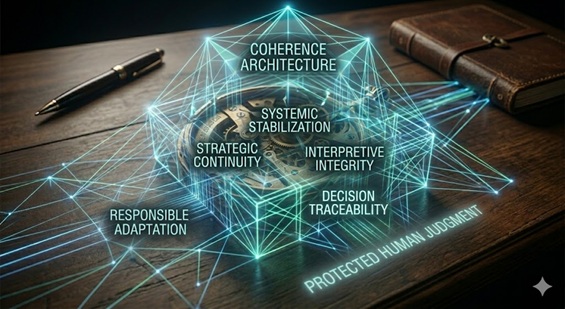
• Maintain responsible adaptation,
• Protect meaningful human judgment under continuous systemic acceleration.
This requires a very different kind of PMO.
Not merely a Project Management Office.
But an organizational coherence architecture.
This evolution is operationally necessary because modern organizations increasingly function as:
• Adaptive systems,
• Distributed cognitive environments,
• Recursive decision networks,
• Continuously recalibrating socio-technical ecosystems.
In these environments, fragmentation rarely appears through obvious collapse.
It emerges gradually through:
• Localized legitimacy pressures,
• Conflicting optimization signals,
• Metric-Driven behavior,
• AI-amplified prioritization,
• Recursive adaptation loops,
• Interpretive inconsistency,
• Uncoordinated behavioral drift across the enterprise.
The organization slowly loses shared meaning.
And once shared meaning erodes, coordination itself becomes increasingly unstable.
This is why PMOs may now need to evolve toward a fundamentally different institutional role.
Not merely:
• Reporting,
• Tracking,
• Compliance,
• Delivery oversight.
But preserving systemic coherence across increasingly adaptive organizational environments.
This changes the function of governance itself.
Because governance can no longer operate merely as procedural supervision.
Governance increasingly becomes:
• Interpretive stabilization,
• Decision integration,
• Coherence preservation,
• Adaptive boundary management,
• Organizational sensemaking under complexity.
This is where PMOs become strategically critical again.
Not as bureaucratic enforcement structures.
But as coherence infrastructures inside systems increasingly vulnerable to:
• Fragmentation,
• Adaptive drift,
• Behavioral synchronization,
• Recursive optimization,
• Cybernetic overcorrection.
The PMO becomes less focused on controlling execution directly.
And more focused on preserving:
• Strategic continuity,
• Cross-System integration,
• Responsible trade-off visibility,
• Decision traceability,
• Systemic learning,
• Organizational alignment under conditions of distributed acceleration.
This role becomes especially important once AI systems begin participating directly in:
• Prioritization,
• Coordination,
• Forecasting,
• Recommendation generation,
• Workflow orchestration,
• Adaptive governance processes themselves.
Because AI-native organizations naturally accelerate:
• Decision velocity,
• Coordination complexity,
• Feedback propagation,
• Behavioral adaptation,
• Systemic interdependence simultaneously.
Without coherence mechanisms, acceleration itself becomes destabilizing.
This is one of the defining governance realities emerging in modern enterprises:
Operational speed without cognitive coherence creates systemic fragility.
And this is precisely where the future PMO may become indispensable.
Not because organizations need more bureaucracy.
But because increasingly adaptive systems require institutional structures capable of preserving:
• Interpretive consistency,
• Strategic direction,
• Responsible escalation,
• Organizational memory,
• Human judgment,
• Systemic coherence under continuous pressure.
This also changes how PMO maturity itself should be understood.
Traditional maturity models often emphasize:
• Process standardization,
• Compliance discipline,
• Reporting sophistication,
• Governance coverage,
• Delivery predictability.
But future PMO maturity may increasingly depend on something else entirely:
The organizational capacity to sustain coherence under continuous adaptation.
This includes the ability to:
• Detect fragmentation early,
• Surface systemic tensions,
• Integrate distributed signals,
• Preserve decision integrity,
• Maintain strategic continuity,
• Protect cognitive diversity,
• Stabilize organizational interpretation under complexity.
In this sense, the PMO increasingly evolves from:
• Process administrator,
to:
• Organizational integrator.
From:
• Governance controller,
to:
• Coherence architect.
From:
• Reporting function,
to:
• Cognitive infrastructure for responsible coordination.
And this shift may ultimately become essential in AI-native environments.
Because the greatest risk facing adaptive organizations may not be insufficient intelligence.
It may be the inability to metabolize intelligence coherently across the system.
This is where the future PMO becomes far more than an operational structure.
It becomes an institutional stabilizer for organizational cognition itself.
Not to slow adaptation.
Not to suppress agility.
Not to centralize authority.
But to preserve enough coherence, interpretive integrity, organizational memory, and responsible decision architecture for adaptive systems to remain strategically human over time.
And this may ultimately become one of the defining governance responsibilities of the AI-native era.
Because as organizations become increasingly adaptive, interconnected, observable, and autonomous, the real challenge may no longer be simply coordinating execution.
It may be preserving the human capacity to think coherently inside systems accelerating faster than human cognition naturally evolved to process.
In the final article of this series, I will explore the deepest tension of all:
As organizations become increasingly intelligent, adaptive, observable, and autonomous, how do we ensure that governance continues to preserve human sovereignty rather than gradually dissolving it? |
Posted on: June 19, 2026 06:33 AM
|
Permalink |
Comments (2)
|
"It takes a lot of courage to show your dreams to someone else."
- Erma Bombeck
|




