
This blog addresses management-related topics and has three areas of focus: 1. Technical skills; 2. Competencies in the field of interpersonal relations and communication (including personal organization and delegation, leadership, teamwork, conflict resolution, conducting meetings, and negotiation); and 3. Strategy (including diagnosis, strategic guidelines, and implementation).4.Technology
Recent Posts
Delegation with Purpose: Building Autonomy and Developing Capability
RCPCV™: A Method for Decision-Making and Continuous Improvement
The Same Change Can Succeed and Fail at the Same Time
What Must Exist Even When No Single Role Owns the Whole?
PHASE 4 – THE EMERGENCE
Categories
Agile,
Career Development,
Career Development,
Career Development,
Career Development,
Career Development,
Career Development,
Career Development,
Career Development,
Career Development,
Career Development,
Career Development,
Career Development,
Career Development,
Career Development,
Career Development,
Career Development,
Career Development,
Career Development,
Career Development,
Career Development,
Career Development,
Career Development,
Career Development,
Career Development,
Career Development,
Career Development,
Career Development,
Career Development,
Career Development,
Career Development,
Career Development,
Career Development,
Career Development,
Career Development,
Career Development,
Career Development,
Career Development,
Career Development,
Career Development,
Career Development,
Career Development,
Career Development,
Career Development,
Career Development,
Career Development,
Career Development,
Career Development,
Career Development,
Career Development,
Career Development,
Career Development,
Career Development,
Career Development,
Career Development,
Career Development,
Career Development,
Career Development,
Career Development,
Career Development,
Career Development,
Career Development,
Career Development,
Career Development,
Career Development,
Career Development,
Career Development,
Career Development,
Career Development,
Career Development,
Career Development,
Career Development,
Career Development,
Career Development,
Career Development,
Career Development,
Career Development,
Career Development,
Career Development,
Career Development,
Career Development,
Career Development,
Career Development,
Career Development,
Career Development,
Career Development,
Career Development,
Career Development,
Career Development,
Career Development,
Career Development,
Career Development,
Career Development,
Career Development,
Career Development,
Career Development,
Career Development,
Career Development,
Career Development,
Career Development,
Career Development,
Career Development,
Career Development,
Career Development,
Career Development,
Career Development,
Career Development,
Career Development,
Career Development,
Career Development,
Career Development,
Career Development,
Career Development,
Career Development,
Career Development,
Career Development,
Career Development,
Career Development,
Career Development,
Career Development,
Career Development,
Career Development,
Career Development,
Education,
Governance,
Governance,
Governance,
Governance,
Governance,
Governance,
Governance,
Governance,
Governance,
Governance,
Governance,
Governance,
Governance,
Governance,
Governance,
Governance,
Governance,
Governance,
Governance,
Governance,
Governance,
Governance,
In,
Integration Management,
Interpersonal Skills,
Interpersonal Skills,
Interpersonal Skills,
Interpersonal Skills,
Interpersonal Skills,
Interpersonal Skills,
Interpersonal Skills,
Interpersonal Skills,
Interpersonal Skills,
Interpersonal Skills,
Interpersonal Skills,
Interpersonal Skills,
Interpersonal Skills,
Interpersonal Skills,
Interpersonal Skills,
Interpersonal Skills,
Interpersonal Skills,
Interpersonal Skills,
Interpersonal Skills,
Interpersonal Skills,
Interpersonal Skills,
Interpersonal Skills,
Interpersonal Skills,
Interpersonal Skills,
Interpersonal Skills,
Interpersonal Skills,
Interpersonal Skills,
Interpersonal Skills,
Interpersonal Skills,
Interpersonal Skills,
Interpersonal Skills,
Interpersonal Skills,
Interpersonal Skills,
Interpersonal Skills,
Interpersonal Skills,
Interpersonal Skills,
Interpersonal Skills,
Interpersonal Skills,
Interpersonal Skills,
Interpersonal Skills,
Interpersonal Skills,
Interpersonal Skills,
Interpersonal Skills,
Interpersonal Skills,
Interpersonal Skills,
Interpersonal Skills,
Interpersonal Skills,
Interpersonal Skills,
Interpersonal Skills,
Interpersonal Skills,
Interpersonal Skills,
Interpersonal Skills,
Interpersonal Skills,
Interpersonal Skills,
Interpersonal Skills,
Interpersonal Skills,
Interpersonal Skills,
Interpersonal Skills,
Interpersonal Skills,
Interpersonal Skills,
Interpersonal Skills,
Interpersonal Skills,
Interpersonal Skills,
Interpersonal Skills,
Interpersonal Skills,
Interpersonal Skills,
Interpersonal Skills,
Interpersonal Skills,
Interpersonal Skills,
Interpersonal Skills,
Interpersonal Skills,
Interpersonal Skills,
Interpersonal Skills,
Interpersonal Skills,
Interpersonal Skills,
Interpersonal Skills,
Interpersonal Skills,
Interpersonal Skills,
Interpersonal Skills,
Interpersonal Skills,
Interpersonal Skills,
Interpersonal Skills,
Interpersonal Skills,
Interpersonal Skills,
Interpersonal Skills,
Interpersonal Skills,
Interpersonal Skills,
Interpersonal Skills,
Interpersonal Skills,
Interpersonal Skills,
Interpersonal Skills,
Interpersonal Skills,
Interpersonal Skills,
Interpersonal Skills,
Interpersonal Skills,
Interpersonal Skills,
Interpersonal Skills,
Interpersonal Skills,
Interpersonal Skills,
Interpersonal Skills,
Interpersonal Skills,
Interpersonal Skills,
Interpersonal Skills,
Interpersonal Skills,
Interpersonal Skills,
Interpersonal Skills,
Interpersonal Skills,
Interpersonal Skills,
Interpersonal Skills,
Interpersonal Skills,
Interpersonal Skills,
Interpersonal Skills,
Interpersonal Skills,
Interpersonal Skills,
Interpersonal Skills,
Interpersonal Skills,
Interpersonal Skills,
Interpersonal Skills,
Interpersonal Skills,
Interpersonal Skills,
Interpersonal Skills,
Interpersonal Skills,
Knowledge Management,
le,
lea,
Leadership,
Leadership,
Leadership,
Leadership,
Leadership,
Leadership,
Leadership,
Leadership,
Leadership,
Leadership,
Leadership,
Leadership,
Leadership,
Leadership,
Leadership,
Leadership,
Leadership,
Leadership,
Leadership,
Leadership,
Leadership,
Leadership,
Leadership,
Leadership,
Leadership,
Leadership,
Leadership,
Leadership,
Leadership,
Leadership,
Leadership,
Leadership,
Leadership,
Leadership,
Leadership,
Leadership,
Leadership,
Leadership,
Leadership,
Leadership,
Leadership,
Leadership,
Leadership,
Leadership,
Leadership,
Leadership,
Leadership,
Leadership,
Leadership,
Leadership,
Leadership,
Leadership,
Leadership,
Leadership,
Leadership,
Leadership,
Leadership,
Leadership,
Leadership,
Leadership,
Leadership,
Leadership,
Leadership,
Leadership,
Leadership,
Leadership,
Leadership,
Leadership,
Leadership,
Leadership,
Leadership,
Leadership,
Leadership,
Leadership,
Leadership,
Leadership,
Leadership,
Leadership,
Leadership,
Leadership,
Leadership,
Leadership,
Leadership,
Leadership,
Leadership,
Leadership,
Leadership,
Leadership,
Leadership,
Leadership,
Leadership,
Leadership,
Leadership,
Leadership,
Leadership,
Leadership,
Leadership,
Leadership,
Leadership,
Leadership,
Leadership,
Leadership,
Leadership,
Leadership,
Leadership,
Leadership,
Leadership,
Leadership,
Leadership,
Leadership,
Leadership,
Leadership,
Leadership,
Leadership,
Leadership,
Leadership,
Leadership,
Leadership,
Leadership,
Leadership,
Leadership,
Leadership,
Leadership,
or,
Organizational Project Management,
Portfolio Management,
Program,
Program Management,
Strategy,
Strategy,
Strategy,
Strategy,
Strategy,
Strategy,
Strategy,
Strategy,
Strategy,
Strategy,
Strategy,
Strategy,
Strategy,
Strategy,
Strategy,
Strategy,
Strategy,
Strategy,
Strategy,
Strategy,
Strategy,
Strategy,
Strategy,
Strategy,
Strategy,
Strategy,
Strategy,
Strategy,
Strategy,
Strategy,
Strategy,
Strategy,
Strategy,
Strategy,
Strategy,
Strategy,
Strategy,
Strategy,
Strategy,
Strategy,
Strategy,
Strategy,
Strategy,
Strategy,
Strategy,
Strategy,
Strategy,
Strategy,
Strategy,
Strategy,
Strategy,
Strategy,
Strategy,
Strategy,
Strategy,
Strategy,
Strategy,
Strategy,
Strategy,
Strategy,
Strategy,
Strategy,
Strategy,
Strategy,
Strategy,
Strategy,
Strategy,
Strategy,
Strategy,
Strategy,
Strategy,
Strategy,
Strategy,
Strategy,
Strategy,
Strategy,
Strategy,
Strategy,
Strategy,
Strategy,
Strategy,
Strategy,
Strategy,
Strategy,
Strategy,
Strategy,
Strategy,
Strategy,
Strategy,
Strategy,
Strategy,
Strategy,
Strategy,
Strategy,
Strategy,
Strategy,
Strategy,
Strategy,
Strategy,
Strategy,
Strategy,
Strategy,
Strategy,
Strategy,
Strategy,
Strategy,
Strategy,
Strategy,
Strategy,
Strategy,
Strategy,
Strategy,
Strategy,
Strategy,
Strategy,
Strategy,
Strategy,
Strategy,
Strategy,
Strategy,
Strategy,
Strategy,
Strategy,
Sustainability,
Talent Management,
Talent Management,
Talent Management,
Talent Management,
Talent Management,
Talent Management,
Talent Management,
Talent Management,
Talent Management,
Talent Management,
Talent Management,
Talent Management,
Talent Management,
Talent Management,
Talent Management,
Talent Management,
Talent Management,
Talent Management,
Talent Management,
Talent Management,
Talent Management,
Talent Management,
Talent Management,
Talent Management,
Talent Management,
Talent Management,
Talent Management,
Talent Management,
Talent Management,
Talent Management,
Talent Management,
Talent Management,
Talent Management,
Talent Management,
Talent Management,
Talent Management,
Talent Management,
Talent Management,
Talent Management,
Talent Management,
Talent Management,
Talent Management,
Talent Management,
Talent Management,
Talent Management,
Talent Management,
Talent Management,
Talent Management,
Talent Management,
Talent Management,
Talent Management,
Talent Management,
Talent Management,
Talent Management,
Talent Management,
Talent Management,
Talent Management,
Talent Management,
Talent Management,
Talent Management,
Talent Management,
Talent Management,
Talent Management,
Talent Management,
Talent Management,
Talent Management,
Talent Management,
Talent Management,
Talent Management,
Talent Management,
Talent Management,
Talent Management,
Talent Management,
Talent Management,
Talent Management,
Talent Management,
Talent Management,
Talent Management,
Talent Management,
Talent Management,
Talent Management,
Talent Management,
Talent Management,
Talent Management,
Talent Management,
Talent Management,
Talent Management,
Talent Management,
Talent Management,
Talent Management,
Talent Management,
Talent Management,
Talent Management,
Talent Management,
Talent Management,
Talent Management,
Talent Management,
Talent Management,
Talent Management,
Talent Management,
Talent Management,
Talent Management,
Talent Management,
Talent Management,
Talent Management,
Talent Management,
Talent Management,
Talent Management,
Talent Management,
Talent Management,
Talent Management,
Talent Management,
Talent Management,
Talent Management,
Talent Management,
Talent Management,
Talent Management,
Talent Management,
Talent Management,
Talent Management,
Talent Management,
Talent Management,
Talent Management
Date
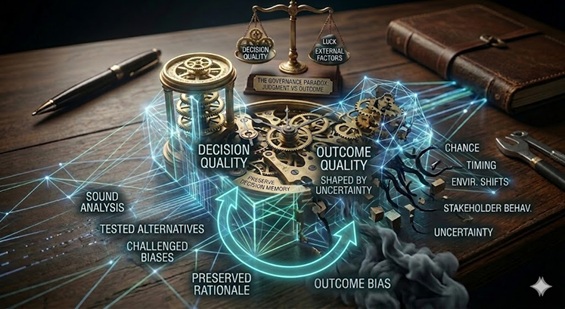
Modern organizations are obsessed with outcomes.
Projects are evaluated through outcomes.
Strategies are evaluated through outcomes.
Leaders are evaluated through outcomes.
Governance systems are evaluated through outcomes.
AI systems are evaluated through outcomes.
At first glance, this appears entirely reasonable.
Organizations exist to produce results.
Results matter.
Performance matters.
Value creation matters.
But beneath this seemingly obvious logic lies one of the most persistent and dangerous misconceptions in modern governance:
The assumption that outcomes and decision quality are the same thing.They are not.And confusing the two may quietly undermine organizational learning, governance maturity, strategic coherence, and responsible judgment itself.
This distinction becomes increasingly important in environments characterized by:
• Uncertainty,
• Systemic complexity,
• Distributed decision-making,
• Adaptive governance,
• AI-enabled coordination,
• Continuously evolving operating conditions.
Because under these conditions, outcomes often reflect far more than the quality of the decision that preceded them.
They also reflect:
• Chance,
• Timing,
• Incomplete information,
• Environmental shifts,
• Stakeholder behavior,
• Emergent system dynamics,
• Events that no decision-maker could fully anticipate.
Yet organizations frequently evaluate decisions as though outcomes alone provide a complete verdict.
Good outcome.
Good decision.
Bad outcome.
Bad decision.
The logic appears intuitive.
But reality is rarely that simple.
Consider two organizations.
The first conducts a rigorous analysis.
It evaluates assumptions.
Tests alternatives.
Examines risks.
Challenges biases.
Documents trade-offs.
The decision is thoughtful, disciplined, and well-governed.
Months later, an unexpected geopolitical event fundamentally changes the environment.
The initiative fails.
The outcome is poor.
Was the decision poor?
Not necessarily.
Now consider a second organization.
The decision process is superficial.
Risks are ignored.
Alternatives are never explored.
Assumptions remain unchallenged.
The initiative proceeds largely through optimism and momentum.
Then market conditions unexpectedly become favorable.
The initiative succeeds.
The outcome is positive.
Was the decision high quality?
Not necessarily.
This distinction lies at the heart of one of the most important governance challenges facing modern organizations:
How do we evaluate decisions when outcomes are shaped by uncertainty?This question becomes particularly uncomfortable because organizations naturally gravitate toward visible results.
Outcomes are measurable.
Outcomes are observable.
Outcomes fit neatly into dashboards.
Decision quality often does not.
Decision quality exists largely inside:
• Assumptions,
• Reasoning,
• Judgment,
• Trade-Offs,
• Interpretation,
• Contextual understanding.
These are significantly harder to measure.
Yet they may be far more important for long-term organizational capability.
This is where governance often encounters a subtle learning trap.
Organizations may unintentionally reward:• Favorable outcomes produced by weak decisions,while simultaneously penalizing:•
Sound decisions that encountered unfavorable circumstances.Over time, this creates distorted learning.
Poor practices become reinforced.
Good practices become abandoned.
Luck is mistaken for competence.And uncertainty becomes confused with failure.This phenomenon is often described as outcome bias.
But the governance implications extend much further.
Because outcome bias does not merely distort evaluation.
It distorts learning itself.
Organizations gradually begin optimizing for what appears successful rather than understanding why success occurred.Over time, outcome bias can become a hidden driver of coherence erosion.Organizations gradually reinforce behaviors that appear successful while weakening the decision disciplines that originally sustained strategic integrity.
The result is a subtle form of adaptive drift where apparent success masks the progressive deterioration of decision quality itself.The organization remains active.
The organization remains adaptive.
The organization may even appear successful.
Yet the foundations of sound judgment slowly weaken beneath the surface.
This distinction becomes even more important in AI-native environments.
Because AI systems increasingly contribute to:
• Forecasting,
• Prioritization,
• Recommendation generation,
• Predictive analytics,
• Scenario modeling,
• Operational optimization.
As predictive capabilities improve, organizations may become increasingly vulnerable to confusing analytical sophistication with epistemic certainty.
When outcomes diverge from expectations, attention naturally shifts toward identifying who was wrong.
But this reaction often misunderstands the nature of uncertainty.
Better prediction does not eliminate uncertainty.It simply improves visibility into probability.Probability and certainty are not the same thing.A highly probable outcome can still fail to occur.
A low-probability event can still happen.
Reality does not guarantee compliance with forecasts.This creates a governance paradox.
The more sophisticated organizational intelligence becomes, the greater the temptation to evaluate decisions through outcomes alone.
Yet uncertainty remains fundamentally irreducible.
This is why mature governance must evaluate decisions through at least two lenses simultaneously.The first lens examines outcomes.
What happened?
What results emerged?
What consequences occurred?
What value was created or destroyed?
These questions remain important.
Organizations cannot ignore reality.
But a second lens is equally necessary.
How was the decision made?What information was available at the time?
What assumptions were reasonable?
What alternatives were considered?
What trade-offs were accepted?
What uncertainties were acknowledged?
These questions evaluate decision quality itself.
And decision quality often remains visible only when organizations deliberately preserve decision rationale.As organizations accelerate, preserving decision rationale becomes increasingly important.
In many environments, this may ultimately require institutional mechanisms capable of maintaining decision traceability beyond outcome reporting alone.
Future PMOs may play an important role here.Not merely as custodians of delivery metrics.
Not merely as governance reporting structures.
But as guardians of organizational decision memory itself.Because once decision rationale disappears, organizations lose the ability to distinguish between:•
Skill and luck, • Judgment and outcome, • Learning and hindsight, • Coherence and drift.This distinction may ultimately become one of the defining governance capabilities of AI-native organizations.
Because future governance cannot focus exclusively on evaluating results.
It must also preserve the capacity to evaluate judgment.
Otherwise organizations risk creating a dangerous cybernetic feedback loop:
• Rewarding luck,
• Punishing thoughtful risk-taking,
• Reinforcing poor reasoning,
• Weakening organizational learning,
• Gradually eroding decision quality itself.
This is why governance maturity should not be defined solely by the ability to measure outcomes.
It should also be defined by the ability to understand how those outcomes emerged.
Results matter.
But results alone rarely tell the entire story.
Outcomes tell us what happened.Decision quality tells us whether the organization was thinking well when it happened.And in environments increasingly shaped by uncertainty, adaptation, and AI-enabled acceleration, that distinction may become one of the most important governance capabilities of all.
Because organizations do not merely need better outcomes.They need better judgment.
And judgment cannot be evaluated through outcomes alone.Organizations do not learn from outcomes alone.They learn by preserving the reasoning, assumptions, uncertainties, and trade-offs that shaped judgment at the moment a decision was made.Without that, organizations may remember what happened.But they gradually forget why they believed it was the right decision at the time.
Posted on: June 24, 2026 04:30 AM |
Permalink




