


AI as a Team Member 3.0: Human–Agent–Robot and the New Forms of Work


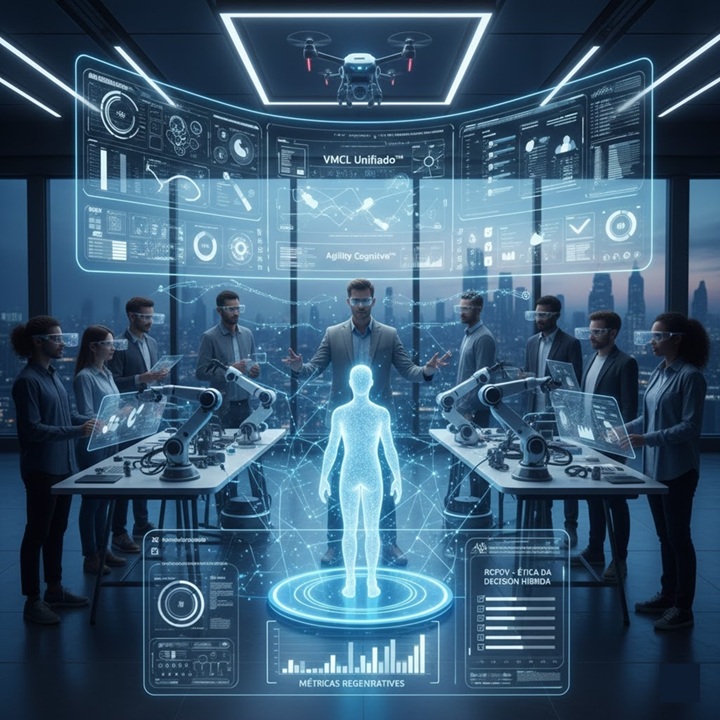 Work is changing faster than organizations can process, and often faster than leaders can adapt. We are entering a new era: Hybrid Human–Agent–Robot Teams™. Technology is no longer a tool that sits outside the workflow. It has become an active member of the team, with presence, agency, and autonomous influence in the flow of value. So the core question is no longer: “How do we use AI?” The real question is: “How do we work - and lead - when AI has voice, agency, and contextual autonomy inside the team?” This is the new anatomy of work. And it demands a new mindset, a new ethical foundation, and a new approach to Work Design. 1. Human–Agent–Robot: The New Anatomy of Work Modern work blends three complementary forms of intelligence: Humans -Consciousness, Ethics, Creativity Intention • Purpose • Meaning • Context • Ethical judgment • Deep collaboration • Cultural sense-making • Relational learning Cognitive Agents (AI) - Prediction, Analysis, Coordination Language interpretation • Pattern recognition • Risk anticipation • Real-time decision support • Living documentation • Human–robot orchestration Robots - Execution, Precision, Cadence Physical/digital automation • High-frequency reliability • Safety • Repeatability • Elimination of dangerous or exhausting tasks This is not science fiction. It is the present becoming visible. 2. New Forms of Work = Intelligent Work Design The integration of humans, agents, and robots is not a technology problem. It is a Work Design problem. New Forms of Work require: • Flexible and reconfigurable teams • Adaptive, living workflows • Short learning cycles • Dynamic roles (initiator, checker, explainer, arbiter, synthesizer) • Clear autonomy boundaries for agents and robots • Intentional alignment rituals • Psychological safety • Embedded ethical governance • Transparency in algorithmic decisions • Coherent organizational intent New forms of work do not “happen.” They are designed and redesigned continuously. 3. Agentic AI: The Nervous System of Modern Teams AI no longer simply responds to commands. It acts with contextual autonomy, across three levels: Level 1 - Assistive Zero autonomy. AI responds, summarizes, executes. Level 2 - Collaborative Partial autonomy. AI suggests, anticipates patterns, identifies tensions and risks. Level 3 - Contextually Autonomous AI interprets intent, reads variables, acts within ethical and operational boundaries — always with human fallback. AI does not replace teams. AI amplifies teams. 4. Copilots, Chatbots, and NLP - Language Is the New Operating System With advanced NLP, language becomes the universal interface of collaboration: • Copilots capture knowledge in real time • Meetings turn into structured documentation • Ideas become visual maps • Misalignment becomes clarity • Cognitive noise becomes shared understanding • Humans, agents, and robots connect into one workflow Language is now the operating system of intelligent collaboration. 5. SECI 2.0™ + AI - Knowledge That Breathes The SECI 2.0™ model transforms knowledge into an organizational breathing cycle: Socialization → AI captures signals, tensions, and context Externalization → copilots turn conversations into structured knowledge Combination → agents merge data, narratives, and scenarios Internalization → real-time learning embedded into work itself Knowledge stops being static documentation. It becomes living, adaptive, continuous. 6. Cognitive Agility™ - The Essential Competence of Hybrid Work Hybrid teams require a new mental fluency: • Pattern recognition • Clarity amid complexity • Intentional action • Rapid adaptation • Integrating AI without losing humanity • Balancing data with meaning • Navigating paradoxes Cognitive Agility™ is the core muscle of future-ready teams. 7. RCPCV™ — Ethical Decision-Making in Hybrid Environments Decisions now occur at multiple speeds: human, robotic, and algorithmic. RCPCV™ ensures moral coherence: R — Recollect → data, weak signals, perceptions, context C — Consult → affected people + AI-generated insights P — Process (Think) → critical reasoning, foresight, bias awareness C — Communicate → clarity, intent, responsibility V — Verify → real-world impact, learning, regeneration AI accelerates. RCPCV™ protects. Leadership integrates. 8. The Human Edge - The Competitive Advantage AI Cannot Replace Even in an AI-augmented world, human capabilities define outcomes: Purpose • Ethics • Trust • Deep Learning • Psychological Safety • Sensibility • Discernment • Culture • Intention • Impact •Technology amplifies. Humans direct. 9. The Human–Agent–Robot Ethical Contract Hybrid teams require a living ethical contract built on:
Without trust, there is no team. 10. Conclusion - Work Has Changed. Leadership Must Change Too. AI does not replace teams. It replaces outdated ways of working. The future belongs to those who can: Design intelligent work Integrate humans, agents, and robots Cultivate the human edge Learn continuously Make ethical decisions Lead with consciousness Create sustainable, regenerative value So the central question becomes: Is AI in your organization just a tool, or already a team member? References: Nonaka, I., & Takeuchi, H. (1995). The Knowledge-Creating Company. Oxford University Press. Senge, P. (2006). The Fifth Discipline. Doubleday. Siemens, G. (2005). Connectivism: A learning theory for the digital age. IJITDL. Edmondson, A. (1999). Psychological safety and learning behavior. ASQ. Jurafsky, D., & Martin, J. (2023). Speech and Language Processing (3rd ed.). Vaswani, A., et al. (2017). Attention is all you need. NeurIPS. Valentine, M., & Bernstein, M. (2025). Flash Teams 2.0. MIT Work Design Lab. Appelo, J. (2025). Human–Robot–Agent. Meadows, D. (2008). Thinking in Systems. Chelsea Green. Laloux, F. (2014). Reinventing Organizations. Nelson Parker. Covey, S. (2006). The Speed of Trust. Free Press. Project Management Institute. (2025). PMI Code of Ethics. National Institute of Standards and Technology. (2023). AI Risk Management Framework. McKinsey & Company. (2024). Future of Work Report. Boston Consulting Group. (2023). Adaptive Work Design. European Union. (2025). Artificial Intelligence Act (Regulation (EU). |
Posted on: December 17, 2025 10:42 AM
| Permalink |
Comments (0)
It’s Time: PMI Should Create an Official Ethics Certification, and Make It Mandatory.
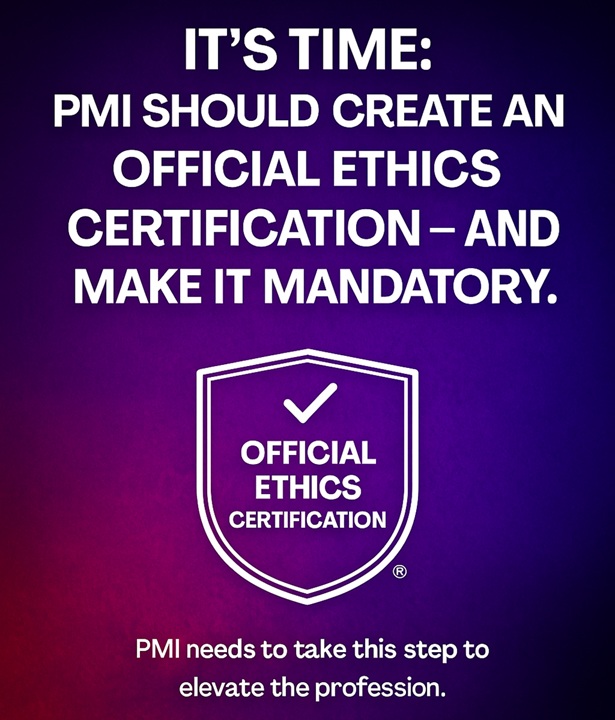 We now have the 2025 Code of Ethics, the EDMF, the Practitioner Ethics Toolkit, and the Chapter Board Ethics Toolkit. This is, without question, the strongest ethical ecosystem PMI has ever published. But one decisive step is still missing. Ethics must stop being just a document, and become a certification. And PMI should lead that change. It makes little sense for our profession to have highly rigorous technical certifications (PMP®, PMI-ACP® PMI-PMOCP™) while the foundation that sustains everything - ethical conduct - has no formal certification at all. The time has come for a structural shift: 1. PMI should create an Official Ethics Certification. A certification based on the 2025 Code, the EDMF, real dilemmas, conflicts of interest, Chapter governance, AI ethics, and sustainability ethics. 2. This certification should be mandatory for ALL other PMI certifications. Before becoming PMP, ACP, RMP, or PMO-CP, every professional should demonstrate: - Ethical maturity - Critical judgement - Conscious decision-making - Responsibility and integrity Technique without ethics is risk. Ethics without technique can be developed. The hierarchy is obvious. 3. All Chapter Board members MUST be certified in Ethics. Leading a Chapter is not only about delivering activities, it is about stewarding trust, fairness, ethical communication, conflicts of interest, and responsible governance. Making ethics certification mandatory for Board Members would: - Protect the community - Increase transparency - Reduce internal conflicts - Professionalize volunteer leadership - Build global institutional maturity - Strengthen PMI’s reputation worldwide 4. This is the natural next step in the evolution of our profession. If we want ethics to be more than words, we must treat it the same way we treat methodology: - With learning, rigor, evaluation, and continuous practice. The profession does not advance by updating guides alone. It advances when we elevate conscience, conduct, and responsibility. PMI now has a historic opportunity: To make ethics its most important certification. To explore PMI’s official ethics resources: PMI members’ ethics commitments Note: This reflection is personal and independent, based on my study of PMI’s published materials, and does not represent an official PMI position. |
Posted on: December 15, 2025 09:03 AM
| Permalink |
Comments (8)
Ethics vs. Methodology: What Truly Shapes Our Profession?
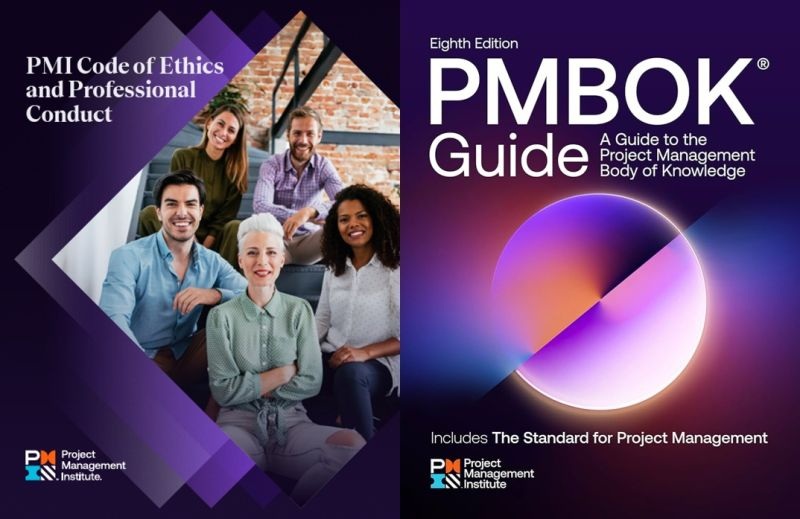 A question emerged several times throughout this series: “What is more important for our profession - the PMBOK® Guide or PMI’s four new ethics documents?” The answer is clear, structural, and unavoidable: The ethical documents are more important than the PMBOK® Guide - 8th Edition. Here’s why. 1. The PMBOK guides how to manage projects. Ethics guides how professionals must behave. The PMBOK is a body of knowledge. The Code of Ethics is a professional obligation. When process and integrity collide, Ethics always prevails. 2. No one loses a certification for violating the PMBOK. But one can lose it for violating the Code of Ethics. This defines the hierarchy. The PMBOK can be interpreted, tailored, or adapted. Ethics is not optional, it is mandatory. 3. The PMBOK shapes technique. Ethics shapes the professional. A technically imperfect but ethical practitioner: - Can grow. A highly skilled but unethical practitioner: - Endangers projects, teams, organizations, and trust. 4. In audits, disputes, or ethical investigations it is the Code that determines correct conduct. The four ethical documents: • PMI Code of Ethics and Professional Conduct (2025) • EDMF – Ethical Decision-Making Framework • Practitioner Ethics Toolkit • Chapter Board Ethics Toolkit Are disciplinary, regulatory, and binding. The PMBOK is not. 5. These four documents form the new ethical architecture of the profession. They transform: • Implicit values → explicit expectations • Instinctive decisions → intentional decisions • Passive culture → active ethical culture • Individual responsibility → shared responsibility The PMBOK structures the work. Ethics protects people, projects, and reputation. Direct conclusion The PMBOK evolves with time. Ethics sustains the profession. Without the PMBOK, projects can still be managed in other ways. Without ethics, there is no trust, no credibility, and no profession. Methodology matters. Conduct is essential. And PMI’s four ethical documents represent the most significant ethical evolution in our profession in more than a decade. To explore all official PMI ethics resources: PMI members’ ethics commitments Note: This reflection is personal and independent, based on my study of PMI’s published materials, and does not represent an official PMI position. |
Posted on: December 12, 2025 08:30 AM
| Permalink |
Comments (2)
Ethics as a Discipline: The End of the Series and the Beginning of a New Practice
 With this four-part series, dedicated to the 2025 PMI Code of Ethics, the EDMF, the Practitioner Ethics Toolkit and the Chapter Board Ethics Toolkit, we reach the end of a reflection that, in truth, has no ending. Because ethics is not something we visit. It is a place we must inhabit. What PMI has done with this renewed ethical ecosystem represents a structural shift: - From implicit values to explicit expectations, - From intentions to processes, - From hope to responsibility, - From principles on paper to decisions in practice. Throughout this series, we explored four complementary dimensions: 1. The Code (2025): Sets a clear, current, and unambiguous standard for responsibility, respect, fairness, and honesty. 2. The EDMF: Transforms ethics into a disciplined process of critical thinking and intentional decision-making. 3. The Practitioner Ethics Toolkit: Brings ethics into daily practice, helping teams turn integrity into a consistent habit. 4. The Chapter Board Ethics Toolkit: Strengthens ethical governance in Chapters, where trust, transparency, and accountability define community leadership. What emerges from all this is more than an update. It is a profound and necessary evolution. Ethics is no longer an accessory, it becomes part of the architecture of our profession. And perhaps the most important message of this entire series is this: Ethics is not something we apply only when dilemmas appear. It is what shapes the culture so dilemmas can be addressed with clarity. As project leaders, professionals, volunteers, and members of the PMI community, it is now our task to turn these tools into living practices: • Questioning assumptions • Making dilemmas discussable • Keeping decision-making transparent • Placing impact above comfort • Treating integrity as a competence, not a hope Thank you to everyone who followed this series and contributed with insights, reflections, and meaningful dialogue. May this not be the conclusion, but the beginning of a more conscious, mature, and practiced form of ethical leadership across our profession. For those who want to explore PMI’s ethical resources, here is the official link: Ethics Guidelines Note: This reflection is personal and independent, based on my study of PMI’s published materials, and does not represent an official PMI position. |
Posted on: December 10, 2025 09:42 AM
| Permalink |
Comments (2)
Chapter Board Ethics Toolkit: Ethical Governance for Communities that Lead by Example
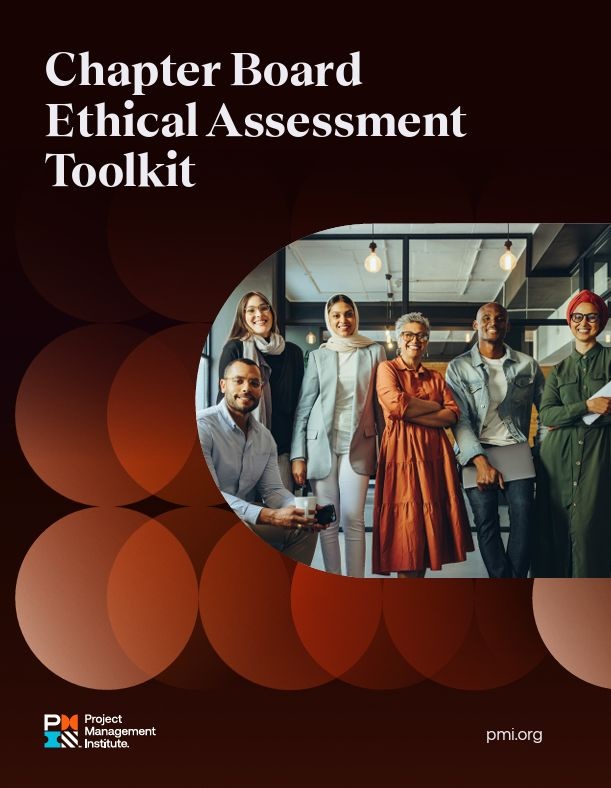 The final component of PMI’s renewed ethical ecosystem is designed for a group that often faces complex, visible dilemmas with real impact on community wellbeing: Chapter Board members. The Chapter Board Ethics Toolkit supports leaders and volunteers who operate in environments where ethical leadership, transparency, and accountability are essential to sustaining trust within the PMI community. While the Code of Ethics defines the principles, the EDMF guides decision-making, and the Practitioner Toolkit translates ethics into daily behaviour, the Chapter Board Ethics Toolkit serves a distinct purpose: - To strengthen the ethical governance of community-driven structures that represent PMI at the local level. This toolkit provides practical guidance to help Boards: • Reinforce transparency and accountability in governance decisions • Handle conflicts of interest in a structured and predictable way • Promote ethical communication between the Board, volunteers, and the wider community • Apply fairness, respect, and responsibility during moments of tension • Create processes that reduce ambiguity and prevent unilateral decisions • Protect the integrity and reputation of the Chapter as an institution Its true value lies in recognising a fundamental reality: Leading a Chapter is not only about managing activities, it is about managing trust. Chapter Boards make decisions that influence volunteers, members, partners, students, and the PMI brand in their region. Having a clear, actionable ethical reference point is essential for ensuring coherence, fairness, and institutional maturity. In a world where professional communities demand transparency and integrity, this toolkit provides Boards with a structure that turns values into solid practices, preventing issues before they emerge and strengthening governance as an act of service. For those who wish to consult PMI’s official ethics guidelines, here is the link: Chapter Board Ethical Assessment ToolkitNote: This reflection is personal and independent, based on my study of PMI’s published materials, and does not represent an official PMI position. |
Posted on: December 08, 2025 09:49 AM
| Permalink |
Comments (4)


