Support to Develop
by Luis Branco

This blog addresses management-related topics and has three areas of focus: 1. Technical skills; 2. Competencies in the field of interpersonal relations and communication (including personal organization and delegation, leadership, teamwork, conflict resolution, conducting meetings, and negotiation); and 3. Strategy (including diagnosis, strategic guidelines, and implementation).4.Technology
Recent Posts
Does Integration Need an Integrator?
Before We Rebuild, What Must We Take Apart?
When Locally Valid Decisions Become Globally Incoherent
When Yesterday’s Solutions Become Today’s Constraints
PMBOK 8 Recognizes Integration. How Is Integrative Responsibility Allocated When Leadership Is Distributed?
Categories
Agile,
Career Development,
Career Development,
Career Development,
Career Development,
Career Development,
Career Development,
Career Development,
Career Development,
Career Development,
Career Development,
Career Development,
Career Development,
Career Development,
Career Development,
Career Development,
Career Development,
Career Development,
Career Development,
Career Development,
Career Development,
Career Development,
Career Development,
Career Development,
Career Development,
Career Development,
Career Development,
Career Development,
Career Development,
Career Development,
Career Development,
Career Development,
Career Development,
Career Development,
Career Development,
Career Development,
Career Development,
Career Development,
Career Development,
Career Development,
Career Development,
Career Development,
Career Development,
Career Development,
Career Development,
Career Development,
Career Development,
Career Development,
Career Development,
Career Development,
Career Development,
Career Development,
Career Development,
Career Development,
Career Development,
Career Development,
Career Development,
Career Development,
Career Development,
Career Development,
Career Development,
Career Development,
Career Development,
Career Development,
Career Development,
Career Development,
Career Development,
Career Development,
Career Development,
Career Development,
Career Development,
Career Development,
Career Development,
Career Development,
Career Development,
Career Development,
Career Development,
Career Development,
Career Development,
Career Development,
Career Development,
Career Development,
Career Development,
Career Development,
Career Development,
Career Development,
Career Development,
Career Development,
Career Development,
Career Development,
Career Development,
Career Development,
Career Development,
Career Development,
Career Development,
Career Development,
Career Development,
Career Development,
Career Development,
Career Development,
Career Development,
Career Development,
Career Development,
Career Development,
Career Development,
Career Development,
Career Development,
Career Development,
Career Development,
Career Development,
Career Development,
Career Development,
Career Development,
Career Development,
Career Development,
Career Development,
Career Development,
Career Development,
Career Development,
Career Development,
Career Development,
Career Development,
Career Development,
Governance,
Governance,
Governance,
Governance,
Governance,
Governance,
In,
Integration Management,
Interpersonal Skills,
Interpersonal Skills,
Interpersonal Skills,
Interpersonal Skills,
Interpersonal Skills,
Interpersonal Skills,
Interpersonal Skills,
Interpersonal Skills,
Interpersonal Skills,
Interpersonal Skills,
Interpersonal Skills,
Interpersonal Skills,
Interpersonal Skills,
Interpersonal Skills,
Interpersonal Skills,
Interpersonal Skills,
Interpersonal Skills,
Interpersonal Skills,
Interpersonal Skills,
Interpersonal Skills,
Interpersonal Skills,
Interpersonal Skills,
Interpersonal Skills,
Interpersonal Skills,
Interpersonal Skills,
Interpersonal Skills,
Interpersonal Skills,
Interpersonal Skills,
Interpersonal Skills,
Interpersonal Skills,
Interpersonal Skills,
Interpersonal Skills,
Interpersonal Skills,
Interpersonal Skills,
Interpersonal Skills,
Interpersonal Skills,
Interpersonal Skills,
Interpersonal Skills,
Interpersonal Skills,
Interpersonal Skills,
Interpersonal Skills,
Interpersonal Skills,
Interpersonal Skills,
Interpersonal Skills,
Interpersonal Skills,
Interpersonal Skills,
Interpersonal Skills,
Interpersonal Skills,
Interpersonal Skills,
Interpersonal Skills,
Interpersonal Skills,
Interpersonal Skills,
Interpersonal Skills,
Interpersonal Skills,
Interpersonal Skills,
Interpersonal Skills,
Interpersonal Skills,
Interpersonal Skills,
Interpersonal Skills,
Interpersonal Skills,
Interpersonal Skills,
Interpersonal Skills,
Interpersonal Skills,
Interpersonal Skills,
Interpersonal Skills,
Interpersonal Skills,
Interpersonal Skills,
Interpersonal Skills,
Interpersonal Skills,
Interpersonal Skills,
Interpersonal Skills,
Interpersonal Skills,
Interpersonal Skills,
Interpersonal Skills,
Interpersonal Skills,
Interpersonal Skills,
Interpersonal Skills,
Interpersonal Skills,
Interpersonal Skills,
Interpersonal Skills,
Interpersonal Skills,
Interpersonal Skills,
Interpersonal Skills,
Interpersonal Skills,
Interpersonal Skills,
Interpersonal Skills,
Interpersonal Skills,
Interpersonal Skills,
Interpersonal Skills,
Interpersonal Skills,
Interpersonal Skills,
Interpersonal Skills,
Interpersonal Skills,
Interpersonal Skills,
Interpersonal Skills,
Interpersonal Skills,
Interpersonal Skills,
Interpersonal Skills,
Interpersonal Skills,
Interpersonal Skills,
Interpersonal Skills,
Interpersonal Skills,
Interpersonal Skills,
Interpersonal Skills,
Interpersonal Skills,
Interpersonal Skills,
Interpersonal Skills,
Interpersonal Skills,
Interpersonal Skills,
Interpersonal Skills,
Interpersonal Skills,
Interpersonal Skills,
Interpersonal Skills,
Interpersonal Skills,
Interpersonal Skills,
Interpersonal Skills,
Interpersonal Skills,
Interpersonal Skills,
Interpersonal Skills,
Interpersonal Skills,
Interpersonal Skills,
Interpersonal Skills,
le,
lea,
Leadership,
Leadership,
Leadership,
Leadership,
Leadership,
Leadership,
Leadership,
Leadership,
Leadership,
Leadership,
Leadership,
Leadership,
Leadership,
Leadership,
Leadership,
Leadership,
Leadership,
Leadership,
Leadership,
Leadership,
Leadership,
Leadership,
Leadership,
Leadership,
Leadership,
Leadership,
Leadership,
Leadership,
Leadership,
Leadership,
Leadership,
Leadership,
Leadership,
Leadership,
Leadership,
Leadership,
Leadership,
Leadership,
Leadership,
Leadership,
Leadership,
Leadership,
Leadership,
Leadership,
Leadership,
Leadership,
Leadership,
Leadership,
Leadership,
Leadership,
Leadership,
Leadership,
Leadership,
Leadership,
Leadership,
Leadership,
Leadership,
Leadership,
Leadership,
Leadership,
Leadership,
Leadership,
Leadership,
Leadership,
Leadership,
Leadership,
Leadership,
Leadership,
Leadership,
Leadership,
Leadership,
Leadership,
Leadership,
Leadership,
Leadership,
Leadership,
Leadership,
Leadership,
Leadership,
Leadership,
Leadership,
Leadership,
Leadership,
Leadership,
Leadership,
Leadership,
Leadership,
Leadership,
Leadership,
Leadership,
Leadership,
Leadership,
Leadership,
Leadership,
Leadership,
Leadership,
Leadership,
Leadership,
Leadership,
Leadership,
Leadership,
Leadership,
Leadership,
Leadership,
Leadership,
Leadership,
Leadership,
Leadership,
Leadership,
Leadership,
Leadership,
Leadership,
Leadership,
Leadership,
Leadership,
Leadership,
Leadership,
Leadership,
Leadership,
Leadership,
Leadership,
Leadership,
Leadership,
or,
Organizational Project Management,
Program,
Program Management,
Strategy,
Strategy,
Strategy,
Strategy,
Strategy,
Strategy,
Strategy,
Strategy,
Strategy,
Strategy,
Strategy,
Strategy,
Strategy,
Strategy,
Strategy,
Strategy,
Strategy,
Strategy,
Strategy,
Strategy,
Strategy,
Strategy,
Strategy,
Strategy,
Strategy,
Strategy,
Strategy,
Strategy,
Strategy,
Strategy,
Strategy,
Strategy,
Strategy,
Strategy,
Strategy,
Strategy,
Strategy,
Strategy,
Strategy,
Strategy,
Strategy,
Strategy,
Strategy,
Strategy,
Strategy,
Strategy,
Strategy,
Strategy,
Strategy,
Strategy,
Strategy,
Strategy,
Strategy,
Strategy,
Strategy,
Strategy,
Strategy,
Strategy,
Strategy,
Strategy,
Strategy,
Strategy,
Strategy,
Strategy,
Strategy,
Strategy,
Strategy,
Strategy,
Strategy,
Strategy,
Strategy,
Strategy,
Strategy,
Strategy,
Strategy,
Strategy,
Strategy,
Strategy,
Strategy,
Strategy,
Strategy,
Strategy,
Strategy,
Strategy,
Strategy,
Strategy,
Strategy,
Strategy,
Strategy,
Strategy,
Strategy,
Strategy,
Strategy,
Strategy,
Strategy,
Strategy,
Strategy,
Strategy,
Strategy,
Strategy,
Strategy,
Strategy,
Strategy,
Strategy,
Strategy,
Strategy,
Strategy,
Strategy,
Strategy,
Strategy,
Strategy,
Strategy,
Strategy,
Strategy,
Strategy,
Strategy,
Strategy,
Strategy,
Strategy,
Strategy,
Strategy,
Strategy,
Strategy,
Sustainability,
Talent Management,
Talent Management,
Talent Management,
Talent Management,
Talent Management,
Talent Management,
Talent Management,
Talent Management,
Talent Management,
Talent Management,
Talent Management,
Talent Management,
Talent Management,
Talent Management,
Talent Management,
Talent Management,
Talent Management,
Talent Management,
Talent Management,
Talent Management,
Talent Management,
Talent Management,
Talent Management,
Talent Management,
Talent Management,
Talent Management,
Talent Management,
Talent Management,
Talent Management,
Talent Management,
Talent Management,
Talent Management,
Talent Management,
Talent Management,
Talent Management,
Talent Management,
Talent Management,
Talent Management,
Talent Management,
Talent Management,
Talent Management,
Talent Management,
Talent Management,
Talent Management,
Talent Management,
Talent Management,
Talent Management,
Talent Management,
Talent Management,
Talent Management,
Talent Management,
Talent Management,
Talent Management,
Talent Management,
Talent Management,
Talent Management,
Talent Management,
Talent Management,
Talent Management,
Talent Management,
Talent Management,
Talent Management,
Talent Management,
Talent Management,
Talent Management,
Talent Management,
Talent Management,
Talent Management,
Talent Management,
Talent Management,
Talent Management,
Talent Management,
Talent Management,
Talent Management,
Talent Management,
Talent Management,
Talent Management,
Talent Management,
Talent Management,
Talent Management,
Talent Management,
Talent Management,
Talent Management,
Talent Management,
Talent Management,
Talent Management,
Talent Management,
Talent Management,
Talent Management,
Talent Management,
Talent Management,
Talent Management,
Talent Management,
Talent Management,
Talent Management,
Talent Management,
Talent Management,
Talent Management,
Talent Management,
Talent Management,
Talent Management,
Talent Management,
Talent Management,
Talent Management,
Talent Management,
Talent Management,
Talent Management,
Talent Management,
Talent Management,
Talent Management,
Talent Management,
Talent Management,
Talent Management,
Talent Management,
Talent Management,
Talent Management,
Talent Management,
Talent Management,
Talent Management,
Talent Management,
Talent Management,
Talent Management
Date
| 
This is the fourth post in the series “The 11 Keys of Regenerative Leadership.”
Collaboration is not a slogan.
It is an intentional, regenerative, and relational practice.
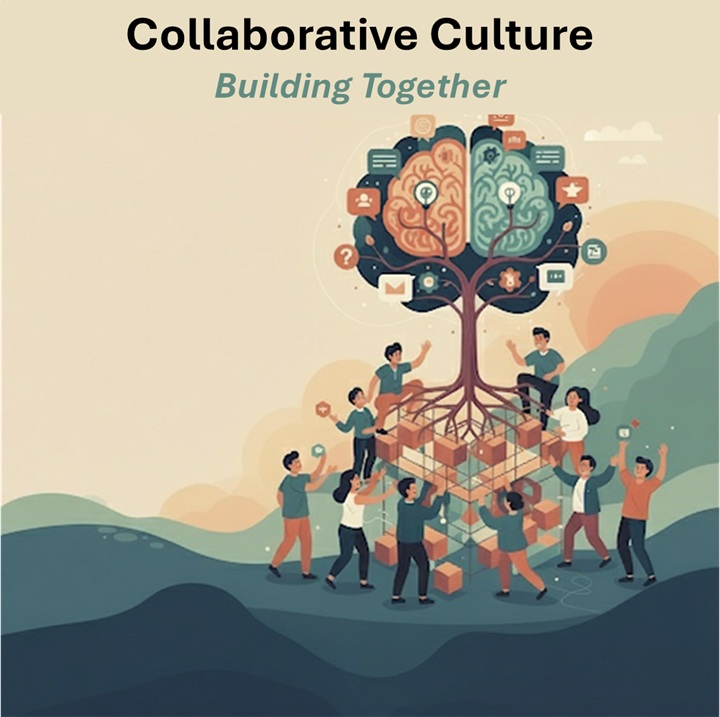
It’s more than working together — it’s building together.
Regenerative leadership recognizes that a collaborative culture doesn’t happen by chance.
It is born from conscious choices, consistent rituals, and the invisible structures that generate safety and trust.
In a collaborative team:
- Conflict is welcomed with maturity
- Alignment is co-created, not imposed
- Difference is seen as potential, not a problem
That’s why I developed the Collaborative Model in 3 Steps:
- Welcome the Perspective — listen to understand, not to react
- Co-create the Meaning — build shared understanding before solution
- Commit with Clarity — align intentions before assigning actions
Real-world example:
In a critical project involving departments that had historically competed for resources, we adopted this model.
Result: the team shifted from “position-based negotiation” to solution-building grounded in shared meaning.
Collaboration isn’t just kindness — it’s regenerative strength.
A collaborative culture is not just a nicer environment.
It is a living system that unlocks intelligence, accelerates decisions, and builds collective legacy.
It is also the fertile ground where the kind of humble yet determined leadership described by Jim Collins as Level 5 Leadership can thrive —
a leadership that acts with purpose, listens with integrity, and shapes the future without needing control or spotlight.
In your experience, what makes collaboration truly regenerative?
Did you miss the previous posts in this series?
|
Posted on: September 12, 2025 10:53 AM
|
Permalink |
Comments (0)
| 
Third post in the series “The 11 Keys of Regenerative Leadership”
Delegating is not just about assigning tasks.
It’s about transferring meaning, vision, and responsibility.
In regenerative leadership, delegation becomes a strategic act:
A conscious gesture of trust, a catalyst for growth,
and a tool for multiplying leadership.
It’s not about offloading work.
It’s about preparing the future — with intention.
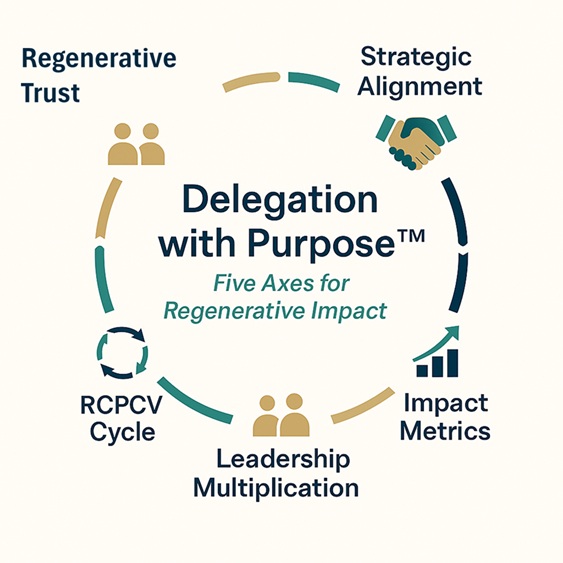
Delegation with Purpose™
A model that links delegation to five regenerative dimensions:
- RCPCV™ → Delegation starts with an effective decision
- Regenerative Trust → To delegate is to trust and enable
- Strategic Alignment → Delegate what truly matters, not just what’s left over
- Impact Metrics → Measure the value created, not just the execution
- Leadership Multiplication → Delegate as legacy, not as relief
See the image below for the visual representation of the model.
Practical Example
In a large-scale transformation project, a leader applied this model to identify and develop successors.
The results?
- +21% productivity
- +23% talent retention
- A team able to think, decide, and act with autonomy and purpose
How to apply it in practice
To operationalize regenerative delegation:
- Define the purpose and expected outcome
- Select the right person — with potential and alignment
- Communicate with clarity and context (RCPCV™)
“I trust you to lead this challenge. I’m here to support.”
- Define value indicators, not just tasks
- Follow up with listening and proportional freedom
Give the person room to choose how to reach the outcome.
The path can be theirs — the purpose belongs to all.
Practical tip: Set aside 15 minutes a week to validate, adjust, and celebrate.
That’s where leadership multiplies.
When we delegate with intention, we don’t just deliver results - we build legacy.
What are you delegating today that is truly preparing for tomorrow?
Missed the previous posts?
|
Posted on: September 10, 2025 10:41 AM
|
Permalink |
Comments (0)
| 
Not all clarity comes from logic.
Not all decisions are individual.
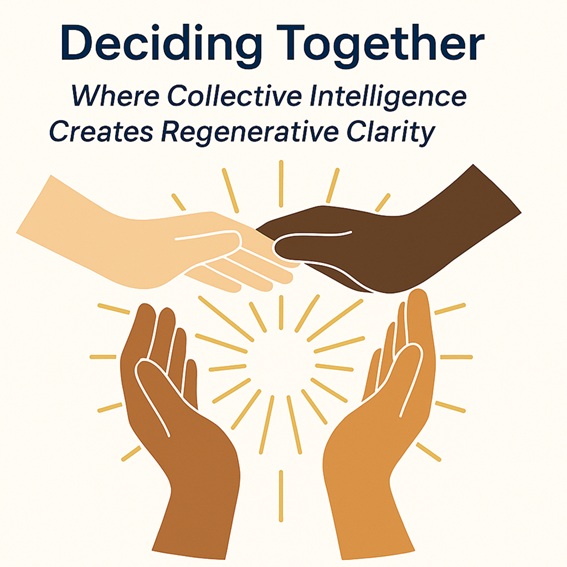
Often, what unlocks the right path is the courage to listen collectively -with empathy and presence.
This post was inspired by a recent comment in this series - one that captured the essence of regenerative decision-making with powerful clarity:
“Decisions are never neutral. They shape outcomes, legacies and lives.”
The RCPCV™ model offers an effective decision cycle.
But in regenerative leadership, effectiveness is not measured only by outcomes — it’s also measured by the quality of presence, intention, and shared understanding.
- Leaders are not the only ones carrying uncertainty.
- Teams also bring fears, perceptions, and aspirations.
- When we create space for both rational insights and emotional realities to surface, we access a depth of wisdom no single perspective can provide.
I’ve seen decisions shift direction simply because a previously silent voice was finally heard.
In that moment of listening, real clarity emerged — the kind that builds commitment and resilience.
Deciding together is more than deciding well.
It turns decision-making into an act of connection, trust, and legacy.
In your experience: how do you bring collective voice into critical decisions?
Did you miss the previous posts in this series?
|
Posted on: September 08, 2025 10:59 AM
|
Permalink |
Comments (2)
| 
Companion Post to Pillar 2 | RCPCV™ in Real Action
It’s not always possible to wait for certainty.
In fact, in complex or ambiguous contexts, waiting too long can block action.
That was precisely what struck me in a recent comment:
“Certainty is often an illusion.
Progress rarely emerges from waiting for perfect clarity.
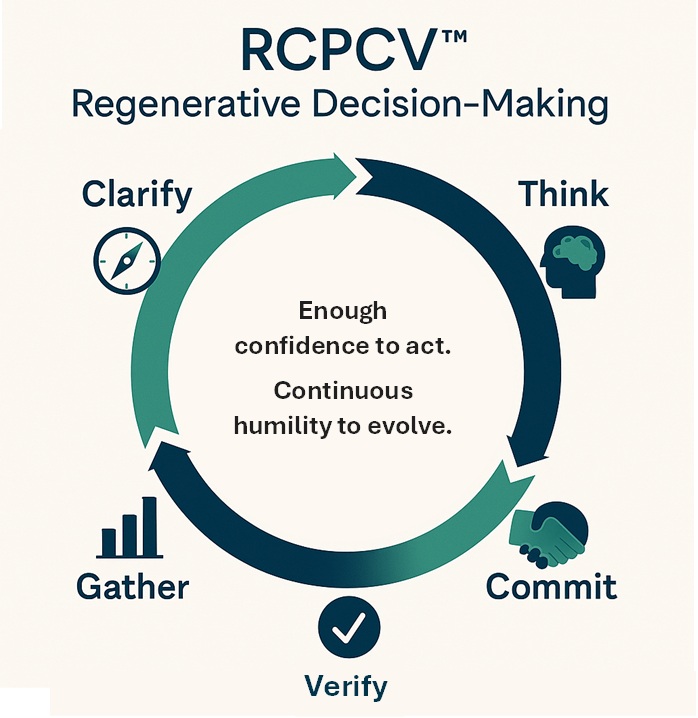
It comes from moving forward with enough confidence to take action - combined with the humility to adapt and learn as reality shifts.”
This sentence captures the essence of RCPCV™:
A regenerative decision cycle that combines sufficient clarity with continuous humility.
RCPCV™ as a living cycle:
Decision-making is not a single act — it is an iterative, relational and learning process.
Instead of chasing perfection, the RCPCV™ model helps leaders to:
- Gather the Facts — collect available data, signals, and context (acknowledging uncertainty)
- Consult the People — engage those affected to listen and surface perspectives
- Reflect and Analyze — make sense of complexity, test assumptions, and weigh options
- Communicate the Decision — state the decision with clarity and purpose, explain its rationale, and ensure shared understanding across those impacted or involved in its execution
- Verify and Follow Up — check outcomes, learn, and adapt
Regenerative leadership means moving forward with imperfect confidence
And having enough humility to learn from each decision.
It means turning every choice into a cultural act, not just a technical one.
It means understanding that progress doesn’t require certainty — it requires presence, purpose, and courage.
And what about you?
Where have you been hesitating — waiting for “total certainty”?
What helps you move forward, even in the midst of doubt?
Share in the comments.
This series keeps growing with your presence.
Missed the previous posts?
• Post 1 — Introduction to the 11 Keys of Regenerative Leadership
• Post 2 — Pillar 1 — Regenerative Trust
• Post 3 — Pillar 2: Effective Decision-Making (RCPCV™)
• Post 4 — Deciding with Emotional Clarity - When Listening Also Means Feeling
|
Posted on: September 05, 2025 11:58 AM
|
Permalink |
Comments (4)
| 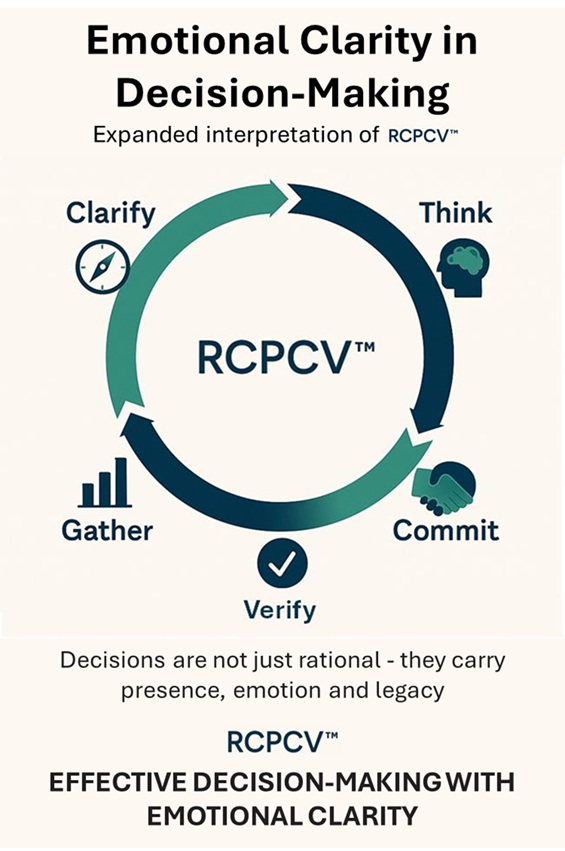
Subdimension of RCPCV™ | Expanded interpretation of Pillar 2
Not every decision is logical.
Not every act of listening is technical.
When I shared Pillar 2 – RCPCV™: Effective Decision-Making, I received a comment that made me pause and reflect:
“What is often overlooked is the emotional weight carried by decisions.
Leaders are not only analyzing data or exploring alternatives - they’re also facing uncertainty, external pressures and the expectations of those who depend on their choices.”
This expanded reading reveals something essential:
Deciding well is not just about thinking — it’s also about feeling.
That’s why I’m sharing today a transversal subdimension of the RCPCV™ model:
Emotional Presence in Decision-Making
In each of the five RCPCV™ phases, there is an emotional layer that can influence, support — or block — clarity:
|
Phase
|
Rational Clarity
|
Emotional Clarity
|
|
1. Gather
|
Listening to data, signals, voices
|
Perceiving emotions, tensions, unspoken dynamics
|
|
2. Clarify
|
Prioritizing what’s essential
|
Dealing with ambiguity, resistance, insecurity
|
|
3. Think
|
Exploring options, applying critical thinking
|
Regulating emotions, recognizing bias, embracing doubt
|
|
4. Communicate & Commite
|
Sharing with intention, engaging others
|
Speaking with courage, generating safety, active listening
|
|
5. Verify
|
Validating impact, adjusting direction
|
Receiving reactions, acknowledging emotional outcomes
|
Emotional clarity does not replace critical thinking.
But it humanizes the decision.
It strengthens trust.
It makes the process more real, relational, and regenerative.
Because decisions are not neutral.
They carry pressure, legacy, and emotion.
And for that reason, they deserve full presence — cognitive, ethical… and emotional.What about in your reality?
When do you feel the emotional weight of decision-making most strongly?
What helps you decide with more clarity — and with more presence?
Share in the comments.
This series stays alive because it is also collective.
Missed the previous posts in the series?
• Post 1 — Introduction to the 11 Keys of Regenerative Leadership
• Post 2 — Pillar 1 — Regenerative Trust
• Post 3 — Pillar 2: Effective Decision-Making (RCPCV™)
|
Posted on: September 03, 2025 09:25 AM
|
Permalink |
Comments (6)
|
"All progress is based upon a universal innate desire on the part of every organism to live beyond its income."
- Samuel Butler
|




