
Professionalism Under Pressure: Choosing Respect When Conflict Escalates
Categories:
Ethics as a competence,
Behavior,
courage honesty responsibility respect fairness,
code of ethics,
Ethical Leadership,
Decision-making,
Ethics Insight Team,
Ethics Bistro,
Business Ethics,
code of conduct,
Power Skills,
Decision-making,
Business Ethics,
Professionalization,
practitioner,
Ethical Dilemma,
respect,
Professional Responsibility,
Honesty,
Respect,
Responsibility,
Fairness,
Code of Ethics and Professional Conduct,
Human,
fairness,
communication,
honesty,
responsibility,
professonal conduct,
Conflict,
empathy,
EDMF,
Ethics in Communication,
Agile,
Decision Making,
Ethics,
Legal Project Management
Categories: Ethics as a competence, Behavior, courage honesty responsibility respect fairness, code of ethics, Ethical Leadership, Decision-making, Ethics Insight Team, Ethics Bistro, Business Ethics, code of conduct, Power Skills, Decision-making, Business Ethics, Professionalization, practitioner, Ethical Dilemma, respect, Professional Responsibility, Honesty, Respect, Responsibility, Fairness, Code of Ethics and Professional Conduct, Human, fairness, communication, honesty, responsibility, professonal conduct, Conflict, empathy, EDMF, Ethics in Communication, Agile, Decision Making, Ethics, Legal Project Management


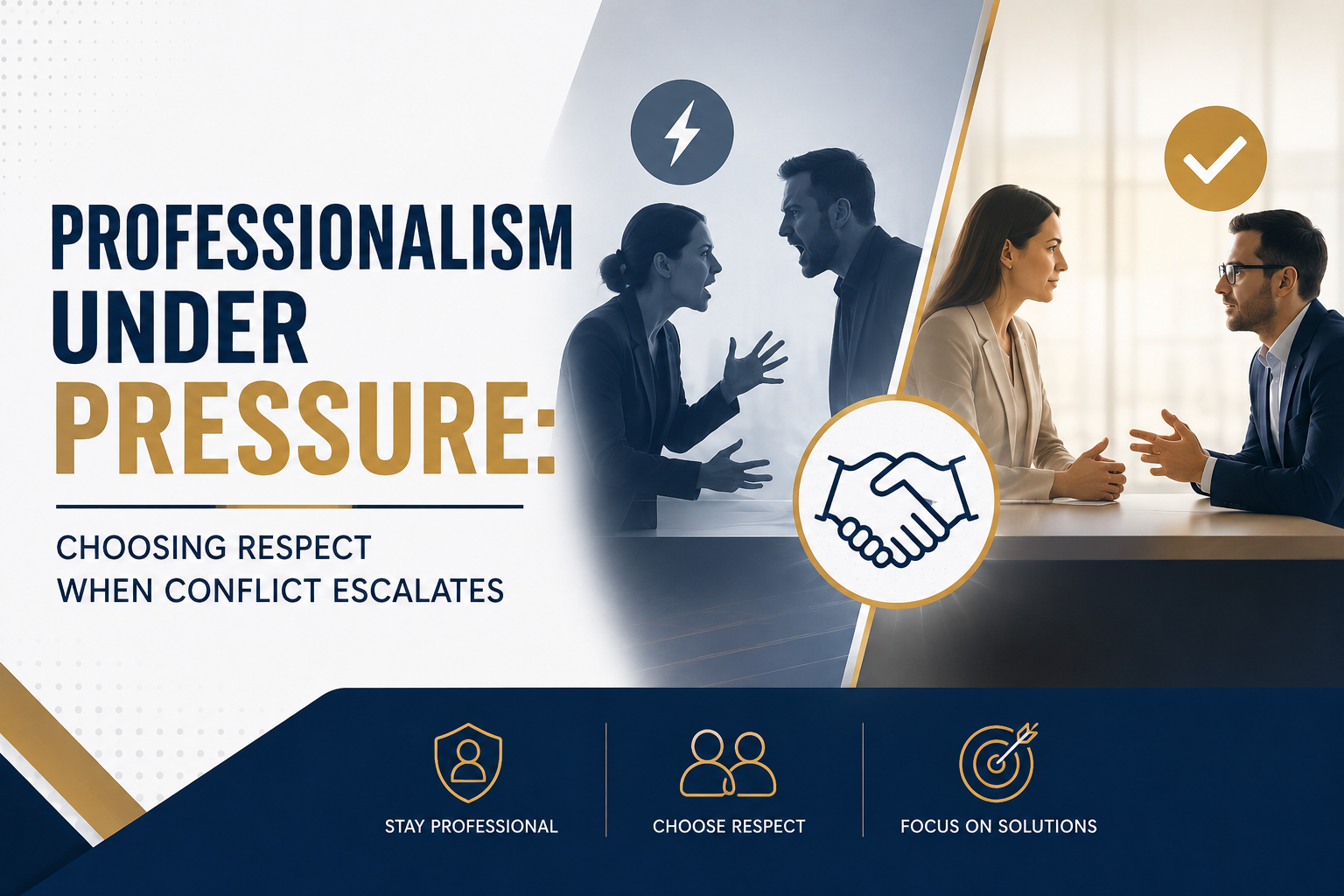 The message arrived at 11:47 p.m. It wasn't long. Just a few lines. But every sentence carried anger. A disagreement over a contract had been going on for weeks. There were questions about payment, responsibilities, and what each side believed had been promised. The conversation had already become uncomfortable. Now, the latest message crossed a different line. There were accusations. Personal insults. A veiled threat about “making sure people know” what had happened. And then came a remark about the other person's background. For a moment, the easiest response seemed obvious: Fight back. After all, they started it. But this is where professionalism is really tested not when everyone is calm and reasonable, but when someone gives us every reason to lose our composure. Conflict is part of professional life. Employment decisions can disappoint people. Contracts can fall apart. Candidates can feel unfairly treated. Managers can become frustrated. Clients and suppliers can disagree about commitments. Sometimes we are genuinely wronged. And sometimes we may be the ones who got something wrong. Either way, disagreement does not give us permission to abandon respect. The PMI Code of Ethics and Professional Conduct places Respect among its four core values. That sounds simple until we find ourselves staring at a message that feels deliberately insulting, threatening, or unfair. Respect is easy when it is reciprocated. It becomes meaningful when it isn't. The person receiving that late-night message eventually did something surprisingly difficult. They didn't respond. Not immediately. They saved the communication, stepped away from the computer, reviewed the facts, and went to bed. The next morning, they wrote back. The response acknowledged the disagreement. It clarified the contractual position. It proposed using the appropriate process to resolve the matter. There were no insults. No threats. No attempt to embarrass the other person. It wasn't weakness. It was professional self-control. Respect doesn't mean tolerating abuse. It doesn't mean remaining silent when discriminatory language is used. It doesn't mean accepting intimidation or allowing retaliation to go unchallenged. And it certainly doesn't mean avoiding difficult conversations. Sometimes respect means setting a boundary. Sometimes it means documenting what happened and involving Human Resources, legal counsel, procurement, recruitment leadership, or another appropriate authority. Sometimes it means saying: “I am willing to discuss the issue, but I will not continue the conversation in this manner.” That is respect too. Because respect isn't only about how we treat people when we agree with them. It is also about recognizing their dignity when we don't. And perhaps that's the uncomfortable part of professional ethics. We cannot control the tone of the message that arrives at 11:47 p.m. We cannot control whether someone tries to intimidate us, insults us, uses discriminatory language, or threatens retaliation. But we can control whether we respond in kind. We can choose to protect our boundaries without attacking someone else's dignity. We can choose accountability without humiliation. We can choose firmness without hostility. We can choose Respect. Not because the other person necessarily deserves our kindness in that moment, but because our professional values should not depend on someone else's behavior. The next time a difficult message lands in your inbox, ask yourself: When someone crosses the line with us, can we hold the line without crossing it ourselves? |
Ethics, and Professionalization of Project Management
Categories:
Professionalization,
Project,
PMI Program Management,
Regulatory,
Do the right thing,
Legilsation,
CIO,
CxO,
CEO,
CFO,
PMIAA,
Thought leadership,
Nexus,
Strategy,
Ethics
Categories: Professionalization, Project, PMI Program Management, Regulatory, Do the right thing, Legilsation, CIO, CxO, CEO, CFO, PMIAA, Thought leadership, Nexus, Strategy, Ethics
| The end of the year is a generous time when we all expect to give and receive, to go over the year’s achievements and to prepare for the New Year. For project managers, and for all professionals involved in management of projects, programs and portfolios, the month of December 2016 brought a historical and ground breaking development. The U.S. President Barack Obama signed bill S.1550, the Program Management Improvement and Accountability Act of 2015 (PMIAA). With this law in place, the CxO class (CEOs, CIOs and CFOs) in the agencies of the U.S. federal government are now directed to use and apply project and program standards in their work. This is a major shift in management practices, with direct social and economic impact, not only in the United States but also around the world. The Project Management Institute (PMI) has been a strong advocate for the professionalization and recognition of project and program management as an occupation. This cause has been pursued since the late 1960s, and the support now offered by the U.S. federal government is the crowning achievement of over five decades of professional advocacy. The message is clear not only for the professionals in private and public sector in the United States: Project management brings professionalism, accountability, efficiency and ultimately success to any management agenda. Our hope is that the impact and implications will serve as the basis for similar government initiatives around the world. Let’s examine this monumental achievement, which supports the process of professionalization of project and program management, and see how ethics comes into play. PMI and others have exerted intense and prolonged efforts to move toward the professionalization of project and program management. These efforts have combined creation of standards, education in project and program management, defining the right skill sets and suggesting, via thought leadership, ways to improve business practices. But these practices must go hand in hand with ethics and high integrity, as they are the nexus of business and strategy for any value-based professional activity. Sharing the responsibility for benefits in the field of professional project, program and portfolio management requires ethics, as well as “values” in the form of general ethical principles on how professionals should treat the people they work with and what sorts of actions are regarded as right or wrong. With the PMIAA, the CxO class is called upon to engage their businesses in ethical practices in a desire to do the right thing, and convince stakeholders of their capability of doing the right thing, thus achieving the right thing! The ability to “do the right thing” should be enabled internationally with the appropriate regulatory support and legislation being enacted by additional governments world-wide. We applaud the efforts and support of the United States federal government, and hope more jurisdictions will follow their lead. |


