Viewing Posts by Amany Nuseibeh
What’s Your Ethical Score?


| As I am writing this blog, Australia confronts the findings of an investigation that our special forces allegedly committed war crimes in Afghanistan, our New South Wales Premier is perceived to have broken her own health advice rules – not self-isolating after a Covid-19 Test; and our previous Federal Finance Minister; is jetting Europe at the expense of tax payers to lobby for an OECD role while at the same time, Australians overseas are waiting for repatriation flights to bring them home. Australia is facing national and global challenges[i]: Covid-19 pandemic, the future of work resulting from the introduction new technologies; AI, Robotics, Cyber Security; climate change and the impact on our environment with the diversity and uniqueness of our rare species be it in the bush or in the oceans. The fires followed by floods that we faced last year are still vivid in our memories as we are experiencing a heat wave this weekend with well above average temperatures. In addition to that our journey of reconciliation with Indigenous Australians has yet a long way to go. One cannot help but wonder: How ethical is Australia? And what difference would that make? And why would I care as a leader whose field is Project Management about how ethical the country is?
Image by Mary Pahlke from Pixabay[ii] Despite the challenges, and the current political climate, the findings of a recent study commissioned by the Ethics Centre in Australia and conducted by Deloitte Access Economics[i] draw a more positive picture, stating that:
So what are the benefits of a more ethical Australia, or any country for that matter, and where do we start? The study affirms that ethical infrastructure is to be built at the society and organisational level in both formal and informal ways;
So how ethical are we as leaders? What’s our ethical score? And, do we have any PMI Ethics tools that will enable us as individuals to be more aware of our ethical values and behaviors?
How about taking the Ethics Self-Assessment questionnaire as a self-reflection tool? How ethical is each and every one of us? What is the gap and how can we address it? Share your thoughts - What other activities do we undertake as individuals and professionals to build ethics and professional conduct awareness in our teams, organizations, and communities? __________________________ References: [i] https://ethics.org.au/wp-content/uploads/2018/05/The-Ethical-Advantage-4.pdf [ii] https://pixabay.com/illustrations/business-idea-style-concept-goals-1753098/
|
The Traps of a Conflict of Interest
Categories:
courage honesty responsibility respect fairness
Categories: courage honesty responsibility respect fairness
| Catherine lives in a small city, where everyone knows everyone, they are childhood friend, school mates, sports mates, colleagues who worked together at one point in time in their careers, neighbors, relatives, or connected with almost no degrees of separation! Simon, one of Catherine’s direct reports has been extremely busy; running an operational arm, establishing a new line of business, while at the same time driving the establishment of new service centers to expand the business and extend the reach to other geographical areas. Catherine could easily see that Simon needs support in establishing these new centers. The level of complexity and engagement with internal and external stakeholders require a dedicated Project Manager, rather than an Operational Manager whose time is split in between running the business and driving the establishment of new centers. Each center is a project on its own right that has a complex of level of consultation, communication, compliance, and a focus on driving a large number of interdependent activities and tasks. Catherine suggested that Simon creates the new project manager role and advertises it as soon as possible.
Photo by Gustavo Fring from Pexels The role drew a lot of interest, as it offers a sense of purpose - serving the community, a rich experience in driving a set of projects end to end, including engagement with a variety of stakeholders. The candidate list contained a large number of people, most of which would have crossed paths with both Catherine and Simon at one stage in their lives. However, the candidate’s name that raised red flags was Emma, a well-known close relative of Catherine. Catherine was planning to take part in the interview panel. However, seeing Emma’s name not only as an applicant, but also as a strong candidate, she opted out, demonstrating honesty and citing her conflict of interest. She asked Simon to formulate an interview panel. Simon, being aware of the situation, formulates the interview panel asking each to declare any conflicts of interest. The interviews proceed, with mixed feelings. Every member of the interview panel is aware of the relationship between Catherine and Emma. While each doesn’t have the conflict of interest that Catherine has, Catherine is ultimately their boss.
Image by Wokandapix from Pixabay The panel discussed openly how they do feel a little bit of pressure, as they understand the relationship between Catherine and Emma. They are also aware of how they are going to be judged by their recommendation. They also understand the need for the new role and how critical it is to select the most suitable candidate. Taking their responsibility seriously, they go about interviewing, giving each candidate their fair share of time, the opportunity to respond to interview questions as well as ask their own. Following a marathon of interviews, they pick the top two most suitable candidates to be lined up for a second interview. All agreed that while Emma was a good candidate, she is not one of the top two – as a matter of fact she comes third. The inner thoughts of the panel were:
The panel asks Simon as he conveys the shortlist to Catherine, to give Catherine the context and the reasoning that supports the top two shortlisted candidates. The panel members await the results of Simon’s conversation with Catherine. Their anxiety and worries turn into delight, they are relieved to hear that Catherine not only accepted their recommendation of the top two, but also was happy to offer the job to the top candidate waiving the need for second interview. How wonderful it is to see Catherine’s words reinforced by actions, distancing herself from the situation, declaring her conflict of interest and trusting her team’s judgement and recommendations! Reflecting on your own experience, if you were in Catherine’s shoes, what would you have done? |
.jpg)
Are we paying attention to the dormant ethical fires?
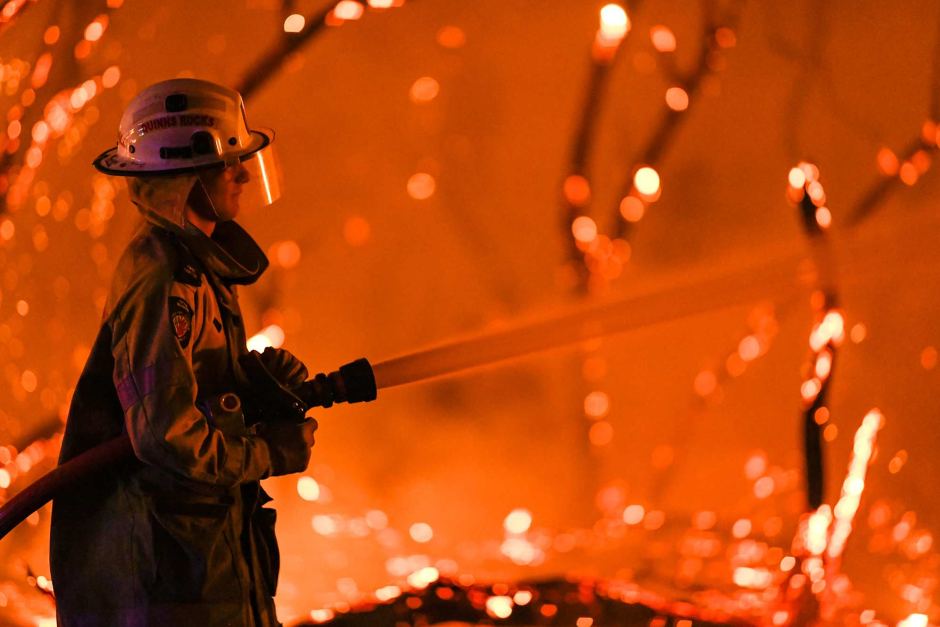
| As I am writing this blog, more than 80 fires are raging in New South Wales and Queensland - two states in Australia! Heavy smoke is blurring visibility at the airports, hiding Sydney Harbour Bridge and triggering fire alarms in buildings. It’s been quite a tough time, whether on Australian farmers or on those who live in or close to the bush! Lives were lost, homes, belongings and a large part of bush land along with native habitats and animals lost. And it’s more likely to get worst as the summer season has just started. It’s not the message anyone wants to hear nor the experience that anyone wants to go through. Especially during the festive season, we all want to rejoice, be happy, look optimistically as we turn the page on a year gone and open a new page on new beginnings. My mind starts drawing parallels between the bush fires and ethics in project management.
Photo from: https://www.abc.net.au/news/2019-12-12/gospers-mountain-fire/11790830 Our Ethics and Professional Conduct are at the core of what we do, whether it’s part of our daily behaviors, actions, sentiments or decisions. It is a critical component of our culture, as individuals, as teams and as organisations. Yet sometimes, we might dismiss an unethical behavior or be patient in tackling it until we see the “Fires”. Though we might be away from the fire, the smoke that engulfs a profession, an organisation or an industry, engulfs us all. This causes damage that we would never imagine to us as individuals, organizations and to project management as a profession. The fire of unethical conduct can rummage through smaller pockets of projects to large-scale industries thus causing impact that might no longer be controllable. Its impact could be detrimental to the survival and existence of an organisation – depending on its nature, it ranges from damaging the individual and organisation brand and reputation, destroying trust to putting its sustainability let alone its existence at risk. Similarly, Sydney was engulfed with hazardous smoke, you could smell it while inside the office, you could see it as it covers all the beautiful harbour city, its beaches and distinctive Sydney Harbour Bridge as well as its buildings. One cannot help but wonder - are we preserving the heritage that we are enjoying? The history of the land and its people, the environment and the resources that are entrusted to us? This is a hard project management lesson that include ethics. Are we listening to all our stakeholders? Are we really listening and respecting their advice by honoring their experiences and wisdom? Are we responsible enough to take actions in our projects that will mitigate and eliminate the ethical fires, ensuring awareness of our Code of Ethics and Professional Conduct, and providing the tools to our team members to equip them sufficiently to deal with dormant fires - be prepared for the fires once they come their way, or even better recognize what to and when to do it well ahead of the fire? Let us all refresh our memories as we embrace a new year wearing ethics as an armor that will protect us from the fires to come, putting them at bay, getting us to manage our projects ethically, sustainably and successfully. It’s our responsibility to ensure that our team members are aware and well equipped well ahead of the fires. Re-read and distribute our PMI Code of Ethics and Professional Conduct, have a look at the PMI Ethical Decision Framework and use the available Ethics toolkit – run a workshop, go through all resources on pmi.org/ethics. There’s a plethora of ethics related discussions, webinars and articles on projectmanagement.com. Let me take this opportunity to wish you all a Merry Christmas, a Happy Festive Season and a Prosperous, Peaceful and Ethical New Year.
Photo from https://pixabay.com/photos/poinsettia-adventsstern-4648025/ |

Can empathy turn the tide in a project?
Categories:
respect,
fairness,
honesty,
empathy,
professional conduct,
Leadership,
Ethics,
Organizational Culture
Categories: respect, fairness, honesty, empathy, professional conduct, Leadership, Ethics, Organizational Culture
| Note – Readers might find this story distressing as it involves a team member passing away. Please use your own judgement. Helen has heard it a few times, her counterpart from the supplier’s side wanted to attend to a team member related emergency. Maya, the new team member has arrived just last week to take on a change management piece of work for a large and complex program. Maya hasn’t been on site but once. When Maya arrived to meet her new team, she excused herself as soon as she could – not feeling well and suspecting that she had food poisoning. Maya joined a couple of conference calls during the week. However, she has not joined the call she scheduled just before the weekend. Maya’s colleagues have been trying to get in touch with her via phone and email with no response from Maya’s side. Knowing that she wasn’t feeling well, they thought initially that she might need to rest. As a new week started and another day went by, with Maya not responding to emails, text messages or phone calls, they thought they would ask the hotel staff to check on her. The staff advised that they have not entered the room for a few days respecting the “Do not disturb” sign that was put up. Fearing the worst, the team urged the hotel staff to get into the room to check on her. Unfortunately, fears translated into reality as she was found in her room resting peacefully but with no sign of life! What could have happened if the team checked on Maya before? What would have happened if any of her team members accompanied her or insisted to pay her a visit or take her to the doctor? Everyone in the team was in mere shock, the emotions ranged from guilt, blame, sadness, frustration and anger. The blow was more than any team member could handle on their own. This was one of so many defining moments for Jack, who himself has moved countries to run the IT department and drive a large and complex transformation, modernizing the organization’s customers journey and building the back-bone for further incremental transformations to follow. The program has partnered with one of the off-shore IT suppliers to accompany them on the transformation journey, providing experienced resources both onshore and off-shore, flying people in and out of the country. Moving from his home country, Jack embraced his new-found home, the diversity of his teams, the variety of cultures, values, attitudes and behaviors that they all bring. Jack has been tested numerous times while driving this initiative. The organization’s policies and priorities have safety and well-being at the top. This is well advertised and communicated, with functions, activities and awareness campaigns running in every corner. However, this specific program has faced several safety and well-being challenges. The program progress was slower than anticipated, running behind schedule, there was a definite need for the team to work harder in order to catch-up. Working late and during weekends have become the norm rather than the exception. The team members have been trying their best to ensure that all of this happens while still adhering to the organisation’s policies and practices ensuring safety and well-being, especially those who were new to the country. Eighteen months since Maya’s incident, things have changed. Jack managed not only to deliver the program successfully, but also to have a happy and safe team, satisfied stakeholders, executives and the organisation’s Board. Jack managed to turn the environment from a grim, sad one that had a negative impact on the team’s health and well-being to one that is more compassionate and understanding, translating policies into actions. Furthermore, Jack was now looking forward to the new executive role he’s been offered in recognition of his outstanding leadership. So how did Jack manage to turn this negative situation into a positive one, bring the team together, deliver and be promoted? Simply put “Empathy and Ethics”.
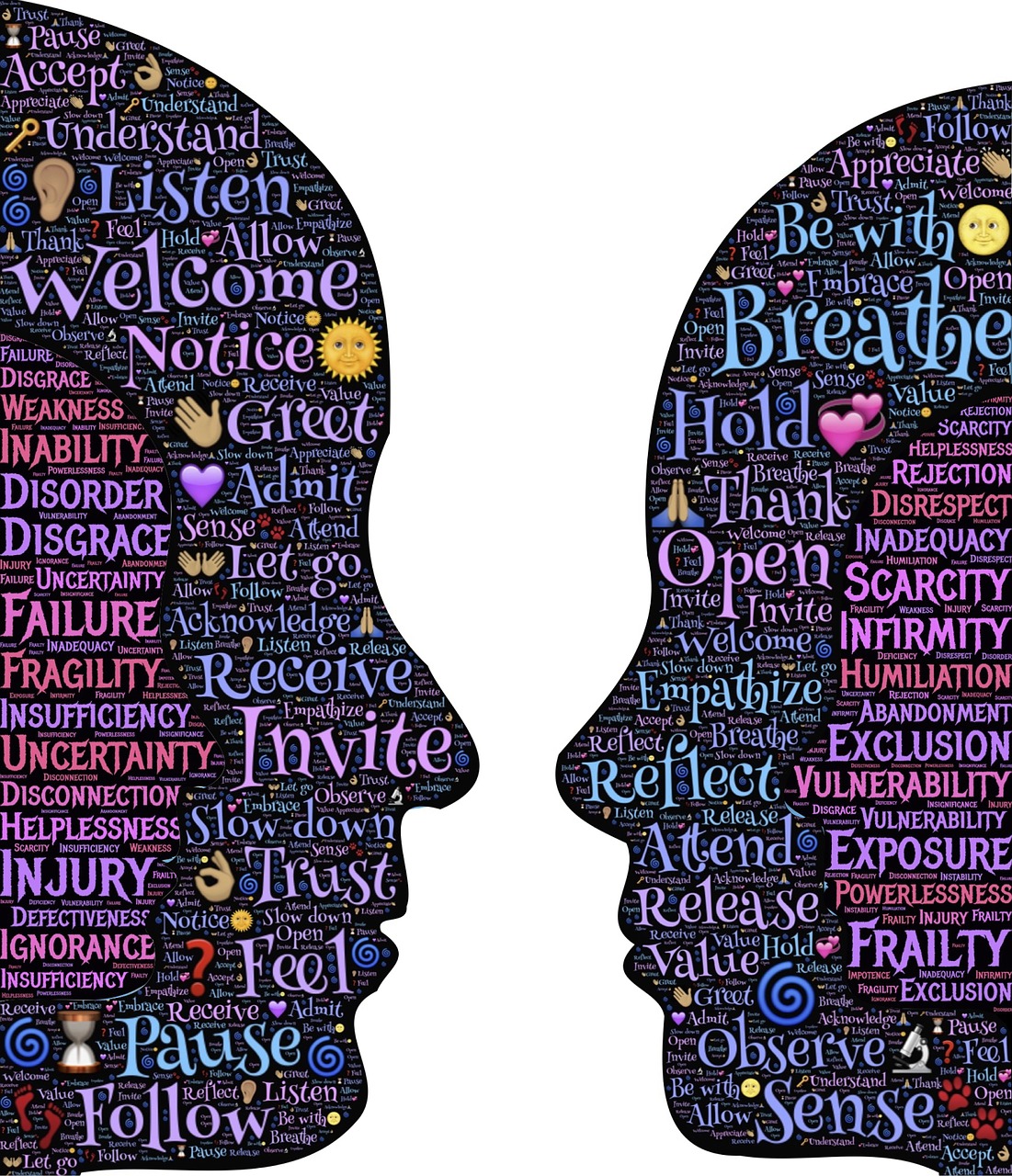
Empathy as defined by Pressley, Delores[i]”is the ability to experience and relate to the thoughts, emotions or experience of others. Empathy is more than simple sympathy, which is being able to understand and support others with compassion or sensitivity. Simply put, empathy is the ability to step into someone else’s shoes, be aware of their feelings and understand their needs”. Empathy is the oxygen breathing life into the relationship between individual and other, a metaphor introduced by Heinz Kohut (1977)[ii] Applying the questions posed by Pressley, Deloresion The Importance of Empathy in the Workplace might help us understand how Jack’s empathy played a critical role in turning the tide. Jack understood the needs of all team members Jack was well-aware of the conflicting priorities on the program, the layers of complexities within the cultures, especially co-locating client and supplier’s teams to work under one roof, bringing people from all corners of the world, while at the same time embedding new practices and policies. The supplier has won this gig in a very competitive bid, that pushed margins down. The supplier was pushing hard to meet their obligations under the contract, delivering according to schedules and timelines that have been committed as part of the bid. However, the toll that this took on team members was too dear a price to pay no matter which side they worked for. While Jack was committed to delivery, his priorities were surely team safety and well-being. He realized that there are a number of factors at play in this situation, some he would have to tackle immediately and others he would have to put in place at a later stage. His humanistic side has come to the forefront, gathering the team, going through the detailed steps of the situation, analyzing what could have been done better and what can be done in the future. His empathy; putting himself into the supplier’s shoes, understanding the context without judgement or fear, taking steps to ensure that no other staff would have to go through any similar situation. He assembled the team members who were most close to Maya, gathering data and collecting information about what has been going on with her as a person, tracing her steps from the time she landed in the country, who contacted her and which capacity, drawing the timeline and the interactions. While collecting the information, Jack demonstrated his appreciation for Maya and for every team member who got in touch with her, as well as the approach the supplier is undertaking to catch-up on delays. His empathy combined with his high ethical standards, made each and every team member share detailed information about their communications, coming to an agreement on the gaps and what to needs to be in place to ensure that this situation would not be repeated in future. In understanding each team member’s experience in this instant, Jack has been developing a close relationship with the team. What traits/behaviors did Jack have that would qualify his as empathetic? Empathy requires three things [i]: listening, openness and understanding. Jack realized that delivering a successful transformation required that all team members, no matter which camp they belong to, are to feel safe and be well - both physically and mentally. Hence, his understanding of the team’s feelings and emotions were critical to the next steps that he had to undertake. Empathy drove Jack to have a meeting with the executives and organization’s Board to negotiate more acceptable timelines taking into consideration the current situation and the progress rate to date. At the same time, he worked with the team to re-visit the schedule and suggest a couple of alternatives for delivery. This bad news has already claimed the previous head! Yet, Jack was not deterred. He believed firmly that there was a fine balance that needed to be maintained between delivery and well-being. He cared about his team, every single individual and the incidents that they have been through to date, while also caring about successful delivery of this very critical strategic initiative. What role does empathy play in the workplace? Why does it matter? Jack’s understanding of the team members was critical to understanding the challenges that he would face. He made the team feel safe by not resorting to blame, but by listening openly and without any judgement. This openness and understanding made the next steps much easier and as Jack had a clearer picture of the challenges he and the team would face. As each team member felt safe sharing their experiences, Jack had a better understanding of the changes that were needed. He identified areas for improvement such as formulating a “body system” for each employee, re-negotiating a more acceptable timeline - assisting struggling teams in catching-up while maintaining their well-being. So why isn’t everyone like Jack - more empathetic at work? Jack was one of the most humanistic, empathetic and ethical bosses the team and organization could ever have. With empathy and ethics, he managed to get the team through these heart-breaking times. Empathy was not easy and took lot of hard work on Jack’s part, and this helped him put his head and shoulders above other leaders within the organization, where not only he was recognized for his outstanding leadership by his teams, his colleagues, the organization and the Board, but also his professional community. Would you consider yourself to be empathetic? Would you share your empathy story? or how about sharing a “lack of empathy” story along with its impact? References [i]https://www.psychologytoday.com/us/blog/empathy-and-relationships/201701/the-connection-between-empathy-toward-others-and-ethics [ii]http://www.sbnonline.com/article/the-importance-of-empathy-in-the-workplace/
|