
Viewing Posts by Mohamed Hassan

Digital Transformation & Ethical Decisions
Categories:
Ethics
Categories: Ethics


|
Through this post, I want to pick your brain regarding some of the less rosy consequences of rapid DX. According to World Economic Forum (WEF), current estimates of global job losses due to digitalization range from 2 million to 2 billion by 2030. Also, for every 1% increase in global GDP, CO2e emissions have risen by approximately 0.5% and resource intensity by 0.4%. The trend will contribute to a global gap of 8 billion tonnes between the supply and demand of natural resources by 2030, translating to $4.5 trillion of lost economic growth by 2030. According to the Edelman Trust Barometer, trust in all technology-based sectors is declining with concerns over data privacy and security being key factors. Broader ethical questions about the way organizations use digital technology also threaten to erode trust in DX. Few organizations and their leaders develop an overall approach to the ethical impacts of technology use—at least not at the start of a digital transformation. In a recent study, only 35 percent of respondents said their organization’s leaders spend enough time thinking about and communicating the impact of digital initiatives on society.
In order to be truly savvy in the age of advanced, connected, and autonomous technologies, leaders must think beyond designing and implementing technologically driven capabilities. They should consider how to do so responsibly from the start. In order to be ethically driven from the start, business leaders need to be proactive and stay ahead of potential ethical challenges and consider designing new technology-driven products and services with ethical principles in mind from the start. This can help organizations anticipate and avoid problems, rather than having to react after a situation arises. PMI’s Code of Ethics and Professional Conduct provides guidelines which can help in addressing many ethical concerns related to fast paced DX. Responsibility entails that organizations own the decisions they make or fail to make, the actions they take or fail to take, and the resulting consequences. In exhibiting Respect, an organization must show high regard for themselves, others, and the resources entrusted to their management. Resources may include people, money, reputation, the safety of others, and natural or environmental resources. Fairness requires that humans and machines trained by them take decisions and act impartially and objectively. Algorithms running the technologies must be free from competing self-interest, prejudice, and favoritism. Honesty requires that facts are interpreted in a manner which is truthful and not misleading. I strongly believe that DX is a great trend, and it may not be an option. To leverage it properly, decision makers must keep ethical values as the base of their decisions to guarantee sustainable success. Please share your perspective and experience with the rest of us so we can also learn from your insights.
|
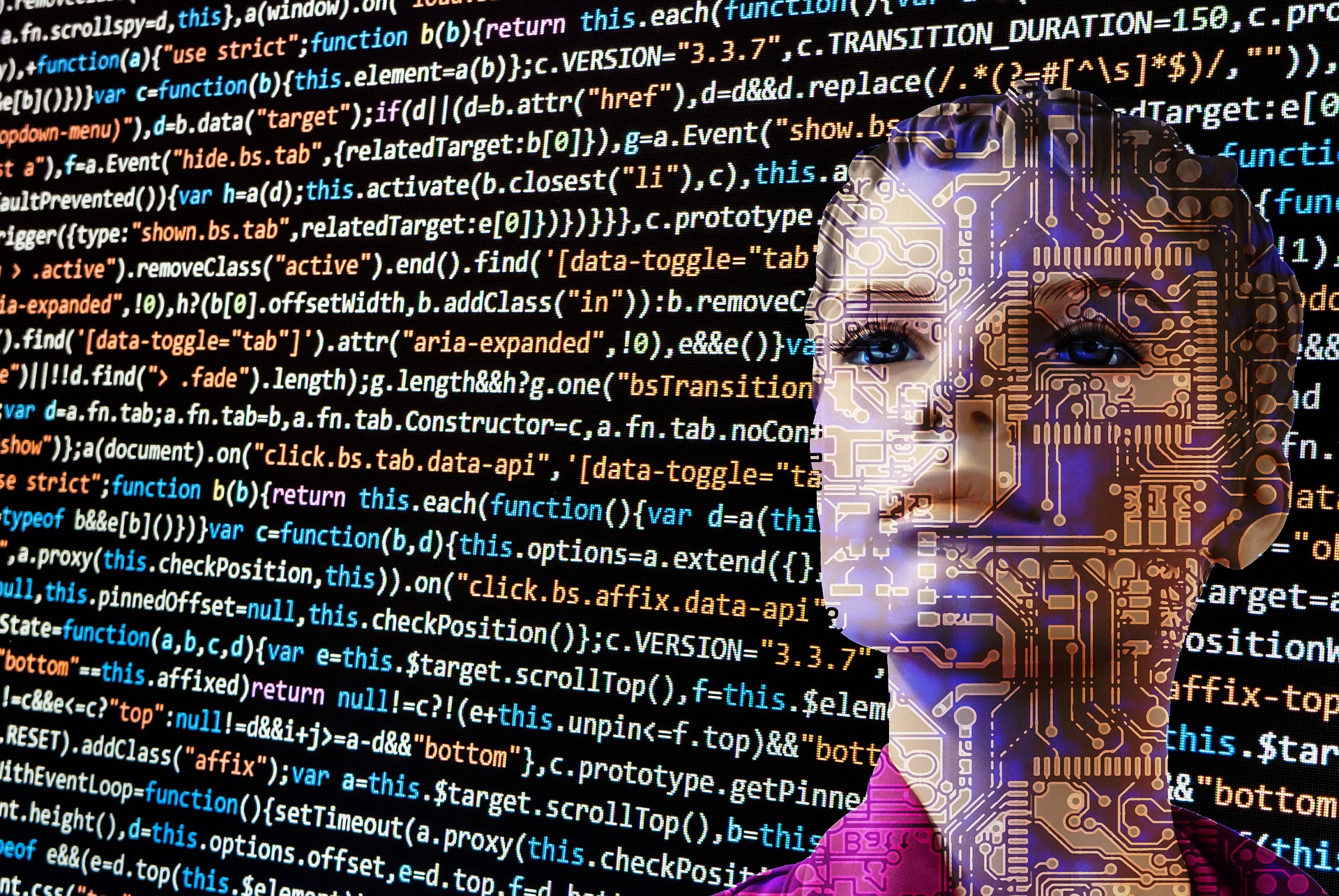 Digital Transformation (DX) provides the critical response needed by organizations to meet rising customer expectations, deliver scalable, individualized experiences, and respond to market forces with ever increasing levels of business agility. Technologies like cloud computing, robotics, AI and big data combined with optimized operating models enable organizations to drive innovation and respond to internal and external events quicker and cheaper than ever before. All of these seem to be steps in the right direction and while they can definitely get characterized as being so, one cannot overlook the challenges posed by DX. Ethical concerns like individual privacy rights, potential job losses, implicit consent, digital trust, unanticipated consequences of innovations and decision making by machines must be carefully evaluated and addressed.
Are you treating yourself ethically?
Categories:
Ethics
Categories: Ethics
|
When I ask them how they can implement them, they said a lot of things makes me feel they are angels working in the heaven (which is also nice). Maybe they are, I don’t judge. The problem is they don’t mention anything about how they apply these core values on themselves. No one said “I first respect myself and my passion, then respect my family, then respect my society, and then respect everyone at work. No one said I'm fair with myself first. I'm honest with myself first. I'm fair with myself firstand I am responsible of myself. I believe that before we look at the world around us and apply those good values at work, we need first to treat ourselves ethically. First you need apply this to yourself, before you can it elsewhere. The ethics assessment always focus on your actions in different situations with others not ourselves. To make it easy, did you ask yourself these questions? Am I fair with myself? Do I get a fair price for my services? Am I responsible of my own happiness? What about my peace of mind? What about decisions that I take or not take to make myself happy and healthy? Do I respect myself and build a good brand for myself? Do I influence everyone to give me the respect I deserve? Am I honest with myself about what I capable to do or not to do? You need to sit with yourself and prepare a list of questions. After that, you need to make a cup of coffee and sit in quite place to start your journey inside yourself Possibly you will discover that the world outside yourself makes it difficult to treat yourself ethically. The question here is, if you don’t treat yourself ethically, how can you do this with others? I'm not psychologist, but I'm a professional like all of you. I found that in order to make everyone happy, I forget to treat myself ethically. I was working on more than I could do, or accept attacks on my personal respect, or not being responsible enough on myself. I decided to change and be ethical with myself first before I do this with others. I believe that if I can't do this with myself I can't offer these values to others. If work and society, don’t allow you to implement the values that you believe in, how can they expect you to give back to them? Start your self-discovery journey today, not tomorrow. After you fix the weakness go to the world stronger, bolder and more ethically. This is what I believe. The discussion is now about treating yourself first, and then others”
|
 PMI has an excellent code of Ethics and Professional conduct, with four core values. If you don't remember them, don't feel guilty. In my sessions I asked the participants if they remember them. I found less than 10% remember them all, half of them remember two, and all just remember one. The good thing is if you ask them to guess, they often come with more than 10 values with one or two of them are in the core values. Anyway they are “Respect, Honesty, Responsibly and Fairness”.
Why sometimes, good people are found lying?
| Why sometimes, good people are found lying? It is a very pertinent question because of the general assumption that liars are not good people, and that everyone must tell the truth at all times. This is what we learned during our school daysor even earlier and continue to believe till today. Despite this fairly universal belief, we sometimes find good people lying and find ourselves thinking that it might be fine to do so. Good people sometimes tell lies to people they care about. In many cultures, we are told about the selfless mother who tells her kids she is not hungry so the children get a higher share of food. Also, we often read about leaders telling their staff they are doing a great job to keep them motivated despite knowing well that the work done is far from being great. We have all learned about entrepreneurs who are warding off bankruptcy but keep telling their buyers that business is good and can get even better in days or weeks to come. We salute the veterans who were captured and tortured to divulge positions of their platoon mates but misled the captors. Many of us “fake it till we make it” often lying to our own-selves to improve our prospects of success. So the mother who is in fact hungry but sacrifices her own needs for her children, leaders who are trying to keep their staff motivated to keep trying, entrepreneurs who are taking great personal risks to generate money just enough to pay salaries, the officer relying on deception to protect his soldiers, people who keep themselves energized through fantasies of being on the right track – actually telling lies? If these people are indeedtelling lies, how do we treat such false assertions? Is this type oflying good or bad? It seems there are lies which are told for personal gains and lies which are told to protect others from harm. I have always advocated the universal belief that lying is unethical under any circumstances, but I also wonder why well respected people are found telling lies. Your thoughts on this seemingly controversial question are welcome. |
Professional Certificates and The Ethical Aspects
| As Project, Program and Portfolio Managers we are looking for ways to increase and validate our personal value to the organizations and clients we serve. One way to achieve this is by acquiring additional professional certifications or credentials that match the milestones in our career with the experience gained, competencies acquired and accomplishments achieved. Earning professional designations not only strengthens the profession, it demonstrates initiative, is leading by example to others such as our stakeholders, team members and colleagues the importance of professional development for our professional credibility.
This makes the stakes high for the hard work, demonstrated competencies and commitment to achieve these credentials. Obviously, not all of the institutions regulating and offering these professional designations adhere to the same standards. The requirements, credibility and proven reputation of the varying organizations who award these impact the value of the credential, The awarding organization and the practitioner both bear the responsibility for its value In this article, I will address the ethical role of the organizations that grant professional certificates, the role of the applicants for such certificate, and what is expected from them before and after obtaining it, ethically.
First, let's start by the role of the organizations that grant the certificates and among these organizations, there are some that have global acceptance and a reputation gained only by following a professional code of conduct and technical rules and also because of the mutual trust between them and the professional community. We find that successful organizations are mainly based on the four ethical values we have in the PMI's Code of Ethics and Professional Conduct, which are honesty, responsibility, respect and fairness.
These organizations have entrusted themselves with the responsibility of graduating graduates of high efficiency through the issuance of valuable knowledge guides in which a great number of volunteers have participate , working through a specific methodology so that they would be able to issue a certificate of great value in the labor market. These organizations have extended their full respect for the community with honesty, responsibility and fairness. They also have required their members and those who wish to obtain such professional certificates to agree to and adhere to these values of a Code of Ethics and Professional Conduct. .
Therefore, and generally, they have gained the acceptance of the profession, they are serving. At the same time, there were other organizations that did not adhere nor obligated their members to follow such ethical values, which led to the collapse of these professional societies and therefore did not become credible even if their scientific content was good or acceptable.
Second, as for the applicants to obtain such professional certificates, their lack of commitment to honesty in providing their papers and experience for the certificate is a violation. There are several applicants who may have provided false information to obtain the approval of such organizations to enter the test. if they succeeded in deceiving these organizations for some time, they will be in the eyes of their colleagues, with no credibility because their colleagues know how they were able to deceive these organizations to get access to the test. However, It is difficult to pass the tests if they do not already have the experience required for such field. So, there will be another station to evaluate their ability to pass the test. Therefore, the applicant must choose the certificate which truly commensurate with his experience and abilities.
Thirdly, we may find the holders of the professional certificate, although they have obtained the certificate and have totally agreed to follow such ethical values associated with it. While we find that the clear majority apply these rules, but there are some who may not follow these rules and mislead the community by conducting such immoral acts. We conclude that the social culture may affect the certificate holders to make decisions that may conflict with the ethical values that they already have agreed to, and this leads to the loss of the profession which they work in. and then it raises some questions to the professional organization that gave them this certificate.
Therefore, we conclude that adherence to rules and ethical values in the field of professional certificates is the main basis that leads to the success of organizations and the individual and society in general.
|
Let me ask you a question: Is this ethical or legal?
Categories:
Ethical Dilemma
Categories: Ethical Dilemma
| Ethical behavior is not always legal and legal standards are not always ethical. This means that sometimes you have to make a tough decision. Are you facing a situation in which you must choose between legal action and ethical action? There is a difference between what is considered right according to legal standards and ethical standards. Legal standards are mandated by governmental laws. All the statutes and laws that attorneys point to are legal standards. Ethical standards, on the other hand, don't necessarily have a legal basis. They are based on human principles of right and wrong. In one of my classes, a doctor said, “I’m working in a government hospital and we have a rule here that prevents me from giving cancer medicine to expats. I can only give it to the citizens. I believe this is not an ethical law, so whenever a citizen patient comes to me, I give him/her double the medicine’s quantity and ask the patient to give half of them to one who is not able to get it for free under the law.” When she said that, the class divided into two camps. One camp said that you must follow the law because you are working within a system and it is not ethical to make these choices on your own. Others said that the choice you made is correct because you are a doctor and you have to find ways to save people’s lives. (If you are with us in the same class, which camp you will belong to? And why?) This is where the ethical dilemmas come from—when we don’t know whether what we did is right or wrong. Cultural norms play a big role in defining what is ethical and what is not. That is why we need to consider the case itself and cultural norms before we judge whether it is ethical. In this case, just imagine that a journalist found out about this case and made it the headline of the most famous newspaper. Would this person feel proud of what he/she did? If he or she is fine with this, that means there is some level of acceptance from society that what he or she did is ethical. Regardless, it may not be legal and it can cause trouble for the person. If we search around us, we can find many people who follow their ethical principles secretly while showing respect to the law in public. This helps them to avoid trouble when ethics and legality are in conflict. Share with us some of the ethical dilemmas that you see around you in the project management field and how people deal with them. |


