
Professionalism Under Pressure: Choosing Respect When Conflict Escalates
Categories:
Ethics as a competence,
Behavior,
courage honesty responsibility respect fairness,
code of ethics,
Ethical Leadership,
Decision-making,
Ethics Insight Team,
Ethics Bistro,
Business Ethics,
code of conduct,
Power Skills,
Decision-making,
Business Ethics,
Professionalization,
practitioner,
Ethical Dilemma,
respect,
Professional Responsibility,
Honesty,
Respect,
Responsibility,
Fairness,
Code of Ethics and Professional Conduct,
Human,
fairness,
communication,
honesty,
responsibility,
professonal conduct,
Conflict,
empathy,
EDMF,
Ethics in Communication,
Agile,
Decision Making,
Ethics,
Legal Project Management
Categories: Ethics as a competence, Behavior, courage honesty responsibility respect fairness, code of ethics, Ethical Leadership, Decision-making, Ethics Insight Team, Ethics Bistro, Business Ethics, code of conduct, Power Skills, Decision-making, Business Ethics, Professionalization, practitioner, Ethical Dilemma, respect, Professional Responsibility, Honesty, Respect, Responsibility, Fairness, Code of Ethics and Professional Conduct, Human, fairness, communication, honesty, responsibility, professonal conduct, Conflict, empathy, EDMF, Ethics in Communication, Agile, Decision Making, Ethics, Legal Project Management


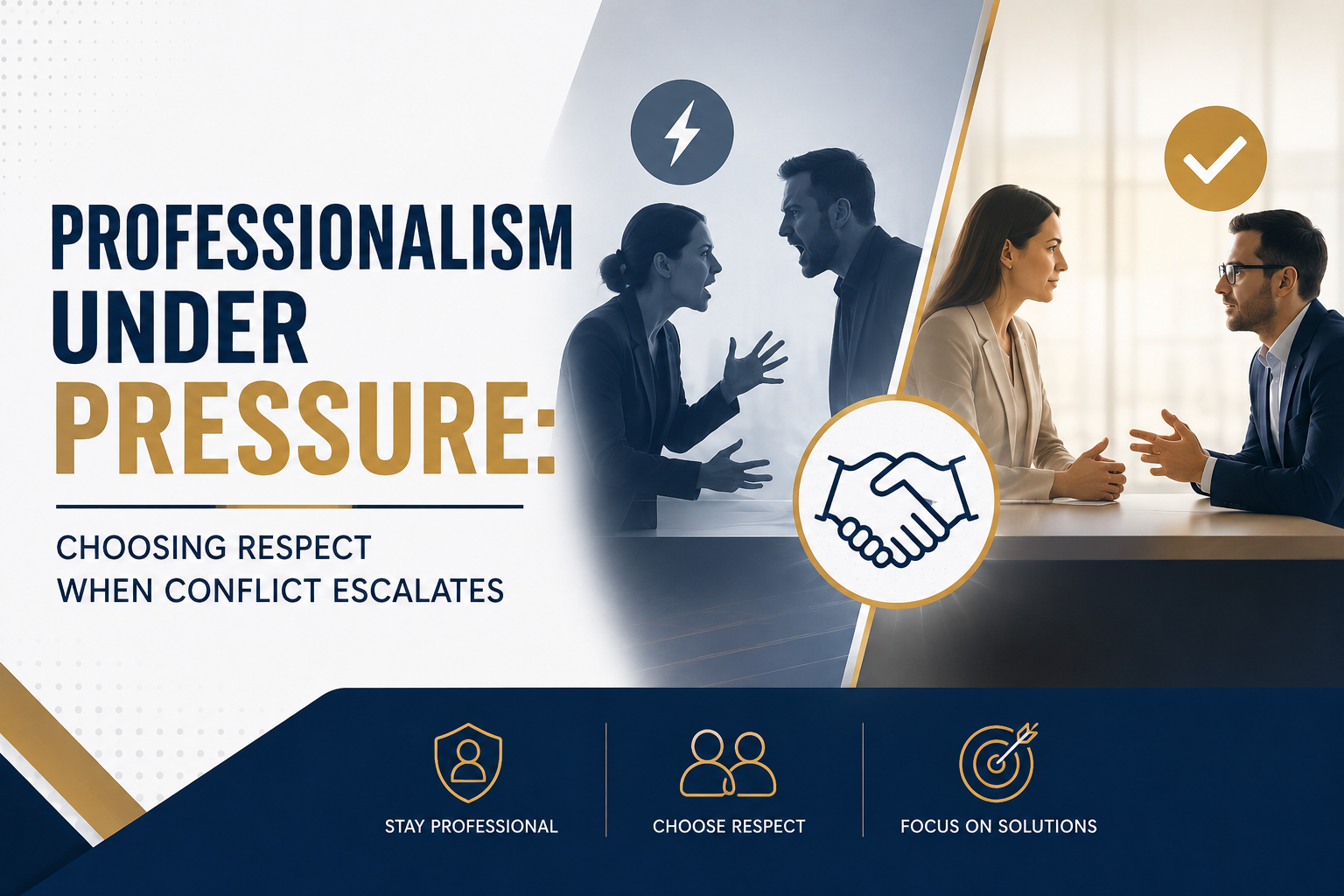 The message arrived at 11:47 p.m. It wasn't long. Just a few lines. But every sentence carried anger. A disagreement over a contract had been going on for weeks. There were questions about payment, responsibilities, and what each side believed had been promised. The conversation had already become uncomfortable. Now, the latest message crossed a different line. There were accusations. Personal insults. A veiled threat about “making sure people know” what had happened. And then came a remark about the other person's background. For a moment, the easiest response seemed obvious: Fight back. After all, they started it. But this is where professionalism is really tested not when everyone is calm and reasonable, but when someone gives us every reason to lose our composure. Conflict is part of professional life. Employment decisions can disappoint people. Contracts can fall apart. Candidates can feel unfairly treated. Managers can become frustrated. Clients and suppliers can disagree about commitments. Sometimes we are genuinely wronged. And sometimes we may be the ones who got something wrong. Either way, disagreement does not give us permission to abandon respect. The PMI Code of Ethics and Professional Conduct places Respect among its four core values. That sounds simple until we find ourselves staring at a message that feels deliberately insulting, threatening, or unfair. Respect is easy when it is reciprocated. It becomes meaningful when it isn't. The person receiving that late-night message eventually did something surprisingly difficult. They didn't respond. Not immediately. They saved the communication, stepped away from the computer, reviewed the facts, and went to bed. The next morning, they wrote back. The response acknowledged the disagreement. It clarified the contractual position. It proposed using the appropriate process to resolve the matter. There were no insults. No threats. No attempt to embarrass the other person. It wasn't weakness. It was professional self-control. Respect doesn't mean tolerating abuse. It doesn't mean remaining silent when discriminatory language is used. It doesn't mean accepting intimidation or allowing retaliation to go unchallenged. And it certainly doesn't mean avoiding difficult conversations. Sometimes respect means setting a boundary. Sometimes it means documenting what happened and involving Human Resources, legal counsel, procurement, recruitment leadership, or another appropriate authority. Sometimes it means saying: “I am willing to discuss the issue, but I will not continue the conversation in this manner.” That is respect too. Because respect isn't only about how we treat people when we agree with them. It is also about recognizing their dignity when we don't. And perhaps that's the uncomfortable part of professional ethics. We cannot control the tone of the message that arrives at 11:47 p.m. We cannot control whether someone tries to intimidate us, insults us, uses discriminatory language, or threatens retaliation. But we can control whether we respond in kind. We can choose to protect our boundaries without attacking someone else's dignity. We can choose accountability without humiliation. We can choose firmness without hostility. We can choose Respect. Not because the other person necessarily deserves our kindness in that moment, but because our professional values should not depend on someone else's behavior. The next time a difficult message lands in your inbox, ask yourself: When someone crosses the line with us, can we hold the line without crossing it ourselves? |
The Ethical Compass of Project Management: Doing What is Right Beyond What is Legal
| "Legality draws the line we must not cross; ethics raises the bar we strive to reach."
In project management, success hinges on timelines, budgets, and deliverables. Yet, beneath these metrics lies a deeper principle: ethics. As practitioners, we are trained not just to follow the law but to do "what is right." This distinction—between legality and morality—shapes our decisions, builds trust, and defines our legacy. Legal vs. Ethical Standards Legality sets the baseline: contracts met, regulations followed. It is the minimum standard. Ethics, however, pushes us further. A project might be legally sound yet ethically flawed—say, exploiting a contract loophole to cut safety costs. The law might permit it, but "what is right" demands we reject it. This mindset is not optional; it is ingrained through certifications like PMI’s Code of Ethics and Professional Conduct (CoEPC), which emphasizes Responsibility, Respect, Fairness and Honesty. The Ethical Foundation Our training instils a moral compass. It is the instinct to challenge a decision that harms stakeholders or the courage to prioritize sustainability over profit, even when laws do not require it. This is not about rule-following—it is about anticipating consequences and acting with integrity. A project manager who opts for greener practices beyond legal mandates is not just ethical; they are visionary, fostering innovation and goodwill. Why Ethics Trumps Legality Focusing on "what is right" is not altruism—it is practical. Projects are ecosystems of people and relationships. A legally compliant but ethically weak project might succeed short-term but falter in trust or reputation. Conversely, ethical choices—like fair labour practices or transparency—build loyalty and resilience. Clients remember integrity; teams thrive under it. Ethics does not just elevate outcomes; it sustains them. The Real-World Balancing Act Reality complicates this ideal. Tight deadlines and budgets test our resolve. Do you delay a project to fix an ethical issue, risking stakeholder ire? Do you push a team harder to meet a moral goal, risking burnout? These trade-offs demand balance. Ethical project managers lean on transparency—engaging stakeholders, explaining dilemmas, and finding collaborative fixes. This keeps projects on track without compromising principles. The Ripple Effect Ethical decisions ripple outward. Rejecting a bribe sets a standard. Prioritizing community impact over profit inspires trust. These choices, often subtle, shape cultures and industries. They prove project managers are not just taskmasters—we are stewards of progress. PMI’s Ethical Decision-Making Framework (EDMF) is a great tool to refer. Conclusion: Ethics as Our Guide Our indoctrination to "do what is right" elevates project management from execution to purpose. Legality is the guardrail; ethics is the compass. It ensures our work does not just meet deadlines but leaves a positive mark. In a field of constant change, this commitment to integrity anchors us, turning projects into legacies worth building. Question Have you come across projects that have proved to be more Ethical beyond Legal? Please share your thoughts and insights! |



