What is new in PMBOK 8 – An ethics perspective
Categories:
Ethics as a competence,
Values,
Behavior,
values,
code of ethics,
Ethical Leadership,
Decision-making,
Ethics Insight Team,
Ethics Bistro,
Business Ethics,
code of conduct,
PMI Talent Triangle,
Ways of Working,
Decision-making,
Values,
Business Ethics,
AI,
Project,
PMI Program Management,
Do the right thing,
Culture,
Ethical Dilemma,
respect,
Professional Responsibility,
Professional Conduct,
Honesty,
Respect,
Responsibility,
Project Management,
Code of Ethics and Professional Conduct,
honesty,
responsibility,
professonal conduct,
volunteers,
professional conduct,
Digital Transformation,
Ethics in Communication,
Agile,
Leadership,
Decision Making,
Ethics,
Diversity,
Organizational Project Management,
Information Technology,
Organizational Culture,
Governance,
Artificial Intelligence
Categories: Ethics as a competence, Values, Behavior, values, code of ethics, Ethical Leadership, Decision-making, Ethics Insight Team, Ethics Bistro, Business Ethics, code of conduct, PMI Talent Triangle, Ways of Working, Decision-making, Values, Business Ethics, AI, Project, PMI Program Management, Do the right thing, Culture, Ethical Dilemma, respect, Professional Responsibility, Professional Conduct, Honesty, Respect, Responsibility, Project Management, Code of Ethics and Professional Conduct, honesty, responsibility, professonal conduct, volunteers, professional conduct, Digital Transformation, Ethics in Communication, Agile, Leadership, Decision Making, Ethics, Diversity, Organizational Project Management, Information Technology, Organizational Culture, Governance, Artificial Intelligence


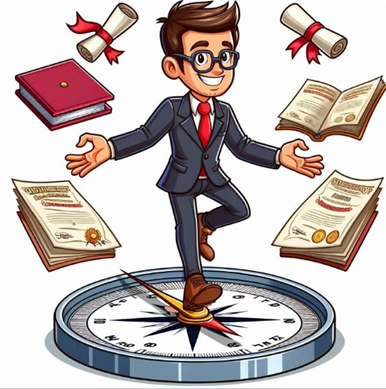 Imagine a team of explorers crossing a desert. No matter how skilled its members are or how modern their vehicles are, they may not succeed in reaching their destination without a compass. In project management, ethics serve as that compass, guiding decision-making, fostering trust, and ensuring accountability. For PMI Members, the compass is the Code of Ethics and Professional Conduct. Developed even before the first edition of the Project Management Book of Knowledge, the Code was and remains the holder of the guardrails of the project management profession. PMBOK 7 replaced knowledge areas with performance domains. The 8th is more aligned with the Agile delivery approach, whilst retaining the importance of good governance. Like the previous version, the PMBOK highlights alignment with both internal and external environments. It is important to note the focus on artificial intelligence and sustainability. Principles of project management PMBOK 8 simplified the 12 principles from the 7th edition to create a more focused and actionable foundation for modern project management. The principles of project management are aligned with the values of PMI’s Code of Ethics and Professional Conduct. They do not follow the same format, and they are not duplicative; rather, the principles and the Code of Ethics are complementary. ·Adopt a holistic view: Consider the project within its larger organizational and ecosystem context. ·Focus on value: Prioritize delivering tangible value and aligning project outcomes with strategic goals. ·Embed quality into processes and deliverables: Integrate quality throughout the project lifecycle, not just as a final check. ·Be an accountable leader: Take ownership and responsibility for the project's success and outcomes. ·Integrate sustainability within all project areas: Include environmental and social considerations in project work. ·Build an empowered culture: Foster a project environment that empowers team members. Enterprise environmental factors: Internal and external to the Organization ·The standard emphasises the impact of organizational culture, structure, and governance. Aspects like vision, mission, values, beliefs, cultural norms, leadership style, hierarchy and authority relationships, organizational style, ethics, and code of conduct remain critical success factors, as well as a framework for ethical decision making. Social and cultural influences and issues. External factors include political climate, regional customs and traditions, public holidays and events, codes of conduct, ethics, and perceptions. Artificial Intelligence (AI) AI ethical issues, especially the responsible use of AI tools and the negative impact on project team members, are an especially important aspect. Topics like data privacy and security can be addressed using technical controls. Issues like bias and fairness require special attention from project managers. Lack of clarity on who is responsible when AI-driven decisions go wrong can create confusion and an unending blame game. AI agents cannot be (yet) included in a Responsible, Accountable, Consulted, or Informed (RACI) matrix. Although their use is unavoidable, the responsibility and accountability remain with the human user. The use of AI is dependent on context, and it should be assessed for each project through a decision-making process to determine when AI can assist with tasks or provide more time for other valuable activities. The evaluation should be focused on the use of AI to produce project artifacts. Initiative-taking measures should be considered to identify and assess the risk of incorporating AI and determine if it is acceptable or it should be controlled. Below is a list of some ethical concerns related to the use of AI in projects
·Diversification of the data sets on which the AI system is trained; ·Periodic tests conducted on the AI system, with particular focus on bias; and ·Involvement of different teams in the development of the AI system. Procurement is another ethics area of focus that PMBOK 8 provides guidance on. In chapter X4.9.2, Sensitivity of Legal Actions and Upholding Ethics Codes, the standard provides considerations to avoid impact on project outcomes and stakeholder relationships: ·Nuanced communication. ·Escalation protocols. ·Confidentiality. ·Impartiality. PMBOK 7 explicitly references the PMI Code of Ethics as a complementary and essential guide for project professionals. This code provides the specific rules for ethical conduct, based on core values of honesty, responsibility, respect, and fairness.
|
An approach to ethics for Digital disruption projects
Categories:
Digital Transformation
Categories: Digital Transformation
| Categories: Ethics, responsibility, respect, fairness, honesty, digital disruption, digital transformation, leadership, research
George is a newly hired project manager. It was his dream to join the company, a start-up on artificial intelligence (AI) and machine learning in education. Working with digital disrupted technology was something he has waiting for a long time. As a project manager, he is aware of the rise of these technologies and has decided to “get his feet wet” and develop his knowledge base with these concepts. In a recent read George become aware that according to Gartner 1, by 2020, AI will generate 2.3 million jobs, and $2.9 trillion in business value by 2021. “AI is one of the most important things humanity is working on. It is more profound than […] electricity or fire”, indicates Google’s CEO2. George is so ready to lead this project! Using the existing data base of client information, via a customer-centric approach, using AI and machine learning the client information will be analyzed, identifying patterns, and predictive capabilities to enrich and develop customized education products. With a global user-based audience the company is seeking to create long-lasting products that support, meet and exceed customers’ expectations.
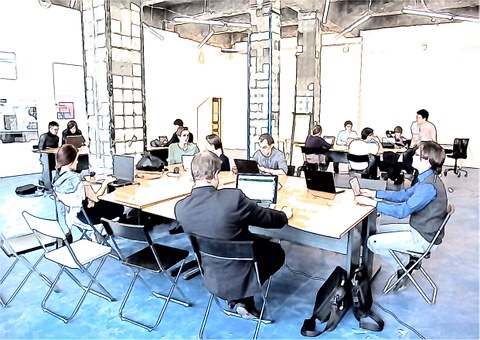
The day of the kickoff meeting come, George met his team of data engineer, data scientist, infrastructure engineering, training specialists. The discussions were heated, as the project was very interesting, the deliverables were heavy, some of them a novelty in the field, but with strict and short deadlines as the company wanted to “break the ice” on the market with their products. The team was so excited, eager to apply knowledge and start the work. Right away they shared concerns towards the processes, the products to be created /delivered, and the impact on the users.
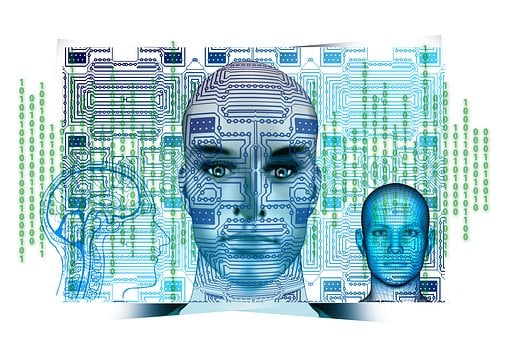
(Source: pixabay.com) During the meeting the team posed a variety of ethical questions related to how AI and machine learning impact the current and future of the project and the deliverables.
George recalled a recent issue on this topic of Brightline™ 3 and he immediately shared the insights:
(Source: pixabay.com) The data scientist, the two software developers asked George if accessing the existing database of client information using AI and machine learning there are digital ethics and privacy concern, and how the users trust will be built, and maintained. Personal information is sensitive and valuable, said George, and users may want access control over them. Fairness, trust, consent, protection of the individual privacy, the choice of users on how their information is to be used are just a few of the ethical aspects to be investigated. The team engaged in the broader topic of digital ethics, how privacy and security are key elements in building trust. The team will share best practices and be early adopters of the ones that support the needs of their project.
(Source: pixabay.com) The ethical quest continued on the ethical principles of the organization. George indicated that the journey of developing a digital ethical framework on the use of the disrupted technology is just in its early stages, as the company was moving from “are we compliant” toward “are we doing the right thing”, a bold move from compliance-driven organizations to ethics-driven organizations.
(Source: pixabay.com) The entire team was eager to learn about the ethics resources in place. George shared the company’s Code of Ethics, and reminded the team that responsibility, respect, fairness, and honesty 6 are the core values in their work; he has shared the compendium of PMI ethics resources 7 , including the practical tools of the Ethics in Project Management Toolkit 8. It is George’s commitment to discuss ethics in each of the weekly meetings of the team and ensure that concerns are addressed, leadership is involved, and stakeholders are properly informed.
(Source: pixabay.com) The kick-off meeting was indeed one of a kind, as it was the project that everybody was so looking forward to advance. The team agreed to continue to engage in these conversations and support the organization throughout the development of the necessary policies, guidelines and tools that will bring run business ethically while addressing user needs and stakeholders’ expectations. George realized that for this project ethics will be the status quo item on the agenda of the project team throughout the lifecycle of the project. As a project manager, he was ready to start his learning journey and take the team with him in developing their digital competencies, and project management skills and knowledge.
(Source: pixabay.com) Digital disrupted technology, digital transformation will result in more projects like this one or may be embedded as components of any other type of project, bringing ethics at the forefront of the discussion.
As a project manager, from your experience, what else could George do for his team to better support them to be “ethically equipped” during this interesting but challenging project? What is the role of the team in all this time and what actions should they take? How should the internal and external stakeholders be made aware and be involved? As project managers what is our stance towards the four core values and how can we make sure that we do the right thing?
Thanks for sharing your insights and your experience.
DISCLAIMER: The names, roles in this story are fictional. Any resemblance to actual persons, living or dead, or actual events is purely coincidental. GLOSSARY of TERMS:
SOURCES of INFORMATION:
|


 Tom, the data engineer asked about the ethical considerations on this strategic project, and the role of the company’s leadership?

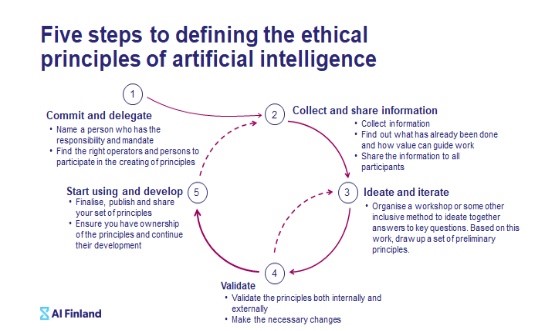 For defining the ethical principles of AI, on how AI is used in a fair and trust-building way, George suggested to the team a series of approaches, among which a European approach.The team agreed to continue the conversation for finding a model that support their organizational and project context. (Source: AI Finland: