Navigating AI in Project Management: A Comparison with Racing Co-Pilots and Driverless Cars
Categories:
Ethics as a competence,
Values,
values,
Ethical Leadership,
Decision-making,
Ethics Insight Team,
Ethics Bistro,
trust,
Ways of Working,
Decision-making,
Values,
AI,
Do the right thing,
Ethical Dilemma,
respect,
Professional Conduct,
Honesty,
Respect,
Responsibility,
Trust,
honesty,
responsibility,
professonal conduct,
empathy,
professional conduct,
Ethics in Communication,
Leadership,
Decision Making,
Ethics
Categories: Ethics as a competence, Values, values, Ethical Leadership, Decision-making, Ethics Insight Team, Ethics Bistro, trust, Ways of Working, Decision-making, Values, AI, Do the right thing, Ethical Dilemma, respect, Professional Conduct, Honesty, Respect, Responsibility, Trust, honesty, responsibility, professonal conduct, empathy, professional conduct, Ethics in Communication, Leadership, Decision Making, Ethics


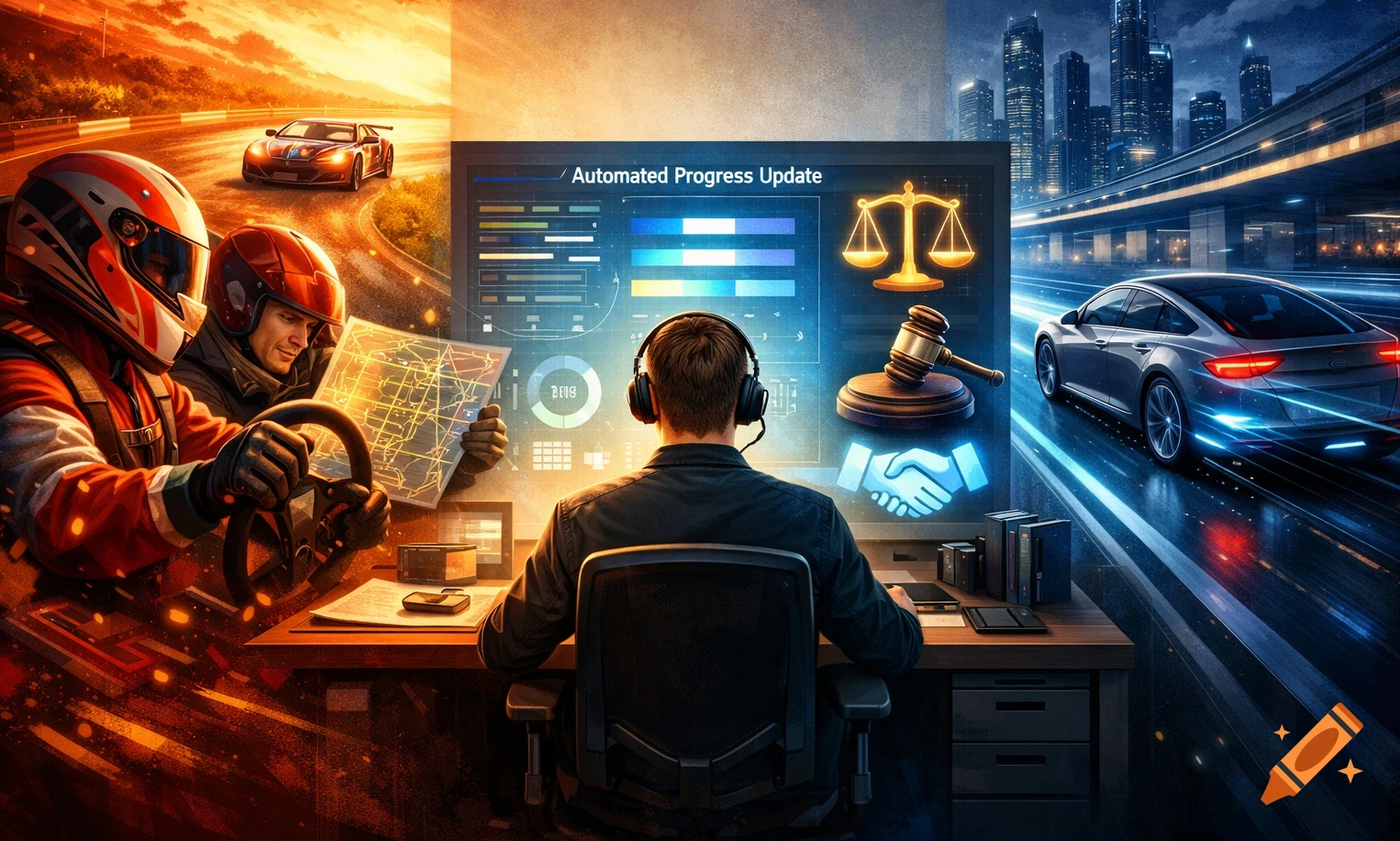 Artificial Intelligence (AI) is revolutionizing industries, and project management is no exception. With advanced tools supporting decision-making, risk mitigation, and efficiency, the project management landscape is increasingly intertwined with AI technologies. However, this evolution raises questions about human responsibility, autonomy, and ethics—questions like those faced in the realms of racing co-pilots and driverless cars. This blog explores the pros and cons of using AI in project management and compares these dynamics with racing environments and autonomous vehicle scenarios, focusing on the balance between human involvement and ethical considerations.  The Role of AI in Project Management AI-driven tools, such as virtual assistants and machine learning algorithms, are increasingly used to streamline project management processes. From schedule optimization and predictive analytics to stakeholder communication and resource allocation, AI empowers project managers to make well-informed and efficient decisions. The Racing Co-Pilot Analogy: Shared Responsibility, Enhanced Performance In professional racing environments, a co-pilot performs critical tasks: navigating the course, analysing conditions, and advising the driver. This relationship mirrors the human-machine collaboration often seen in project management. Here, AI acts as a "co-pilot," assisting project managers while leaving primary control in human hands. Let us examine this analogy: Pros of AI as a Co-Pilot in Project Management:
The Driverless Car Comparison: Autonomous AI in Project Management Shifting perspective, consider driverless cars: vehicles fully controlled by AI, requiring minimal human intervention. Some envision project management systems that resemble a driverless car—autonomous AI overseeing the project's execution from start to finish. While promising, this model has risks and challenges to consider. Pros of Autonomous AI in Project Management:
Ethical Considerations: Responsibility and Integrity Both racing co-pilots and driverless cars illustrate contrasting extremes in human-machine collaboration. A key differentiator in these scenarios is ethical responsibility:
Conclusion: The Road Ahead for AI in Project Management The racing co-pilot and driverless car analogies shed light on the pivotal balance required in leveraging AI for project management. While AI offers immense benefits—such as efficiency, precision, and scalability—it also raises concerns about accountability, ethical responsibility, and judgment. As the PMI Code of Ethics underscores values like fairness, honesty, and responsibility, project managers must ensure AI tools serve as partners rather than replacements, fostering trust and inclusivity. By choosing the right path—whether enhanced collaboration or selective autonomy—project managers can steer their projects responsibly toward success while maintaining the ethical values essential to effective leadership. Related discussion topic: Can project management run on AI autopilot?https://tinyurl.com/mr497je7 |
What is new in PMBOK 8 – An ethics perspective
Categories:
Ethics as a competence,
Values,
Behavior,
values,
code of ethics,
Ethical Leadership,
Decision-making,
Ethics Insight Team,
Ethics Bistro,
Business Ethics,
code of conduct,
PMI Talent Triangle,
Ways of Working,
Decision-making,
Values,
Business Ethics,
AI,
Project,
PMI Program Management,
Do the right thing,
Culture,
Ethical Dilemma,
respect,
Professional Responsibility,
Professional Conduct,
Honesty,
Respect,
Responsibility,
Project Management,
Code of Ethics and Professional Conduct,
honesty,
responsibility,
professonal conduct,
volunteers,
professional conduct,
Digital Transformation,
Ethics in Communication,
Agile,
Leadership,
Decision Making,
Ethics,
Diversity,
Organizational Project Management,
Information Technology,
Organizational Culture,
Governance,
Artificial Intelligence
Categories: Ethics as a competence, Values, Behavior, values, code of ethics, Ethical Leadership, Decision-making, Ethics Insight Team, Ethics Bistro, Business Ethics, code of conduct, PMI Talent Triangle, Ways of Working, Decision-making, Values, Business Ethics, AI, Project, PMI Program Management, Do the right thing, Culture, Ethical Dilemma, respect, Professional Responsibility, Professional Conduct, Honesty, Respect, Responsibility, Project Management, Code of Ethics and Professional Conduct, honesty, responsibility, professonal conduct, volunteers, professional conduct, Digital Transformation, Ethics in Communication, Agile, Leadership, Decision Making, Ethics, Diversity, Organizational Project Management, Information Technology, Organizational Culture, Governance, Artificial Intelligence
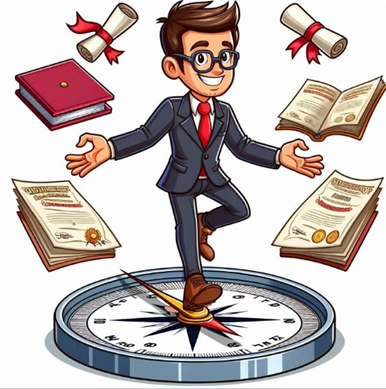 Imagine a team of explorers crossing a desert. No matter how skilled its members are or how modern their vehicles are, they may not succeed in reaching their destination without a compass. In project management, ethics serve as that compass, guiding decision-making, fostering trust, and ensuring accountability. For PMI Members, the compass is the Code of Ethics and Professional Conduct. Developed even before the first edition of the Project Management Book of Knowledge, the Code was and remains the holder of the guardrails of the project management profession. PMBOK 7 replaced knowledge areas with performance domains. The 8th is more aligned with the Agile delivery approach, whilst retaining the importance of good governance. Like the previous version, the PMBOK highlights alignment with both internal and external environments. It is important to note the focus on artificial intelligence and sustainability. Principles of project management PMBOK 8 simplified the 12 principles from the 7th edition to create a more focused and actionable foundation for modern project management. The principles of project management are aligned with the values of PMI’s Code of Ethics and Professional Conduct. They do not follow the same format, and they are not duplicative; rather, the principles and the Code of Ethics are complementary. ·Adopt a holistic view: Consider the project within its larger organizational and ecosystem context. ·Focus on value: Prioritize delivering tangible value and aligning project outcomes with strategic goals. ·Embed quality into processes and deliverables: Integrate quality throughout the project lifecycle, not just as a final check. ·Be an accountable leader: Take ownership and responsibility for the project's success and outcomes. ·Integrate sustainability within all project areas: Include environmental and social considerations in project work. ·Build an empowered culture: Foster a project environment that empowers team members. Enterprise environmental factors: Internal and external to the Organization ·The standard emphasises the impact of organizational culture, structure, and governance. Aspects like vision, mission, values, beliefs, cultural norms, leadership style, hierarchy and authority relationships, organizational style, ethics, and code of conduct remain critical success factors, as well as a framework for ethical decision making. Social and cultural influences and issues. External factors include political climate, regional customs and traditions, public holidays and events, codes of conduct, ethics, and perceptions. Artificial Intelligence (AI) AI ethical issues, especially the responsible use of AI tools and the negative impact on project team members, are an especially important aspect. Topics like data privacy and security can be addressed using technical controls. Issues like bias and fairness require special attention from project managers. Lack of clarity on who is responsible when AI-driven decisions go wrong can create confusion and an unending blame game. AI agents cannot be (yet) included in a Responsible, Accountable, Consulted, or Informed (RACI) matrix. Although their use is unavoidable, the responsibility and accountability remain with the human user. The use of AI is dependent on context, and it should be assessed for each project through a decision-making process to determine when AI can assist with tasks or provide more time for other valuable activities. The evaluation should be focused on the use of AI to produce project artifacts. Initiative-taking measures should be considered to identify and assess the risk of incorporating AI and determine if it is acceptable or it should be controlled. Below is a list of some ethical concerns related to the use of AI in projects
·Diversification of the data sets on which the AI system is trained; ·Periodic tests conducted on the AI system, with particular focus on bias; and ·Involvement of different teams in the development of the AI system. Procurement is another ethics area of focus that PMBOK 8 provides guidance on. In chapter X4.9.2, Sensitivity of Legal Actions and Upholding Ethics Codes, the standard provides considerations to avoid impact on project outcomes and stakeholder relationships: ·Nuanced communication. ·Escalation protocols. ·Confidentiality. ·Impartiality. PMBOK 7 explicitly references the PMI Code of Ethics as a complementary and essential guide for project professionals. This code provides the specific rules for ethical conduct, based on core values of honesty, responsibility, respect, and fairness.
|
Trust: The Cornerstone of Successful Project Management
| As an experienced project manager, Victor recently joined a new organization after a five-month break due to layoffs at his previous job. He was hired as a PMO Lead and was eager to make a positive impact on his new team. However, he quickly realized that the team seemed hesitant to trust him, due to his newness to the organization or the time it would take for him to fully engage with them. Victor took various initiatives to engage with his team, scheduling regular cadence with them to get to know them better. However, he observed that the team was not seeking help when they needed it, and his peers were taking advantage of this situation. This lack of trust was affecting the progress of the team, the projects, and even the customers. Victor felt conflicted because he wanted to help the team succeed in their projects, but he also wanted to earn their trust and inspire them as their leader. He did not want the team to be affected by negative energies resulting from the trust issues. However, he realized that he was not being honest with the responsibilities assigned to him by the management and was not justifying his role as PMO Lead. According to the Project Management Institute's Code of Ethics and Professional Conduct, honesty is defined as understanding the truth and acting truthfully in communications and conduct. Victor realized that he was not being honest with himself or the organization, and this was causing him to feel like he was not fulfilling his responsibilities. He considered leaving the organization as he did not want to compromise on his integrity. At the same time, Victor also realized that he may encounter similar situations in any new workplace, and his lack of confidence in himself may be due to the five-month break he had taken. He did not want to let his peers take advantage of this situation, and he wanted to find a solution that would align with his values and principles as a project manager. After careful consideration, Victor decided to take the following steps:
As time passed, Victor noticed a positive change in his team's attitude towards him. They started seeking his guidance and support, and the team's progress improved. Victor regained his confidence as a project manager and felt that he was justifying his role in the organization. He realized that by being honest with himself and others, and upholding his professional values, he could overcome the initial trust issues and create a positive work environment. "What are your thoughts on how project managers can balance the need to be honest about their challenges while still fulfilling their responsibilities and justifying their role within an organization?" |

What’s Your Ethical Score?
| As I am writing this blog, Australia confronts the findings of an investigation that our special forces allegedly committed war crimes in Afghanistan, our New South Wales Premier is perceived to have broken her own health advice rules – not self-isolating after a Covid-19 Test; and our previous Federal Finance Minister; is jetting Europe at the expense of tax payers to lobby for an OECD role while at the same time, Australians overseas are waiting for repatriation flights to bring them home. Australia is facing national and global challenges[i]: Covid-19 pandemic, the future of work resulting from the introduction new technologies; AI, Robotics, Cyber Security; climate change and the impact on our environment with the diversity and uniqueness of our rare species be it in the bush or in the oceans. The fires followed by floods that we faced last year are still vivid in our memories as we are experiencing a heat wave this weekend with well above average temperatures. In addition to that our journey of reconciliation with Indigenous Australians has yet a long way to go. One cannot help but wonder: How ethical is Australia? And what difference would that make? And why would I care as a leader whose field is Project Management about how ethical the country is?
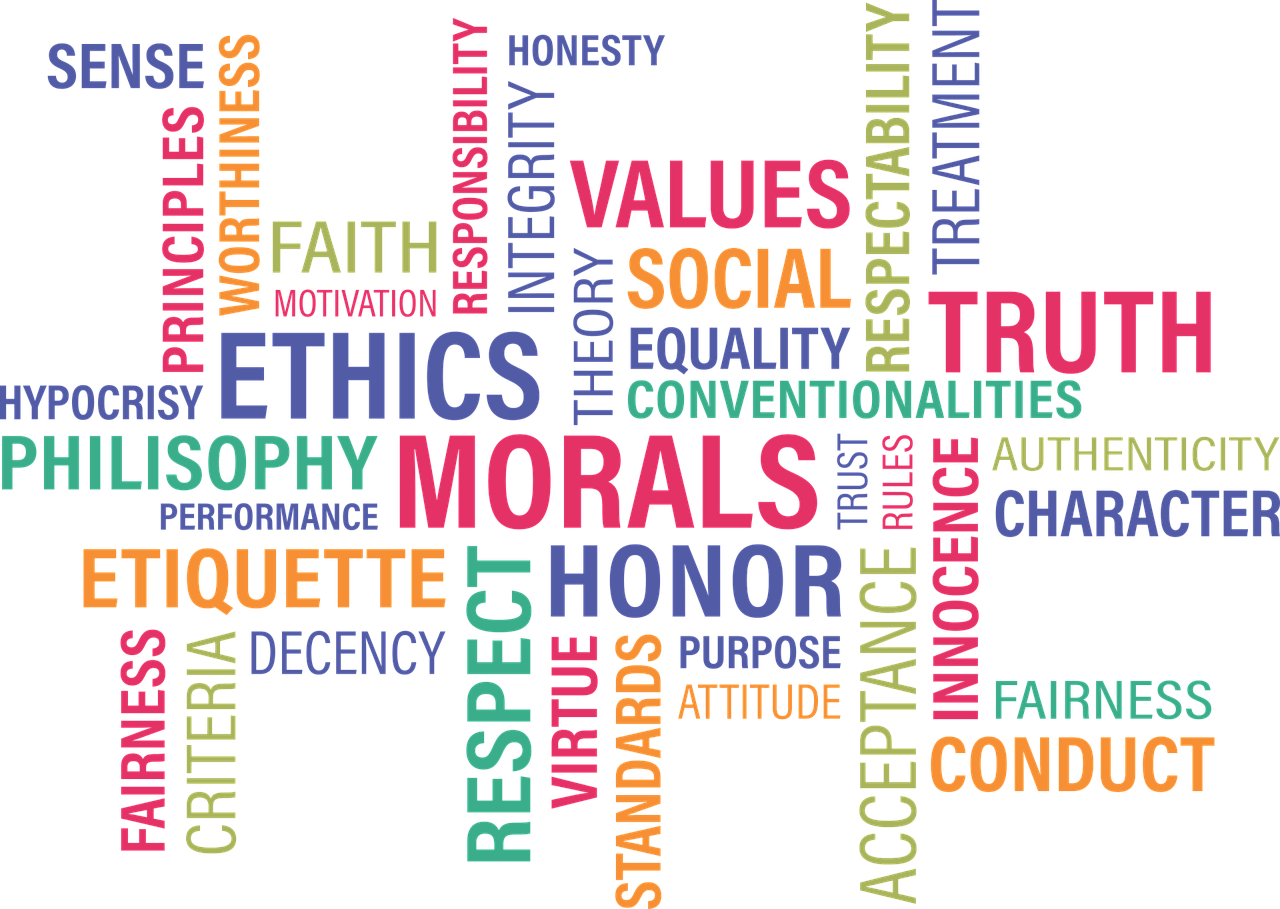
Image by Mary Pahlke from Pixabay[ii] Despite the challenges, and the current political climate, the findings of a recent study commissioned by the Ethics Centre in Australia and conducted by Deloitte Access Economics[i] draw a more positive picture, stating that:
So what are the benefits of a more ethical Australia, or any country for that matter, and where do we start? The study affirms that ethical infrastructure is to be built at the society and organisational level in both formal and informal ways;
So how ethical are we as leaders? What’s our ethical score? And, do we have any PMI Ethics tools that will enable us as individuals to be more aware of our ethical values and behaviors?
How about taking the Ethics Self-Assessment questionnaire as a self-reflection tool? How ethical is each and every one of us? What is the gap and how can we address it? Share your thoughts - What other activities do we undertake as individuals and professionals to build ethics and professional conduct awareness in our teams, organizations, and communities? __________________________ References: [i] https://ethics.org.au/wp-content/uploads/2018/05/The-Ethical-Advantage-4.pdf [ii] https://pixabay.com/illustrations/business-idea-style-concept-goals-1753098/
|