Professionalism Under Pressure: Choosing Respect When Conflict Escalates
Categories:
Ethics as a competence,
Behavior,
courage honesty responsibility respect fairness,
code of ethics,
Ethical Leadership,
Decision-making,
Ethics Insight Team,
Ethics Bistro,
Business Ethics,
code of conduct,
Power Skills,
Decision-making,
Business Ethics,
Professionalization,
practitioner,
Ethical Dilemma,
respect,
Professional Responsibility,
Honesty,
Respect,
Responsibility,
Fairness,
Code of Ethics and Professional Conduct,
Human,
fairness,
communication,
honesty,
responsibility,
professonal conduct,
Conflict,
empathy,
EDMF,
Ethics in Communication,
Agile,
Decision Making,
Ethics,
Legal Project Management
Categories: Ethics as a competence, Behavior, courage honesty responsibility respect fairness, code of ethics, Ethical Leadership, Decision-making, Ethics Insight Team, Ethics Bistro, Business Ethics, code of conduct, Power Skills, Decision-making, Business Ethics, Professionalization, practitioner, Ethical Dilemma, respect, Professional Responsibility, Honesty, Respect, Responsibility, Fairness, Code of Ethics and Professional Conduct, Human, fairness, communication, honesty, responsibility, professonal conduct, Conflict, empathy, EDMF, Ethics in Communication, Agile, Decision Making, Ethics, Legal Project Management


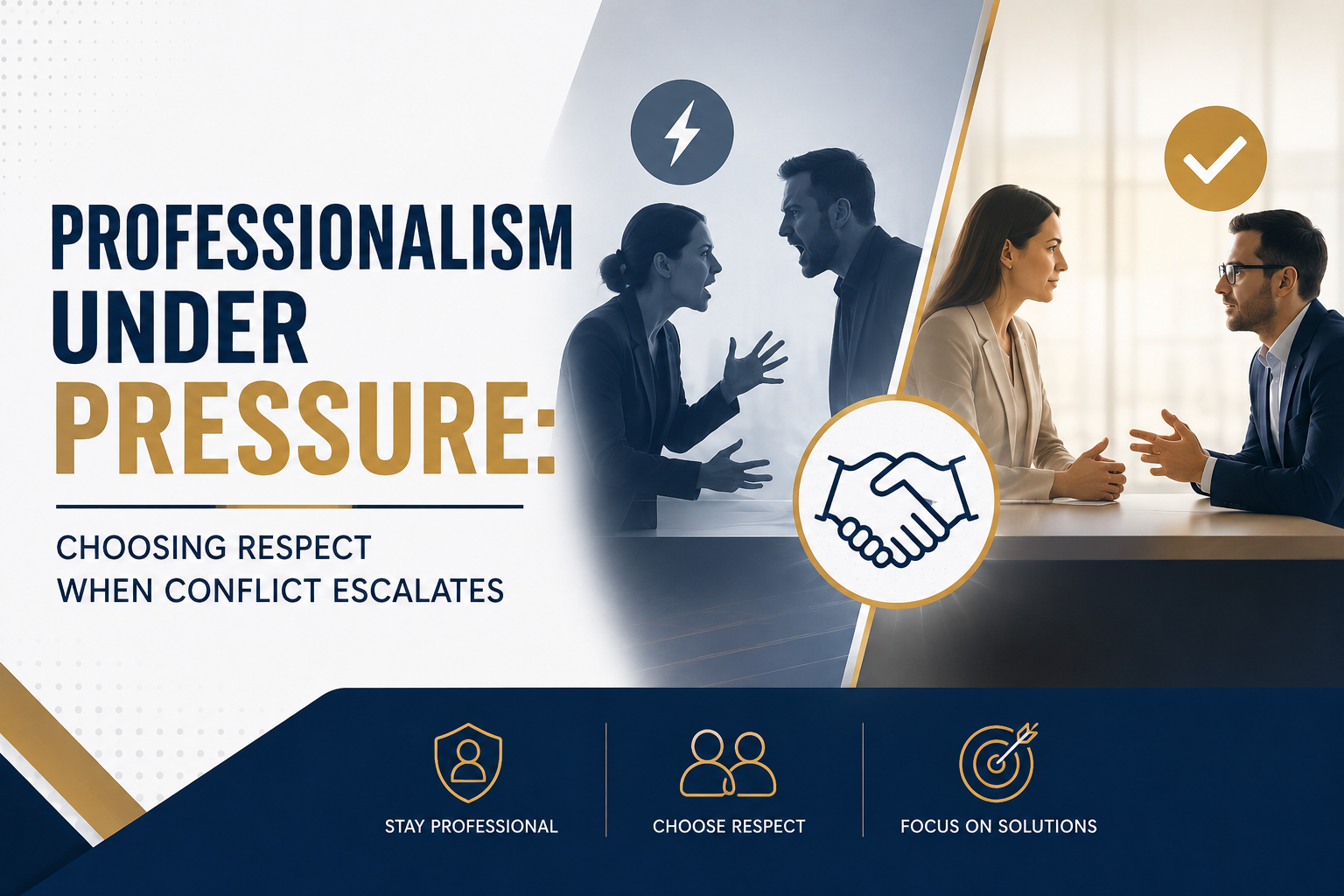 The message arrived at 11:47 p.m. It wasn't long. Just a few lines. But every sentence carried anger. A disagreement over a contract had been going on for weeks. There were questions about payment, responsibilities, and what each side believed had been promised. The conversation had already become uncomfortable. Now, the latest message crossed a different line. There were accusations. Personal insults. A veiled threat about “making sure people know” what had happened. And then came a remark about the other person's background. For a moment, the easiest response seemed obvious: Fight back. After all, they started it. But this is where professionalism is really tested not when everyone is calm and reasonable, but when someone gives us every reason to lose our composure. Conflict is part of professional life. Employment decisions can disappoint people. Contracts can fall apart. Candidates can feel unfairly treated. Managers can become frustrated. Clients and suppliers can disagree about commitments. Sometimes we are genuinely wronged. And sometimes we may be the ones who got something wrong. Either way, disagreement does not give us permission to abandon respect. The PMI Code of Ethics and Professional Conduct places Respect among its four core values. That sounds simple until we find ourselves staring at a message that feels deliberately insulting, threatening, or unfair. Respect is easy when it is reciprocated. It becomes meaningful when it isn't. The person receiving that late-night message eventually did something surprisingly difficult. They didn't respond. Not immediately. They saved the communication, stepped away from the computer, reviewed the facts, and went to bed. The next morning, they wrote back. The response acknowledged the disagreement. It clarified the contractual position. It proposed using the appropriate process to resolve the matter. There were no insults. No threats. No attempt to embarrass the other person. It wasn't weakness. It was professional self-control. Respect doesn't mean tolerating abuse. It doesn't mean remaining silent when discriminatory language is used. It doesn't mean accepting intimidation or allowing retaliation to go unchallenged. And it certainly doesn't mean avoiding difficult conversations. Sometimes respect means setting a boundary. Sometimes it means documenting what happened and involving Human Resources, legal counsel, procurement, recruitment leadership, or another appropriate authority. Sometimes it means saying: “I am willing to discuss the issue, but I will not continue the conversation in this manner.” That is respect too. Because respect isn't only about how we treat people when we agree with them. It is also about recognizing their dignity when we don't. And perhaps that's the uncomfortable part of professional ethics. We cannot control the tone of the message that arrives at 11:47 p.m. We cannot control whether someone tries to intimidate us, insults us, uses discriminatory language, or threatens retaliation. But we can control whether we respond in kind. We can choose to protect our boundaries without attacking someone else's dignity. We can choose accountability without humiliation. We can choose firmness without hostility. We can choose Respect. Not because the other person necessarily deserves our kindness in that moment, but because our professional values should not depend on someone else's behavior. The next time a difficult message lands in your inbox, ask yourself: When someone crosses the line with us, can we hold the line without crossing it ourselves? |
Navigating AI in Project Management: A Comparison with Racing Co-Pilots and Driverless Cars
Categories:
Ethics as a competence,
Values,
values,
Ethical Leadership,
Decision-making,
Ethics Insight Team,
Ethics Bistro,
trust,
Ways of Working,
Decision-making,
Values,
AI,
Do the right thing,
Ethical Dilemma,
respect,
Professional Conduct,
Honesty,
Respect,
Responsibility,
Trust,
honesty,
responsibility,
professonal conduct,
empathy,
professional conduct,
Ethics in Communication,
Leadership,
Decision Making,
Ethics
Categories: Ethics as a competence, Values, values, Ethical Leadership, Decision-making, Ethics Insight Team, Ethics Bistro, trust, Ways of Working, Decision-making, Values, AI, Do the right thing, Ethical Dilemma, respect, Professional Conduct, Honesty, Respect, Responsibility, Trust, honesty, responsibility, professonal conduct, empathy, professional conduct, Ethics in Communication, Leadership, Decision Making, Ethics
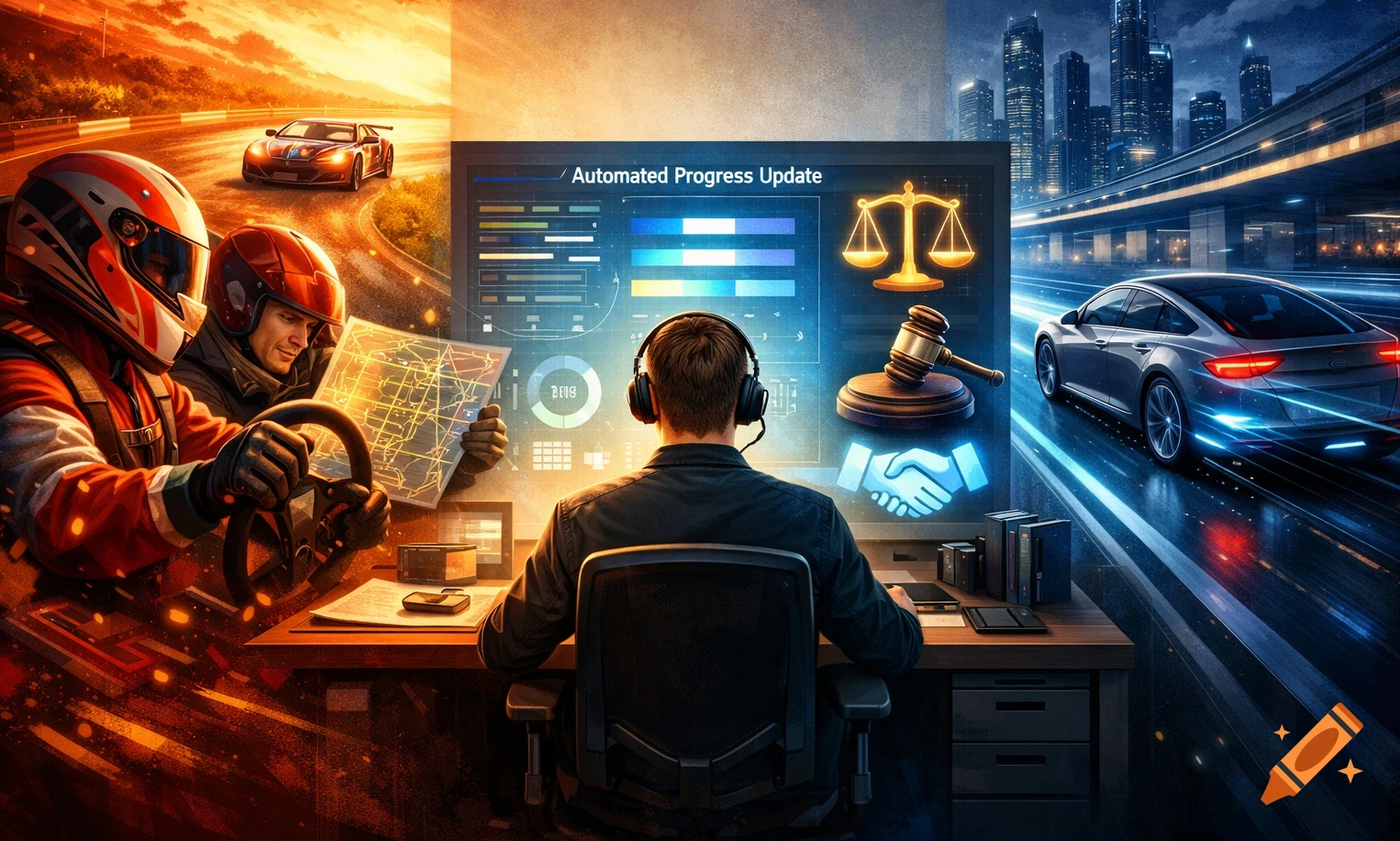 Artificial Intelligence (AI) is revolutionizing industries, and project management is no exception. With advanced tools supporting decision-making, risk mitigation, and efficiency, the project management landscape is increasingly intertwined with AI technologies. However, this evolution raises questions about human responsibility, autonomy, and ethics—questions like those faced in the realms of racing co-pilots and driverless cars. This blog explores the pros and cons of using AI in project management and compares these dynamics with racing environments and autonomous vehicle scenarios, focusing on the balance between human involvement and ethical considerations.  The Role of AI in Project Management AI-driven tools, such as virtual assistants and machine learning algorithms, are increasingly used to streamline project management processes. From schedule optimization and predictive analytics to stakeholder communication and resource allocation, AI empowers project managers to make well-informed and efficient decisions. The Racing Co-Pilot Analogy: Shared Responsibility, Enhanced Performance In professional racing environments, a co-pilot performs critical tasks: navigating the course, analysing conditions, and advising the driver. This relationship mirrors the human-machine collaboration often seen in project management. Here, AI acts as a "co-pilot," assisting project managers while leaving primary control in human hands. Let us examine this analogy: Pros of AI as a Co-Pilot in Project Management:
The Driverless Car Comparison: Autonomous AI in Project Management Shifting perspective, consider driverless cars: vehicles fully controlled by AI, requiring minimal human intervention. Some envision project management systems that resemble a driverless car—autonomous AI overseeing the project's execution from start to finish. While promising, this model has risks and challenges to consider. Pros of Autonomous AI in Project Management:
Ethical Considerations: Responsibility and Integrity Both racing co-pilots and driverless cars illustrate contrasting extremes in human-machine collaboration. A key differentiator in these scenarios is ethical responsibility:
Conclusion: The Road Ahead for AI in Project Management The racing co-pilot and driverless car analogies shed light on the pivotal balance required in leveraging AI for project management. While AI offers immense benefits—such as efficiency, precision, and scalability—it also raises concerns about accountability, ethical responsibility, and judgment. As the PMI Code of Ethics underscores values like fairness, honesty, and responsibility, project managers must ensure AI tools serve as partners rather than replacements, fostering trust and inclusivity. By choosing the right path—whether enhanced collaboration or selective autonomy—project managers can steer their projects responsibly toward success while maintaining the ethical values essential to effective leadership. Related discussion topic: Can project management run on AI autopilot?https://tinyurl.com/mr497je7 |
What is new in PMBOK 8 – An ethics perspective
Categories:
Ethics as a competence,
Values,
Behavior,
values,
code of ethics,
Ethical Leadership,
Decision-making,
Ethics Insight Team,
Ethics Bistro,
Business Ethics,
code of conduct,
PMI Talent Triangle,
Ways of Working,
Decision-making,
Values,
Business Ethics,
AI,
Project,
PMI Program Management,
Do the right thing,
Culture,
Ethical Dilemma,
respect,
Professional Responsibility,
Professional Conduct,
Honesty,
Respect,
Responsibility,
Project Management,
Code of Ethics and Professional Conduct,
honesty,
responsibility,
professonal conduct,
volunteers,
professional conduct,
Digital Transformation,
Ethics in Communication,
Agile,
Leadership,
Decision Making,
Ethics,
Diversity,
Organizational Project Management,
Information Technology,
Organizational Culture,
Governance,
Artificial Intelligence
Categories: Ethics as a competence, Values, Behavior, values, code of ethics, Ethical Leadership, Decision-making, Ethics Insight Team, Ethics Bistro, Business Ethics, code of conduct, PMI Talent Triangle, Ways of Working, Decision-making, Values, Business Ethics, AI, Project, PMI Program Management, Do the right thing, Culture, Ethical Dilemma, respect, Professional Responsibility, Professional Conduct, Honesty, Respect, Responsibility, Project Management, Code of Ethics and Professional Conduct, honesty, responsibility, professonal conduct, volunteers, professional conduct, Digital Transformation, Ethics in Communication, Agile, Leadership, Decision Making, Ethics, Diversity, Organizational Project Management, Information Technology, Organizational Culture, Governance, Artificial Intelligence
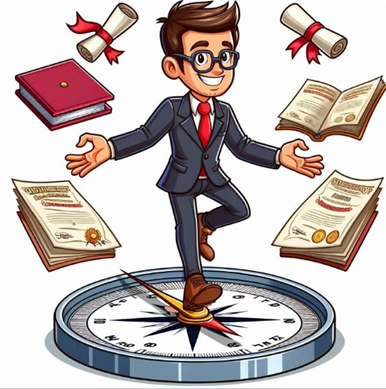 Imagine a team of explorers crossing a desert. No matter how skilled its members are or how modern their vehicles are, they may not succeed in reaching their destination without a compass. In project management, ethics serve as that compass, guiding decision-making, fostering trust, and ensuring accountability. For PMI Members, the compass is the Code of Ethics and Professional Conduct. Developed even before the first edition of the Project Management Book of Knowledge, the Code was and remains the holder of the guardrails of the project management profession. PMBOK 7 replaced knowledge areas with performance domains. The 8th is more aligned with the Agile delivery approach, whilst retaining the importance of good governance. Like the previous version, the PMBOK highlights alignment with both internal and external environments. It is important to note the focus on artificial intelligence and sustainability. Principles of project management PMBOK 8 simplified the 12 principles from the 7th edition to create a more focused and actionable foundation for modern project management. The principles of project management are aligned with the values of PMI’s Code of Ethics and Professional Conduct. They do not follow the same format, and they are not duplicative; rather, the principles and the Code of Ethics are complementary. ·Adopt a holistic view: Consider the project within its larger organizational and ecosystem context. ·Focus on value: Prioritize delivering tangible value and aligning project outcomes with strategic goals. ·Embed quality into processes and deliverables: Integrate quality throughout the project lifecycle, not just as a final check. ·Be an accountable leader: Take ownership and responsibility for the project's success and outcomes. ·Integrate sustainability within all project areas: Include environmental and social considerations in project work. ·Build an empowered culture: Foster a project environment that empowers team members. Enterprise environmental factors: Internal and external to the Organization ·The standard emphasises the impact of organizational culture, structure, and governance. Aspects like vision, mission, values, beliefs, cultural norms, leadership style, hierarchy and authority relationships, organizational style, ethics, and code of conduct remain critical success factors, as well as a framework for ethical decision making. Social and cultural influences and issues. External factors include political climate, regional customs and traditions, public holidays and events, codes of conduct, ethics, and perceptions. Artificial Intelligence (AI) AI ethical issues, especially the responsible use of AI tools and the negative impact on project team members, are an especially important aspect. Topics like data privacy and security can be addressed using technical controls. Issues like bias and fairness require special attention from project managers. Lack of clarity on who is responsible when AI-driven decisions go wrong can create confusion and an unending blame game. AI agents cannot be (yet) included in a Responsible, Accountable, Consulted, or Informed (RACI) matrix. Although their use is unavoidable, the responsibility and accountability remain with the human user. The use of AI is dependent on context, and it should be assessed for each project through a decision-making process to determine when AI can assist with tasks or provide more time for other valuable activities. The evaluation should be focused on the use of AI to produce project artifacts. Initiative-taking measures should be considered to identify and assess the risk of incorporating AI and determine if it is acceptable or it should be controlled. Below is a list of some ethical concerns related to the use of AI in projects
·Diversification of the data sets on which the AI system is trained; ·Periodic tests conducted on the AI system, with particular focus on bias; and ·Involvement of different teams in the development of the AI system. Procurement is another ethics area of focus that PMBOK 8 provides guidance on. In chapter X4.9.2, Sensitivity of Legal Actions and Upholding Ethics Codes, the standard provides considerations to avoid impact on project outcomes and stakeholder relationships: ·Nuanced communication. ·Escalation protocols. ·Confidentiality. ·Impartiality. PMBOK 7 explicitly references the PMI Code of Ethics as a complementary and essential guide for project professionals. This code provides the specific rules for ethical conduct, based on core values of honesty, responsibility, respect, and fairness.
|
Conflict Resolution: Leading with Ethics to Prevent Fractures from Becoming Irreparable and Transform Them into Growth
| This past week, I caught up with several former colleagues and friends from different organisations. A recurring theme emerged in our conversations: many of them are grappling with significant challenges, with much of their time and energy consumed in trying to resolve conflicts within their teams. In several cases, these conflicts are escalating and beginning to get out of hand. By the end of the week, these discussions prompted me to pause and reflect, analysing not only what I had heard, but also how it connects with lessons I’ve learned through teaching, leadership, and practice.
Why Do We End Up in Conflict? Across these reflections, one root cause stood out: misaligned expectations. When expectations are not met, trust begins to erode. But why are expectations so often out of alignment? Each person brings their own interpretation of what success will look like working in this team driven mostly by their own sense of purpose. Over time, when those expectations are not met for a variety of reasons. Without the right guardrails in place, signs of disengagement or frustration go unnoticed until conflict surfaces. How individuals react is strongly influenced by their values and coping mechanisms. For organisations, this can result in good employees quietly leaving disruptive arguments within teams, or prolonged disputes that drain productivity and morale. Drawing from My Teaching Experience When teaching the PMI Agile Certified Practitioner (PMI-ACP®) course under Domain IV: Team Performance, one of the models I referenced often was Speed B. Leas’ Model of Conflict. It outlines five escalating levels of conflict from manageable problem solving to entrenched, intractable disputes. The lesson is simple but powerful: leaders must recognise and address conflict early. In agile environments, where transparency and collaboration are vital, even small misunderstandings can snowball into major disputes if left unchecked. Another useful framework is the Thomas-Kilmann Conflict Mode Instrument (TKI), which identifies five approaches: competing, collaborating, compromising, avoiding, and accommodating. Effective leaders learn to adapt their approach to context, while prioritising collaboration for long term trust and cohesion. Together, these frameworks reinforce a core truth: effective conflict resolution requires awareness, adaptability, and timing. Preventing Conflict Before It Escalates The best approach to conflict is prevention. From my reflections, several practices stand out as essential:
When these practices are embedded in the way we work, conflict shifts from being destructive to becoming a constructive part of problem solving. The Role of PMI Ethics Conflict also brings us back to values and ethics. How we respond under pressure whether we lash out, withdraw, resign quietly, or seek constructive dialogue is guided by both personal values and professional standards. The PMI Code of Ethics and Professional Conduct provide a compass for leaders and teams alike:
Applied consistently, these principles not only help to prevent conflict but also shape how teams respond when disagreements inevitably arise. When Conflict Becomes Beyond Repair Despite best efforts, some conflicts move beyond repair. This typically happens when:
At this stage, leadership often shifts from resolution to containment, restructuring, or separation, to protect the wider team and organisation. These conversations reinforced my belief that conflict is not a sign of failure it is an inevitable part of human interaction. When addressed constructively, it can become a powerful driver of learning, innovation, and stronger collaboration. The true test of leadership lies in how early we recognise conflict, how openly we create space for resolution, and how firmly we anchor our actions in ethical principles. By leading with responsibility, respect, fairness, and honesty, we can transform conflict into an opportunity for trust and growth ultimately strengthening the very foundations of collaboration and leadership. |

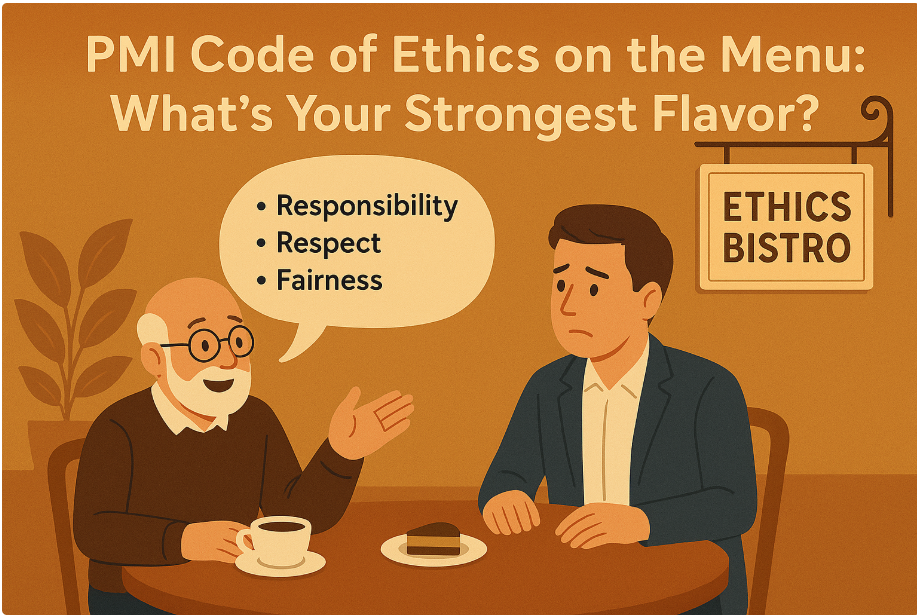
PMI Code of Ethics on the Menu: What’s Your Strongest Flavor?
| Imagine walking into a cozy little café called The Ethics Bistro. The air smells of freshly brewed coffee, and the tables are filled with people quietly reflecting on their day. At one corner table sits a project manager named David, looking worried.
The owner of the bistro, a wise old mentor, notices David’s frown and walks over. “Why so serious, David?” the mentor asks. David sighs. “I am leading a project team, but I am struggling to make the right calls. Deadlines, clients, budgets it feels like I am being pulled in every direction. How do I know if I am being fair?” The mentor smiles and says, “Ah, then you need to taste the four-course meal we serve here every day. It is called the PMI Code of Ethics.” First Course: Responsibility “Responsibility is like the soup,” the mentor explains. “It warms the soul. As project managers, we are responsible for our decisions, both good and bad. If something goes wrong, we take responsibility instead of placing blame. Taking responsibility keeps the project honest and the team confident.” Second Course: Respect Next comes the main dish. “Respect is the heart of the meal. Just as food is seasoned with care, respect seasons every conversation. Whether it is a client, team member, or vendor, every person deserves to be valued. Respect builds trust, and trust keeps the project alive.” Third Course: Fairness Then arrives a plate of perfectly balanced flavors. “Fairness means treating everyone equally. No hidden favoritism, no secret deals. Like sharing bread at the table, fairness ensures everyone gets their piece. When the team feels fairness, they give their best.” Final Course: Honesty Finally, dessert is served sweet but powerful. “Honesty,” says the mentor, “is the sugar of relationships. Speak the truth, even when it is uncomfortable. A project can survive a missed deadline, but it cannot survive broken trust.” David listens carefully, sipping coffee. “So, the PMI Code of Ethics is like this meal responsibility, respect, fairness, and honesty. If I serve these values to my team, they will follow me with trust.” The mentor nods. “Exactly. Projects come and go, but the taste of integrity stays forever.” As David leaves the Ethics Bistro that night, the burden feels lighter. He knows that no matter how tough the project becomes, the recipe for ethical leadership will guide him. If you were serving your project team at the Ethics Bistro, which course responsibility, respect, fairness, or honesty would they say is your strongest flavor? Share your answer in the comments. Reference: |