

Professionalism Under Pressure: Choosing Respect When Conflict Escalates
Categories:
Ethics as a competence,
Behavior,
courage honesty responsibility respect fairness,
code of ethics,
Ethical Leadership,
Decision-making,
Ethics Insight Team,
Ethics Bistro,
Business Ethics,
code of conduct,
Power Skills,
Decision-making,
Business Ethics,
Professionalization,
practitioner,
Ethical Dilemma,
respect,
Professional Responsibility,
Honesty,
Respect,
Responsibility,
Fairness,
Code of Ethics and Professional Conduct,
Human,
fairness,
communication,
honesty,
responsibility,
professonal conduct,
Conflict,
empathy,
EDMF,
Ethics in Communication,
Agile,
Decision Making,
Ethics,
Legal Project Management
Categories: Ethics as a competence, Behavior, courage honesty responsibility respect fairness, code of ethics, Ethical Leadership, Decision-making, Ethics Insight Team, Ethics Bistro, Business Ethics, code of conduct, Power Skills, Decision-making, Business Ethics, Professionalization, practitioner, Ethical Dilemma, respect, Professional Responsibility, Honesty, Respect, Responsibility, Fairness, Code of Ethics and Professional Conduct, Human, fairness, communication, honesty, responsibility, professonal conduct, Conflict, empathy, EDMF, Ethics in Communication, Agile, Decision Making, Ethics, Legal Project Management


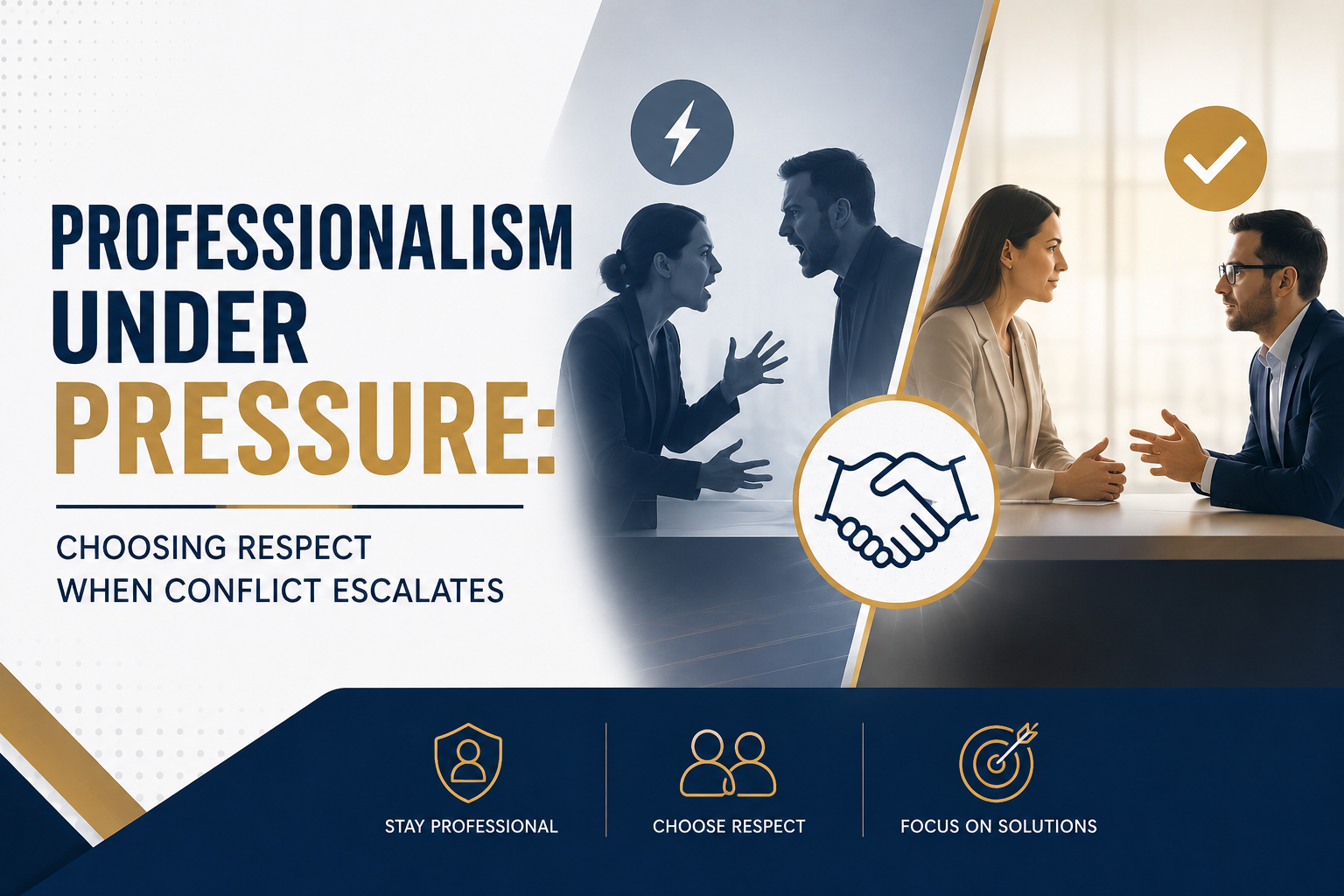 The message arrived at 11:47 p.m. It wasn't long. Just a few lines. But every sentence carried anger. A disagreement over a contract had been going on for weeks. There were questions about payment, responsibilities, and what each side believed had been promised. The conversation had already become uncomfortable. Now, the latest message crossed a different line. There were accusations. Personal insults. A veiled threat about “making sure people know” what had happened. And then came a remark about the other person's background. For a moment, the easiest response seemed obvious: Fight back. After all, they started it. But this is where professionalism is really tested not when everyone is calm and reasonable, but when someone gives us every reason to lose our composure. Conflict is part of professional life. Employment decisions can disappoint people. Contracts can fall apart. Candidates can feel unfairly treated. Managers can become frustrated. Clients and suppliers can disagree about commitments. Sometimes we are genuinely wronged. And sometimes we may be the ones who got something wrong. Either way, disagreement does not give us permission to abandon respect. The PMI Code of Ethics and Professional Conduct places Respect among its four core values. That sounds simple until we find ourselves staring at a message that feels deliberately insulting, threatening, or unfair. Respect is easy when it is reciprocated. It becomes meaningful when it isn't. The person receiving that late-night message eventually did something surprisingly difficult. They didn't respond. Not immediately. They saved the communication, stepped away from the computer, reviewed the facts, and went to bed. The next morning, they wrote back. The response acknowledged the disagreement. It clarified the contractual position. It proposed using the appropriate process to resolve the matter. There were no insults. No threats. No attempt to embarrass the other person. It wasn't weakness. It was professional self-control. Respect doesn't mean tolerating abuse. It doesn't mean remaining silent when discriminatory language is used. It doesn't mean accepting intimidation or allowing retaliation to go unchallenged. And it certainly doesn't mean avoiding difficult conversations. Sometimes respect means setting a boundary. Sometimes it means documenting what happened and involving Human Resources, legal counsel, procurement, recruitment leadership, or another appropriate authority. Sometimes it means saying: “I am willing to discuss the issue, but I will not continue the conversation in this manner.” That is respect too. Because respect isn't only about how we treat people when we agree with them. It is also about recognizing their dignity when we don't. And perhaps that's the uncomfortable part of professional ethics. We cannot control the tone of the message that arrives at 11:47 p.m. We cannot control whether someone tries to intimidate us, insults us, uses discriminatory language, or threatens retaliation. But we can control whether we respond in kind. We can choose to protect our boundaries without attacking someone else's dignity. We can choose accountability without humiliation. We can choose firmness without hostility. We can choose Respect. Not because the other person necessarily deserves our kindness in that moment, but because our professional values should not depend on someone else's behavior. The next time a difficult message lands in your inbox, ask yourself: When someone crosses the line with us, can we hold the line without crossing it ourselves? |
What is new in PMBOK 8 – An ethics perspective
Categories:
Ethics as a competence,
Values,
Behavior,
values,
code of ethics,
Ethical Leadership,
Decision-making,
Ethics Insight Team,
Ethics Bistro,
Business Ethics,
code of conduct,
PMI Talent Triangle,
Ways of Working,
Decision-making,
Values,
Business Ethics,
AI,
Project,
PMI Program Management,
Do the right thing,
Culture,
Ethical Dilemma,
respect,
Professional Responsibility,
Professional Conduct,
Honesty,
Respect,
Responsibility,
Project Management,
Code of Ethics and Professional Conduct,
honesty,
responsibility,
professonal conduct,
volunteers,
professional conduct,
Digital Transformation,
Ethics in Communication,
Agile,
Leadership,
Decision Making,
Ethics,
Diversity,
Organizational Project Management,
Information Technology,
Organizational Culture,
Governance,
Artificial Intelligence
Categories: Ethics as a competence, Values, Behavior, values, code of ethics, Ethical Leadership, Decision-making, Ethics Insight Team, Ethics Bistro, Business Ethics, code of conduct, PMI Talent Triangle, Ways of Working, Decision-making, Values, Business Ethics, AI, Project, PMI Program Management, Do the right thing, Culture, Ethical Dilemma, respect, Professional Responsibility, Professional Conduct, Honesty, Respect, Responsibility, Project Management, Code of Ethics and Professional Conduct, honesty, responsibility, professonal conduct, volunteers, professional conduct, Digital Transformation, Ethics in Communication, Agile, Leadership, Decision Making, Ethics, Diversity, Organizational Project Management, Information Technology, Organizational Culture, Governance, Artificial Intelligence
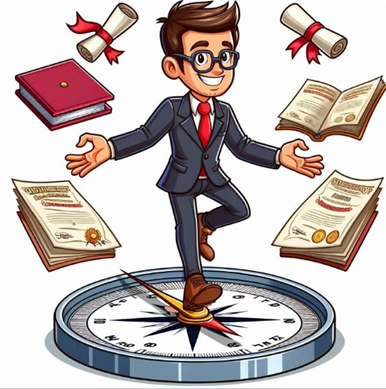 Imagine a team of explorers crossing a desert. No matter how skilled its members are or how modern their vehicles are, they may not succeed in reaching their destination without a compass. In project management, ethics serve as that compass, guiding decision-making, fostering trust, and ensuring accountability. For PMI Members, the compass is the Code of Ethics and Professional Conduct. Developed even before the first edition of the Project Management Book of Knowledge, the Code was and remains the holder of the guardrails of the project management profession. PMBOK 7 replaced knowledge areas with performance domains. The 8th is more aligned with the Agile delivery approach, whilst retaining the importance of good governance. Like the previous version, the PMBOK highlights alignment with both internal and external environments. It is important to note the focus on artificial intelligence and sustainability. Principles of project management PMBOK 8 simplified the 12 principles from the 7th edition to create a more focused and actionable foundation for modern project management. The principles of project management are aligned with the values of PMI’s Code of Ethics and Professional Conduct. They do not follow the same format, and they are not duplicative; rather, the principles and the Code of Ethics are complementary. ·Adopt a holistic view: Consider the project within its larger organizational and ecosystem context. ·Focus on value: Prioritize delivering tangible value and aligning project outcomes with strategic goals. ·Embed quality into processes and deliverables: Integrate quality throughout the project lifecycle, not just as a final check. ·Be an accountable leader: Take ownership and responsibility for the project's success and outcomes. ·Integrate sustainability within all project areas: Include environmental and social considerations in project work. ·Build an empowered culture: Foster a project environment that empowers team members. Enterprise environmental factors: Internal and external to the Organization ·The standard emphasises the impact of organizational culture, structure, and governance. Aspects like vision, mission, values, beliefs, cultural norms, leadership style, hierarchy and authority relationships, organizational style, ethics, and code of conduct remain critical success factors, as well as a framework for ethical decision making. Social and cultural influences and issues. External factors include political climate, regional customs and traditions, public holidays and events, codes of conduct, ethics, and perceptions. Artificial Intelligence (AI) AI ethical issues, especially the responsible use of AI tools and the negative impact on project team members, are an especially important aspect. Topics like data privacy and security can be addressed using technical controls. Issues like bias and fairness require special attention from project managers. Lack of clarity on who is responsible when AI-driven decisions go wrong can create confusion and an unending blame game. AI agents cannot be (yet) included in a Responsible, Accountable, Consulted, or Informed (RACI) matrix. Although their use is unavoidable, the responsibility and accountability remain with the human user. The use of AI is dependent on context, and it should be assessed for each project through a decision-making process to determine when AI can assist with tasks or provide more time for other valuable activities. The evaluation should be focused on the use of AI to produce project artifacts. Initiative-taking measures should be considered to identify and assess the risk of incorporating AI and determine if it is acceptable or it should be controlled. Below is a list of some ethical concerns related to the use of AI in projects
·Diversification of the data sets on which the AI system is trained; ·Periodic tests conducted on the AI system, with particular focus on bias; and ·Involvement of different teams in the development of the AI system. Procurement is another ethics area of focus that PMBOK 8 provides guidance on. In chapter X4.9.2, Sensitivity of Legal Actions and Upholding Ethics Codes, the standard provides considerations to avoid impact on project outcomes and stakeholder relationships: ·Nuanced communication. ·Escalation protocols. ·Confidentiality. ·Impartiality. PMBOK 7 explicitly references the PMI Code of Ethics as a complementary and essential guide for project professionals. This code provides the specific rules for ethical conduct, based on core values of honesty, responsibility, respect, and fairness.
|
Trust the Data - but Not Blindly: An Ethics Bistro on AI
|
It was a rainy Tuesday when the red flag popped up. The AI tool, designed to optimize resource allocation across our project portfolio, had flagged three critical projects for delay. The model’s recommendation? Shift half the team from Project Titan to Project Eclipse to balance out workloads. At first glance, it seemed logical. The resource allocation maps, and velocity graphs supported the reallocation. But something did not sit right. I had collaborated closely with Titan’s team leads for months. They were on the verge of a breakthrough with a critical client deliverable. Moving people now, even with Eclipse falling behind, could cause a domino effect across our most valuable account. I called a huddle. “Why did the model deprioritize Titan?” I asked the AI SME. “It is based on risk scoring from delivery variance, budget utilization, and resource burn. Titan looked stable, so it pulled from there.” “But it does not know the client conversation we had last week. Titan’s ‘stability’ is built on momentum we cannot afford to interrupt.” That was it. The AI had the data but not the context. We chose not to follow the recommendation. Instead, we manually adjusted scope and brought in temporary support for Eclipse. It was a tough call, but three months later, Titan delivered on time and exceeded client expectations. Eclipse caught up too—without derailing the portfolio. That experience taught me something: AI is brilliant at pattern recognition, but it does not see what you know. It does not read nuance. And it does not carry responsibility. So, when should project managers trust AI—and when should we intervene? Trust AI when:
But intervene when:
AI is like a junior analyst with infinite memory and no emotional baggage. But it lacks judgment, and judgment is where leadership lives. As project managers, we are not just responsible for outcomes; we are stewards of values. According to the PMI Code of Ethics, we are bound to act with responsibility, respect, fairness, and honesty. Blindly following AI no matter how accurate without human oversight may compromise all four. Use AI like a compass not a map. Let it guide your thinking, but do not let it override your wisdom. Because when things go south, the algorithm will not be in the room explaining the outcome you will. So next time your AI flags a decision, pause. Ask: Does this align with what I know, what I have seen, and what matters most? If the answer is no, trust yourself and intervene. Reference: Webinar: Ethical Project Leadership in the digital age Webinar: When to Trust AI and When to Intervene
|

Ethical Leadership in the Digital Age
|
The rapid pace of technological innovation has transformed industries, workplaces, and the way we live. While these advancements have brought remarkable benefits, they also present unique challenges for leaders, particularly in maintaining ethical standards. Ethical leadership in the digital age is not just about making decisions that comply with laws and regulations but also ensuring those decisions align with core values and principles. Navigating Complex Ethical Landscapes Digital technologies often blur the lines between right and wrong, especially when decisions involve data privacy, artificial intelligence, or automation. Leaders must grapple with questions like: How much data collection is too much? Is it ethical to replace human jobs with AI? These dilemmas require a framework for thoughtful decision-making. The Project Management Institute (PMI) provides a valuable Ethical Decision-Making Framework (EDMF) that can guide leaders through these complex scenarios. The EDMF encourages:
Building Trust Through Transparency In a digital-first world, trust is a cornerstone of ethical leadership. Leaders must prioritize transparency in their decision-making processes, particularly when handling sensitive issues like data breaches or AI bias. Communicating openly about challenges and the steps being taken to address them fosters trust among employees, customers, and stakeholders. Fostering an Ethical Culture Ethical leadership also involves creating a culture where ethical behavior is encouraged and rewarded. This means setting clear expectations, providing training on ethical practices, and leading by example. When employees see their leaders making ethical choices, even when it's difficult, they are more likely to follow suit. The Role of Continuous Learning The digital age evolves rapidly, and so do its ethical challenges. Leaders must commit to continuous learning to stay informed about emerging technologies and their potential implications. This includes engaging with diverse perspectives to better understand the societal impact of their decisions. Conclusion Ethical leadership in the digital age is about more than avoiding scandals or staying compliant. It's about making principled decisions that benefit not just the organization but society as a whole. By leveraging frameworks like PMI’s EDMF, fostering transparency, and committing to continuous learning, leaders can navigate the ethical complexities of the digital world. What’s your take? How do you think leaders can better prepare themselves for the ethical challenges posed by digital transformation? Share your thoughts in the comments below! Reference: |

How to File a Good Ethics Complaint: A Simple Guide
| Ever found yourself in a situation where you witnessed unethical behavior by a covered individual (PMI Member, PMI Volunteer, PMI Credential holder, or Certification applicant) and wondered what to do next? Filing a complaint can be daunting, but it's an important step to maintain integrity in our professional community. Here's a straightforward guide to help you file a good Ethics complaint. Find the Right Motivation First things first, why do you want to file this complaint? Is it because you're upset and want revenge, or because you genuinely want to stop unethical behavior? The latter is the right reason. Filing a complaint takes courage as complaints cannot be anonymous. Keep Perspective Remember, filing a complaint is just about reporting what you saw. The Ethics Review Committee will investigate the facts and take action if needed. You're not accusing anyone; you're just sharing your observations. Focus on Facts This is crucial. Your complaint needs to be backed up with fact-based evidence. Strong supporting documents are essential for building a compelling and persuasive case. These documents should be specific, relevant, and verifiable, providing concrete proof of the ethical violation. Examples include emails, violation-related documents, records to point out the violation, and witness statements. Take screenshots with dates and times, as digital information can be altered or deleted, especially after the Respondent is notified about the complaint. Collect sufficient evidence to support your observation and keep it organized. It is critical to collect the evidence at the time a complaint is filed. Refer to the Code of Ethics A “good” complaint should refer to the Code of Ethics and Professional Conduct paragraph believed to be violated. This will help you gather the right evidence. Remember, you can't file complaints against aspirational standards, only mandatory ones. Be Concise Keep your complaint focused and to the point. Avoid adding unnecessary documents. A well-organized, concise complaint is much easier to review. If you have a lot of documents, provide an overview and sort them in chronological order. Include Witnesses In some cases, it can be very helpful to include witnesses. Especially in "word against word" situations, witnesses can provide additional perspectives that support your complaint. Follow-up and closure It's crucial to monitor the proceedings closely, answer the questions received, and attend the hearing, as this will provide a better opportunity to understand the complaint. Act for the Greater Good The Vision and Purpose section of the Code of Ethics and Professional Conduct starts with the sentence: “As practitioners of project management, we are committed to doing what is right and honorable. We set high standards for ourselves and aspire to meet these standards in all aspects of our lives-at work, at home, and in service to our profession.” Walk the Talk Follow the Code of Ethics and Professional Conduct: 2.3.2: “We report unethical or illegal conduct to appropriate management and, if necessary, to those affected by the conduct” 2.3.3: “We bring violations of this Code to the attention of the appropriate body for resolution” 2.3.4 “We only file ethics complaints when they are substantiated by facts”
Let's work together to uphold the highest standards in project management! What recommendations can you give to make ethics complaints better? |


