Professionalism Under Pressure: Choosing Respect When Conflict Escalates
Categories:
Ethics as a competence,
Behavior,
courage honesty responsibility respect fairness,
code of ethics,
Ethical Leadership,
Decision-making,
Ethics Insight Team,
Ethics Bistro,
Business Ethics,
code of conduct,
Power Skills,
Decision-making,
Business Ethics,
Professionalization,
practitioner,
Ethical Dilemma,
respect,
Professional Responsibility,
Honesty,
Respect,
Responsibility,
Fairness,
Code of Ethics and Professional Conduct,
Human,
fairness,
communication,
honesty,
responsibility,
professonal conduct,
Conflict,
empathy,
EDMF,
Ethics in Communication,
Agile,
Decision Making,
Ethics,
Legal Project Management
Categories: Ethics as a competence, Behavior, courage honesty responsibility respect fairness, code of ethics, Ethical Leadership, Decision-making, Ethics Insight Team, Ethics Bistro, Business Ethics, code of conduct, Power Skills, Decision-making, Business Ethics, Professionalization, practitioner, Ethical Dilemma, respect, Professional Responsibility, Honesty, Respect, Responsibility, Fairness, Code of Ethics and Professional Conduct, Human, fairness, communication, honesty, responsibility, professonal conduct, Conflict, empathy, EDMF, Ethics in Communication, Agile, Decision Making, Ethics, Legal Project Management


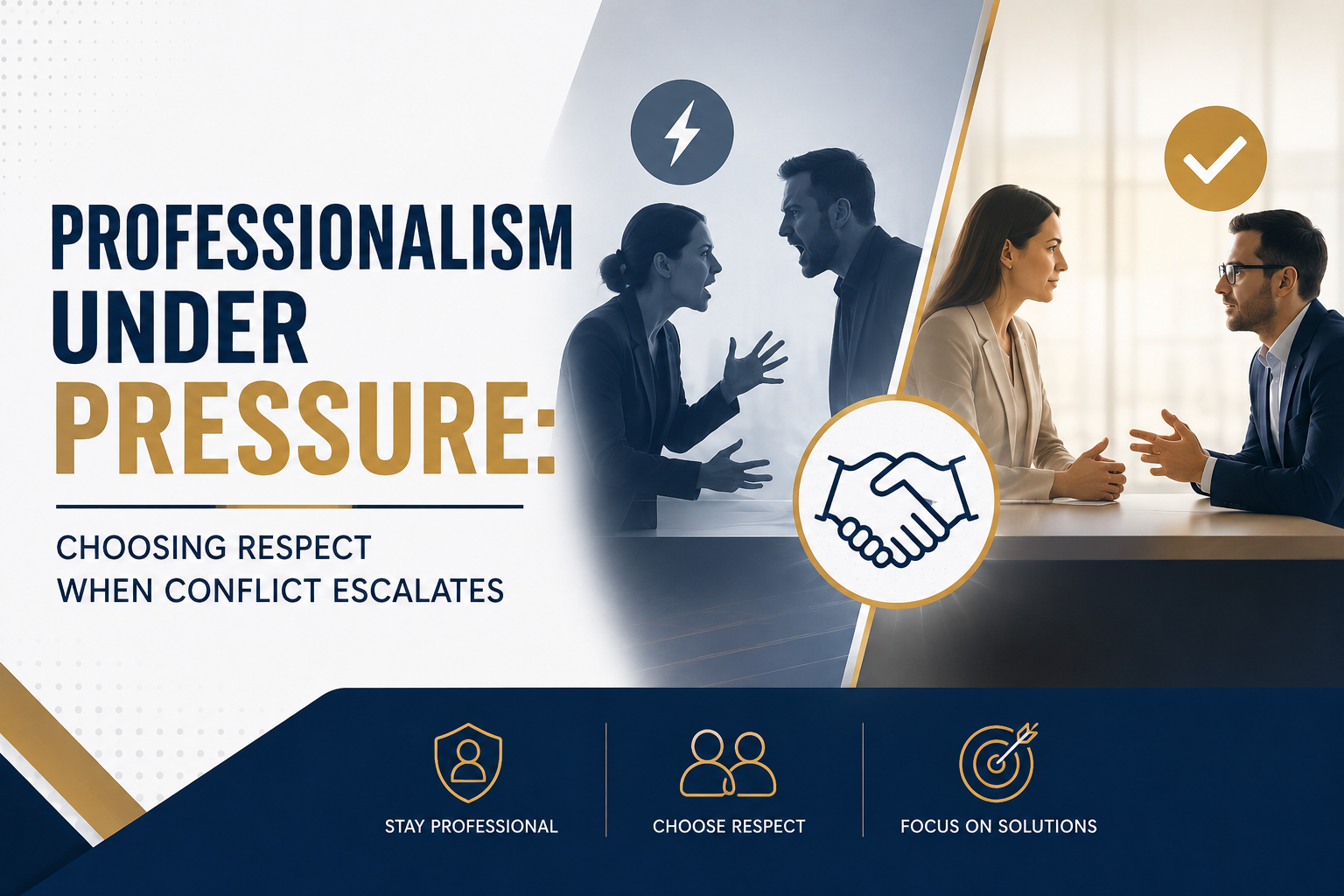 The message arrived at 11:47 p.m. It wasn't long. Just a few lines. But every sentence carried anger. A disagreement over a contract had been going on for weeks. There were questions about payment, responsibilities, and what each side believed had been promised. The conversation had already become uncomfortable. Now, the latest message crossed a different line. There were accusations. Personal insults. A veiled threat about “making sure people know” what had happened. And then came a remark about the other person's background. For a moment, the easiest response seemed obvious: Fight back. After all, they started it. But this is where professionalism is really tested not when everyone is calm and reasonable, but when someone gives us every reason to lose our composure. Conflict is part of professional life. Employment decisions can disappoint people. Contracts can fall apart. Candidates can feel unfairly treated. Managers can become frustrated. Clients and suppliers can disagree about commitments. Sometimes we are genuinely wronged. And sometimes we may be the ones who got something wrong. Either way, disagreement does not give us permission to abandon respect. The PMI Code of Ethics and Professional Conduct places Respect among its four core values. That sounds simple until we find ourselves staring at a message that feels deliberately insulting, threatening, or unfair. Respect is easy when it is reciprocated. It becomes meaningful when it isn't. The person receiving that late-night message eventually did something surprisingly difficult. They didn't respond. Not immediately. They saved the communication, stepped away from the computer, reviewed the facts, and went to bed. The next morning, they wrote back. The response acknowledged the disagreement. It clarified the contractual position. It proposed using the appropriate process to resolve the matter. There were no insults. No threats. No attempt to embarrass the other person. It wasn't weakness. It was professional self-control. Respect doesn't mean tolerating abuse. It doesn't mean remaining silent when discriminatory language is used. It doesn't mean accepting intimidation or allowing retaliation to go unchallenged. And it certainly doesn't mean avoiding difficult conversations. Sometimes respect means setting a boundary. Sometimes it means documenting what happened and involving Human Resources, legal counsel, procurement, recruitment leadership, or another appropriate authority. Sometimes it means saying: “I am willing to discuss the issue, but I will not continue the conversation in this manner.” That is respect too. Because respect isn't only about how we treat people when we agree with them. It is also about recognizing their dignity when we don't. And perhaps that's the uncomfortable part of professional ethics. We cannot control the tone of the message that arrives at 11:47 p.m. We cannot control whether someone tries to intimidate us, insults us, uses discriminatory language, or threatens retaliation. But we can control whether we respond in kind. We can choose to protect our boundaries without attacking someone else's dignity. We can choose accountability without humiliation. We can choose firmness without hostility. We can choose Respect. Not because the other person necessarily deserves our kindness in that moment, but because our professional values should not depend on someone else's behavior. The next time a difficult message lands in your inbox, ask yourself: When someone crosses the line with us, can we hold the line without crossing it ourselves? |
Navigating AI in Project Management: A Comparison with Racing Co-Pilots and Driverless Cars
Categories:
Ethics as a competence,
Values,
values,
Ethical Leadership,
Decision-making,
Ethics Insight Team,
Ethics Bistro,
trust,
Ways of Working,
Decision-making,
Values,
AI,
Do the right thing,
Ethical Dilemma,
respect,
Professional Conduct,
Honesty,
Respect,
Responsibility,
Trust,
honesty,
responsibility,
professonal conduct,
empathy,
professional conduct,
Ethics in Communication,
Leadership,
Decision Making,
Ethics
Categories: Ethics as a competence, Values, values, Ethical Leadership, Decision-making, Ethics Insight Team, Ethics Bistro, trust, Ways of Working, Decision-making, Values, AI, Do the right thing, Ethical Dilemma, respect, Professional Conduct, Honesty, Respect, Responsibility, Trust, honesty, responsibility, professonal conduct, empathy, professional conduct, Ethics in Communication, Leadership, Decision Making, Ethics
 Artificial Intelligence (AI) is revolutionizing industries, and project management is no exception. With advanced tools supporting decision-making, risk mitigation, and efficiency, the project management landscape is increasingly intertwined with AI technologies. However, this evolution raises questions about human responsibility, autonomy, and ethics—questions like those faced in the realms of racing co-pilots and driverless cars. This blog explores the pros and cons of using AI in project management and compares these dynamics with racing environments and autonomous vehicle scenarios, focusing on the balance between human involvement and ethical considerations.  The Role of AI in Project Management AI-driven tools, such as virtual assistants and machine learning algorithms, are increasingly used to streamline project management processes. From schedule optimization and predictive analytics to stakeholder communication and resource allocation, AI empowers project managers to make well-informed and efficient decisions. The Racing Co-Pilot Analogy: Shared Responsibility, Enhanced Performance In professional racing environments, a co-pilot performs critical tasks: navigating the course, analysing conditions, and advising the driver. This relationship mirrors the human-machine collaboration often seen in project management. Here, AI acts as a "co-pilot," assisting project managers while leaving primary control in human hands. Let us examine this analogy: Pros of AI as a Co-Pilot in Project Management:
The Driverless Car Comparison: Autonomous AI in Project Management Shifting perspective, consider driverless cars: vehicles fully controlled by AI, requiring minimal human intervention. Some envision project management systems that resemble a driverless car—autonomous AI overseeing the project's execution from start to finish. While promising, this model has risks and challenges to consider. Pros of Autonomous AI in Project Management:
Ethical Considerations: Responsibility and Integrity Both racing co-pilots and driverless cars illustrate contrasting extremes in human-machine collaboration. A key differentiator in these scenarios is ethical responsibility:
Conclusion: The Road Ahead for AI in Project Management The racing co-pilot and driverless car analogies shed light on the pivotal balance required in leveraging AI for project management. While AI offers immense benefits—such as efficiency, precision, and scalability—it also raises concerns about accountability, ethical responsibility, and judgment. As the PMI Code of Ethics underscores values like fairness, honesty, and responsibility, project managers must ensure AI tools serve as partners rather than replacements, fostering trust and inclusivity. By choosing the right path—whether enhanced collaboration or selective autonomy—project managers can steer their projects responsibly toward success while maintaining the ethical values essential to effective leadership. Related discussion topic: Can project management run on AI autopilot?https://tinyurl.com/mr497je7 |
Can empathy turn the tide in a project?
Categories:
respect,
fairness,
honesty,
empathy,
professional conduct,
Leadership,
Ethics,
Organizational Culture
Categories: respect, fairness, honesty, empathy, professional conduct, Leadership, Ethics, Organizational Culture
| Note – Readers might find this story distressing as it involves a team member passing away. Please use your own judgement. Helen has heard it a few times, her counterpart from the supplier’s side wanted to attend to a team member related emergency. Maya, the new team member has arrived just last week to take on a change management piece of work for a large and complex program. Maya hasn’t been on site but once. When Maya arrived to meet her new team, she excused herself as soon as she could – not feeling well and suspecting that she had food poisoning. Maya joined a couple of conference calls during the week. However, she has not joined the call she scheduled just before the weekend. Maya’s colleagues have been trying to get in touch with her via phone and email with no response from Maya’s side. Knowing that she wasn’t feeling well, they thought initially that she might need to rest. As a new week started and another day went by, with Maya not responding to emails, text messages or phone calls, they thought they would ask the hotel staff to check on her. The staff advised that they have not entered the room for a few days respecting the “Do not disturb” sign that was put up. Fearing the worst, the team urged the hotel staff to get into the room to check on her. Unfortunately, fears translated into reality as she was found in her room resting peacefully but with no sign of life! What could have happened if the team checked on Maya before? What would have happened if any of her team members accompanied her or insisted to pay her a visit or take her to the doctor? Everyone in the team was in mere shock, the emotions ranged from guilt, blame, sadness, frustration and anger. The blow was more than any team member could handle on their own. This was one of so many defining moments for Jack, who himself has moved countries to run the IT department and drive a large and complex transformation, modernizing the organization’s customers journey and building the back-bone for further incremental transformations to follow. The program has partnered with one of the off-shore IT suppliers to accompany them on the transformation journey, providing experienced resources both onshore and off-shore, flying people in and out of the country. Moving from his home country, Jack embraced his new-found home, the diversity of his teams, the variety of cultures, values, attitudes and behaviors that they all bring. Jack has been tested numerous times while driving this initiative. The organization’s policies and priorities have safety and well-being at the top. This is well advertised and communicated, with functions, activities and awareness campaigns running in every corner. However, this specific program has faced several safety and well-being challenges. The program progress was slower than anticipated, running behind schedule, there was a definite need for the team to work harder in order to catch-up. Working late and during weekends have become the norm rather than the exception. The team members have been trying their best to ensure that all of this happens while still adhering to the organisation’s policies and practices ensuring safety and well-being, especially those who were new to the country. Eighteen months since Maya’s incident, things have changed. Jack managed not only to deliver the program successfully, but also to have a happy and safe team, satisfied stakeholders, executives and the organisation’s Board. Jack managed to turn the environment from a grim, sad one that had a negative impact on the team’s health and well-being to one that is more compassionate and understanding, translating policies into actions. Furthermore, Jack was now looking forward to the new executive role he’s been offered in recognition of his outstanding leadership. So how did Jack manage to turn this negative situation into a positive one, bring the team together, deliver and be promoted? Simply put “Empathy and Ethics”.
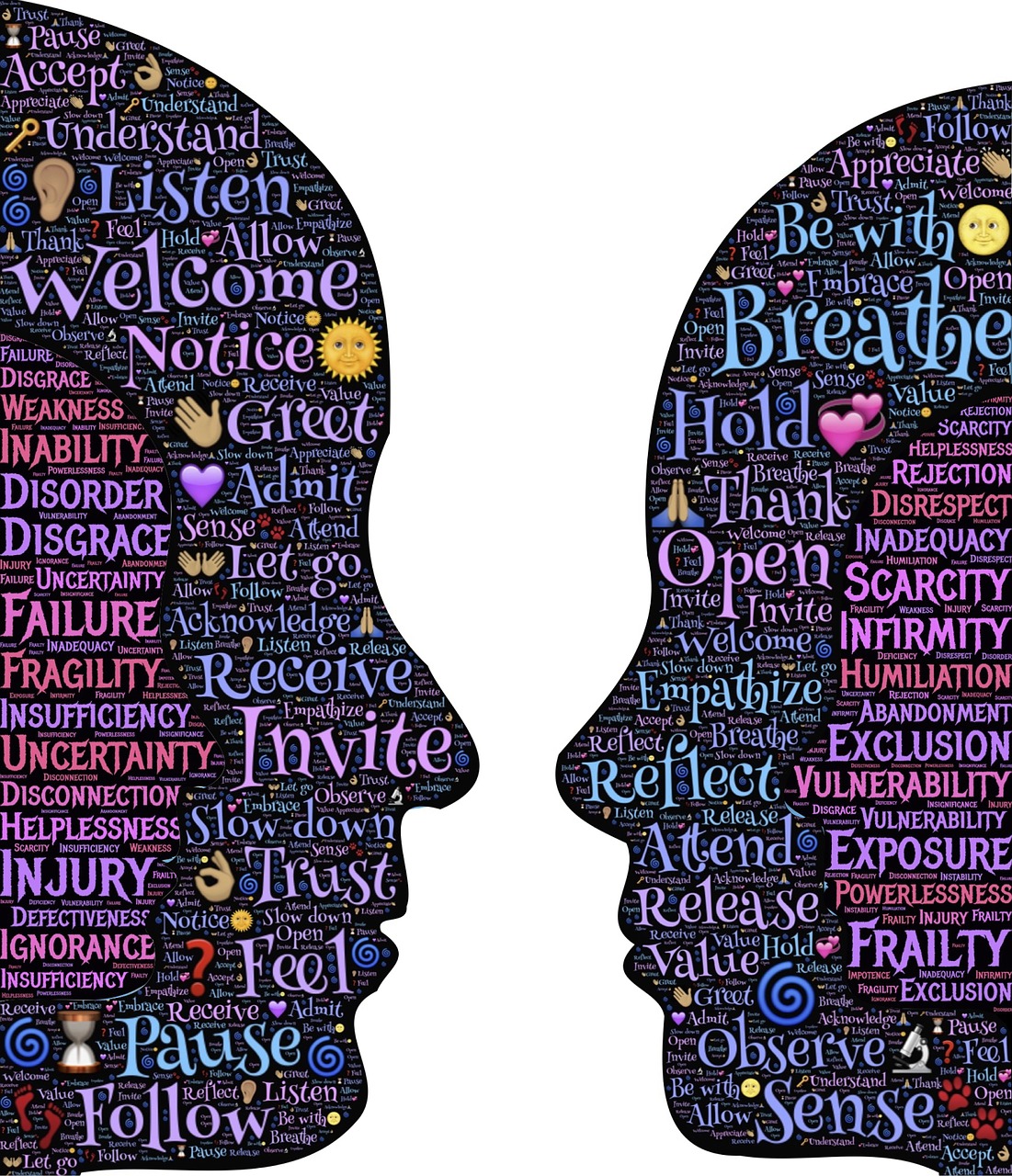
Empathy as defined by Pressley, Delores[i]”is the ability to experience and relate to the thoughts, emotions or experience of others. Empathy is more than simple sympathy, which is being able to understand and support others with compassion or sensitivity. Simply put, empathy is the ability to step into someone else’s shoes, be aware of their feelings and understand their needs”. Empathy is the oxygen breathing life into the relationship between individual and other, a metaphor introduced by Heinz Kohut (1977)[ii] Applying the questions posed by Pressley, Deloresion The Importance of Empathy in the Workplace might help us understand how Jack’s empathy played a critical role in turning the tide. Jack understood the needs of all team members Jack was well-aware of the conflicting priorities on the program, the layers of complexities within the cultures, especially co-locating client and supplier’s teams to work under one roof, bringing people from all corners of the world, while at the same time embedding new practices and policies. The supplier has won this gig in a very competitive bid, that pushed margins down. The supplier was pushing hard to meet their obligations under the contract, delivering according to schedules and timelines that have been committed as part of the bid. However, the toll that this took on team members was too dear a price to pay no matter which side they worked for. While Jack was committed to delivery, his priorities were surely team safety and well-being. He realized that there are a number of factors at play in this situation, some he would have to tackle immediately and others he would have to put in place at a later stage. His humanistic side has come to the forefront, gathering the team, going through the detailed steps of the situation, analyzing what could have been done better and what can be done in the future. His empathy; putting himself into the supplier’s shoes, understanding the context without judgement or fear, taking steps to ensure that no other staff would have to go through any similar situation. He assembled the team members who were most close to Maya, gathering data and collecting information about what has been going on with her as a person, tracing her steps from the time she landed in the country, who contacted her and which capacity, drawing the timeline and the interactions. While collecting the information, Jack demonstrated his appreciation for Maya and for every team member who got in touch with her, as well as the approach the supplier is undertaking to catch-up on delays. His empathy combined with his high ethical standards, made each and every team member share detailed information about their communications, coming to an agreement on the gaps and what to needs to be in place to ensure that this situation would not be repeated in future. In understanding each team member’s experience in this instant, Jack has been developing a close relationship with the team. What traits/behaviors did Jack have that would qualify his as empathetic? Empathy requires three things [i]: listening, openness and understanding. Jack realized that delivering a successful transformation required that all team members, no matter which camp they belong to, are to feel safe and be well - both physically and mentally. Hence, his understanding of the team’s feelings and emotions were critical to the next steps that he had to undertake. Empathy drove Jack to have a meeting with the executives and organization’s Board to negotiate more acceptable timelines taking into consideration the current situation and the progress rate to date. At the same time, he worked with the team to re-visit the schedule and suggest a couple of alternatives for delivery. This bad news has already claimed the previous head! Yet, Jack was not deterred. He believed firmly that there was a fine balance that needed to be maintained between delivery and well-being. He cared about his team, every single individual and the incidents that they have been through to date, while also caring about successful delivery of this very critical strategic initiative. What role does empathy play in the workplace? Why does it matter? Jack’s understanding of the team members was critical to understanding the challenges that he would face. He made the team feel safe by not resorting to blame, but by listening openly and without any judgement. This openness and understanding made the next steps much easier and as Jack had a clearer picture of the challenges he and the team would face. As each team member felt safe sharing their experiences, Jack had a better understanding of the changes that were needed. He identified areas for improvement such as formulating a “body system” for each employee, re-negotiating a more acceptable timeline - assisting struggling teams in catching-up while maintaining their well-being. So why isn’t everyone like Jack - more empathetic at work? Jack was one of the most humanistic, empathetic and ethical bosses the team and organization could ever have. With empathy and ethics, he managed to get the team through these heart-breaking times. Empathy was not easy and took lot of hard work on Jack’s part, and this helped him put his head and shoulders above other leaders within the organization, where not only he was recognized for his outstanding leadership by his teams, his colleagues, the organization and the Board, but also his professional community. Would you consider yourself to be empathetic? Would you share your empathy story? or how about sharing a “lack of empathy” story along with its impact? References [i]https://www.psychologytoday.com/us/blog/empathy-and-relationships/201701/the-connection-between-empathy-toward-others-and-ethics [ii]http://www.sbnonline.com/article/the-importance-of-empathy-in-the-workplace/
|