Ethics Bistro
by Tara Leparulo,
Shenila Shahabuddin, Juan Posada Toro, Albert Agbemenu, Ming Yeung, Kannan Ganesan, Yannick Arekion, Witold Hendrysiak, Stelian ROMAN, Laszlo J. Kremmer MBA, CSPO®, CSM®, PMP®

We all tackle ethical dilemmas. Wrong decisions can break careers. Which are the key challenges faced? What are some likely solutions? Where can we find effective tools? Who can apply these and why? Dry, theoretical discussions don't help. Join us for lively, light conversations to learn, share and grow!
View Posts By:
Tara Leparulo
Shenila Shahabuddin
Juan Posada Toro
Albert Agbemenu
Ming Yeung
Kannan Ganesan
Yannick Arekion
Witold Hendrysiak
Stelian ROMAN
Laszlo J. Kremmer MBA, CSPO®, CSM®, PMP®
Past Contributors:
Dr. Deepa Bhide
Lily Murariu
Alankar Karpe
Bryan Shelby
Amany Nuseibeh
Mohamed Hassan
Fabio Rigamonti
Simona Bonghez
John Watson
Lissa Muncer
Valerie Denney
Majeed Hosseiney
Gretta Kelzi
Enrique Cappella
Rocio Briceno
Karthik Ramamurthy
Recent Posts
Professionalism Under Pressure: Choosing Respect When Conflict Escalates
The Credential Is a Promise: What Do Three Letters Really Say?
When the schedule slipped, so did accountability: Ethical reflections from an early ERP project - Part 2
When the schedule slipped, so did accountability: Ethical reflections from an early ERP project - Part 1
Do You Like to Pick and Choose Your Projects?
Categories
Aerospace and Defense,
Agile,
AI,
Ambassadors,
Artificial Intelligence,
Ask the Experts,
Behavior,
bottom line,
Business Acumen,
Business Ethics,
Business Ethics,
CEO,
CFO,
Change Management,
Chapters,
CIO,
code of conduct,
code of ethics,
Code of Ethics and Professional Conduct,
communication,
Conflict,
Construction,
courage honesty responsibility respect fairness,
Cultural Diversity,
Culture,
CxO,
Decision Making,
Decision-making,
Decision-making,
Digital Project Management,
Digital Transformation,
Diversity,
Do the right thing,
dugutalization project manager professionalism social media,
economy,
EDMF,
EMAG,
empathy,
Ethical Dilemma,
Ethical Leadership,
Ethics,
Ethics,
Ethics,
Ethics,
Ethics,
Ethics,
Ethics,
Ethics as a competence,
Ethics Bistro,
Ethics in Communication,
Ethics Insight Team,
Fairness,
fairness,
Governance,
Honesty,
honesty,
Human,
Information Technology,
Leadership,
Legal Project Management,
Legilsation,
Lessons Learned,
Negotiation,
Nexus,
Organizational Culture,
Organizational Project Management,
PMI Program Management,
PMI Talent Triangle,
PMIAA,
Portfolio Management,
Power Skills,
practitioner,
Product Management,
Professional Conduct,
professional conduct,
Professional Responsibility,
Professionalization,
professonal conduct,
Program Management,
Project,
Project Management,
project manager,
Regulatory,
research,
Respect,
respect,
Responsibility,
responsibility,
Risk Management,
Stakeholder Management,
Strategy,
Sustainability,
Team Assessment,
Teams,
Thought leadership,
tools,
Trust,
trust,
Values,
Values,
values,
Virtual Experience Series,
volunteers,
Ways of Working
Date
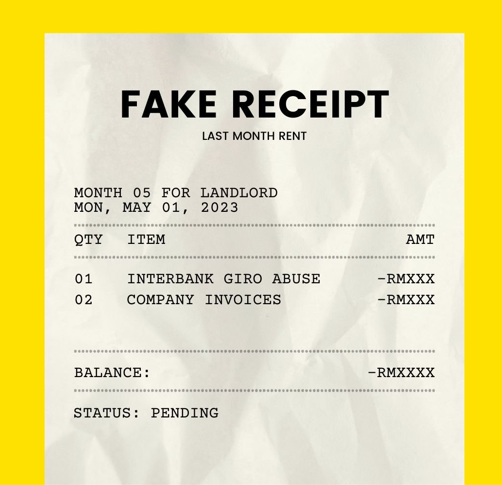
The rise of generative artificial intelligence has ushered in unprecedented efficiencies across industries. However, as highlighted in the article “Phony AI-Created Receipts Become Real Problem for Businesses” (PYMNTS, 2025), it has also enabled new forms of ethical misconduct. The report reveals a troubling trend: employees using AI-powered image generation tools to create fraudulent expense receipts. Platforms like AppZen and Ramp have detected a surge in falsified documents, with AppZen reporting that 14% of all fraudulent submissions last month were AI-generated, a stark increase from zero the previous year. These receipts often feature realistic details such as wrinkles, itemized menus, and forged signatures, making them difficult to detect.
This misuse of AI technology violates the core principles of ethical conduct, particularly within the project management profession. The Project Management Institute (PMI) Code of Ethics and Professional Conduct emphasizes four foundational values: responsibility, respect, fairness, and honesty (PMI, 2016). Falsifying receipts for reimbursement breaches all four values. It undermines trust, exploits organizational systems, and shifts financial burdens unfairly with actions that are antithetical to the integrity expected of project professionals.
To navigate such ethical dilemmas, PMI offers the Ethical Decision-Making Framework (EDMF), a structured tool that guides professionals through evaluating options, considering stakeholder impact, and aligning decisions with PMI’s core values (PMI, 2019). The EDMF encourages reflection on whether an action is legal, fair, and in line with professional standards. In cases like AI-generated receipt fraud, the framework would clearly identify the behavior as unethical, regardless of technological sophistication or perceived harmlessness.
Discrediting the use of AI for fraudulent purposes is essential. While AI can enhance productivity, its misuse for deception erodes organizational culture and exposes companies to financial and reputational risks. Ethical misconduct, especially when aided by advanced tools, must be met with robust countermeasures. These include implementing AI-detection systems, conducting regular audits, and fostering a culture of ethics through training and leadership modeling.
Project professionals must lead by example. As stewards of organizational resources and strategy, they are uniquely positioned to champion ethical behavior. This includes reporting misconduct, mentoring peers, and integrating ethical considerations into project planning and execution. Organizations should also reinforce ethical standards by embedding the PMI Code of Ethics into performance evaluations and decision-making processes.
In conclusion, the project management community must remain vigilant and proactive. The misuse of AI to falsify expense receipts is not merely a technical issue, but a moral one. By adhering to PMI’s Code of Ethics and leveraging the EDMF, professionals can uphold integrity, protect organizational assets, and ensure that technological advancements serve the greater good.
As the use of AI becomes mainstream and widespread, the improper application becomes prevalent. How would you practice ethical leadership in this situation? What guardrails would you implement to mitigate the ethical use of AI? Our Ethics Advisory Team loves to hear from you on your perspectives.
References
Project Management Institute. (2016). Code of Ethics and Professional Conduct. https://www.pmi.org/about/ethics/code
Project Management Institute. (2019). Ethical Decision-Making Framework. https://www.pmi.org/about/ethics/ethical-decision-making-framework
PYMNTS. (2025, October 25). Phony AI-Created Receipts Become Real Problem for Businesses. https://www.pymnts.com/news/security-and-risk/2025/phony-ai-created-receipts-become-real-problem-for-businesses |
Posted
by
Ming Yeung
on: November 14, 2025 02:39 AM
|
Permalink |
Comments (2)
| 
In the bustling offices of YKF Technical Solutions, a mid-sized IT firm, Lai-mui, its project manager, was leading a high-stakes software deployment for a government client. With tight deadlines and mounting pressure, Lai-mui delegated expense reporting to her trusted team lead, Deejay. Weeks later, during a routine audit, discrepancies surfaced as receipts for meals, travel, and equipment were inflated or entirely fabricated. Deejay admitted to falsifying receipts to “compensate for overtime and stress.” Lai-mui was stunned. What seemed like a minor infraction was, in fact, a serious ethical breach.
This scenario is not uncommon, yet it strikes at the heart of the PMI Code of Ethics and Professional Conduct, which is built on four core values: Responsibility, Respect, Fairness, and Honesty.
Violations of PMI’s Core Values
- Responsibility: Deejay failed to take ownership of his actions and misused organizational resources. Ethical responsibility demands accountability, especially in financial stewardship. Falsifying receipts undermines trust and exposes the organization to legal and reputational risks.
- Respect: By manipulating expense reports, Deejay disrespected the trust placed in him by Lai-mui, the client, and the company. Respect includes honoring the dignity of others and the resources entrusted to us—including budgets and public funds.
- Fairness: Inflated claims create an uneven playing field. Honest employees, unlike Deejay, who follow protocol are disadvantaged, and project funds are misallocated. Fairness requires transparency and equal treatment, not personal gain at the expense of others.
- Honesty: The act of falsifying receipts is a direct violation of truthfulness. PMI’s Code of Ethics and Professional Conduct emphasizes that honesty is the cornerstone of ethical project management. Deejay’s deception eroded stakeholder confidence and jeopardized the integrity of the project.
Applying the PMI Ethical Decision-Making Framework (EDMF)
Lai-mui, now faced with an ethical dilemma, turned to the PMI Ethical Decision-Making Framework. The EDMF guided her through:
- Assessment: Identifying the facts and stakeholders affected.
- Alternatives: Considering disciplinary action, restitution, and process improvements.
- Analysis: Evaluating options against PMI’s values.
- Application: Choosing a course of action aligned with ethical standards.
- Action: Reporting the incident, initiating corrective measures, and reinforcing ethical training.
Call to Action
The project management community must treat ethics as a living practice, not a checkbox. We must:
- Educate teams on PMI’s Code of Ethics and Professional Conduct.
- Embed ethical discussions into retrospectives and planning.
- Encourage transparent reporting and protect whistleblowers.
- Use the EDMF to navigate gray zones with clarity.
Conclusion
Ethical leadership is not just about doing things right; it’s about doing the right things. Falsifying receipts may seem minor, but its ripple effects can compromise entire projects. Let’s recommit to the values that define our profession and lead with integrity, every step of the way.
Questions for Reflection
- How can organizations prevent expense fraud without creating a culture of fear?
- What systems should be in place to detect and deter falsified claims?
- How do we empower team members to report unethical behavior safely?
- What role should project managers play in modeling ethical financial practices?
References:
Project Management Institute, Inc. (2025). Ethics. pmi.org. https://www.pmi.org/about/ethics
Project Management Institute, Inc. (n.d.). Ethics Guidelines. pmi.org. https://www.pmi.org/about/ethics/guidelines
Project Management Institute, Inc. (n.d.). PMI Code of Ethics and Professional Conduct. pmi.org. https://www.pmi.org/-/media/pmi/documents/public/pdf/ethics/pmi-code-of-ethics.pdf
====
|
Posted
by
Ming Yeung
on: October 16, 2025 01:28 AM
|
Permalink |
Comments (4)
|  Posted
by Ming Yeung
on: December 01, 2023 12:00 AM
| Permalink |
Comments (14)
Posted
by Ming Yeung
on: December 01, 2023 12:00 AM
| Permalink |
Comments (14)
| The end of the year is a generous time when we all expect to give and receive, to go over the year’s achievements and to prepare for the New Year.
For project managers, and for all professionals involved in management of projects, programs and portfolios, the month of December 2016 brought a historical and ground breaking development. The U.S. President Barack Obama signed bill S.1550, the Program Management Improvement and Accountability Act of 2015 (PMIAA).
With this law in place, the CxO class (CEOs, CIOs and CFOs) in the agencies of the U.S. federal government are now directed to use and apply project and program standards in their work. This is a major shift in management practices, with direct social and economic impact, not only in the United States but also around the world.
The Project Management Institute (PMI) has been a strong advocate for the professionalization and recognition of project and program management as an occupation. This cause has been pursued since the late 1960s, and the support now offered by the U.S. federal government is the crowning achievement of over five decades of professional advocacy. The message is clear not only for the professionals in private and public sector in the United States: Project management brings professionalism, accountability, efficiency and ultimately success to any management agenda. Our hope is that the impact and implications will serve as the basis for similar government initiatives around the world.
Let’s examine this monumental achievement, which supports the process of professionalization of project and program management, and see how ethics comes into play.
PMI and others have exerted intense and prolonged efforts to move toward the professionalization of project and program management. These efforts have combined creation of standards, education in project and program management, defining the right skill sets and suggesting, via thought leadership, ways to improve business practices. But these practices must go hand in hand with ethics and high integrity, as they are the nexus of business and strategy for any value-based professional activity.
Sharing the responsibility for benefits in the field of professional project, program and portfolio management requires ethics, as well as “values” in the form of general ethical principles on how professionals should treat the people they work with and what sorts of actions are regarded as right or wrong.
With the PMIAA, the CxO class is called upon to engage their businesses in ethical practices in a desire to do the right thing, and convince stakeholders of their capability of doing the right thing, thus achieving the right thing!
The ability to “do the right thing” should be enabled internationally with the appropriate regulatory support and legislation being enacted by additional governments world-wide.
We applaud the efforts and support of the United States federal government, and hope more jurisdictions will follow their lead.
|
Posted
by Lily Murariu
on: February 10, 2017 07:39 PM
| Permalink |
Comments (9)
|




