
Viewing Posts by Witold Hendrysiak
Looking for the most important information on pmi.org? Here are the key links.
Categories:
Ethics
Categories: Ethics


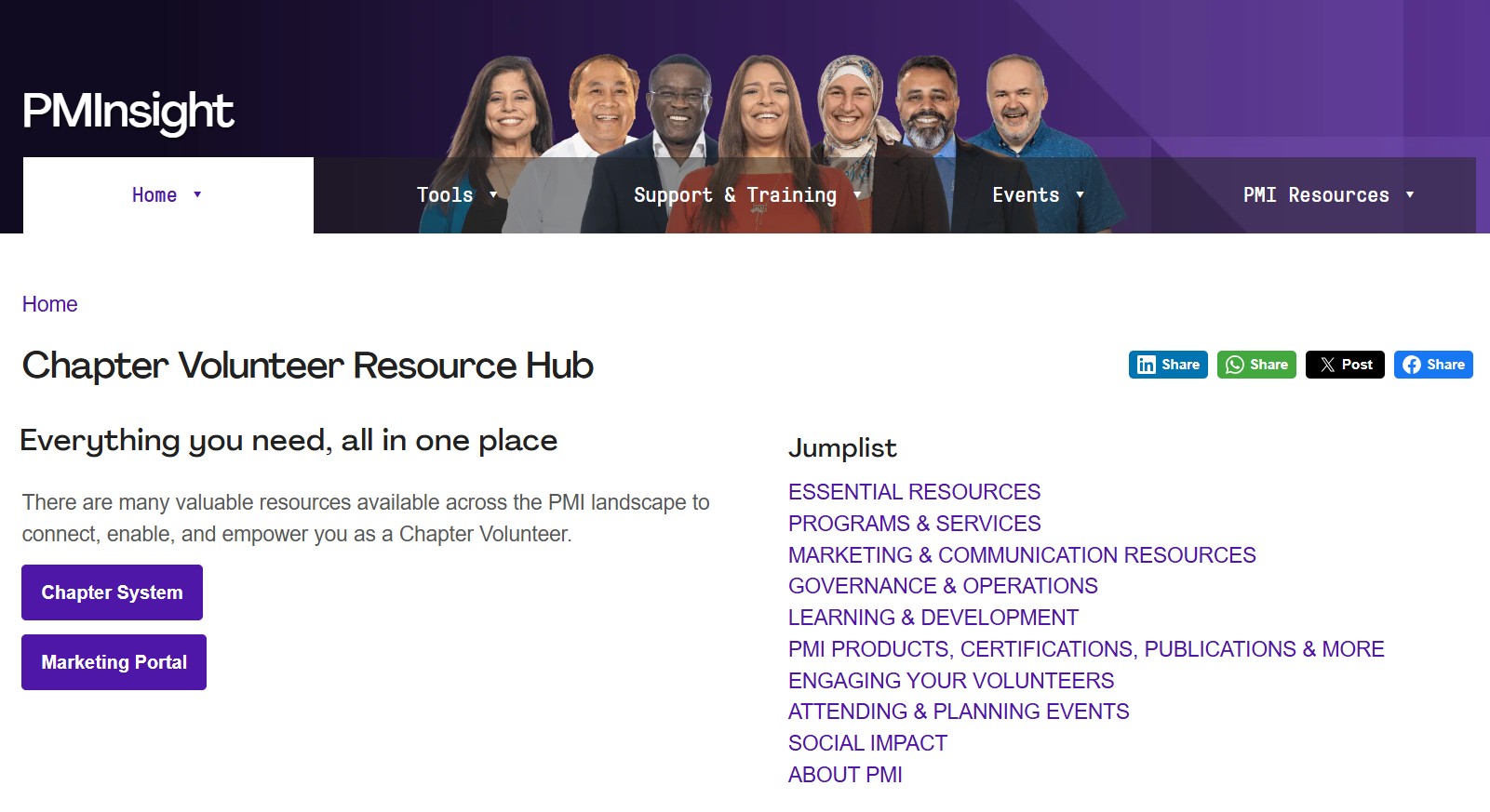 Contact and Issue Reporting At the very bottom of the pmi.org homepage, the Contact Us link is the entry point to get help or report non-ethical but administrative issues, including membership, certification, and PDU issues, as well as exam security complaints, such as exam invalidation and membership payment issues. Volunteer Resources The Chapter and Volunteer Resources page (pmi.org/leadership-central/chapter-volunteer-resources) should be the favorite page for every PMI volunteer. It offers a well-structured collection of links to documents that every PMI volunteer should keep handy. Among many documents, you can find the Chapter Conflict Management Program for chapter-level dispute resolution. This document provides a fair and timely process for addressing conflicts that may arise among volunteers and/or members within chapters. Governance Documents and Grievance Policy All key PMI governance documents are consolidated under pmi.org/about/leadership-governance/documents. Among them, the Complaint, Dispute and Grievance Policy outlines how PMI receives, reviews, and resolves formal complaints, disputes, and grievances for members, volunteers, components, customers, employees, and other stakeholders. It can be used for policy-related issues (e.g., a nomination committee failing to follow procedures) and operational issues (e.g., system downtime affecting member registration). It does not address ethical matters. Ethics Complaint Process For ethics-related issues, go to pmi.org/ethics. Follow the PMI Code of Ethics and Professional Conduct and the Ethics Case Procedures documents. These provide the correct process for submitting and handling ethics complaints. In case you decide to file a complaint, be sure to start by identifying which mandatory sections of the code were violated. What are your favorite links on the pmi.org website? Which should be added to this short compendium? |
Facing an ethics complaint? Don’t Panic: Hints for PMI Ethics Complaint’s Respondent
| Getting notice that you’re accused of violating PMI’s Code of Ethics and Professional Conduct is unsettling. Breathe. This is the moment to steady yourself, get clear on the facts, and respond thoughtfully. The path forward is practical and values-based. Use the following steps to organize your response and act with responsibility, respect, fairness, and honesty.
A steady, principled response demonstrates professionalism under pressure. Focus on facts, align with the Code, cooperate fully, and—if needed—make amends and show how you will do better. Don’t panic. Lead with integrity, and let that guide your next steps. Familiarize yourself with the PMI Code of Ethics and Professional Conduct and refer to Ethics Case Responses & Findings for more details. Let me know if you find this article valuable. What other hints would you add? |
PMI’s Code of Ethics and Professional Conduct – a document nobody reads or a powerful tool to elevate the profession?
| That little booklet, the "PMI's Code of Ethics and Professional Conduct (CoEPC)", usually ends up in a drawer somewhere, right? Most project managers get it when they renew their certifications and don't think much about it after. Sarah was one of them. But lately, a decision she made on a project just didn't feel right. She picked up the pamphlet, almost by accident. Could this thing, usually ignored like a fire safety manual until there's smoke, actually help her figure things out? Was it just another piece of paper, or could it really make being a project manager better? All PMI members, volunteers, certification holders, and certification applicants accepted the PMI’s CoEPC. Has this document been read, understood, and complied with, or was the checkbox confirming acceptance checked without reading it, like the legal clauses attached to contracts in small print? It is not easy to answer this question. We can however state that it is not a dead document covered with dust, having no impact on us.
Thanks to the complaint process in place and a group of PMI volunteers serving in the Ethics Review Committee (ERC) the CoEPC has become a powerful tool to enforce ethical behavior in the project management profession. Whenever an unethical behavior is observed anybody can file a complaint. This complaint will be carefully investigated, and appropriate actions will be taken. We are not helpless facing somebody bullying, cheating, being dishonest or not respecting rules and regulations. All that is needed is our courage to stand for truth and justice and simply state the facts by filing a complaint. From this moment the case is in the capable hands of the ERC, which will do whatever is necessary. Please visit the https://www.pmi.org/about/ethics/cases webpage to review the public reprimands recently published, which is just the top of the iceberg of the strongest sanctions applied. This is proof that PMI takes seriously the continuous effort to make project management an ethical profession. Your involvement in this process is, however, critical. Code section 2.3.3 says: “We bring violations of this Code to the attention of the appropriate body for resolution.” Do you have the courage to act if needed? |

How to File a Good Ethics Complaint: A Simple Guide
| Ever found yourself in a situation where you witnessed unethical behavior by a covered individual (PMI Member, PMI Volunteer, PMI Credential holder, or Certification applicant) and wondered what to do next? Filing a complaint can be daunting, but it's an important step to maintain integrity in our professional community. Here's a straightforward guide to help you file a good Ethics complaint. Find the Right Motivation First things first, why do you want to file this complaint? Is it because you're upset and want revenge, or because you genuinely want to stop unethical behavior? The latter is the right reason. Filing a complaint takes courage as complaints cannot be anonymous. Keep Perspective Remember, filing a complaint is just about reporting what you saw. The Ethics Review Committee will investigate the facts and take action if needed. You're not accusing anyone; you're just sharing your observations. Focus on Facts This is crucial. Your complaint needs to be backed up with fact-based evidence. Strong supporting documents are essential for building a compelling and persuasive case. These documents should be specific, relevant, and verifiable, providing concrete proof of the ethical violation. Examples include emails, violation-related documents, records to point out the violation, and witness statements. Take screenshots with dates and times, as digital information can be altered or deleted, especially after the Respondent is notified about the complaint. Collect sufficient evidence to support your observation and keep it organized. It is critical to collect the evidence at the time a complaint is filed. Refer to the Code of Ethics A “good” complaint should refer to the Code of Ethics and Professional Conduct paragraph believed to be violated. This will help you gather the right evidence. Remember, you can't file complaints against aspirational standards, only mandatory ones. Be Concise Keep your complaint focused and to the point. Avoid adding unnecessary documents. A well-organized, concise complaint is much easier to review. If you have a lot of documents, provide an overview and sort them in chronological order. Include Witnesses In some cases, it can be very helpful to include witnesses. Especially in "word against word" situations, witnesses can provide additional perspectives that support your complaint. Follow-up and closure It's crucial to monitor the proceedings closely, answer the questions received, and attend the hearing, as this will provide a better opportunity to understand the complaint. Act for the Greater Good The Vision and Purpose section of the Code of Ethics and Professional Conduct starts with the sentence: “As practitioners of project management, we are committed to doing what is right and honorable. We set high standards for ourselves and aspire to meet these standards in all aspects of our lives-at work, at home, and in service to our profession.” Walk the Talk Follow the Code of Ethics and Professional Conduct: 2.3.2: “We report unethical or illegal conduct to appropriate management and, if necessary, to those affected by the conduct” 2.3.3: “We bring violations of this Code to the attention of the appropriate body for resolution” 2.3.4 “We only file ethics complaints when they are substantiated by facts”
Let's work together to uphold the highest standards in project management! What recommendations can you give to make ethics complaints better? |
Why the PMI Code of Ethics is essential for PMI Volunteers
Categories:
Ethics Bistro
Categories: Ethics Bistro
| Project Management Institute (PMI) volunteers are the lifeblood of the organization. Their dedication, expertise, and passion contribute significantly to advancing the project management profession. However, with such responsibility comes the critical need for ethical conduct. The PMI Code of Ethics and Professional Conduct serves as a cornerstone framework that PMI volunteers should actively champion.
The PMI Code of Ethics transcends mere guidelines; it's a resolute commitment to upholding the highest professional standards. By adhering to the core principles of responsibility, respect, fairness, and honesty, PMI volunteers foster a culture of trust within the project management community, both at the chapter and global level. This translates to a more credible and respected profession, ultimately benefiting all stakeholders.
The complexities inherent in project management can present situations where ethical boundaries become unclear. The code provides PMI volunteers with a clear roadmap for navigating these challenges. Whether facing pressure to compromise quality or navigating conflicts of interest, the code equips volunteers with the framework necessary to make sound, ethical decisions.
PMI volunteers often serve as mentors and role models for emerging professionals in the project management community. By demonstrating ethical leadership and sharing their experiences with ethical decision-making, volunteers help shape the next generation of project managers, instilling in them the importance of integrity and ethics in their careers.
The PMI Code of Ethics extends beyond mere adherence to established rules. It encourages volunteers to strive for excellence and continuous improvement. By upholding the aspirational standards outlined in the code, volunteers contribute to the overall advancement and development of the project management profession.
PMI volunteers play a pivotal role in shaping the future of project management. Their active embrace and promotion of the PMI Code of Ethics and Professional Conduct ensure a strong foundation built on trust, respect, and ethical decision-making. This, in turn, benefits not only the profession itself, but also the countless projects and stakeholders that rely on skilled and ethical project managers.
What are your thoughts on the importance of PMI's Code of Ethics for volunteers? Share your insights in the comments below! |


