
Professionalism Under Pressure: Choosing Respect When Conflict Escalates
Categories:
Ethics as a competence,
Behavior,
courage honesty responsibility respect fairness,
code of ethics,
Ethical Leadership,
Decision-making,
Ethics Insight Team,
Ethics Bistro,
Business Ethics,
code of conduct,
Power Skills,
Decision-making,
Business Ethics,
Professionalization,
practitioner,
Ethical Dilemma,
respect,
Professional Responsibility,
Honesty,
Respect,
Responsibility,
Fairness,
Code of Ethics and Professional Conduct,
Human,
fairness,
communication,
honesty,
responsibility,
professonal conduct,
Conflict,
empathy,
EDMF,
Ethics in Communication,
Agile,
Decision Making,
Ethics,
Legal Project Management
Categories: Ethics as a competence, Behavior, courage honesty responsibility respect fairness, code of ethics, Ethical Leadership, Decision-making, Ethics Insight Team, Ethics Bistro, Business Ethics, code of conduct, Power Skills, Decision-making, Business Ethics, Professionalization, practitioner, Ethical Dilemma, respect, Professional Responsibility, Honesty, Respect, Responsibility, Fairness, Code of Ethics and Professional Conduct, Human, fairness, communication, honesty, responsibility, professonal conduct, Conflict, empathy, EDMF, Ethics in Communication, Agile, Decision Making, Ethics, Legal Project Management


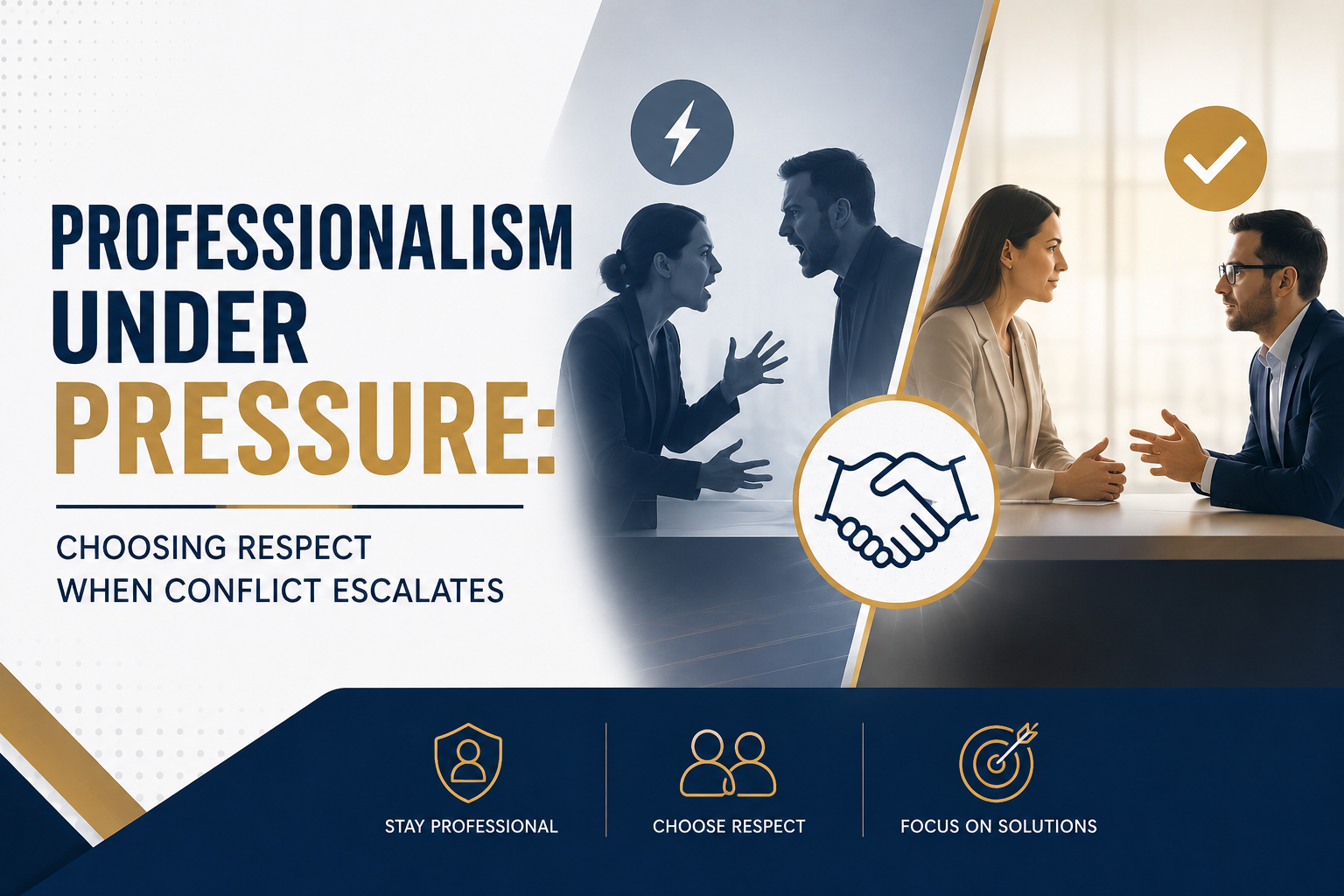 The message arrived at 11:47 p.m. It wasn't long. Just a few lines. But every sentence carried anger. A disagreement over a contract had been going on for weeks. There were questions about payment, responsibilities, and what each side believed had been promised. The conversation had already become uncomfortable. Now, the latest message crossed a different line. There were accusations. Personal insults. A veiled threat about “making sure people know” what had happened. And then came a remark about the other person's background. For a moment, the easiest response seemed obvious: Fight back. After all, they started it. But this is where professionalism is really tested not when everyone is calm and reasonable, but when someone gives us every reason to lose our composure. Conflict is part of professional life. Employment decisions can disappoint people. Contracts can fall apart. Candidates can feel unfairly treated. Managers can become frustrated. Clients and suppliers can disagree about commitments. Sometimes we are genuinely wronged. And sometimes we may be the ones who got something wrong. Either way, disagreement does not give us permission to abandon respect. The PMI Code of Ethics and Professional Conduct places Respect among its four core values. That sounds simple until we find ourselves staring at a message that feels deliberately insulting, threatening, or unfair. Respect is easy when it is reciprocated. It becomes meaningful when it isn't. The person receiving that late-night message eventually did something surprisingly difficult. They didn't respond. Not immediately. They saved the communication, stepped away from the computer, reviewed the facts, and went to bed. The next morning, they wrote back. The response acknowledged the disagreement. It clarified the contractual position. It proposed using the appropriate process to resolve the matter. There were no insults. No threats. No attempt to embarrass the other person. It wasn't weakness. It was professional self-control. Respect doesn't mean tolerating abuse. It doesn't mean remaining silent when discriminatory language is used. It doesn't mean accepting intimidation or allowing retaliation to go unchallenged. And it certainly doesn't mean avoiding difficult conversations. Sometimes respect means setting a boundary. Sometimes it means documenting what happened and involving Human Resources, legal counsel, procurement, recruitment leadership, or another appropriate authority. Sometimes it means saying: “I am willing to discuss the issue, but I will not continue the conversation in this manner.” That is respect too. Because respect isn't only about how we treat people when we agree with them. It is also about recognizing their dignity when we don't. And perhaps that's the uncomfortable part of professional ethics. We cannot control the tone of the message that arrives at 11:47 p.m. We cannot control whether someone tries to intimidate us, insults us, uses discriminatory language, or threatens retaliation. But we can control whether we respond in kind. We can choose to protect our boundaries without attacking someone else's dignity. We can choose accountability without humiliation. We can choose firmness without hostility. We can choose Respect. Not because the other person necessarily deserves our kindness in that moment, but because our professional values should not depend on someone else's behavior. The next time a difficult message lands in your inbox, ask yourself: When someone crosses the line with us, can we hold the line without crossing it ourselves? |
Why sometimes, good people are found lying?
| Why sometimes, good people are found lying? It is a very pertinent question because of the general assumption that liars are not good people, and that everyone must tell the truth at all times. This is what we learned during our school daysor even earlier and continue to believe till today. Despite this fairly universal belief, we sometimes find good people lying and find ourselves thinking that it might be fine to do so. Good people sometimes tell lies to people they care about. In many cultures, we are told about the selfless mother who tells her kids she is not hungry so the children get a higher share of food. Also, we often read about leaders telling their staff they are doing a great job to keep them motivated despite knowing well that the work done is far from being great. We have all learned about entrepreneurs who are warding off bankruptcy but keep telling their buyers that business is good and can get even better in days or weeks to come. We salute the veterans who were captured and tortured to divulge positions of their platoon mates but misled the captors. Many of us “fake it till we make it” often lying to our own-selves to improve our prospects of success. So the mother who is in fact hungry but sacrifices her own needs for her children, leaders who are trying to keep their staff motivated to keep trying, entrepreneurs who are taking great personal risks to generate money just enough to pay salaries, the officer relying on deception to protect his soldiers, people who keep themselves energized through fantasies of being on the right track – actually telling lies? If these people are indeedtelling lies, how do we treat such false assertions? Is this type oflying good or bad? It seems there are lies which are told for personal gains and lies which are told to protect others from harm. I have always advocated the universal belief that lying is unethical under any circumstances, but I also wonder why well respected people are found telling lies. Your thoughts on this seemingly controversial question are welcome. |


