Professionalism Under Pressure: Choosing Respect When Conflict Escalates
Categories:
Ethics as a competence,
Behavior,
courage honesty responsibility respect fairness,
code of ethics,
Ethical Leadership,
Decision-making,
Ethics Insight Team,
Ethics Bistro,
Business Ethics,
code of conduct,
Power Skills,
Decision-making,
Business Ethics,
Professionalization,
practitioner,
Ethical Dilemma,
respect,
Professional Responsibility,
Honesty,
Respect,
Responsibility,
Fairness,
Code of Ethics and Professional Conduct,
Human,
fairness,
communication,
honesty,
responsibility,
professonal conduct,
Conflict,
empathy,
EDMF,
Ethics in Communication,
Agile,
Decision Making,
Ethics,
Legal Project Management
Categories: Ethics as a competence, Behavior, courage honesty responsibility respect fairness, code of ethics, Ethical Leadership, Decision-making, Ethics Insight Team, Ethics Bistro, Business Ethics, code of conduct, Power Skills, Decision-making, Business Ethics, Professionalization, practitioner, Ethical Dilemma, respect, Professional Responsibility, Honesty, Respect, Responsibility, Fairness, Code of Ethics and Professional Conduct, Human, fairness, communication, honesty, responsibility, professonal conduct, Conflict, empathy, EDMF, Ethics in Communication, Agile, Decision Making, Ethics, Legal Project Management


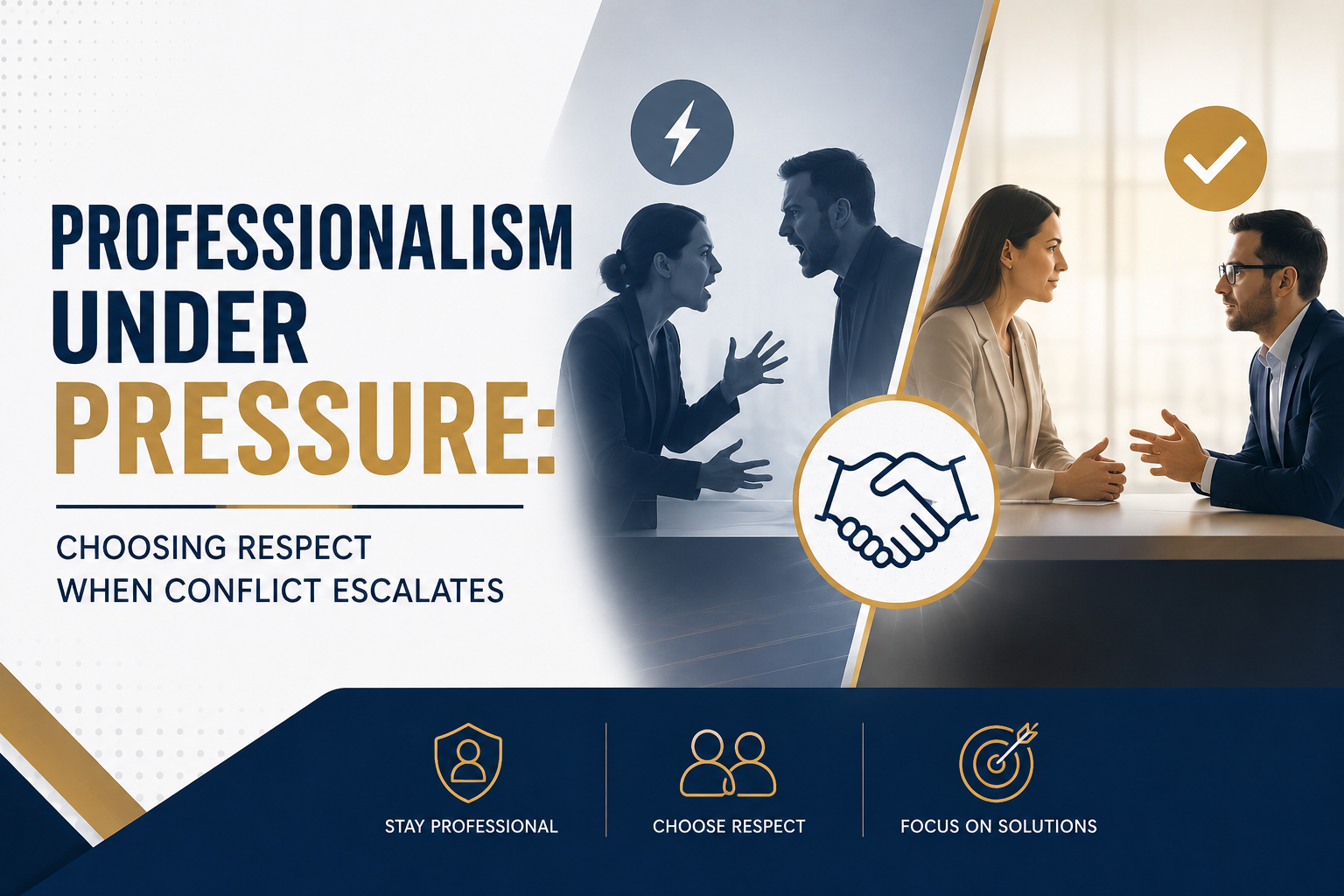 The message arrived at 11:47 p.m. It wasn't long. Just a few lines. But every sentence carried anger. A disagreement over a contract had been going on for weeks. There were questions about payment, responsibilities, and what each side believed had been promised. The conversation had already become uncomfortable. Now, the latest message crossed a different line. There were accusations. Personal insults. A veiled threat about “making sure people know” what had happened. And then came a remark about the other person's background. For a moment, the easiest response seemed obvious: Fight back. After all, they started it. But this is where professionalism is really tested not when everyone is calm and reasonable, but when someone gives us every reason to lose our composure. Conflict is part of professional life. Employment decisions can disappoint people. Contracts can fall apart. Candidates can feel unfairly treated. Managers can become frustrated. Clients and suppliers can disagree about commitments. Sometimes we are genuinely wronged. And sometimes we may be the ones who got something wrong. Either way, disagreement does not give us permission to abandon respect. The PMI Code of Ethics and Professional Conduct places Respect among its four core values. That sounds simple until we find ourselves staring at a message that feels deliberately insulting, threatening, or unfair. Respect is easy when it is reciprocated. It becomes meaningful when it isn't. The person receiving that late-night message eventually did something surprisingly difficult. They didn't respond. Not immediately. They saved the communication, stepped away from the computer, reviewed the facts, and went to bed. The next morning, they wrote back. The response acknowledged the disagreement. It clarified the contractual position. It proposed using the appropriate process to resolve the matter. There were no insults. No threats. No attempt to embarrass the other person. It wasn't weakness. It was professional self-control. Respect doesn't mean tolerating abuse. It doesn't mean remaining silent when discriminatory language is used. It doesn't mean accepting intimidation or allowing retaliation to go unchallenged. And it certainly doesn't mean avoiding difficult conversations. Sometimes respect means setting a boundary. Sometimes it means documenting what happened and involving Human Resources, legal counsel, procurement, recruitment leadership, or another appropriate authority. Sometimes it means saying: “I am willing to discuss the issue, but I will not continue the conversation in this manner.” That is respect too. Because respect isn't only about how we treat people when we agree with them. It is also about recognizing their dignity when we don't. And perhaps that's the uncomfortable part of professional ethics. We cannot control the tone of the message that arrives at 11:47 p.m. We cannot control whether someone tries to intimidate us, insults us, uses discriminatory language, or threatens retaliation. But we can control whether we respond in kind. We can choose to protect our boundaries without attacking someone else's dignity. We can choose accountability without humiliation. We can choose firmness without hostility. We can choose Respect. Not because the other person necessarily deserves our kindness in that moment, but because our professional values should not depend on someone else's behavior. The next time a difficult message lands in your inbox, ask yourself: When someone crosses the line with us, can we hold the line without crossing it ourselves? |
Values and Ethics in Fintech: A 2026 Reflection on Integrity, Accountability, and Ethical Vigilance
 The call for principled conduct in the fast‑moving world of digital finance has only grown more urgent with notable financial failures on the newspaper headlines. For the past few years, the fintech landscape has expanded at an extraordinary pace, but so have the ethical vulnerabilities that accompany it. Recent high‑profile cases of data breaches, internal theft, and employee‑driven embezzlement make it clear that ethical failures are no longer hypothetical risks; they are real, costly, and profoundly damaging. Recent Ethical Failures in Fintech and Corporate Technology 1. The 2022 FTX Bankruptcy & Collapse in November 2022, it was revealed that customer funds, amounting to billions of dollars, had been improperly diverted to Alameda Research, a trading firm closely tied to FTX’s leadership. This diversion was part of a broader pattern of commingling assets, weak or nonexistent internal controls, and misleading representations about the company’s financial health to the detriments of the respective investors, clients, and users. (TokenTax, 2026). The employee’s actions breached PMI’s principles of Honesty, Fairness, and Respect, while also highlighting the organization’s insufficient internal controls. 2. The 2024 PayPal Credential‑Stuffing Incident in December 2024, PayPal experienced a credential stuffing attack that compromised 35,000 user accounts. Hackers accessed sensitive information such as names, birthdates, and social security numbers by exploiting reused passwords across multiple accounts. The incident highlights the critical need for businesses to adopt advanced security measures like password less authentication (Security Boulevard, 2025). This failure to act proactively reflects a lapse in Responsibility and Respect for stakeholders whose financial well‑being depends on robust security. Ethical Implications and the Need for Stronger Decision Frameworks Across these incidents, the common thread is not merely technical vulnerability—it is ethical vulnerability. Whether through negligence, insufficient oversight, or deliberate misconduct, these failures demonstrate the consequences of ignoring foundational ethical principles. The PMI Code of Ethics and Professional Conduct (v8) provide a clear compass for navigating such challenges. Its four core values—Responsibility, Respect, Fairness, and Honesty—are directly applicable to fintech environments where decisions can have immediate and far‑reaching impacts on customers, markets, and society. To operationalize these values, organizations should adopt the PMI Ethical Decision‑Making Framework (EDMF v8). The EDMF offers a structured approach to evaluating dilemmas, identifying stakeholders, assessing risks, and selecting actions that align with ethical principles rather than short‑term convenience or pressure. A Call to Action Fintech professionals, project managers, and corporate leaders must recommit to ethical vigilance. This includes:
What keeps you, a project practitioner, up at night? Let us deliberate on the finer points of project management. References Project Management Institute. (2025 November). PMI Code of Ethics and Professional Conduct. pmi.org. https://www.pmi.org/-/media/pmi/documents/public/pdf/ethics/pmi-code-of-ethics.pdf. Project Management Institute. (2025 November). PMI Ethical Decision Making Framework. pmi.org. https://www.pmi.org/-/media/pmi/documents/public/pdf/ethics/ethical-decision-making-framework.pdf. Security Boulevard. (2025, April). Understanding Credential Stuffing: A Growing Cybersecurity Threat. Securityboulevard.com. https://securityboulevard.com/2025/04/understanding-credential-stuffing-a-growing-cybersecurity-threat/. TokenTax. (February 2026). The FTX Collapse: A Complete Guide. tokentax.co. https://tokentax.co/blog/ftx-collapse. |
Cultural Shift: Artificial Intelligence, Machine Learning, and Project Practice
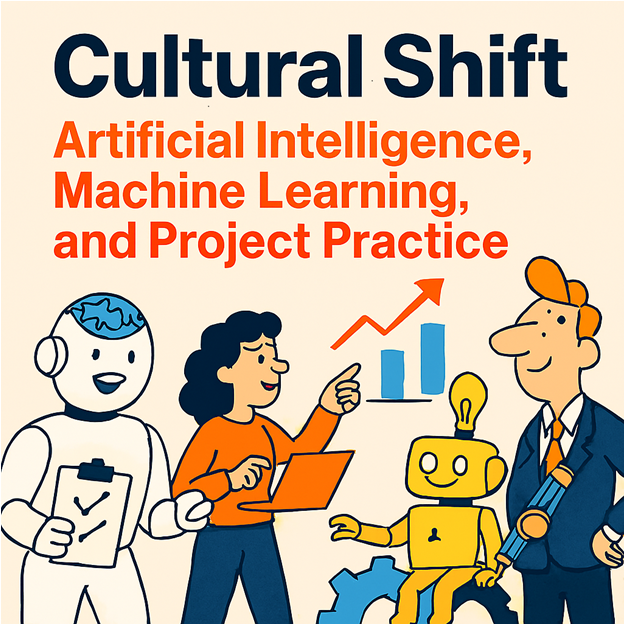 We are now facing a new wave of transformation like the “webification” era two decades ago. This time, it is artificial intelligence (AI) and machine learning (ML). As project practitioners, we must ask: how do these technologies reshape company culture, and how do we guide organizations through the turbulence? AI is not just another tool—it changes how decisions are made, how work is distributed, and how value is delivered. It can automate repetitive tasks, provide predictive insights, and even challenge traditional hierarchies by empowering data-driven decision-making. However, these benefits come with cultural challenges, including trust, transparency, and ethical responsibility. Cultural change is often the most challenging aspect. With AI, the stakes are higher because people fear being replaced. To make a seamless shift, secure senior management buy-in; without leadership commitment, AI initiatives stall. Start with a pilot project involving a small, willing team that can demonstrate clear benefits, such as faster reporting, reduced errors, or improved forecasting. Use advocates and let these satisfied users share their success stories, which build momentum and reduce resistance. AI adoption should feel like a snowball rolling downhill, gaining speed and enthusiasm as more people recognize its value. Benefits must be crystal clear, where “AI” alone does not mean business value. Identify specific improvements, such as automating workflows to reduce manual errors, enhancing project visibility with predictive analytics, optimizing resource allocation to lower costs, and freeing staff from repetitive tasks so they can focus on creative, strategic work. When AI is introduced only for marketing buzz or compliance optics, resistance will be stronger. On the other hand, the cultural shift becomes smoother as the first AI initiative demonstrates tangible benefits. Information must be meaningful. Too often, AI systems generate dashboards or reports that overwhelm rather than enlighten. If end users cannot quickly find actionable insights, they will revert to old habits. Communication is critical, as it explains what AI will deliver, when, and how it should be used. It also provides training to ensure staff understand the system’s strengths and limitations and utilizes pilots to refine usability before scaling. In short, AI should empower, not confuse. Cultural change is cultural change, whether it is the web or AI. Start with strategy: what outcomes does the company want? Then identify processes that are most critical to achieving those outcomes. Engage the knowledge workers who understand those processes best. Facilitate discussions on how AI can enhance their capabilities. This engagement ensures that AI adoption is not imposed but rather co-created. It keeps the focus on the value delivered, rather than technology for its own sake. Remember: technology is a means, not an end. Bring the human side of the story. Sometimes the simplest benefits win hearts. During the web shift, putting the phone directory online was a breakthrough. For AI, start with something equally obvious, such as AI-driven scheduling that saves hours of manual coordination, smart search that retrieves project documents instantly, and/or automated compliance checks that reduce audit stress. Do not sell paradigm shifts; just sneak them in through everyday wins. From these perspectives, several themes emerge:
As project leaders, we must not only deliver benefits but also safeguard ethical values, as prescribed in the PMI Code of Ethics and Professional Conduct and stipulated in PMI Ethical Decision Making Framework. Here are actionable steps:
In closing, AI and ML are reshaping it today, just as the web transformed project management two decades ago. The challenge is not only technical but cultural. By focusing on strategy, demonstrating clear benefits, and embedding ethics into every initiative, we can deliver projects that are both successful and responsible. Let us commit to being ethical while delivering benefits and consider these questions:
References: Project Management Institute. (2025 November). PMI Code of Ethics and Professional Conduct. pmi.org. https://www.pmi.org/-/media/pmi/documents/public/pdf/ethics/pmi-code-of-ethics.pdf Project Management Institute. (2025 November). PMI Ethical Decision Making Framework. pmi.org. https://www.pmi.org/-/media/pmi/documents/public/pdf/ethics/ethical-decision-making-framework.pdf ==== |
Falsified by AI, Rectified by Ethics: Project Managers at the Crossroads
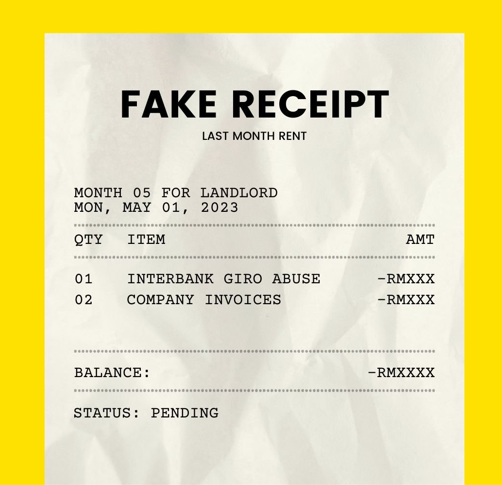 The rise of generative artificial intelligence has ushered in unprecedented efficiencies across industries. However, as highlighted in the article “Phony AI-Created Receipts Become Real Problem for Businesses” (PYMNTS, 2025), it has also enabled new forms of ethical misconduct. The report reveals a troubling trend: employees using AI-powered image generation tools to create fraudulent expense receipts. Platforms like AppZen and Ramp have detected a surge in falsified documents, with AppZen reporting that 14% of all fraudulent submissions last month were AI-generated, a stark increase from zero the previous year. These receipts often feature realistic details such as wrinkles, itemized menus, and forged signatures, making them difficult to detect. This misuse of AI technology violates the core principles of ethical conduct, particularly within the project management profession. The Project Management Institute (PMI) Code of Ethics and Professional Conduct emphasizes four foundational values: responsibility, respect, fairness, and honesty (PMI, 2016). Falsifying receipts for reimbursement breaches all four values. It undermines trust, exploits organizational systems, and shifts financial burdens unfairly with actions that are antithetical to the integrity expected of project professionals. To navigate such ethical dilemmas, PMI offers the Ethical Decision-Making Framework (EDMF), a structured tool that guides professionals through evaluating options, considering stakeholder impact, and aligning decisions with PMI’s core values (PMI, 2019). The EDMF encourages reflection on whether an action is legal, fair, and in line with professional standards. In cases like AI-generated receipt fraud, the framework would clearly identify the behavior as unethical, regardless of technological sophistication or perceived harmlessness. Discrediting the use of AI for fraudulent purposes is essential. While AI can enhance productivity, its misuse for deception erodes organizational culture and exposes companies to financial and reputational risks. Ethical misconduct, especially when aided by advanced tools, must be met with robust countermeasures. These include implementing AI-detection systems, conducting regular audits, and fostering a culture of ethics through training and leadership modeling. Project professionals must lead by example. As stewards of organizational resources and strategy, they are uniquely positioned to champion ethical behavior. This includes reporting misconduct, mentoring peers, and integrating ethical considerations into project planning and execution. Organizations should also reinforce ethical standards by embedding the PMI Code of Ethics into performance evaluations and decision-making processes. In conclusion, the project management community must remain vigilant and proactive. The misuse of AI to falsify expense receipts is not merely a technical issue, but a moral one. By adhering to PMI’s Code of Ethics and leveraging the EDMF, professionals can uphold integrity, protect organizational assets, and ensure that technological advancements serve the greater good. As the use of AI becomes mainstream and widespread, the improper application becomes prevalent. How would you practice ethical leadership in this situation? What guardrails would you implement to mitigate the ethical use of AI? Our Ethics Advisory Team loves to hear from you on your perspectives. References Project Management Institute. (2016). Code of Ethics and Professional Conduct. https://www.pmi.org/about/ethics/code Project Management Institute. (2019). Ethical Decision-Making Framework. https://www.pmi.org/about/ethics/ethical-decision-making-framework PYMNTS. (2025, October 25). Phony AI-Created Receipts Become Real Problem for Businesses. https://www.pymnts.com/news/security-and-risk/2025/phony-ai-created-receipts-become-real-problem-for-businesses |
The Hidden Cost of Falsified Receipts: A Breach of PMI’s Ethical Foundations
|
In the bustling offices of YKF Technical Solutions, a mid-sized IT firm, Lai-mui, its project manager, was leading a high-stakes software deployment for a government client. With tight deadlines and mounting pressure, Lai-mui delegated expense reporting to her trusted team lead, Deejay. Weeks later, during a routine audit, discrepancies surfaced as receipts for meals, travel, and equipment were inflated or entirely fabricated. Deejay admitted to falsifying receipts to “compensate for overtime and stress.” Lai-mui was stunned. What seemed like a minor infraction was, in fact, a serious ethical breach. This scenario is not uncommon, yet it strikes at the heart of the PMI Code of Ethics and Professional Conduct, which is built on four core values: Responsibility, Respect, Fairness, and Honesty. Violations of PMI’s Core Values
Applying the PMI Ethical Decision-Making Framework (EDMF) Lai-mui, now faced with an ethical dilemma, turned to the PMI Ethical Decision-Making Framework. The EDMF guided her through:
Call to Action The project management community must treat ethics as a living practice, not a checkbox. We must:
Conclusion Ethical leadership is not just about doing things right; it’s about doing the right things. Falsifying receipts may seem minor, but its ripple effects can compromise entire projects. Let’s recommit to the values that define our profession and lead with integrity, every step of the way. Questions for Reflection
References: Project Management Institute, Inc. (2025). Ethics. pmi.org. https://www.pmi.org/about/ethics Project Management Institute, Inc. (n.d.). Ethics Guidelines. pmi.org. https://www.pmi.org/about/ethics/guidelines Project Management Institute, Inc. (n.d.). PMI Code of Ethics and Professional Conduct. pmi.org. https://www.pmi.org/-/media/pmi/documents/public/pdf/ethics/pmi-code-of-ethics.pdf ==== |