 Posted
by Stelian ROMAN
on: October 25, 2026 04:51 PM
| Permalink |
Comments (0)
 Posted
by Stelian ROMAN
on: October 25, 2026 04:50 PM
| Permalink |
Comments (0)

IntroductionCentral to PMI’s mission is upholding the highest standards of ethical conduct and professionalism. To this end, PMI has established two critical bodies: the Ethics Review Committee (ERC) and the Ethics Advisory Team (EAT). Each team plays a vital role in sustaining PMI’s ethical framework, mandates, and responsibilities. This blog provides clarity on the structure, function, and distinctions between these two teams, aiming to provide project management professionals with a clear understanding of their importance in the PMI ecosystem.
ERC and EAT place in PMIPMI is a membership-based organization. Members elect directors to the Board, reinforcing the organization’s accountability to its global membership. PMI’s governance structure is broadly divided between the Board of Directors and the CEO/Executive Leadership Team1
The Ethics Review Committee (ERC) is a PMI Board Reporting Committee that investigates and resolves ethics complaints under the PMI Code of Ethics and Professional Conduct. The Ethics Advisory Team (EAT) functions as a team of subject matter experts in the Code of Ethics and Professional Conduct within PMI's Legal Team. Both teams are comprised from PMI volunteers and supported by PMI staff.
Collaboration and Boundaries
Ethics Advisory Team (EAT)Purpose and MandateThe Ethics Advisory Team (EAT) is an advisory and educational initiative within PMI. The EAT provides guidance, interpretation, and support regarding ethical dilemmas, applying the PMI Code of Ethics. EAT promotes awareness, understanding, and application of PMI's Code of Ethics and Professional Conduct. Its focus is prevention, education, and guidance.
Members of the EAT are PMI volunteers selected for their expertise in ethics, experience in project management, and ability to provide clear, unbiased advice.
EAT provides the "educate and advise" function. In change management and process improvement terms, the ERC aligns with the Awareness, Desire, Knowledge, and Ability stages of Prosci’s ADKAR framework and the Define, Measure, Analyse, and Improve phases of Lean Six Sigma’s DMAIC process.
Key Responsibilities·Guidance: Providing advice on ethical dilemmas to members, chapters, and stakeholders.
·Education: Developing and delivering training, webinars, and resources related to the PMI Code of Ethics.
·Interpretation: Clarifying elements of the code and addressing ambiguities.
·Support: Assisting individuals and organizations in embedding ethical practices in their operations.
·Thought Leadership: Contributing to the evolution of PMI’s ethical standards.
Key activitiesEducating PMI members, certification holders, candidates, and volunteers on the Code of Ethics and Professional Conduct.
- Creating tools, resources, communications, and educational content.
- Providing community insights and subject matter expertise to PMI.
- Supporting ethics awareness and ethical decision-making across the profession.
- Collaborating with PMI Legal, Research, and the Ethics Review Committee.
Process Overview1. Members or stakeholders submit questions or scenarios.
2. The EAT reviews and deliberates on the issue.
3. Guidance is provided, typically in the form of written opinions, presentations, or resource materials.
4. The team may use anonymized real-world examples to educate the broader PMI community.
Ethics Review Committee (ERC)Purpose and Mandate
The Ethics Review Committee (ERC) is a formal ethics enforcement body within PMI tasked with investigating and resolving allegations of violation of the PMI Code of Ethics and Professional Conduct. The ERC is responsible for investigating complaints, conducting thorough reviews, and making decisions based on its findings. ERC members must maintain strict confidentiality throughout the process and avoid conflicts of interest. Impartiality is paramount to ensure fairness for all parties involved.
The ERC is composed of experienced PMI volunteers who possess deep knowledge of the code and investigative procedures. Members are selected based on their ethical track record, professional integrity, and commitment to PMI’s values.
Role in the Ethics Framework
ERC plays the investigator and enforcer role. In organisation change management terms, its role aligns with the Reinforcement phase of Prosci’s ADKAR framework. From a process improvement perspective, it corresponds to the Control phase of Lean Six Sigma’s DMAIC process. By investigating alleged violations and enforcing appropriate outcomes, the ERC helps close the loop between developing the Code and ensuring its consistent implementation.
Key Responsibilities·Case Intake: Receives and reviews submitted allegations of ethical violations.
·Investigation: Investigates by reviewing submitted evidence, soliciting the relevant parties for additional information and gathering supporting documentation.
·Deliberation: Reviews and determines whether the available evidence supports finding that the PMI Code of Ethics and Professional Conduct has been violated
·Enforce: Take disciplinary actions, which may include reprimand either public or private, suspension of, or revocation of PMI credentials and/or membership
·Reporting: Documents findings and communicates outcomes to relevant stakeholders.
Key Differences Between the ERC and EATNature of Work
- ERC: Investigative and disciplinary.
- EAT: Advisory and educational.
Interaction with PMI Members
- ERC: Deals only with individuals involved in ethics complaints.
- EAT: Supports any PMI member seeking advice or clarification.
Outcome
- ERC: May recommend sanctions or disciplinary actions.
- EAT: Provides recommendations, guidance, and educational resources.
Confidentiality and Transparency
- ERC: Maintains strict confidentiality due to the sensitive nature of investigations.
- EAT: Upholds confidentiality but may share anonymized guidance for educational purposes.
Authority
- ERC: Empowered to recommend disciplinary actions.
- EAT: No disciplinary authority; operates in an advisory capacity.
|
Posted
by Stelian ROMAN
on: October 24, 2026 03:22 AM
| Permalink |
Comments (1)
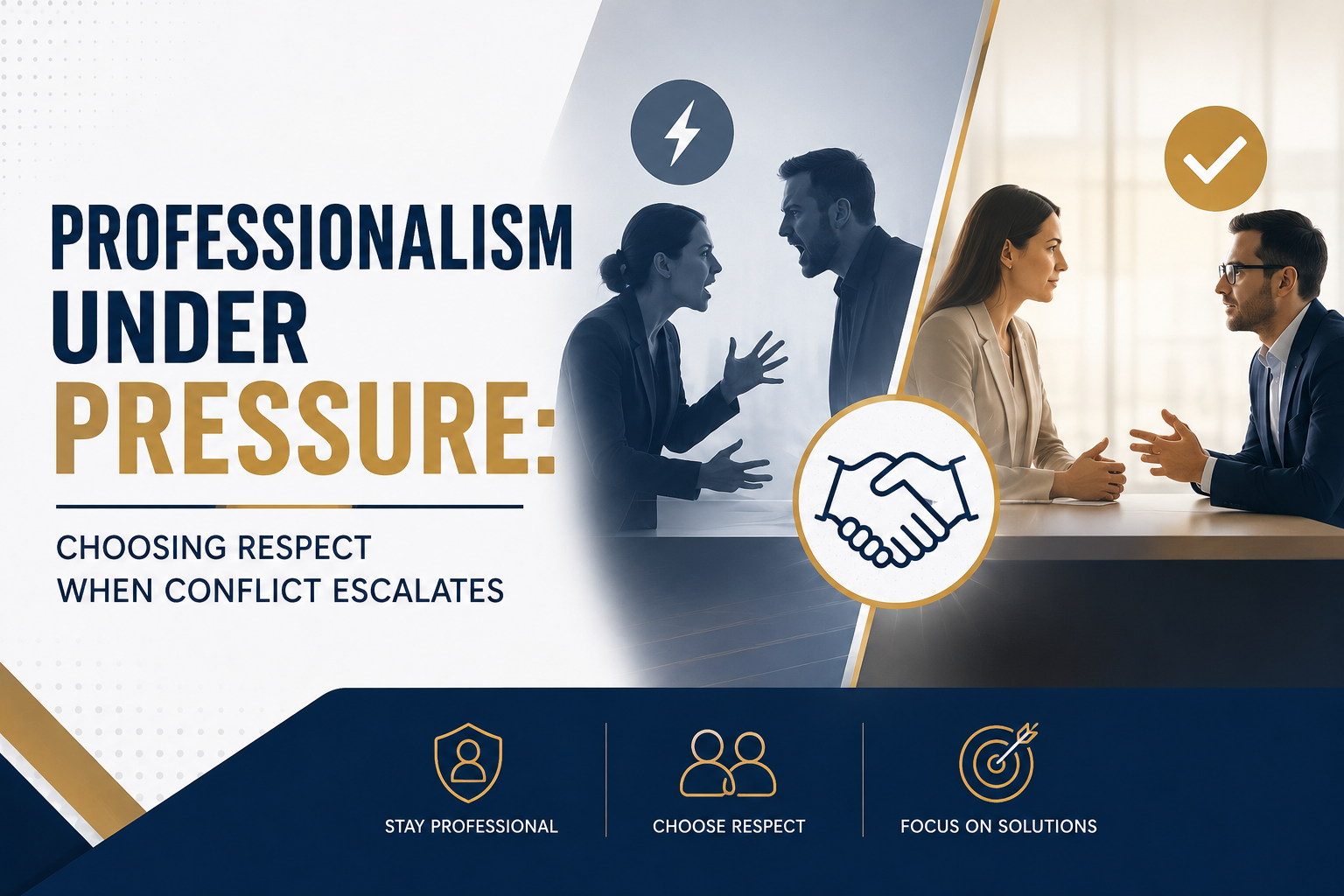
The message arrived at 11:47 p.m.
It wasn't long. Just a few lines. But every sentence carried anger.
A disagreement over a contract had been going on for weeks. There were questions about payment, responsibilities, and what each side believed had been promised. The conversation had already become uncomfortable.
Now, the latest message crossed a different line.
There were accusations. Personal insults. A veiled threat about “making sure people know” what had happened. And then came a remark about the other person's background. For a moment, the easiest response seemed obvious:
Fight back. After all, they started it.
But this is where professionalism is really tested not when everyone is calm and reasonable, but when someone gives us every reason to lose our composure. Conflict is part of professional life. Employment decisions can disappoint people. Contracts can fall apart. Candidates can feel unfairly treated. Managers can become frustrated. Clients and suppliers can disagree about commitments. Sometimes we are genuinely wronged. And sometimes we may be the ones who got something wrong. Either way, disagreement does not give us permission to abandon respect.
The PMI Code of Ethics and Professional Conduct places Respect among its four core values. That sounds simple until we find ourselves staring at a message that feels deliberately insulting, threatening, or unfair. Respect is easy when it is reciprocated. It becomes meaningful when it isn't. The person receiving that late-night message eventually did something surprisingly difficult.
They didn't respond. Not immediately.
They saved the communication, stepped away from the computer, reviewed the facts, and went to bed. The next morning, they wrote back.
The response acknowledged the disagreement. It clarified the contractual position. It proposed using the appropriate process to resolve the matter. There were no insults. No threats. No attempt to embarrass the other person. It wasn't weakness. It was professional self-control. Respect doesn't mean tolerating abuse. It doesn't mean remaining silent when discriminatory language is used. It doesn't mean accepting intimidation or allowing retaliation to go unchallenged. And it certainly doesn't mean avoiding difficult conversations.
Sometimes respect means setting a boundary. Sometimes it means documenting what happened and involving Human Resources, legal counsel, procurement, recruitment leadership, or another appropriate authority. Sometimes it means saying:
“I am willing to discuss the issue, but I will not continue the conversation in this manner.”
That is respect too.
Because respect isn't only about how we treat people when we agree with them. It is also about recognizing their dignity when we don't. And perhaps that's the uncomfortable part of professional ethics.
We cannot control the tone of the message that arrives at 11:47 p.m. We cannot control whether someone tries to intimidate us, insults us, uses discriminatory language, or threatens retaliation. But we can control whether we respond in kind. We can choose to protect our boundaries without attacking someone else's dignity. We can choose accountability without humiliation. We can choose firmness without hostility. We can choose Respect. Not because the other person necessarily deserves our kindness in that moment, but because our professional values should not depend on someone else's behavior. The next time a difficult message lands in your inbox, ask yourself:
When someone crosses the line with us, can we hold the line without crossing it ourselves? |
Posted
by Shenila Shahabuddin
on: August 29, 2026 03:36 PM
| Permalink |
Comments (8)
|
"Man is the only animal that blushes. Or needs to."
- Mark Twain
|
| |


 Posted
by


