Support to Develop
by Luis Branco

This blog addresses management-related topics and has three areas of focus: 1. Technical skills; 2. Competencies in the field of interpersonal relations and communication (including personal organization and delegation, leadership, teamwork, conflict resolution, conducting meetings, and negotiation); and 3. Strategy (including diagnosis, strategic guidelines, and implementation).4.Technology
Recent Posts
Does Integration Need an Integrator?
Before We Rebuild, What Must We Take Apart?
When Locally Valid Decisions Become Globally Incoherent
When Yesterday’s Solutions Become Today’s Constraints
PMBOK 8 Recognizes Integration. How Is Integrative Responsibility Allocated When Leadership Is Distributed?
Categories
Agile,
Career Development,
Career Development,
Career Development,
Career Development,
Career Development,
Career Development,
Career Development,
Career Development,
Career Development,
Career Development,
Career Development,
Career Development,
Career Development,
Career Development,
Career Development,
Career Development,
Career Development,
Career Development,
Career Development,
Career Development,
Career Development,
Career Development,
Career Development,
Career Development,
Career Development,
Career Development,
Career Development,
Career Development,
Career Development,
Career Development,
Career Development,
Career Development,
Career Development,
Career Development,
Career Development,
Career Development,
Career Development,
Career Development,
Career Development,
Career Development,
Career Development,
Career Development,
Career Development,
Career Development,
Career Development,
Career Development,
Career Development,
Career Development,
Career Development,
Career Development,
Career Development,
Career Development,
Career Development,
Career Development,
Career Development,
Career Development,
Career Development,
Career Development,
Career Development,
Career Development,
Career Development,
Career Development,
Career Development,
Career Development,
Career Development,
Career Development,
Career Development,
Career Development,
Career Development,
Career Development,
Career Development,
Career Development,
Career Development,
Career Development,
Career Development,
Career Development,
Career Development,
Career Development,
Career Development,
Career Development,
Career Development,
Career Development,
Career Development,
Career Development,
Career Development,
Career Development,
Career Development,
Career Development,
Career Development,
Career Development,
Career Development,
Career Development,
Career Development,
Career Development,
Career Development,
Career Development,
Career Development,
Career Development,
Career Development,
Career Development,
Career Development,
Career Development,
Career Development,
Career Development,
Career Development,
Career Development,
Career Development,
Career Development,
Career Development,
Career Development,
Career Development,
Career Development,
Career Development,
Career Development,
Career Development,
Career Development,
Career Development,
Career Development,
Career Development,
Career Development,
Career Development,
Career Development,
Governance,
Governance,
Governance,
Governance,
Governance,
Governance,
In,
Integration Management,
Interpersonal Skills,
Interpersonal Skills,
Interpersonal Skills,
Interpersonal Skills,
Interpersonal Skills,
Interpersonal Skills,
Interpersonal Skills,
Interpersonal Skills,
Interpersonal Skills,
Interpersonal Skills,
Interpersonal Skills,
Interpersonal Skills,
Interpersonal Skills,
Interpersonal Skills,
Interpersonal Skills,
Interpersonal Skills,
Interpersonal Skills,
Interpersonal Skills,
Interpersonal Skills,
Interpersonal Skills,
Interpersonal Skills,
Interpersonal Skills,
Interpersonal Skills,
Interpersonal Skills,
Interpersonal Skills,
Interpersonal Skills,
Interpersonal Skills,
Interpersonal Skills,
Interpersonal Skills,
Interpersonal Skills,
Interpersonal Skills,
Interpersonal Skills,
Interpersonal Skills,
Interpersonal Skills,
Interpersonal Skills,
Interpersonal Skills,
Interpersonal Skills,
Interpersonal Skills,
Interpersonal Skills,
Interpersonal Skills,
Interpersonal Skills,
Interpersonal Skills,
Interpersonal Skills,
Interpersonal Skills,
Interpersonal Skills,
Interpersonal Skills,
Interpersonal Skills,
Interpersonal Skills,
Interpersonal Skills,
Interpersonal Skills,
Interpersonal Skills,
Interpersonal Skills,
Interpersonal Skills,
Interpersonal Skills,
Interpersonal Skills,
Interpersonal Skills,
Interpersonal Skills,
Interpersonal Skills,
Interpersonal Skills,
Interpersonal Skills,
Interpersonal Skills,
Interpersonal Skills,
Interpersonal Skills,
Interpersonal Skills,
Interpersonal Skills,
Interpersonal Skills,
Interpersonal Skills,
Interpersonal Skills,
Interpersonal Skills,
Interpersonal Skills,
Interpersonal Skills,
Interpersonal Skills,
Interpersonal Skills,
Interpersonal Skills,
Interpersonal Skills,
Interpersonal Skills,
Interpersonal Skills,
Interpersonal Skills,
Interpersonal Skills,
Interpersonal Skills,
Interpersonal Skills,
Interpersonal Skills,
Interpersonal Skills,
Interpersonal Skills,
Interpersonal Skills,
Interpersonal Skills,
Interpersonal Skills,
Interpersonal Skills,
Interpersonal Skills,
Interpersonal Skills,
Interpersonal Skills,
Interpersonal Skills,
Interpersonal Skills,
Interpersonal Skills,
Interpersonal Skills,
Interpersonal Skills,
Interpersonal Skills,
Interpersonal Skills,
Interpersonal Skills,
Interpersonal Skills,
Interpersonal Skills,
Interpersonal Skills,
Interpersonal Skills,
Interpersonal Skills,
Interpersonal Skills,
Interpersonal Skills,
Interpersonal Skills,
Interpersonal Skills,
Interpersonal Skills,
Interpersonal Skills,
Interpersonal Skills,
Interpersonal Skills,
Interpersonal Skills,
Interpersonal Skills,
Interpersonal Skills,
Interpersonal Skills,
Interpersonal Skills,
Interpersonal Skills,
Interpersonal Skills,
Interpersonal Skills,
Interpersonal Skills,
Interpersonal Skills,
le,
lea,
Leadership,
Leadership,
Leadership,
Leadership,
Leadership,
Leadership,
Leadership,
Leadership,
Leadership,
Leadership,
Leadership,
Leadership,
Leadership,
Leadership,
Leadership,
Leadership,
Leadership,
Leadership,
Leadership,
Leadership,
Leadership,
Leadership,
Leadership,
Leadership,
Leadership,
Leadership,
Leadership,
Leadership,
Leadership,
Leadership,
Leadership,
Leadership,
Leadership,
Leadership,
Leadership,
Leadership,
Leadership,
Leadership,
Leadership,
Leadership,
Leadership,
Leadership,
Leadership,
Leadership,
Leadership,
Leadership,
Leadership,
Leadership,
Leadership,
Leadership,
Leadership,
Leadership,
Leadership,
Leadership,
Leadership,
Leadership,
Leadership,
Leadership,
Leadership,
Leadership,
Leadership,
Leadership,
Leadership,
Leadership,
Leadership,
Leadership,
Leadership,
Leadership,
Leadership,
Leadership,
Leadership,
Leadership,
Leadership,
Leadership,
Leadership,
Leadership,
Leadership,
Leadership,
Leadership,
Leadership,
Leadership,
Leadership,
Leadership,
Leadership,
Leadership,
Leadership,
Leadership,
Leadership,
Leadership,
Leadership,
Leadership,
Leadership,
Leadership,
Leadership,
Leadership,
Leadership,
Leadership,
Leadership,
Leadership,
Leadership,
Leadership,
Leadership,
Leadership,
Leadership,
Leadership,
Leadership,
Leadership,
Leadership,
Leadership,
Leadership,
Leadership,
Leadership,
Leadership,
Leadership,
Leadership,
Leadership,
Leadership,
Leadership,
Leadership,
Leadership,
Leadership,
Leadership,
Leadership,
or,
Organizational Project Management,
Program,
Program Management,
Strategy,
Strategy,
Strategy,
Strategy,
Strategy,
Strategy,
Strategy,
Strategy,
Strategy,
Strategy,
Strategy,
Strategy,
Strategy,
Strategy,
Strategy,
Strategy,
Strategy,
Strategy,
Strategy,
Strategy,
Strategy,
Strategy,
Strategy,
Strategy,
Strategy,
Strategy,
Strategy,
Strategy,
Strategy,
Strategy,
Strategy,
Strategy,
Strategy,
Strategy,
Strategy,
Strategy,
Strategy,
Strategy,
Strategy,
Strategy,
Strategy,
Strategy,
Strategy,
Strategy,
Strategy,
Strategy,
Strategy,
Strategy,
Strategy,
Strategy,
Strategy,
Strategy,
Strategy,
Strategy,
Strategy,
Strategy,
Strategy,
Strategy,
Strategy,
Strategy,
Strategy,
Strategy,
Strategy,
Strategy,
Strategy,
Strategy,
Strategy,
Strategy,
Strategy,
Strategy,
Strategy,
Strategy,
Strategy,
Strategy,
Strategy,
Strategy,
Strategy,
Strategy,
Strategy,
Strategy,
Strategy,
Strategy,
Strategy,
Strategy,
Strategy,
Strategy,
Strategy,
Strategy,
Strategy,
Strategy,
Strategy,
Strategy,
Strategy,
Strategy,
Strategy,
Strategy,
Strategy,
Strategy,
Strategy,
Strategy,
Strategy,
Strategy,
Strategy,
Strategy,
Strategy,
Strategy,
Strategy,
Strategy,
Strategy,
Strategy,
Strategy,
Strategy,
Strategy,
Strategy,
Strategy,
Strategy,
Strategy,
Strategy,
Strategy,
Strategy,
Strategy,
Strategy,
Strategy,
Sustainability,
Talent Management,
Talent Management,
Talent Management,
Talent Management,
Talent Management,
Talent Management,
Talent Management,
Talent Management,
Talent Management,
Talent Management,
Talent Management,
Talent Management,
Talent Management,
Talent Management,
Talent Management,
Talent Management,
Talent Management,
Talent Management,
Talent Management,
Talent Management,
Talent Management,
Talent Management,
Talent Management,
Talent Management,
Talent Management,
Talent Management,
Talent Management,
Talent Management,
Talent Management,
Talent Management,
Talent Management,
Talent Management,
Talent Management,
Talent Management,
Talent Management,
Talent Management,
Talent Management,
Talent Management,
Talent Management,
Talent Management,
Talent Management,
Talent Management,
Talent Management,
Talent Management,
Talent Management,
Talent Management,
Talent Management,
Talent Management,
Talent Management,
Talent Management,
Talent Management,
Talent Management,
Talent Management,
Talent Management,
Talent Management,
Talent Management,
Talent Management,
Talent Management,
Talent Management,
Talent Management,
Talent Management,
Talent Management,
Talent Management,
Talent Management,
Talent Management,
Talent Management,
Talent Management,
Talent Management,
Talent Management,
Talent Management,
Talent Management,
Talent Management,
Talent Management,
Talent Management,
Talent Management,
Talent Management,
Talent Management,
Talent Management,
Talent Management,
Talent Management,
Talent Management,
Talent Management,
Talent Management,
Talent Management,
Talent Management,
Talent Management,
Talent Management,
Talent Management,
Talent Management,
Talent Management,
Talent Management,
Talent Management,
Talent Management,
Talent Management,
Talent Management,
Talent Management,
Talent Management,
Talent Management,
Talent Management,
Talent Management,
Talent Management,
Talent Management,
Talent Management,
Talent Management,
Talent Management,
Talent Management,
Talent Management,
Talent Management,
Talent Management,
Talent Management,
Talent Management,
Talent Management,
Talent Management,
Talent Management,
Talent Management,
Talent Management,
Talent Management,
Talent Management,
Talent Management,
Talent Management,
Talent Management,
Talent Management
Date
| 1. Introduction
Whenever I hear or read: "high performance teams” I remember the teams that change tires and refuel during the pit stop
Watch the video below (click on the image):

What can we see in this short video?
- People working interactively, and interdependently
- Interconnection
- Communication
- Complementary skills
- Cohesion
- Appointment
- Mutual responsibility
- Results
- Performance
2. What is a team?
Small number of people with complementary skills who are committed to:
- Purpose
- Set of performance objectives
- Common approaches for which they hold each other accountable
The essence of a team is the commitment and common commitment in the processes and results.
No group becomes a team until it can take responsibility as a team.
3. Differences between a workgroup and a team
Work group:
- Strong and clearly focused leader
- Individual Responsibility
- The group's objective is the same as the broader organizational mission
- Individual products
- Conducts efficient meetings
- Indirectly assesses your effectiveness through your influence on others
- Discuss, decide and delegate
Team:
- Shared leadership roles
- Individual and mutual responsibility
- Specific team objective achieved by the team
- Collective products
- Encourages open discussion and meetings for active problem solving
- Assess performance directly through the assessment of collective products
- Discuss, decide and present real work together
4. Characteristics of high-performance teams:
Seven characteristics have been identified that have high performance teams:
- Purpose and Values
- Empowerment
- Relationships and communication
- Flexibility
- Optimal productivity
- Recognition and appreciation
- Morale
Which can be represented in the acronym PERFORM
In a next article I will address, in a specific way, each one of these 7 characteristics that the high-performance teams have
|
Posted on: April 21, 2021 12:57 PM
|
Permalink |
Comments (2)
| The year will not be new... if you are the same!

Last year, exactly on the 26th of December 2019, I created my first reflection on this blog on this topic
It occurs to me to ask you:
- Have you defined your goals for 2020?
- Were they S.M.A.R.T.?
- In what areas did you define your objectives?
- Physicist
- Emotional
- Intellectual
- Spiritual
Have you made plans to achieve your goals?
Did you monitor the plans on a monthly basis?
Did you introduce the appropriate corrective measures keeping the objectives in mind?
It's time to compare your goals and what you have achieved:
- In what percentage did you achieve your goals?
- What were the main difficulties you experienced?
- What are the main facilities?
- What are the most important lessons learned?
- What is your opinion about my proposal at the end of 2019? Does it make sense?
Remember that:
- The path is made by walking
I wish your year 2021 to be full of achievements
|
Posted on: December 26, 2020 02:57 PM
|
Permalink |
Comments (6)
    I just received the volunteer certificate for my contribution,
during 2020, to the Project Management Profession and to the PMI
2.jpg)
It is a privilege and a pleasure to be part of the PMI Community
It has been a great learning journey
Many thanks to everyone who has contributed to my growth as a person and as a professional
What will be your contribution as a PMI volunteer?
|
Posted on: December 05, 2020 02:04 PM
|
Permalink |
Comments (10)
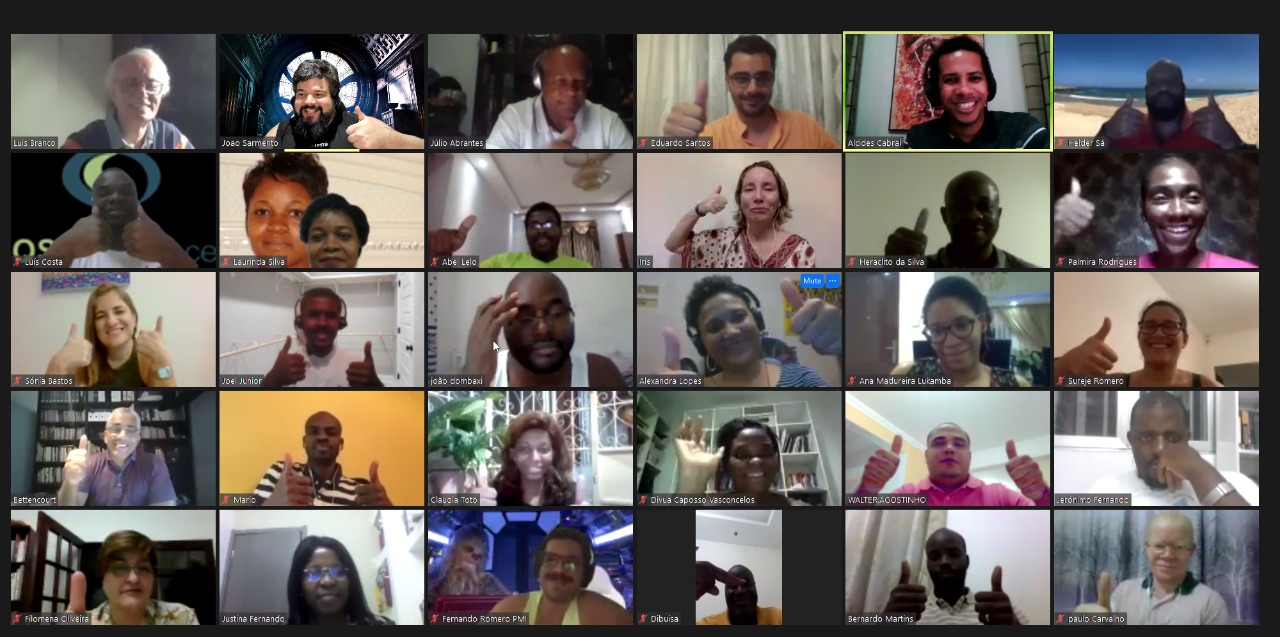
| Yesterday, June 5, 2020, the last online session of the PMP Initiative was held, which was organized by PMI Angola
This training action started on May 4, 2020
Thirty participants attended this course
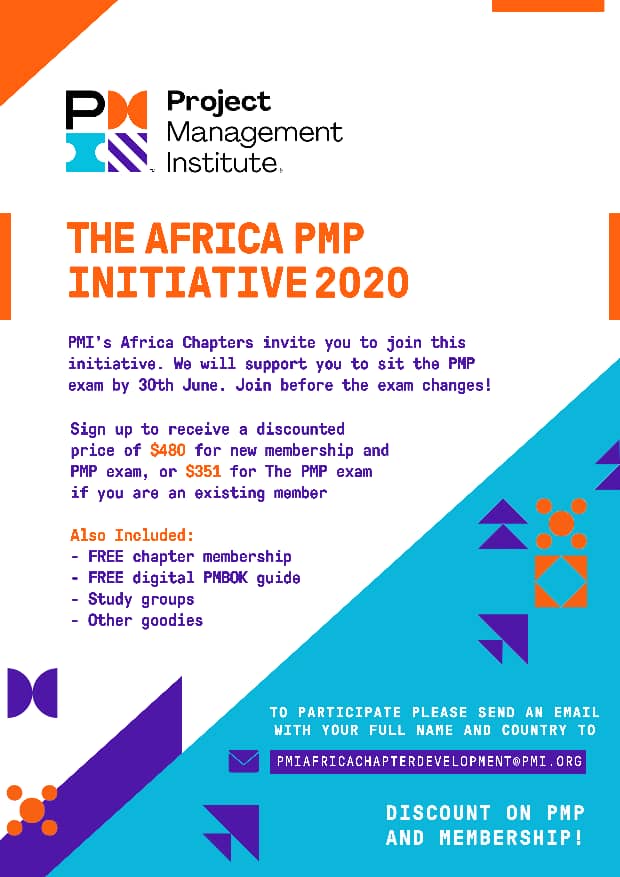
This training course followed the Africa PMP Initiative 2020
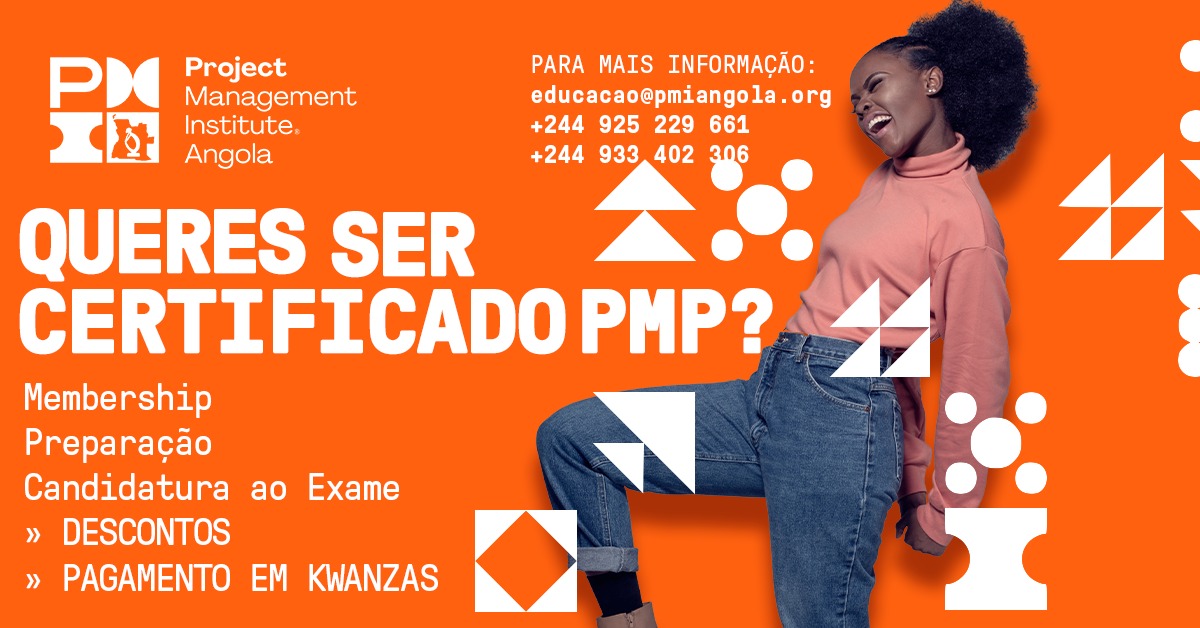
I take this opportunity to congratulate PMI Angola for the initiative
And wish all graduates a great success in carrying out the PMP certification exam
Find out what the trainees of this training said
|
Posted on: June 06, 2020 09:49 AM
|
Permalink |
Comments (14)
| 
Você sabia?
Em 2008 tive oportunidade de, pela primeira vez, ver o vídeo produzido e realizado por v Karl Fisch, Scott McLeod e Jeff Brenman: “Did you Know”?
Passei a incorporá-lo logo no início das acções de formação que ministrava à época.
Para além de servir como “quebra-gelo” (icebreaker) o principal propósito era o de estimular a reflexão ao perguntar aos meus formandos: “O que significa isto para si?”
Como consequência obtive as reacções mais diversas em relação aos factos apresentados e ao significado que estes poderiam ter nas suas vidas.
Em 2008
As informações, prognósticos e/ou conclusões mais impressionantes contidas no vídeo produzido e realizado em 2008 são, para mim:
- Os 10 empregos com maior procura em 2010 não existiam em 2004
- Nós estamos a preparar os estudantes para empregos que ainda não existem, usando tecnologias que ainda não foram inventadas para resolver problemas que nós ainda não sabemos que são problemas
- O Departamento do Trabalho nos EUA estima que os estudantes hoje em dia terão entre 10 e 14 empregos até aos 38 anos, que 1 em cada 4 trabalhadores estão no seu actual emprego menos do que 1 ano e que 1 em cada 2 trabalhadores menos do que 5 anos
- Existem 31 biliões de pesquisas todos os meses no Google
- Em 2006 esse número era de 2,7 milhões
- A quem eram feitas essas perguntas A.G. (Antes do Google)?
- A primeira mensagem comercial de texto foi enviada em Dezembro de 1992
- Hoje o número de mensagens de texto enviadas e recebidas todos os dias ultrapassam o total da população mundial
- 1000 era o número de dispositivos da internet em 1984, 1.000.000 em 1992 e de 1000.000.000 em 2008
- Existem cerca de 540.000 palavras na língua inglesa, ou seja, quase 5 vezes mais do que na época de Shakespeare
- Estima-se que numa semana o New York Times tenha mais informação do que toda a informação que uma pessoa no século 18 adquiria em toda a sua vida
- A quantidade de informações técnicas dobram todos os anos. Para os alunos que começaram os seus estudos técnicos de 4 anos significa que metade do que aprenderam no primeiro ano de estudo estará ultrapassado no terceiro ano
Existem um outro conjunto de informações nos incentivam a ver este vídeo na totalidade
Em 2010 passei a usar outras técnicas e ferramentas para quebrar o gelo (icebreaker) no início das acções de formação de formação que ministrei.
Em 2018
Fiquei surpreendido, em 2018, quando vi uma versão actualizada do vídeo “Did you Know”
Vale a pena ver essa nova versão
 - 2018 Remix_Moment.jpg)
Conclusão
“A única coisa permanente é a mudança” – Heráclito
Quais são, na sua opinião, as alterações mais significativas que ocorreram nos últimos 10 anos?
Em que medida é que estas mudanças podem afectar a nossa profissão de Gestores de Projectos?
Did you Know?
In 2008 I had the opportunity, for the first time, to see the video produced and directed by Karl Fisch, Scott McLeod and Jeff Brenman: “Did you Know”?
I started to incorporate it right at the beginning of the training actions I was teaching at the time
In addition to serving as an “icebreaker”, the main purpose was to stimulate reflection by asking my trainees: “What does this mean for you?”
As a consequence, I got the most diverse reactions in relation to the facts presented and the meaning they could have in their lives.
In 2008
The most impressive information, predictions and/or conclusions contained in the video produced and made in 2008 are, for me:
- The 10 most sought-after jobs in 2010 did not exist in 2004.
- We are preparing students for jobs that do not yet exist, using technologies that have not yet been invented to solve problems that we do not yet know are problems.
- The US Department of Labor estimates that students today will have between 10 and 14 jobs by age 38, that 1 in 4 workers are in their current job less than 1 year and that 1 in 2 workers less than that 5 years.
- There are 31 billion searches every month on Google.
- In 2006, that number was 2.7 million.
- Who were asked these questions A.G. (Before Google).
- The first commercial text message was sent in December 1992.
- Today the number of text messages sent and received every day exceeds the total world population.
- 1000 was the number of internet devices in 1984, 1,000,000 in 1992 and 1,000,000,000 in 2008.
- There are about 540,000 words in the English language, that is, almost 5 times more than in Shakespeare's time.
- It is estimated that in a week the New York Times has more information than all the information that a person in the 18th century acquired in his entire life.
- The amount of technical information doubles every year. For students who started their 4-year technical studies it means that half of what they learned in the first year of study will be exceeded in the third year.
There is another set of information that encourages us to watch this video in its entirety.
In 2018
In 2010, I started using other techniques and tools to break the ice (icebreaker) at the beginning of the training courses I gave.
I was surprised, in 2018, when I saw an updated version of the video “Did you Know”.
This new version is worth seeing.
Conclusion
“The only permanent thing is change” – Heráclito
What are, in your opinion, the most significant changes that have occurred in the past 10 years?
How can this changes affect our profession as Project Managers?
|
Posted on: April 07, 2020 11:15 AM
|
Permalink |
Comments (18)
|
"All generalizations are dangerous, even this one."
- Alexandre Dumas
|




