
Cultural Shift: Artificial Intelligence, Machine Learning, and Project Practice


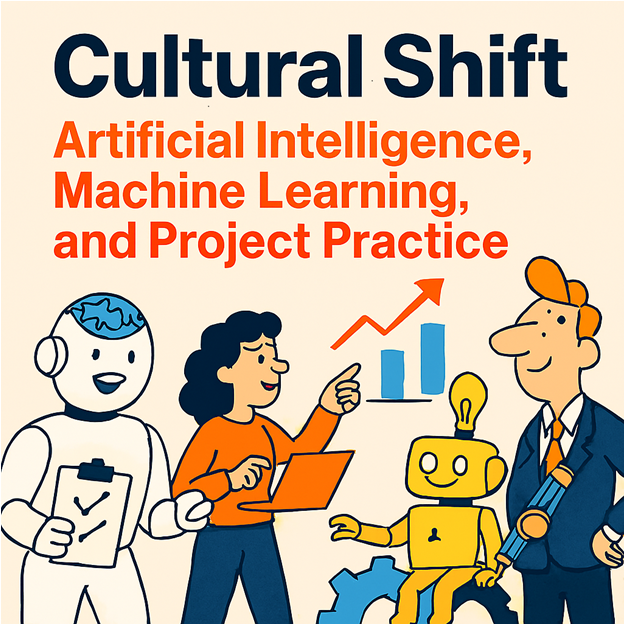 We are now facing a new wave of transformation like the “webification” era two decades ago. This time, it is artificial intelligence (AI) and machine learning (ML). As project practitioners, we must ask: how do these technologies reshape company culture, and how do we guide organizations through the turbulence? AI is not just another tool—it changes how decisions are made, how work is distributed, and how value is delivered. It can automate repetitive tasks, provide predictive insights, and even challenge traditional hierarchies by empowering data-driven decision-making. However, these benefits come with cultural challenges, including trust, transparency, and ethical responsibility. Cultural change is often the most challenging aspect. With AI, the stakes are higher because people fear being replaced. To make a seamless shift, secure senior management buy-in; without leadership commitment, AI initiatives stall. Start with a pilot project involving a small, willing team that can demonstrate clear benefits, such as faster reporting, reduced errors, or improved forecasting. Use advocates and let these satisfied users share their success stories, which build momentum and reduce resistance. AI adoption should feel like a snowball rolling downhill, gaining speed and enthusiasm as more people recognize its value. Benefits must be crystal clear, where “AI” alone does not mean business value. Identify specific improvements, such as automating workflows to reduce manual errors, enhancing project visibility with predictive analytics, optimizing resource allocation to lower costs, and freeing staff from repetitive tasks so they can focus on creative, strategic work. When AI is introduced only for marketing buzz or compliance optics, resistance will be stronger. On the other hand, the cultural shift becomes smoother as the first AI initiative demonstrates tangible benefits. Information must be meaningful. Too often, AI systems generate dashboards or reports that overwhelm rather than enlighten. If end users cannot quickly find actionable insights, they will revert to old habits. Communication is critical, as it explains what AI will deliver, when, and how it should be used. It also provides training to ensure staff understand the system’s strengths and limitations and utilizes pilots to refine usability before scaling. In short, AI should empower, not confuse. Cultural change is cultural change, whether it is the web or AI. Start with strategy: what outcomes does the company want? Then identify processes that are most critical to achieving those outcomes. Engage the knowledge workers who understand those processes best. Facilitate discussions on how AI can enhance their capabilities. This engagement ensures that AI adoption is not imposed but rather co-created. It keeps the focus on the value delivered, rather than technology for its own sake. Remember: technology is a means, not an end. Bring the human side of the story. Sometimes the simplest benefits win hearts. During the web shift, putting the phone directory online was a breakthrough. For AI, start with something equally obvious, such as AI-driven scheduling that saves hours of manual coordination, smart search that retrieves project documents instantly, and/or automated compliance checks that reduce audit stress. Do not sell paradigm shifts; just sneak them in through everyday wins. From these perspectives, several themes emerge:
As project leaders, we must not only deliver benefits but also safeguard ethical values, as prescribed in the PMI Code of Ethics and Professional Conduct and stipulated in PMI Ethical Decision Making Framework. Here are actionable steps:
In closing, AI and ML are reshaping it today, just as the web transformed project management two decades ago. The challenge is not only technical but cultural. By focusing on strategy, demonstrating clear benefits, and embedding ethics into every initiative, we can deliver projects that are both successful and responsible. Let us commit to being ethical while delivering benefits and consider these questions:
References: Project Management Institute. (2025 November). PMI Code of Ethics and Professional Conduct. pmi.org. https://www.pmi.org/-/media/pmi/documents/public/pdf/ethics/pmi-code-of-ethics.pdf Project Management Institute. (2025 November). PMI Ethical Decision Making Framework. pmi.org. https://www.pmi.org/-/media/pmi/documents/public/pdf/ethics/ethical-decision-making-framework.pdf ==== |
Back to office? A challenge or breeze?
| Mary sat sipping coffee in the bistro chatting with her colleagues. One of them was describing her challenges around returning to the office and the others were listening intently. “I don’t think I can go back to office to work. I am searching for a new job that suits my requirements. I see challenges managing my home and work front. Besides, I am not sure why are we being called to the office? Our team has been excelling in the work even as we work from home” - a colleague “Yes, me too. The work-life balance has been redesigned to suit this new reality; I am enjoying my motherhood as well as being a professional at work. I think the culture of the organization matters. It’s important to discover if it’s a command-and-control type or it is de-centralised and manages more by outcomes. It also depends on your rapport with your manager and how flexible he/she is to your requests” - another colleague quipped “I think the pandemic accelerated the adoption of an adaptive model of work leveraging the benefits of using technology. Companies took advantage of it to diversify its workforce, acquire new businesses, learn new technologies, and gain agility for moving their specific business units across the globe. Isn’t that cool?” – the discussion was getting interesting “Yes, of course! There is a lot that we all have gained. For me, personally, reduction in travel made a lot sense. I am not a travel enthusiast but had always felt a lot of travel was unnecessary and detrimental to the environment in the long run. But, on a flip side, when some units just cannot have a work from home (eg healthcare workforce), I also see issues such as disparity in compensation, career progression, preference of careers etc. This can cause a dissatisfaction. Technology to monitor employee behavior may seem like micromanagement causing employee dissatisfaction. And last but not the least, I think I will miss the team bonding that happened over coffee and in corridors”. “Oh yes, there are numerous challenges that will hound us. But I think the benefits of a new hybrid model of work will prevail over the disadvantages” Mary was silently listening to her colleagues as they battled over these contemporary topics. “I agree with you all. In all this maze of benefits and challenges, what I think is important is being ethical in your work. Ethical values are key to sustainability and success and in the long term, where businesses and organizations will thrive in the new model of work, it’s only the ethical principles that will help drive positive outcomes. Didn’t we experience this the last couple of years? While we saw our near and dear ones grappling with unprecedented situations, organizations across the globe, their own ways, supported them to the best of their abilities. The empathy was evident from their support. The organizations, no doubt had multiple challenges and I found PMI Ethics resources are a good reference. When faced with ethical challenges at work, I would refer to PMI’s Code of Ethics and Professional Conduct to support in decision making. Hey, at the end of the day, it’s happiness that matters; isn’t it?- Mary concluded The group fell silent as Mary’s comments on ethical values were echoing in their minds. Do they resonate with you too? Would like to hear from you. References |
Avoiding the Alligators While Navigating Uncharted Territory
|
2020 has been quite a year so far….. And we aren’t even halfway through it. Individuals, families, friends and business entities have been stretched (and stressed) in new and unusual way. For those fortunate to still have a project management job, the challenges are often related to communicating in the completely virtual environment. Even in those organizations which had a distributed workforce before the start of 2020, things have changed. It was common to mix phone calls and zoom meetings with periodic face to face meetings. Gone is the physical networking. Gone are the physical conferences. Gone are the trips through airport security and staying in hotels. Gone are the day long whiteboard problem solving sessions.
Is it that ethical expectations have changed? To that I say NO! The expectations haven’t changed, but perhaps the change that caused a slide down the slippery slope. Let’s take a moment and reflect. The PMI Code of Ethics and Professional Conduct (AKA- the Code) describes the expectations that we have of ourselves and our fellow practitioners in this global project management community. It consists of four fundamental values described below. First is RESPONSIBILITY. I ask you, if you committed to completing a task and you just didn’t get around to it, are you taking ownership for your decisions? Should there be consequences? Next is RESPECT. I ask you, if you improperly account for the hours you worked and use the company laptop for a personal project during working hours, are you respecting the resources the client has provided you? Next is FAIRNESS. I ask you, if you are consulting on another project management activity during your prescribed work hours, are you exhibiting fairness by using this situation for your own self-interest? The last value is HONESTY. I ask you, if you tell your boss that the work is on track and nearly done when you know that isn’t the care, are you exhibiting honesty? No one said change would be easy. What if the new norm is a continual evolution? I, for one, believe it is. Taking the time to look at the Code, and reflecting upon your own behavior during a time of change strengthens the professionalism of the global project management community. Maybe Aldo Leopold (1887- 1948) said it best: ethical behavior is doing the right thing when on one else is watching. This still rings true today.
Images are provided by Creative Commons.
|

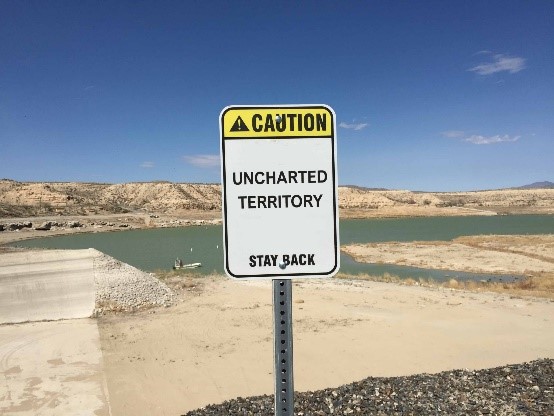 Transitioning to a virtual environment requires a mindset change. How tempting it is to find other things to do around the house when no one is looking. How will the boss even know I cleaned the garage, or planted the garden, consulted for another company, or simply read a book unrelated to work during my normal working hours?

