


Categories: Conflict, Cultural Diversity, Ethics, Leadership, Professional Conduct, Project Management
Guru was happy that the weekly project status call was conflict-free. His feel-good was shattered by a sudden jolt. Nathan, a system architect, seemed to be in a foul mood. He was almost screaming. “Ananya: This is the worst documentation I’ve ever seen. You also delivered this trash several days late. I don’t want to work with you anymore!”

Ananya, a fresh college graduate and new recruit to the team, was shell-shocked. Her silence further angered Nathan, who demanded, “Is there a reply coming?”
Guru was also shocked by Nathan’s outburst. With Ananya staying silent, he moved through the remaining agenda items and ended the call.
Still dazed, Ananya headed straight to the cafeteria. Feeling for her, Guru wanted to immediately tackle the issue with sensitivity. Reaching out to her, he said, “What Nathan did was inexcusable. I apologize on his behalf. Why was he so upset with your work?”
She replied, “My colleague Jahangir was supposed to peer-review my manual on Wednesday. He fell sick. Since we were already late, I emailed it immediately. I agree that there were some quality issues. But that’s no reason for Nathan to humiliate me!”
Guru soothed the youngster. “I agree. Nathan shouldn’t have been so harsh. Maybe he was just being brutally frank. I too have faced the music from several people who are brutally honest with their views. But that’s no excuse for disrespect. I’ll certainly talk to him.”

He connected with Nathan for a brief discussion explaining the serious impact of the harsh words and unwarranted outburst. Nathan understood. He promised to immediately call Ananya and apologize.
Guru’s project was staffed by a virtual team with contributors from the US, UK, Brazil, India, and Japan. There had been several past conflicts based on cultural issues. However, severe time constraints had not allowed him to deal with these challenges.
At the PMI EMEA Congress that weekend, Guru attended the session, “Respect Culture or Face Failure: Leadership Lessons from the world over.”
Katherine, the speaker, started with the impactful words, “Does your project team gel well? If not, success will certainly elude you! If you, as PM, ignore this, you invite disaster.”
The presenter listed many factors that could adversely impact virtual teams: Age, Geography, Language, Attitudes towards Ethics, Religion, etc. Quoting NASA’s Dr. Stephen Johnson, she said, “The root causes of project failure are often cultural, not technical.”
She said that her experience as a global cultural consultant showed that such situations could be reversed. Proactive leaders could leverage positive cultural traits for the good of the project.
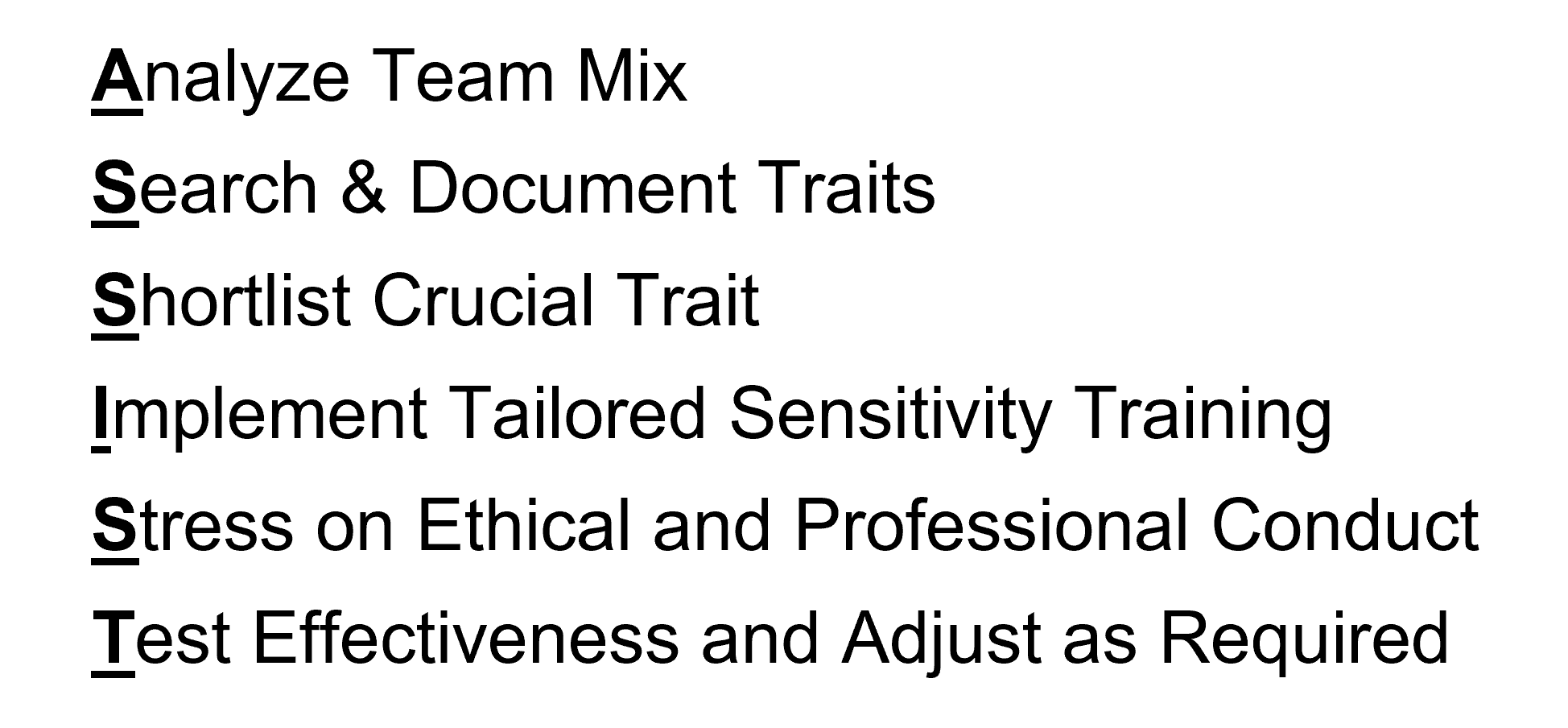
Katherine proposed a six-step process named “ASSIST” to manage cultural differences effectively:
When Katherine asked attendees to share their experiences, Guru narrated the recent project issue and actions he had taken. He asked, “What would you recommend?”
She replied that Guru’s actions were excellent responses. However, to prevent more such dangerous conflicts, the team would need to take a proactive stance on cultural differences.
At the tea break, Guru requested Katherine’s professional assistance in turning around the difficult situation. She readily agreed to help.
She began with an analysis of the team’s cultural mix and various traits that needed careful handling. Using customized team activities such as quizzes and role-plays, she sensitized the team on cultural differences.

Katherine’s interventions worked like a charm as conflicts significantly dropped.
As he approved a final payment, Guru thanked the consultant for her inputs. He told her that she had made a huge difference to his team’s chemistry and resolved to apply the six-step ASSIST process on every project.

Please comment on these factors to benefit our dynamic community here on projectmanagement.com:
- Have you faced similar issues with cultural diversity in your teams?
- What were the negative effects of these issues?
- What did you do to handle the problems?




