


Governmental Projects: Are there any ethical considerations?


| Some people still think that the most important projects are in the private sector, however, governments are the ones that are responsible for creating and establishing the society we want to live in. Saying that questions emerge:
From a human perspective, people are just people, with light and dark sides. Leaders are exposed to take decisions at all times in their projects, they should decide what should be right or wrong with public funds, having a direct impact on the expectations of the population living in poverty, that’s why ethics in project management are fundamental while making those decisions. Al Capone, one of the biggest gangsters in history, even at the end of his days in jail, when people asked him if he was a bad person, he honestly answered: “no, I just wanted to do what is good”. Several sociologists and psychologists went into deep analysis of his answers, find out that he was not lying, he was truly convinced that he was doing what was good in every situation. Observers might think that this is part of Al Capone's craziness, but most human beings tend to justify their actions to the good intentions laying behind those actions. That is why, especially in governmental projects, leaders can’t just rely on their own set of criteria; rather they must have clear and well define metrics and transparency during project execution. Those metrics must be shown to the ones benefiting from the results of the projects as well. Perhaps it’s not too common having metrics to reinforce ethical behaviors, however, “taking the right decision in a project” is subject to be divided into several parts, measurable in schedules and sprints. Communities have the right to see how the projects are managed because they are the ones paying taxes, accordingly, metrics are powerful tools to emphasize public ethical behavior in any government. PMI has a framework to address ethics decisions that apply as well for any project in government, in any approach and country, you can find it in the following link: https://www.pmi.org/-/media/pmi/documents/public/pdf/ethics/ethical-decision-making-framework.pdf
|
Karun’s Charismatic Leadership & Caring Communication in Chaotic, Changing Conditions.
|
Desperately needing fresh air, he started his morning jog. The beautiful hues of the early dawn, the wonderful scent of fresh grass, and the cool breeze on his skin calmed him somewhat. However, it wasn’t enough to take his mind away from his workplace worries. Karun was managing a key project to implement a PeopleSoft HR System for Astra Constructions, a rapidly growing infrastructure company that was hiring aggressively to meet rapid business expansion. The new system would replace hundreds of Excel sheets which were unwieldy, time-consuming, and error-prone. Karun knew that this project would be very challenging as such projects required significant culture shifts and antagonistic stakeholder attitudes. As Karun completed the first part of his morning run, his mind went back to how it had taken just three weeks for his fears to come true.
Fearing the worst, several HR team members were refusing to cooperate. After all, who would want to lose a good job in tough pandemic times? The project was now delayed by several weeks. Coming to the end of his morning run, Karun knew he had to do something quickly to salvage the situation. In his early days as project manager, Karun had ignored people who opposed his projects, thinking that they would ask difficult questions and spread negativity. He often wouldn’t invite them to meetings. This approach backfired badly. Opponents turned more suspicious and inimical. They had virtually derailed the project. Karun would not let history repeat itself. Back at the office, he called Michelle. Over the next week, he held several frank discussions with her. Karun started by listening patiently to all of Michelle’s concerns. Many of them were completely misplaced and were duly clarified. Thinking empathetically, Karun explained how the project would strengthen Michelle’s position. Explaining frankly that just three positions would be eliminated, he mentioned that Astra management had promised to absorb these employees into other roles. Michelle was convinced. She arranged an HR all-hands meeting. Karun’s opening slide read, “Everyone wants to progress, but no one wants to change.” He invited questions and answered them all, including the toughest about lay-offs. He was empathetic and honest in all his replies. Convinced, Astra’s HR team members now participated enthusiastically in the project. Despite some minor hiccups, the project progressed at speed, and in the end, was an unqualified success.
Key takeaways: As experienced project managers, we know the truism of the term, “Change is the only constant.” Yet, we know the fact that change is hard for most. Change is most challenging amidst uncertainty in several aspects of what is changing. “Arandavanukku irundadhevllaam pei,” is a saying in my mother tongue, Tamil. Loosely translated, it means, “To a man who is already scared, everything that moves in the dark seems to be a ghost.” When faced with change filled with uncertainty, I’ve seen many project team members think the worst. This is a dangerous situation where team members almost freeze, causing plummeting productivity and dooming the project to failure. It is human nature for many to think the worst. Fear often seems to cause unethical behavior. It is our duty as leaders to proactively and constantly look out for unethical behavior. We need to be proactive, think, and communicate empathetically. Such actions can help retrieve failing projects and leading them to success!
What would you have done if you were in Karun’s position? What has been your experience in similar situations? Please share your thoughts, knowledge and, experiences to benefit our thriving community of project managers here!
|
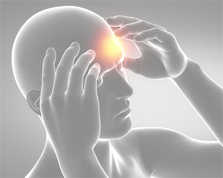 As the 5.30 am alarm buzzed, Karun realized that he had a terrible headache, caused by a very difficult project situation.
 Michelle, Astra
 Karun
Karun What do you think?
Virtual Ethics
Categories:
Virtual Experience Series
Categories: Virtual Experience Series
|
Over years PMI Code of Ethics and Professional Conduct has been giving guidance on practicing values as Honesty, Responsibility, Respect and Fairness in an organization specifically in project management. These values have been practiced and managed with organizations working environment where people were much more in face/face interactions. This has been globally applied across different cultures and practice of values. Over last decades gradually, but specially with the Covid-19 Pandemic situation during 2020 has accelerated organizations to move with speed of light into a highly virtual and remote working environment. This implies the collaboration, communication, human interactions, and teamwork has moved more and more from office locations and meetings rooms to virtual rooms. There are hundreds if not more new normal discussions on how the collaboration would or could adapt to virtuality with regards to effectiveness and productivity. The question of HR and employee’s management from people perspective related to employee’s satisfaction and wellness have also raised much more attention than earlier. One of the key major paradigm shifts is that employees enter to an arena where the physical and mental line between professional and personal life are being merged into a grey zone. This change means among others but not limited to:
Still some obvious but complex challenges remain to look closer to with regards to ethical values as respect, fairness, responsibility, and honesty. This raises fundamental questions related to practice of these values. As obvious there is no one easy answer to these questions that can apply to all employees and functions and culture. Some questions are related to ethics could be:
These questions are not answered simply by training in how to run virtual calls. This is not a question of massive technology booms as MS teams, Zoom, Skype and more. I would appreciate to hear how you experience this paradigm shift in future of work has impacted and will impact the future of work in a more and more virtual collaboration. |


Does Having an Ethical Code Make Sense for a Cybercriminal Organization?
Categories:
Ethics
Categories: Ethics
| Last week in the United States, a group named DarkSide carried out a cyberattack on one of the nation’s biggest gas pipelines. Cyberattacks are not new and often not even newsworthy. Businesses spend a lot of money to prevent (or worst case, respond to) this business risk. The attack caused the pipeline to shutdown causing gas shortages and local panic in some of the areas affected. While the supply line has slowly restarted, there was one part of the story which peaked my interest. According to news sources, a DarkSide representative said that they didn’t mean (emphasis added) to create problems, but rather to simply make money. The group claims to have an ethical code, and even a call-in number and help desk for its victims to discuss the ransom. Whoa! Let’s think about this. What are the implications of these statements? A code of ethics is important because it documents the values the organization. In this case, is having a code simply an excuse for rationalizing poor values? Surely, by using the word “poor” I am making a personal value judgment and not everyone will agree. Let’s tie this a little more closely to the PMI Code of Ethics and Professional Conduct. The four PMI ethical values are honesty, responsibility, respect and fairness. One of the guiding PMI principles is that ethics is about making the best possible decisions, with the strong assumption that the best outcome is the most ethical one. Fairness is the value that particularly sticks with me. Fairness to whom? In project management and overall business, can we always be fair to everyone? Perhaps that is why ethical decision making can be hard at times. Let’s return to DarkSide. I’m not saying that there is a one size fits all for ethical codes, nor am I trying to compare the content of the PMI code to DarkSide’s code. Far from it. I tried finding DarkSide’s code of ethics, and short of signing up for their mailing list (which I didn’t do), I didn’t find the code. Let’s just say that even if DarkSide followed their code, the impact was on many, many hardworking people who are already struggling due to the COVID pandemic. Does that make it right? Maybe they didn’t mean to create problems, but they did. Should they be held accountable? I wrote this blog simply to get people to think and talk about ethical behavior. There are many hard questions here and I leave you with a few to ponder. Perhaps we can have a discussion on this. Let me know your thoughts.
For more information about the PMI Code of Ethics and Professional Conduct, please see PMI- "The Code" |
Ethical Dilemmas of a Project Manager on a Mining Environment Project
Categories:
Construction
Categories: Construction
| As a project manager, you will face situations that would require making a difficult choice between two courses of action, neither of which might be acceptable nor preferable. The Syama mine in Mali is set to be the world's first fully automated underground mine. Today, there are also a reasonable number of mining company’s globally working towards achieving 100% automation and project managers leading these projects may encounter ethical dilemmas relating to technology, stakeholders, or communities.
These ethical dilemmas arise when situations conflict with the Project Manager's Professional Standards or moral values. In terms of doing what is right for society, stakeholders, and adhering to local content laws to ensure a project fulfills its social responsibility and welfare commitments while keeping the organization's long-term goals in mind.
Some ethical issues PMs on these projects may face include:
Employee and Community Anxiety One of the significant reasons people wonder if automation is ethical is Automation anxiety, anxiety amongst employees who fear they might be replaced with robots or technology. When automated technology is first introduced, employees question their job security, and chances are it will cause panic and stress, dipping morale and affecting their output. Worst case scenario, some might jump ship, affecting completion of the project. As a project manager, you must assure your team of their role and responsibilities on the project. Clearly state the purpose of installing automation software or technology as an assistant and not a replacement for team members.
Transitioning into 100% automation is usually a decision made by the top management of the company. You might incur the community's anger or wrath and get torn between fulfilling directives from management and fulfilling your corporate social responsibility of training people within the community to take up primary roles in the company. You need to earn the people's trust and reassure them of your commitment to the community's development and growth.
Lawful Conduct It would be helpful to look at the country of operation's constitution to understand it’s regulatory requirements regarding the scope of your project. Many third world countries have laws that often take into account regulations that guarantee inclusiveness, protection of employment of unskilled and semi-skilled persons within the local communities of operations. How does a project manager leading a full automation project within this environment go around his or her work? These are tough situations that require good ethical decision making.
Fairness Do not misrepresent an employee's performance or activities in favor of technology. Even among your team members, do not play favorites when it comes to performance appraisals. Being human, you might have personal preferences for some technology interventions but over manual labor. The project manager must ensure that all these choices of technology over manpower are made in a fair and responsible manner.
Transparency and accountability There are a number of times where project managers find themselves in dilemmas where manpower must be retrenched in favor of technology to maximize ROI. Every decision that a project manager makes in situations like this have consequences, positive or negative.be that as it may, one must always remain transparent and accountable for those decision and action. It is common for project managers to give the impression that everything is going as planned in such situations, which is wrong. When a client or a stakeholder wants to know how things are going, be open and let them know whether you face difficulties, a few minor problems, or even when there is bad news.
At times, you may also be tempted to conceal your own mistakes and oversights, but such acts are unethical. Instead, be open and own up to your actions and inactions.
In conclusion, you might face these and other ethical dilemmas, but you can reach the best decisions in such instances using an ethical framework as a guide. An ethical framework allows for consistency and makes you competent. A quick search online might be handy- you can start with a global standard such as the Project Management Institute's (PMIs) Ethical Decision-Making Framework (EDMF). Going the ethical way has long term benefits that can boost your career and reputation.
https://www.pmi.org/-/media/pmi/documents/public/pdf/ethics/ethical-decision-making-framework.pdf
|


