
Navigating AI in Project Management: A Comparison with Racing Co-Pilots and Driverless Cars
Categories:
Ethics as a competence,
Values,
values,
Ethical Leadership,
Decision-making,
Ethics Insight Team,
Ethics Bistro,
trust,
Ways of Working,
Decision-making,
Values,
AI,
Do the right thing,
Ethical Dilemma,
respect,
Professional Conduct,
Honesty,
Respect,
Responsibility,
Trust,
honesty,
responsibility,
professonal conduct,
empathy,
professional conduct,
Ethics in Communication,
Leadership,
Decision Making,
Ethics
Categories: Ethics as a competence, Values, values, Ethical Leadership, Decision-making, Ethics Insight Team, Ethics Bistro, trust, Ways of Working, Decision-making, Values, AI, Do the right thing, Ethical Dilemma, respect, Professional Conduct, Honesty, Respect, Responsibility, Trust, honesty, responsibility, professonal conduct, empathy, professional conduct, Ethics in Communication, Leadership, Decision Making, Ethics


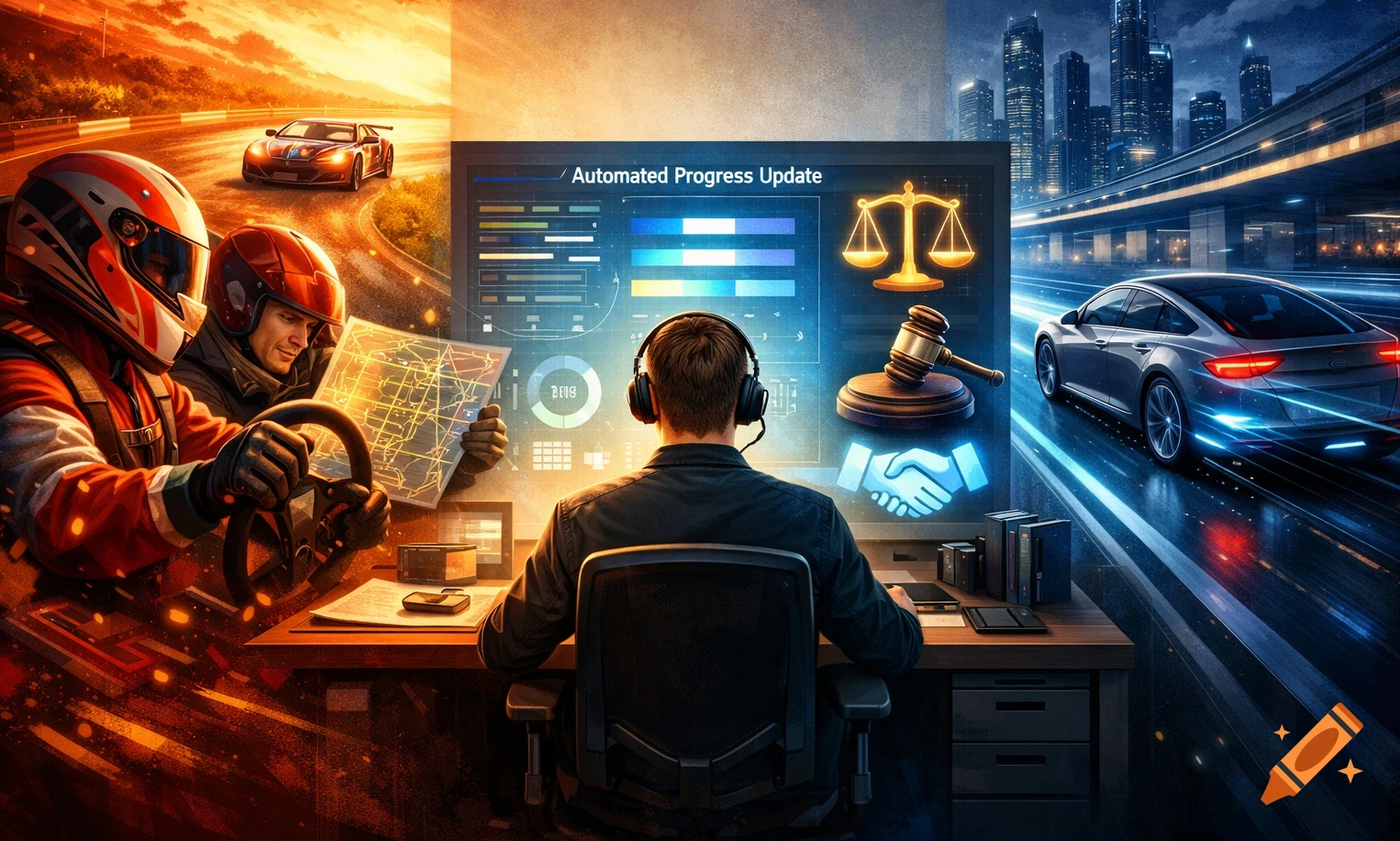 Artificial Intelligence (AI) is revolutionizing industries, and project management is no exception. With advanced tools supporting decision-making, risk mitigation, and efficiency, the project management landscape is increasingly intertwined with AI technologies. However, this evolution raises questions about human responsibility, autonomy, and ethics—questions like those faced in the realms of racing co-pilots and driverless cars. This blog explores the pros and cons of using AI in project management and compares these dynamics with racing environments and autonomous vehicle scenarios, focusing on the balance between human involvement and ethical considerations.  The Role of AI in Project Management AI-driven tools, such as virtual assistants and machine learning algorithms, are increasingly used to streamline project management processes. From schedule optimization and predictive analytics to stakeholder communication and resource allocation, AI empowers project managers to make well-informed and efficient decisions. The Racing Co-Pilot Analogy: Shared Responsibility, Enhanced Performance In professional racing environments, a co-pilot performs critical tasks: navigating the course, analysing conditions, and advising the driver. This relationship mirrors the human-machine collaboration often seen in project management. Here, AI acts as a "co-pilot," assisting project managers while leaving primary control in human hands. Let us examine this analogy: Pros of AI as a Co-Pilot in Project Management:
The Driverless Car Comparison: Autonomous AI in Project Management Shifting perspective, consider driverless cars: vehicles fully controlled by AI, requiring minimal human intervention. Some envision project management systems that resemble a driverless car—autonomous AI overseeing the project's execution from start to finish. While promising, this model has risks and challenges to consider. Pros of Autonomous AI in Project Management:
Ethical Considerations: Responsibility and Integrity Both racing co-pilots and driverless cars illustrate contrasting extremes in human-machine collaboration. A key differentiator in these scenarios is ethical responsibility:
Conclusion: The Road Ahead for AI in Project Management The racing co-pilot and driverless car analogies shed light on the pivotal balance required in leveraging AI for project management. While AI offers immense benefits—such as efficiency, precision, and scalability—it also raises concerns about accountability, ethical responsibility, and judgment. As the PMI Code of Ethics underscores values like fairness, honesty, and responsibility, project managers must ensure AI tools serve as partners rather than replacements, fostering trust and inclusivity. By choosing the right path—whether enhanced collaboration or selective autonomy—project managers can steer their projects responsibly toward success while maintaining the ethical values essential to effective leadership. Related discussion topic: Can project management run on AI autopilot?https://tinyurl.com/mr497je7 |
The Hidden Cost of Falsified Receipts: A Breach of PMI’s Ethical Foundations
|
In the bustling offices of YKF Technical Solutions, a mid-sized IT firm, Lai-mui, its project manager, was leading a high-stakes software deployment for a government client. With tight deadlines and mounting pressure, Lai-mui delegated expense reporting to her trusted team lead, Deejay. Weeks later, during a routine audit, discrepancies surfaced as receipts for meals, travel, and equipment were inflated or entirely fabricated. Deejay admitted to falsifying receipts to “compensate for overtime and stress.” Lai-mui was stunned. What seemed like a minor infraction was, in fact, a serious ethical breach. This scenario is not uncommon, yet it strikes at the heart of the PMI Code of Ethics and Professional Conduct, which is built on four core values: Responsibility, Respect, Fairness, and Honesty. Violations of PMI’s Core Values
Applying the PMI Ethical Decision-Making Framework (EDMF) Lai-mui, now faced with an ethical dilemma, turned to the PMI Ethical Decision-Making Framework. The EDMF guided her through:
Call to Action The project management community must treat ethics as a living practice, not a checkbox. We must:
Conclusion Ethical leadership is not just about doing things right; it’s about doing the right things. Falsifying receipts may seem minor, but its ripple effects can compromise entire projects. Let’s recommit to the values that define our profession and lead with integrity, every step of the way. Questions for Reflection
References: Project Management Institute, Inc. (2025). Ethics. pmi.org. https://www.pmi.org/about/ethics Project Management Institute, Inc. (n.d.). Ethics Guidelines. pmi.org. https://www.pmi.org/about/ethics/guidelines Project Management Institute, Inc. (n.d.). PMI Code of Ethics and Professional Conduct. pmi.org. https://www.pmi.org/-/media/pmi/documents/public/pdf/ethics/pmi-code-of-ethics.pdf ==== |
Ethics and Trust: The Case of the Miraculous Program Recovery
| By Dr. Valerie Denney, EMAG member In this blog, I encourage you to comment on this hypothetical, but realistic case, that describes a program that had an apparent miraculous recovery. Trust and ethics…. Two powerful, yet common words. Do we just use the words as slogans without stopping to think about what they really mean? “Trust, but verify.” “In God we trust.” “Got ethics?”
Let’s begin with a simple definition for ethics: the rules of conduct for a particular culture or group. Using a thesaurus yields words such as integrity, morality, honesty, and conscience. For trust, let’s use reliance on the ability, integrity, and surety of an individual or institution. Covey, in his bestseller, The Speed of Trust, describes trust with all stakeholders as a key leadership competency. Project managers, as with other leaders, build trust by the manner in which they make ethical decisions- those which make the best possible choices while working within the constraints and expectations of the environment. Leadership is inextricability linked with ethical choices.
As project and program managers, we have an obligation to comply with the PMI Code of Ethics and Professional Conduct. The code embraces four global project management community values including responsibility, respect, fairness, and honesty. In context to this topic, respect is our duty to show a high regard to ourselves, others, and the resources entrusted to us. Honesty is our duty to understand the truth and act in a truthful manner in all that we do. Consider the following situation with respect to ethics and trust. You are the program manager of a high technology contract that has significant risk. There were a number of bumps on the program in the first 9 months including key personal issues, supplier problems, design errors, and late contract deliverables. Since then, everything seems to be going well… at least according to your chief engineer. Apparently program recoveries can come true! You haven’t heard of any significant problems since this new chief engineer came to the program 5 months ago. In fact, the weekly test metrics are excellent and far better than they were 4 months ago. According to last week’s report, we are meeting, and in some places exceeding, the test completion plan. Last week a government auditor was at our facility for the annual review of the program. She and the chief engineer are good friends and served in the military together. They go back at least 15 years. As friends, the chief engineer and the auditor went for an evening on the town. The chief engineer bragged “I have found a foolproof way of keeping the program on track. All I need to do is estimate the results of the simple tests. I am positive everything works so actually I am being efficient and saving time and money.” The auditor gave a puzzled look, but continued the reunion that evening. The next day, the auditor continued the review and stumbled across some problems with the way the test data was recorded. Some of the detailed evidence seems to be missing. A few days later, the auditor meets with you, and reveals a number of deficiencies, including issues with the test reporting. You are shocked. How is this possible? There must be some mistake. The chief engineer assured you that everything was great and you believed it to be true. You meet with the chief engineer for clarification. The chief admits that there have been shortcuts, “but only on the tests that don’t really matter. We all know those simple tests work, so why waste our time and money on a formality?” The meeting ends abruptly. You trusted the chief engineer to be a leader and a technical expert? You ask yourself “how could this happen?”
What action(s) would you take now? What lesson(s) can we take from this scenario so we don’t encounter similar situations in the future? In the end, performing ethically allows us to execute projects and programs successfully while acting in a manner which is consistent with our personal, company, and professional associations. Simply stated O’Brochta (2016) wrote that “ethics lead to trust, which leads to leadership, which in turn leads to project success.” This hypothetical case allows us to continue to explore this statement. For more ethical resources please visit: https://www.pmi.org/about/ethics. O'Brochta, M. (2016). Why project ethics matter: Leadership is built on trust. If the foundation is cracked, a project's future is in doubt. PM Network, 30(1), 29. |




