
What is new in PMBOK 8 – An ethics perspective
Categories:
Ethics as a competence,
Values,
Behavior,
values,
code of ethics,
Ethical Leadership,
Decision-making,
Ethics Insight Team,
Ethics Bistro,
Business Ethics,
code of conduct,
PMI Talent Triangle,
Ways of Working,
Decision-making,
Values,
Business Ethics,
AI,
Project,
PMI Program Management,
Do the right thing,
Culture,
Ethical Dilemma,
respect,
Professional Responsibility,
Professional Conduct,
Honesty,
Respect,
Responsibility,
Project Management,
Code of Ethics and Professional Conduct,
honesty,
responsibility,
professonal conduct,
volunteers,
professional conduct,
Digital Transformation,
Ethics in Communication,
Agile,
Leadership,
Decision Making,
Ethics,
Diversity,
Organizational Project Management,
Information Technology,
Organizational Culture,
Governance,
Artificial Intelligence
Categories: Ethics as a competence, Values, Behavior, values, code of ethics, Ethical Leadership, Decision-making, Ethics Insight Team, Ethics Bistro, Business Ethics, code of conduct, PMI Talent Triangle, Ways of Working, Decision-making, Values, Business Ethics, AI, Project, PMI Program Management, Do the right thing, Culture, Ethical Dilemma, respect, Professional Responsibility, Professional Conduct, Honesty, Respect, Responsibility, Project Management, Code of Ethics and Professional Conduct, honesty, responsibility, professonal conduct, volunteers, professional conduct, Digital Transformation, Ethics in Communication, Agile, Leadership, Decision Making, Ethics, Diversity, Organizational Project Management, Information Technology, Organizational Culture, Governance, Artificial Intelligence


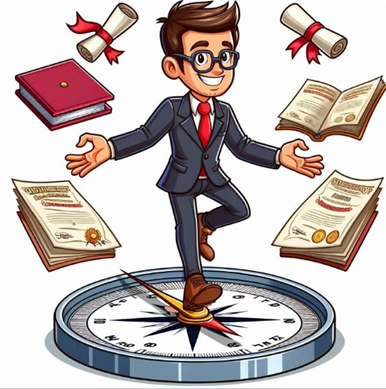 Imagine a team of explorers crossing a desert. No matter how skilled its members are or how modern their vehicles are, they may not succeed in reaching their destination without a compass. In project management, ethics serve as that compass, guiding decision-making, fostering trust, and ensuring accountability. For PMI Members, the compass is the Code of Ethics and Professional Conduct. Developed even before the first edition of the Project Management Book of Knowledge, the Code was and remains the holder of the guardrails of the project management profession. PMBOK 7 replaced knowledge areas with performance domains. The 8th is more aligned with the Agile delivery approach, whilst retaining the importance of good governance. Like the previous version, the PMBOK highlights alignment with both internal and external environments. It is important to note the focus on artificial intelligence and sustainability. Principles of project management PMBOK 8 simplified the 12 principles from the 7th edition to create a more focused and actionable foundation for modern project management. The principles of project management are aligned with the values of PMI’s Code of Ethics and Professional Conduct. They do not follow the same format, and they are not duplicative; rather, the principles and the Code of Ethics are complementary. ·Adopt a holistic view: Consider the project within its larger organizational and ecosystem context. ·Focus on value: Prioritize delivering tangible value and aligning project outcomes with strategic goals. ·Embed quality into processes and deliverables: Integrate quality throughout the project lifecycle, not just as a final check. ·Be an accountable leader: Take ownership and responsibility for the project's success and outcomes. ·Integrate sustainability within all project areas: Include environmental and social considerations in project work. ·Build an empowered culture: Foster a project environment that empowers team members. Enterprise environmental factors: Internal and external to the Organization ·The standard emphasises the impact of organizational culture, structure, and governance. Aspects like vision, mission, values, beliefs, cultural norms, leadership style, hierarchy and authority relationships, organizational style, ethics, and code of conduct remain critical success factors, as well as a framework for ethical decision making. Social and cultural influences and issues. External factors include political climate, regional customs and traditions, public holidays and events, codes of conduct, ethics, and perceptions. Artificial Intelligence (AI) AI ethical issues, especially the responsible use of AI tools and the negative impact on project team members, are an especially important aspect. Topics like data privacy and security can be addressed using technical controls. Issues like bias and fairness require special attention from project managers. Lack of clarity on who is responsible when AI-driven decisions go wrong can create confusion and an unending blame game. AI agents cannot be (yet) included in a Responsible, Accountable, Consulted, or Informed (RACI) matrix. Although their use is unavoidable, the responsibility and accountability remain with the human user. The use of AI is dependent on context, and it should be assessed for each project through a decision-making process to determine when AI can assist with tasks or provide more time for other valuable activities. The evaluation should be focused on the use of AI to produce project artifacts. Initiative-taking measures should be considered to identify and assess the risk of incorporating AI and determine if it is acceptable or it should be controlled. Below is a list of some ethical concerns related to the use of AI in projects
·Diversification of the data sets on which the AI system is trained; ·Periodic tests conducted on the AI system, with particular focus on bias; and ·Involvement of different teams in the development of the AI system. Procurement is another ethics area of focus that PMBOK 8 provides guidance on. In chapter X4.9.2, Sensitivity of Legal Actions and Upholding Ethics Codes, the standard provides considerations to avoid impact on project outcomes and stakeholder relationships: ·Nuanced communication. ·Escalation protocols. ·Confidentiality. ·Impartiality. PMBOK 7 explicitly references the PMI Code of Ethics as a complementary and essential guide for project professionals. This code provides the specific rules for ethical conduct, based on core values of honesty, responsibility, respect, and fairness.
|
Post Pandemic, Navigating through this period…
Categories:
volunteers
Categories: volunteers
| A couple of years ago in my last blog, right before being invaded by the pandemic, , I asked myself and the community about how to be more sustainable in this disruptive age, and answered myself that we are ready if we stick to our ethical values, as leaders. After two years, where for some of us, life and workstyles have changed, I have launched a discussion earlier in February 2022, asking the community about how to navigate through the period after the pandemic. I am sharing, in this blog, the interesting insights and ideas that were shared by the community. Professionals and project management practitioners stated that “binding project work and deliverables with a ring of ethics is crucial to bring the value of those deliverables for the project. Regardless of the leadership styles of the project manager, upholding ethical values should be MANDATORY”. “With maturity and experience, basic ethical values are the key to a long term success, the power of a project manager comes from respect and trust achieved through honesty, fairness, transparency, and integrity.” Moreover, there is an emphasis on creating a balance between the values to satisfy employers, the profession, and practitioners. An interesting opinion to share with the readers is that what the globe is going through is not a transition, this is a long-time reality that was accelerated due to the pandemic. This is a continuation of the process of evolution. People are always transitioning while values are the only CONSTANT. Before ending my blog, I want to share with you the story of my dear friend Albert Agbemenu: I worked on a project last year during the peak of the pandemic. The project involved the design of some buildings and infrastructure for a new mine. Being the project manager, I initially thought it was going to be the most difficult assignment, especially so when I never had the opportunity to meet most of the team members with who I was going remotely work with. The only platform we had to meet was virtually to review work and discuss reports. Part of the team was located in Australia whilst the others were here with me in Africa, but yet still not co-located. I was working from my small space on the dining table reaching out to the rest of the team (multicultural). One thing that was clear to every one of us from the outset was the need for having these ethical values. With that in mind, we were able to work across a time zone of 8 hours of difference. This routine continued for almost one year and the project was completed without any single conflict, due to the values we all carried along positively. These values should not only be dependent on a particular situation or period. They must be embedded in the sleeves of the diligent project manager. That said, these values should not be difficult to implement in a virtual project. Constantly upholding these ethical values should be a lifestyle of the project manager. As a recap of what was said, top things to remember:
In light of what was said, one of the received feedback is that it is inevitable to find tools and techniques to make sure that right things are done promptly. As an answer to this, PMI/EIT have created the PMI Practitioner Ethics Toolkit. The tool includes a rich set of resources to assist PMI practitioners understand, identify, and proactively manage ethical issues.
How many of us, as professionals are upholding those values? And how much the ecosystems we are operating inside are fostering the adoption of those values?
|


Governmental Projects: Are there any ethical considerations?
| Some people still think that the most important projects are in the private sector, however, governments are the ones that are responsible for creating and establishing the society we want to live in. Saying that questions emerge:
From a human perspective, people are just people, with light and dark sides. Leaders are exposed to take decisions at all times in their projects, they should decide what should be right or wrong with public funds, having a direct impact on the expectations of the population living in poverty, that’s why ethics in project management are fundamental while making those decisions. Al Capone, one of the biggest gangsters in history, even at the end of his days in jail, when people asked him if he was a bad person, he honestly answered: “no, I just wanted to do what is good”. Several sociologists and psychologists went into deep analysis of his answers, find out that he was not lying, he was truly convinced that he was doing what was good in every situation. Observers might think that this is part of Al Capone's craziness, but most human beings tend to justify their actions to the good intentions laying behind those actions. That is why, especially in governmental projects, leaders can’t just rely on their own set of criteria; rather they must have clear and well define metrics and transparency during project execution. Those metrics must be shown to the ones benefiting from the results of the projects as well. Perhaps it’s not too common having metrics to reinforce ethical behaviors, however, “taking the right decision in a project” is subject to be divided into several parts, measurable in schedules and sprints. Communities have the right to see how the projects are managed because they are the ones paying taxes, accordingly, metrics are powerful tools to emphasize public ethical behavior in any government. PMI has a framework to address ethics decisions that apply as well for any project in government, in any approach and country, you can find it in the following link: https://www.pmi.org/-/media/pmi/documents/public/pdf/ethics/ethical-decision-making-framework.pdf
|
Is there something called an ethical protest?
Categories:
volunteers
Categories: volunteers
|
I have witnessed several protests in my city and around the world lately. These protests were against the action taken or not taken, perceived bias by the government, organizations etc. Residents from my locality took part in these protests. When I spoke to them as why they were protesting against the government while they are not directly affected by the proposed law changes, they said that they are doing it for the betterment of the society as a whole. And after few days, I read in the news that protesters burned public transport buses, chocked the traffic on the road and caused delays for several hours impacting commuters and causing inconvenience to the same society they want to make better by protesting! One of the arguments given to me is that protest is their human right given by the constitution - the same constitution that explains the citizens’ roles and responsibilities. How convenient it is for these citizens to choose one side of the constitution while choosing to ignore another! And then there is a section of general public who are not part of these protests, but they suffer greatly even when there were not faulty. For example, Hong Kong airport was shut down during the protests; there were significant property loss in India due to protest against an amendment in the existing law. In my view, protesters must ask themselves some questions, no matter what they are protesting for, before they |



