Support to Develop
by Luis Branco

This blog addresses management-related topics and has three areas of focus: 1. Technical skills; 2. Competencies in the field of interpersonal relations and communication (including personal organization and delegation, leadership, teamwork, conflict resolution, conducting meetings, and negotiation); and 3. Strategy (including diagnosis, strategic guidelines, and implementation).4.Technology
Recent Posts
Regenerative Learning: Turning Experience into Organizational Capability
Delegation with Purpose: Building Autonomy and Developing Capability
RCPCV™: A Method for Decision-Making and Continuous Improvement
The Same Change Can Succeed and Fail at the Same Time
What Must Exist Even When No Single Role Owns the Whole?
Categories
Agile,
Career Development,
Career Development,
Career Development,
Career Development,
Career Development,
Career Development,
Career Development,
Career Development,
Career Development,
Career Development,
Career Development,
Career Development,
Career Development,
Career Development,
Career Development,
Career Development,
Career Development,
Career Development,
Career Development,
Career Development,
Career Development,
Career Development,
Career Development,
Career Development,
Career Development,
Career Development,
Career Development,
Career Development,
Career Development,
Career Development,
Career Development,
Career Development,
Career Development,
Career Development,
Career Development,
Career Development,
Career Development,
Career Development,
Career Development,
Career Development,
Career Development,
Career Development,
Career Development,
Career Development,
Career Development,
Career Development,
Career Development,
Career Development,
Career Development,
Career Development,
Career Development,
Career Development,
Career Development,
Career Development,
Career Development,
Career Development,
Career Development,
Career Development,
Career Development,
Career Development,
Career Development,
Career Development,
Career Development,
Career Development,
Career Development,
Career Development,
Career Development,
Career Development,
Career Development,
Career Development,
Career Development,
Career Development,
Career Development,
Career Development,
Career Development,
Career Development,
Career Development,
Career Development,
Career Development,
Career Development,
Career Development,
Career Development,
Career Development,
Career Development,
Career Development,
Career Development,
Career Development,
Career Development,
Career Development,
Career Development,
Career Development,
Career Development,
Career Development,
Career Development,
Career Development,
Career Development,
Career Development,
Career Development,
Career Development,
Career Development,
Career Development,
Career Development,
Career Development,
Career Development,
Career Development,
Career Development,
Career Development,
Career Development,
Career Development,
Career Development,
Career Development,
Career Development,
Career Development,
Career Development,
Career Development,
Career Development,
Career Development,
Career Development,
Career Development,
Career Development,
Career Development,
Career Development,
Education,
Governance,
Governance,
Governance,
Governance,
Governance,
Governance,
Governance,
Governance,
Governance,
Governance,
Governance,
Governance,
Governance,
Governance,
Governance,
Governance,
Governance,
Governance,
Governance,
Governance,
Governance,
Governance,
Governance,
In,
Integration Management,
Interpersonal Skills,
Interpersonal Skills,
Interpersonal Skills,
Interpersonal Skills,
Interpersonal Skills,
Interpersonal Skills,
Interpersonal Skills,
Interpersonal Skills,
Interpersonal Skills,
Interpersonal Skills,
Interpersonal Skills,
Interpersonal Skills,
Interpersonal Skills,
Interpersonal Skills,
Interpersonal Skills,
Interpersonal Skills,
Interpersonal Skills,
Interpersonal Skills,
Interpersonal Skills,
Interpersonal Skills,
Interpersonal Skills,
Interpersonal Skills,
Interpersonal Skills,
Interpersonal Skills,
Interpersonal Skills,
Interpersonal Skills,
Interpersonal Skills,
Interpersonal Skills,
Interpersonal Skills,
Interpersonal Skills,
Interpersonal Skills,
Interpersonal Skills,
Interpersonal Skills,
Interpersonal Skills,
Interpersonal Skills,
Interpersonal Skills,
Interpersonal Skills,
Interpersonal Skills,
Interpersonal Skills,
Interpersonal Skills,
Interpersonal Skills,
Interpersonal Skills,
Interpersonal Skills,
Interpersonal Skills,
Interpersonal Skills,
Interpersonal Skills,
Interpersonal Skills,
Interpersonal Skills,
Interpersonal Skills,
Interpersonal Skills,
Interpersonal Skills,
Interpersonal Skills,
Interpersonal Skills,
Interpersonal Skills,
Interpersonal Skills,
Interpersonal Skills,
Interpersonal Skills,
Interpersonal Skills,
Interpersonal Skills,
Interpersonal Skills,
Interpersonal Skills,
Interpersonal Skills,
Interpersonal Skills,
Interpersonal Skills,
Interpersonal Skills,
Interpersonal Skills,
Interpersonal Skills,
Interpersonal Skills,
Interpersonal Skills,
Interpersonal Skills,
Interpersonal Skills,
Interpersonal Skills,
Interpersonal Skills,
Interpersonal Skills,
Interpersonal Skills,
Interpersonal Skills,
Interpersonal Skills,
Interpersonal Skills,
Interpersonal Skills,
Interpersonal Skills,
Interpersonal Skills,
Interpersonal Skills,
Interpersonal Skills,
Interpersonal Skills,
Interpersonal Skills,
Interpersonal Skills,
Interpersonal Skills,
Interpersonal Skills,
Interpersonal Skills,
Interpersonal Skills,
Interpersonal Skills,
Interpersonal Skills,
Interpersonal Skills,
Interpersonal Skills,
Interpersonal Skills,
Interpersonal Skills,
Interpersonal Skills,
Interpersonal Skills,
Interpersonal Skills,
Interpersonal Skills,
Interpersonal Skills,
Interpersonal Skills,
Interpersonal Skills,
Interpersonal Skills,
Interpersonal Skills,
Interpersonal Skills,
Interpersonal Skills,
Interpersonal Skills,
Interpersonal Skills,
Interpersonal Skills,
Interpersonal Skills,
Interpersonal Skills,
Interpersonal Skills,
Interpersonal Skills,
Interpersonal Skills,
Interpersonal Skills,
Interpersonal Skills,
Interpersonal Skills,
Interpersonal Skills,
Interpersonal Skills,
Interpersonal Skills,
Interpersonal Skills,
Knowledge Management,
le,
lea,
Leadership,
Leadership,
Leadership,
Leadership,
Leadership,
Leadership,
Leadership,
Leadership,
Leadership,
Leadership,
Leadership,
Leadership,
Leadership,
Leadership,
Leadership,
Leadership,
Leadership,
Leadership,
Leadership,
Leadership,
Leadership,
Leadership,
Leadership,
Leadership,
Leadership,
Leadership,
Leadership,
Leadership,
Leadership,
Leadership,
Leadership,
Leadership,
Leadership,
Leadership,
Leadership,
Leadership,
Leadership,
Leadership,
Leadership,
Leadership,
Leadership,
Leadership,
Leadership,
Leadership,
Leadership,
Leadership,
Leadership,
Leadership,
Leadership,
Leadership,
Leadership,
Leadership,
Leadership,
Leadership,
Leadership,
Leadership,
Leadership,
Leadership,
Leadership,
Leadership,
Leadership,
Leadership,
Leadership,
Leadership,
Leadership,
Leadership,
Leadership,
Leadership,
Leadership,
Leadership,
Leadership,
Leadership,
Leadership,
Leadership,
Leadership,
Leadership,
Leadership,
Leadership,
Leadership,
Leadership,
Leadership,
Leadership,
Leadership,
Leadership,
Leadership,
Leadership,
Leadership,
Leadership,
Leadership,
Leadership,
Leadership,
Leadership,
Leadership,
Leadership,
Leadership,
Leadership,
Leadership,
Leadership,
Leadership,
Leadership,
Leadership,
Leadership,
Leadership,
Leadership,
Leadership,
Leadership,
Leadership,
Leadership,
Leadership,
Leadership,
Leadership,
Leadership,
Leadership,
Leadership,
Leadership,
Leadership,
Leadership,
Leadership,
Leadership,
Leadership,
Leadership,
Leadership,
Leadership,
or,
Organizational Project Management,
Portfolio Management,
Program,
Program Management,
Strategy,
Strategy,
Strategy,
Strategy,
Strategy,
Strategy,
Strategy,
Strategy,
Strategy,
Strategy,
Strategy,
Strategy,
Strategy,
Strategy,
Strategy,
Strategy,
Strategy,
Strategy,
Strategy,
Strategy,
Strategy,
Strategy,
Strategy,
Strategy,
Strategy,
Strategy,
Strategy,
Strategy,
Strategy,
Strategy,
Strategy,
Strategy,
Strategy,
Strategy,
Strategy,
Strategy,
Strategy,
Strategy,
Strategy,
Strategy,
Strategy,
Strategy,
Strategy,
Strategy,
Strategy,
Strategy,
Strategy,
Strategy,
Strategy,
Strategy,
Strategy,
Strategy,
Strategy,
Strategy,
Strategy,
Strategy,
Strategy,
Strategy,
Strategy,
Strategy,
Strategy,
Strategy,
Strategy,
Strategy,
Strategy,
Strategy,
Strategy,
Strategy,
Strategy,
Strategy,
Strategy,
Strategy,
Strategy,
Strategy,
Strategy,
Strategy,
Strategy,
Strategy,
Strategy,
Strategy,
Strategy,
Strategy,
Strategy,
Strategy,
Strategy,
Strategy,
Strategy,
Strategy,
Strategy,
Strategy,
Strategy,
Strategy,
Strategy,
Strategy,
Strategy,
Strategy,
Strategy,
Strategy,
Strategy,
Strategy,
Strategy,
Strategy,
Strategy,
Strategy,
Strategy,
Strategy,
Strategy,
Strategy,
Strategy,
Strategy,
Strategy,
Strategy,
Strategy,
Strategy,
Strategy,
Strategy,
Strategy,
Strategy,
Strategy,
Strategy,
Strategy,
Strategy,
Strategy,
Sustainability,
Talent Management,
Talent Management,
Talent Management,
Talent Management,
Talent Management,
Talent Management,
Talent Management,
Talent Management,
Talent Management,
Talent Management,
Talent Management,
Talent Management,
Talent Management,
Talent Management,
Talent Management,
Talent Management,
Talent Management,
Talent Management,
Talent Management,
Talent Management,
Talent Management,
Talent Management,
Talent Management,
Talent Management,
Talent Management,
Talent Management,
Talent Management,
Talent Management,
Talent Management,
Talent Management,
Talent Management,
Talent Management,
Talent Management,
Talent Management,
Talent Management,
Talent Management,
Talent Management,
Talent Management,
Talent Management,
Talent Management,
Talent Management,
Talent Management,
Talent Management,
Talent Management,
Talent Management,
Talent Management,
Talent Management,
Talent Management,
Talent Management,
Talent Management,
Talent Management,
Talent Management,
Talent Management,
Talent Management,
Talent Management,
Talent Management,
Talent Management,
Talent Management,
Talent Management,
Talent Management,
Talent Management,
Talent Management,
Talent Management,
Talent Management,
Talent Management,
Talent Management,
Talent Management,
Talent Management,
Talent Management,
Talent Management,
Talent Management,
Talent Management,
Talent Management,
Talent Management,
Talent Management,
Talent Management,
Talent Management,
Talent Management,
Talent Management,
Talent Management,
Talent Management,
Talent Management,
Talent Management,
Talent Management,
Talent Management,
Talent Management,
Talent Management,
Talent Management,
Talent Management,
Talent Management,
Talent Management,
Talent Management,
Talent Management,
Talent Management,
Talent Management,
Talent Management,
Talent Management,
Talent Management,
Talent Management,
Talent Management,
Talent Management,
Talent Management,
Talent Management,
Talent Management,
Talent Management,
Talent Management,
Talent Management,
Talent Management,
Talent Management,
Talent Management,
Talent Management,
Talent Management,
Talent Management,
Talent Management,
Talent Management,
Talent Management,
Talent Management,
Talent Management,
Talent Management,
Talent Management,
Talent Management,
Talent Management,
Talent Management,
Teams
Date
For decades, Project Management evolved by seeking to answer an essential question: how to increase the probability of project success through better methodologies, processes, tools, and competencies.
This evolution built a solid body of knowledge that remains indispensable. Planning, along with the management of scope, schedule, cost, risk, quality, stakeholders, and the delivery of results, continue to be fundamental pillars of the discipline.
Over the past two decades, the spread of agile approaches introduced a new stage in this evolution.
Adaptability, continuous collaboration, frequent feedback, incremental value delivery, and learning began to complement traditional principles of planning and control.
The focus shifted from being exclusively on the efficient execution of plans to also including the ability to respond to change.
Meanwhile, the organizational context transformed once again.
Unlike previous shifts, this transformation does not merely alter how projects are managed.
It alters the very nature of project work, the relationship between strategy and execution, the distribution of authority, how decisions are made, the collaboration between human and computational capabilities, and the role of organizations in creating sustainable value.
The growing adoption of artificial intelligence, the continuous evolution of products and services, digital transformation, interdependence among organizations, technological acceleration, increasing regulatory requirements, and the growing complexity of business environments have profoundly altered the conditions under which projects are conceived, executed, and evaluated.
Today, Project Managers no longer work solely on projects.
They work in organizations striving to adapt continuously, preserve strategic coherence, integrate human and computational capabilities, respond to permanent changes, and create value sustainably.
In this context, one question becomes inevitable.
Will it be enough to continue discussing only methodologies and lifecycles?
In recent months, several particularly relevant documents were published to help understand this evolution, most notably the second edition of the Agile Practice Guide, the Manifesto for Enterprise Agility, and the Closing the Change-Readiness Gap report.
Although each has distinct objectives, reading them together reveals a transformation far deeper than what each document describes individually.
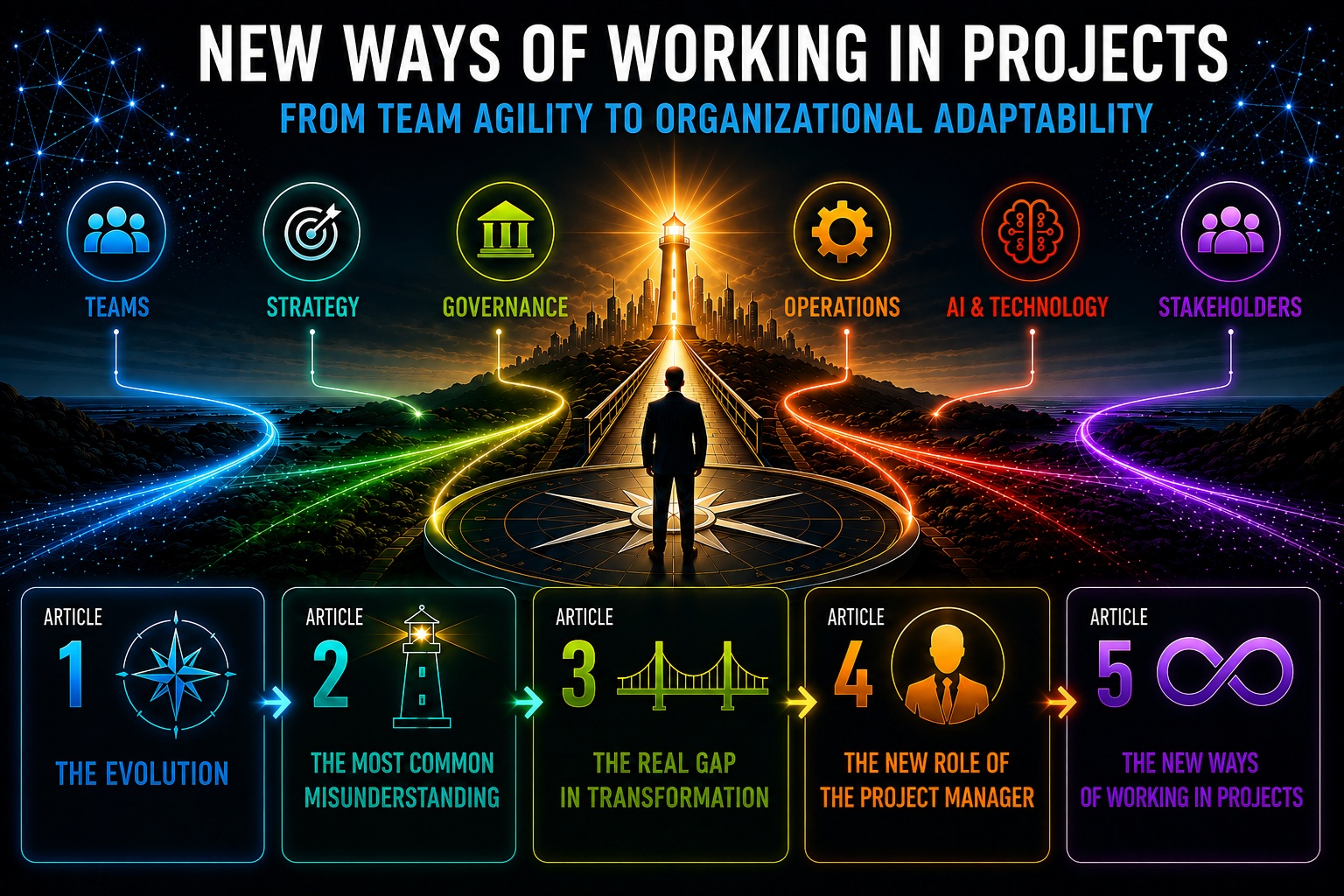
Together, they show that the next stage of Project Management is not merely about improving how teams work.
It is about understanding the organizational conditions that make it possible to transform local adaptation into a true organizational capability.
This distinction is fundamental.
A team can perform exemplarily and yet remain constrained by inadequate decision structures, rigid funding models, loss of strategic context, organizational barriers, a lack of trust, or operating models incapable of keeping pace with the speed of change.
In other words, team excellence is no longer a sufficient condition to guarantee truly adaptive organizations.
It is precisely this evolution that this series aims to explore.
Throughout the upcoming articles, I will analyze the transition from team agility to organizational adaptability, the evolution of the Project Manager's role, the challenges of leadership, governance, and decision-making in highly complex environments, as well as the implications of growing collaboration between people and artificial intelligence in new ways of working in projects.
The objective of this series is not to present a review of the documents that serve as its inspiration, nor to defend a specific methodology.
Rather, it aims to develop a critical reflection on the evolution of Project Management and contribute to a discussion that I consider decisive for the next decade.
New ways of working in projects will not depend solely on adopting new practices.
They will depend on the ability of organizations to preserve the conditions that allow projects, teams, products, and people to adapt continuously without losing strategic coherence, accountability, and a sustainable capacity to create value.
The next evolution of Project Management will not depend merely on better practices.
It will depend on the ability of organizations to create the conditions in which those practices can produce sustainable results.
It is this evolution that this series sets out to explore.
This introduction sets the stage for the journey ahead: unpacking why this transformation is happening, the context driving it, and where our discipline must head next.
The first article will be published next Sunday, August 2nd, followed by a new piece every Sunday.
I hope this series sparks a constructive and timely reflection on the future of Project Management and the core challenges awaiting organizations, leaders, and project professionals in the coming decade.
I warmly invite you to join the conversation, share your perspectives, and shape this discussion as it unfolds. |
Posted on: July 26, 2026 12:52 PM
|
Permalink |
Comments (0)
|
"Being powerful is like being a lady. If you have to tell people you are, you aren't."
- Margaret Thatcher
|




