Back to office? A challenge or breeze?


| Mary sat sipping coffee in the bistro chatting with her colleagues. One of them was describing her challenges around returning to the office and the others were listening intently. “I don’t think I can go back to office to work. I am searching for a new job that suits my requirements. I see challenges managing my home and work front. Besides, I am not sure why are we being called to the office? Our team has been excelling in the work even as we work from home” - a colleague “Yes, me too. The work-life balance has been redesigned to suit this new reality; I am enjoying my motherhood as well as being a professional at work. I think the culture of the organization matters. It’s important to discover if it’s a command-and-control type or it is de-centralised and manages more by outcomes. It also depends on your rapport with your manager and how flexible he/she is to your requests” - another colleague quipped “I think the pandemic accelerated the adoption of an adaptive model of work leveraging the benefits of using technology. Companies took advantage of it to diversify its workforce, acquire new businesses, learn new technologies, and gain agility for moving their specific business units across the globe. Isn’t that cool?” – the discussion was getting interesting “Yes, of course! There is a lot that we all have gained. For me, personally, reduction in travel made a lot sense. I am not a travel enthusiast but had always felt a lot of travel was unnecessary and detrimental to the environment in the long run. But, on a flip side, when some units just cannot have a work from home (eg healthcare workforce), I also see issues such as disparity in compensation, career progression, preference of careers etc. This can cause a dissatisfaction. Technology to monitor employee behavior may seem like micromanagement causing employee dissatisfaction. And last but not the least, I think I will miss the team bonding that happened over coffee and in corridors”. “Oh yes, there are numerous challenges that will hound us. But I think the benefits of a new hybrid model of work will prevail over the disadvantages” Mary was silently listening to her colleagues as they battled over these contemporary topics. “I agree with you all. In all this maze of benefits and challenges, what I think is important is being ethical in your work. Ethical values are key to sustainability and success and in the long term, where businesses and organizations will thrive in the new model of work, it’s only the ethical principles that will help drive positive outcomes. Didn’t we experience this the last couple of years? While we saw our near and dear ones grappling with unprecedented situations, organizations across the globe, their own ways, supported them to the best of their abilities. The empathy was evident from their support. The organizations, no doubt had multiple challenges and I found PMI Ethics resources are a good reference. When faced with ethical challenges at work, I would refer to PMI’s Code of Ethics and Professional Conduct to support in decision making. Hey, at the end of the day, it’s happiness that matters; isn’t it?- Mary concluded The group fell silent as Mary’s comments on ethical values were echoing in their minds. Do they resonate with you too? Would like to hear from you. References |
Post Pandemic, Navigating through this period…
Categories:
volunteers
Categories: volunteers
| A couple of years ago in my last blog, right before being invaded by the pandemic, , I asked myself and the community about how to be more sustainable in this disruptive age, and answered myself that we are ready if we stick to our ethical values, as leaders. After two years, where for some of us, life and workstyles have changed, I have launched a discussion earlier in February 2022, asking the community about how to navigate through the period after the pandemic. I am sharing, in this blog, the interesting insights and ideas that were shared by the community. Professionals and project management practitioners stated that “binding project work and deliverables with a ring of ethics is crucial to bring the value of those deliverables for the project. Regardless of the leadership styles of the project manager, upholding ethical values should be MANDATORY”. “With maturity and experience, basic ethical values are the key to a long term success, the power of a project manager comes from respect and trust achieved through honesty, fairness, transparency, and integrity.” Moreover, there is an emphasis on creating a balance between the values to satisfy employers, the profession, and practitioners. An interesting opinion to share with the readers is that what the globe is going through is not a transition, this is a long-time reality that was accelerated due to the pandemic. This is a continuation of the process of evolution. People are always transitioning while values are the only CONSTANT. Before ending my blog, I want to share with you the story of my dear friend Albert Agbemenu: I worked on a project last year during the peak of the pandemic. The project involved the design of some buildings and infrastructure for a new mine. Being the project manager, I initially thought it was going to be the most difficult assignment, especially so when I never had the opportunity to meet most of the team members with who I was going remotely work with. The only platform we had to meet was virtually to review work and discuss reports. Part of the team was located in Australia whilst the others were here with me in Africa, but yet still not co-located. I was working from my small space on the dining table reaching out to the rest of the team (multicultural). One thing that was clear to every one of us from the outset was the need for having these ethical values. With that in mind, we were able to work across a time zone of 8 hours of difference. This routine continued for almost one year and the project was completed without any single conflict, due to the values we all carried along positively. These values should not only be dependent on a particular situation or period. They must be embedded in the sleeves of the diligent project manager. That said, these values should not be difficult to implement in a virtual project. Constantly upholding these ethical values should be a lifestyle of the project manager. As a recap of what was said, top things to remember:
In light of what was said, one of the received feedback is that it is inevitable to find tools and techniques to make sure that right things are done promptly. As an answer to this, PMI/EIT have created the PMI Practitioner Ethics Toolkit. The tool includes a rich set of resources to assist PMI practitioners understand, identify, and proactively manage ethical issues.
How many of us, as professionals are upholding those values? And how much the ecosystems we are operating inside are fostering the adoption of those values?
|


Governmental Projects: Are there any ethical considerations?
| Some people still think that the most important projects are in the private sector, however, governments are the ones that are responsible for creating and establishing the society we want to live in. Saying that questions emerge:
From a human perspective, people are just people, with light and dark sides. Leaders are exposed to take decisions at all times in their projects, they should decide what should be right or wrong with public funds, having a direct impact on the expectations of the population living in poverty, that’s why ethics in project management are fundamental while making those decisions. Al Capone, one of the biggest gangsters in history, even at the end of his days in jail, when people asked him if he was a bad person, he honestly answered: “no, I just wanted to do what is good”. Several sociologists and psychologists went into deep analysis of his answers, find out that he was not lying, he was truly convinced that he was doing what was good in every situation. Observers might think that this is part of Al Capone's craziness, but most human beings tend to justify their actions to the good intentions laying behind those actions. That is why, especially in governmental projects, leaders can’t just rely on their own set of criteria; rather they must have clear and well define metrics and transparency during project execution. Those metrics must be shown to the ones benefiting from the results of the projects as well. Perhaps it’s not too common having metrics to reinforce ethical behaviors, however, “taking the right decision in a project” is subject to be divided into several parts, measurable in schedules and sprints. Communities have the right to see how the projects are managed because they are the ones paying taxes, accordingly, metrics are powerful tools to emphasize public ethical behavior in any government. PMI has a framework to address ethics decisions that apply as well for any project in government, in any approach and country, you can find it in the following link: https://www.pmi.org/-/media/pmi/documents/public/pdf/ethics/ethical-decision-making-framework.pdf
|
Karun’s Charismatic Leadership & Caring Communication in Chaotic, Changing Conditions.
|
Desperately needing fresh air, he started his morning jog. The beautiful hues of the early dawn, the wonderful scent of fresh grass, and the cool breeze on his skin calmed him somewhat. However, it wasn’t enough to take his mind away from his workplace worries. Karun was managing a key project to implement a PeopleSoft HR System for Astra Constructions, a rapidly growing infrastructure company that was hiring aggressively to meet rapid business expansion. The new system would replace hundreds of Excel sheets which were unwieldy, time-consuming, and error-prone. Karun knew that this project would be very challenging as such projects required significant culture shifts and antagonistic stakeholder attitudes. As Karun completed the first part of his morning run, his mind went back to how it had taken just three weeks for his fears to come true.
Fearing the worst, several HR team members were refusing to cooperate. After all, who would want to lose a good job in tough pandemic times? The project was now delayed by several weeks. Coming to the end of his morning run, Karun knew he had to do something quickly to salvage the situation. In his early days as project manager, Karun had ignored people who opposed his projects, thinking that they would ask difficult questions and spread negativity. He often wouldn’t invite them to meetings. This approach backfired badly. Opponents turned more suspicious and inimical. They had virtually derailed the project. Karun would not let history repeat itself. Back at the office, he called Michelle. Over the next week, he held several frank discussions with her. Karun started by listening patiently to all of Michelle’s concerns. Many of them were completely misplaced and were duly clarified. Thinking empathetically, Karun explained how the project would strengthen Michelle’s position. Explaining frankly that just three positions would be eliminated, he mentioned that Astra management had promised to absorb these employees into other roles. Michelle was convinced. She arranged an HR all-hands meeting. Karun’s opening slide read, “Everyone wants to progress, but no one wants to change.” He invited questions and answered them all, including the toughest about lay-offs. He was empathetic and honest in all his replies. Convinced, Astra’s HR team members now participated enthusiastically in the project. Despite some minor hiccups, the project progressed at speed, and in the end, was an unqualified success.
Key takeaways: As experienced project managers, we know the truism of the term, “Change is the only constant.” Yet, we know the fact that change is hard for most. Change is most challenging amidst uncertainty in several aspects of what is changing. “Arandavanukku irundadhevllaam pei,” is a saying in my mother tongue, Tamil. Loosely translated, it means, “To a man who is already scared, everything that moves in the dark seems to be a ghost.” When faced with change filled with uncertainty, I’ve seen many project team members think the worst. This is a dangerous situation where team members almost freeze, causing plummeting productivity and dooming the project to failure. It is human nature for many to think the worst. Fear often seems to cause unethical behavior. It is our duty as leaders to proactively and constantly look out for unethical behavior. We need to be proactive, think, and communicate empathetically. Such actions can help retrieve failing projects and leading them to success!
What would you have done if you were in Karun’s position? What has been your experience in similar situations? Please share your thoughts, knowledge and, experiences to benefit our thriving community of project managers here!
|
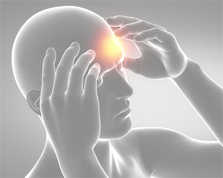 As the 5.30 am alarm buzzed, Karun realized that he had a terrible headache, caused by a very difficult project situation.
 Michelle, Astra
 Karun
Karun What do you think?
Virtual Ethics
Categories:
Virtual Experience Series
Categories: Virtual Experience Series
|
Over years PMI Code of Ethics and Professional Conduct has been giving guidance on practicing values as Honesty, Responsibility, Respect and Fairness in an organization specifically in project management. These values have been practiced and managed with organizations working environment where people were much more in face/face interactions. This has been globally applied across different cultures and practice of values. Over last decades gradually, but specially with the Covid-19 Pandemic situation during 2020 has accelerated organizations to move with speed of light into a highly virtual and remote working environment. This implies the collaboration, communication, human interactions, and teamwork has moved more and more from office locations and meetings rooms to virtual rooms. There are hundreds if not more new normal discussions on how the collaboration would or could adapt to virtuality with regards to effectiveness and productivity. The question of HR and employee’s management from people perspective related to employee’s satisfaction and wellness have also raised much more attention than earlier. One of the key major paradigm shifts is that employees enter to an arena where the physical and mental line between professional and personal life are being merged into a grey zone. This change means among others but not limited to:
Still some obvious but complex challenges remain to look closer to with regards to ethical values as respect, fairness, responsibility, and honesty. This raises fundamental questions related to practice of these values. As obvious there is no one easy answer to these questions that can apply to all employees and functions and culture. Some questions are related to ethics could be:
These questions are not answered simply by training in how to run virtual calls. This is not a question of massive technology booms as MS teams, Zoom, Skype and more. I would appreciate to hear how you experience this paradigm shift in future of work has impacted and will impact the future of work in a more and more virtual collaboration. |