


The A, B, C’s of Ethics


| What words do you associate with A, B and C? Alpha, Bravo, and Charlie? Or Apple, Ball, and Cat? As students return to the physical and virtual classrooms, let’s have some fun with some concepts of Ethics…
Let’s say you are faced with an ethical dilemma: multiple stakeholders telling you how to proceed and the directions conflict with each other. You Vice President says “Don’t tell the customer about the test failure until we have it fixed.” The customer demands “timeliness and transparency at all times.” Using the PMI Ethical Decision Making Framework (EDMF), you would use the five-step process. Using these steps, the letter A can also stand for ASSESSMENT, ALTERNATIVES, ANALYSIS, and APPLICATION.
I am not talking about just a simply competitive, ill-mannered, or challenging personality. While there isn’t a single definition, a bully is someone who exhibits a persistent pattern of mistreatment. This may be verbal, nonverbal, psychological, physical. Often, this includes a degree of humiliation. What can you do? How about using the PMI Project Bully Tool? This tool encourages you to assess bullying behaviors in the workplace context and helps you recognize if you are properly interpreting the behaviors.
One of my favorite descriptions of the difference between compliance and ethics is from a 2019 Forbes editorial by Bruce Weinstein. Compliance is adhering to the rules and regulations, or as he puts it, “what is required of me?” Ethical leaders ask, “How would an honorable person behave in this situation?” To me, this is closely related to having a conscience. What is your internal compass tell you when faced with a dilemma? As I’m running out of space, let me finish with ethical culture. Is it simply an environment that makes it easy to do the right thing and difficult to do the wrong thing? This seems too simplistic. To me, an ethical culture is one in which there is a collective belief in the values of the organization and one in which individuals are empowered to speak up and take ACTION. That brings us back to the letter A! I could spend days just talking about the A, B, Cs of ethics! What do you think? What other words, phrases, or concepts come to mind? I’d love to hear from you. In the future, I hope to address the D, E, Fs (and more) of ethics. For more information on the above, see https://www.pmi.org/about/ethics/code for the EDMF
For information about Project Bully see https://www.pmi.org/about/ethics/resources/bully
|
 What begins with A? How about ACTION? I start with action not only because it is the beginning of the alphabet, but in dealing with an ethical dilemma: Don’t act before you have the facts.
 What begins with B? How about BULLY?
 What begins with C? There are so many words that come to mind: Compliance, Conscience, and Culture.
The Traps of a Conflict of Interest
Categories:
courage honesty responsibility respect fairness
Categories: courage honesty responsibility respect fairness
| Catherine lives in a small city, where everyone knows everyone, they are childhood friend, school mates, sports mates, colleagues who worked together at one point in time in their careers, neighbors, relatives, or connected with almost no degrees of separation! Simon, one of Catherine’s direct reports has been extremely busy; running an operational arm, establishing a new line of business, while at the same time driving the establishment of new service centers to expand the business and extend the reach to other geographical areas. Catherine could easily see that Simon needs support in establishing these new centers. The level of complexity and engagement with internal and external stakeholders require a dedicated Project Manager, rather than an Operational Manager whose time is split in between running the business and driving the establishment of new centers. Each center is a project on its own right that has a complex of level of consultation, communication, compliance, and a focus on driving a large number of interdependent activities and tasks. Catherine suggested that Simon creates the new project manager role and advertises it as soon as possible.
Photo by Gustavo Fring from Pexels The role drew a lot of interest, as it offers a sense of purpose - serving the community, a rich experience in driving a set of projects end to end, including engagement with a variety of stakeholders. The candidate list contained a large number of people, most of which would have crossed paths with both Catherine and Simon at one stage in their lives. However, the candidate’s name that raised red flags was Emma, a well-known close relative of Catherine. Catherine was planning to take part in the interview panel. However, seeing Emma’s name not only as an applicant, but also as a strong candidate, she opted out, demonstrating honesty and citing her conflict of interest. She asked Simon to formulate an interview panel. Simon, being aware of the situation, formulates the interview panel asking each to declare any conflicts of interest. The interviews proceed, with mixed feelings. Every member of the interview panel is aware of the relationship between Catherine and Emma. While each doesn’t have the conflict of interest that Catherine has, Catherine is ultimately their boss.
Image by Wokandapix from Pixabay The panel discussed openly how they do feel a little bit of pressure, as they understand the relationship between Catherine and Emma. They are also aware of how they are going to be judged by their recommendation. They also understand the need for the new role and how critical it is to select the most suitable candidate. Taking their responsibility seriously, they go about interviewing, giving each candidate their fair share of time, the opportunity to respond to interview questions as well as ask their own. Following a marathon of interviews, they pick the top two most suitable candidates to be lined up for a second interview. All agreed that while Emma was a good candidate, she is not one of the top two – as a matter of fact she comes third. The inner thoughts of the panel were:
The panel asks Simon as he conveys the shortlist to Catherine, to give Catherine the context and the reasoning that supports the top two shortlisted candidates. The panel members await the results of Simon’s conversation with Catherine. Their anxiety and worries turn into delight, they are relieved to hear that Catherine not only accepted their recommendation of the top two, but also was happy to offer the job to the top candidate waiving the need for second interview. How wonderful it is to see Catherine’s words reinforced by actions, distancing herself from the situation, declaring her conflict of interest and trusting her team’s judgement and recommendations! Reflecting on your own experience, if you were in Catherine’s shoes, what would you have done? |
.jpg)
Is there something called an ethical protest?
Categories:
volunteers
Categories: volunteers
|
I have witnessed several protests in my city and around the world lately. These protests were against the action taken or not taken, perceived bias by the government, organizations etc. Residents from my locality took part in these protests. When I spoke to them as why they were protesting against the government while they are not directly affected by the proposed law changes, they said that they are doing it for the betterment of the society as a whole. And after few days, I read in the news that protesters burned public transport buses, chocked the traffic on the road and caused delays for several hours impacting commuters and causing inconvenience to the same society they want to make better by protesting! One of the arguments given to me is that protest is their human right given by the constitution - the same constitution that explains the citizens’ roles and responsibilities. How convenient it is for these citizens to choose one side of the constitution while choosing to ignore another! And then there is a section of general public who are not part of these protests, but they suffer greatly even when there were not faulty. For example, Hong Kong airport was shut down during the protests; there were significant property loss in India due to protest against an amendment in the existing law. In my view, protesters must ask themselves some questions, no matter what they are protesting for, before they |

Avoiding the Alligators While Navigating Uncharted Territory
|
2020 has been quite a year so far….. And we aren’t even halfway through it. Individuals, families, friends and business entities have been stretched (and stressed) in new and unusual way. For those fortunate to still have a project management job, the challenges are often related to communicating in the completely virtual environment. Even in those organizations which had a distributed workforce before the start of 2020, things have changed. It was common to mix phone calls and zoom meetings with periodic face to face meetings. Gone is the physical networking. Gone are the physical conferences. Gone are the trips through airport security and staying in hotels. Gone are the day long whiteboard problem solving sessions.
Is it that ethical expectations have changed? To that I say NO! The expectations haven’t changed, but perhaps the change that caused a slide down the slippery slope. Let’s take a moment and reflect. The PMI Code of Ethics and Professional Conduct (AKA- the Code) describes the expectations that we have of ourselves and our fellow practitioners in this global project management community. It consists of four fundamental values described below. First is RESPONSIBILITY. I ask you, if you committed to completing a task and you just didn’t get around to it, are you taking ownership for your decisions? Should there be consequences? Next is RESPECT. I ask you, if you improperly account for the hours you worked and use the company laptop for a personal project during working hours, are you respecting the resources the client has provided you? Next is FAIRNESS. I ask you, if you are consulting on another project management activity during your prescribed work hours, are you exhibiting fairness by using this situation for your own self-interest? The last value is HONESTY. I ask you, if you tell your boss that the work is on track and nearly done when you know that isn’t the care, are you exhibiting honesty? No one said change would be easy. What if the new norm is a continual evolution? I, for one, believe it is. Taking the time to look at the Code, and reflecting upon your own behavior during a time of change strengthens the professionalism of the global project management community. Maybe Aldo Leopold (1887- 1948) said it best: ethical behavior is doing the right thing when on one else is watching. This still rings true today.
Images are provided by Creative Commons.
|

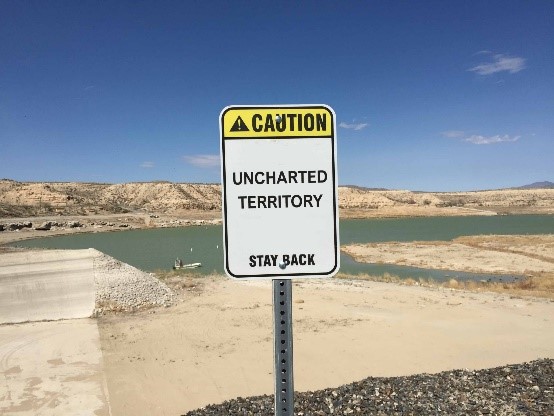 Transitioning to a virtual environment requires a mindset change. How tempting it is to find other things to do around the house when no one is looking. How will the boss even know I cleaned the garage, or planted the garden, consulted for another company, or simply read a book unrelated to work during my normal working hours?
Ethics as a competence of the Portfolio Program Project Manager: a personal journey.
Categories:
Ethics as a competence
Categories: Ethics as a competence
| Hello, welcome to our blog. I would like to share a personal story and some lessons learned about ethics as a new competence for Project Managers. I will appreciate your comments and feedback. Some 20 years ago, I was recruited by a Global Corporation and was tasked to implement their Resource Management Systems for the Service Delivery Practice. I was engaged to the implementation of the Resource Management policies and systems within the Project Management Practice to achieve project success. The Resource Management program was designed to assign the right people, with the right skills and the right cost to the billable projects. At that time, the purpose was to “deliver the project and collect the revenue”. A new ethics policy was issued shortly after I began. I was not sure why we needed ethics in an IT management delivery division. We were required to review the ethics principles and declare that we understood those principles and sign that we agree with the company code. There was a lot of resistance from my direct reports and contributors. “Why ethics?” was the common comment, and of course “it is just another unnecessary and not useful requirement on our already overcharged workload”. Soon after we learned about the consequences in the industry and in the overall market of the Enron fraudulent case and the enacting of the Sarbanes-Oxley Act (SOX)[1]. Then we understood the need for a framework to prevent incorrect behaviors (Ethics!). The ethics initiative started to make sense and we understood the need for ethics in several contexts. Since then, ethics has been a must have and my new challenge was how to change behaviors and habits in myself and my team members to do the right things and to do the things right. This was especially challenging in some countries in the Latin America (LA) region where corruption is endemic. Today, PPPMs (Portfolio, Program and Project Managers) are challenged with new technologies, approaches and resources. They are also challenged to develop new competences that are considered critical to increase their employability. Some of the new competences are described in several papers and leading books, such as agile, communication, leadership, influencing, negotiation and others. In parallel one can observe the need for a set of new habits and behaviors that creates credibility and trust and therefore a greater leadership capacity. Such sets of behaviors and habits are part of ethics and professional conduct. Organizations are demanding that their contributors and contractors make visible the “doing the right thing and doing this the right way”. Ethics is a competence that allows the organization to increase its sales, make sustainable deals and become an employer of choice. In my experience as a keynote speaker in several chapter events in Latin America during the last few years, every time I talk about Ethics, I perceive that the audience are not convinced of the importance of the subject, especially young participants. When I ask for feedback to my presentation, they tell me: “Yes, it was an interesting subject” or “Yes, I liked your presentation”, but not as enthusiastic as when I present about tools and techniques. Why is it so difficult for average participants to become attracted by ethics? Probably they don´t see the immediate use and benefits. Maybe they perceive that ethics is for someone else and not for me. Other comments I receive are related to what´s in it for me? At other times, the comment is “Ok, ethics is important, but how can I become more ethical?” I am convinced that it is not possible to be successful if the tools and techniques are not properly matched with a set of behaviors that convince key stakeholders that personal ethical values are not negotiable. I leaned that it is easier to promote ethics if it is perceived as set of competences that can be developed (as many other skills and competences). This can be accomplished by creating an awareness, the desire for ethics behaviors and a plan to develop the new behaviors. The motivation and desire to develop the competencies differ according to the person´s filters. However, there is not a simple recipe for everyone. In some instances, the orientation to tasks and quick achievements will motivate individuals. In other cases, the motivation is the process, the welfare of others, or the flexibility. Once you create the awareness and the individual is willing to develop the new habits and behaviors, they need to be able to find the tools and techniques that help them transform the ethics principles into a new set of behaviors and habits. The PMI Code of Ethics and Professional Conduct (the “Code”) and the Ethics Tool Kit are great resources for practitioners to start and sustain their journey. For further Information on the code and the Ethics Tool Kit, please visit https://www.pmi.org/about/ethics/resources/toolkit
[1] In 2002, Sarbanes-Oxley was named after bill sponsors U.S. Senator Paul Sarbanes (D-MD) and U.S. Representative Michael G. Oxley (R-OH). As a result of SOX, top management must individually certify the accuracy of financial information. In addition, penalties for fraudulent financial activity are much more severe. Also, SOX increased the oversight role of boards of directors and the independence of the outside auditors who review the accuracy of corporate financial statements.[1] |


