


“To Do or Not To Do – That’s The Question” – A Whistle-blower's Dilemma


|
"The sign of a first-class mind is the ability to hold two opposing views at the same time and still retain the ability to function." - F. Scott Fitzgerald Mary seemed worried as she gulped her lunch and dashed off to her office. Nina, her lunch-buddy followed her to check if everything was okay with Mary. “Oh, this is quite challenging for me. I need courage to deal with the situation” Mary finally opened a window of her mind to Nina “What is bothering you?” - Nina “You have to keep this to yourself. Promise me. Tom is talking to one of our competitors around our top-selling product line and I happened to overhear their discussion. I was on my way to get a coffee for myself and as I stood near the vending machine, I could not help listening to the conversation, I was shocked at the details Tom was sharing. I talked to Tom and tried to sound him of my concern around doing this. He dismissed my concerns stating that he had not leaked any confidential details. I tried explaining the issue and the impact it may have but he clearly wasn’t listening to me. He tried to convince me that sharing some of this information is absolutely normal and that I should not be surprised at this behavior. As you know, Tom is my team lead and I fear this will result in some sort of retaliation” - Mary “Oh! This is a serious matter. You should inform the relevant compliance authorities about this. I hope you are aware of the laws that protect whistle-blowers. The compliance office in the organization is in-charge of such matters. Rob from the compliance office takes care of such matters. He and his team are authorized to investigate the matter and report to the higher compliance authorities” – Nina “Good to know. But, how will anonymity around such matters be maintained?” – Mary “That is protected at the beginning of the investigation but I guess the names may need to be public if deemed necessary as the investigation proceeds. However, the law itself protects whistle-blowers from retaliation. I don’t think you should worry about this.” – Nina
“How can I not worry? If my name is exposed, I know of how things can get difficult for me and may impact my career negatively. From being singled out as a whistle-blower, I am likely to face corporate retaliation, financial hardships and finally, impact on my personal and professional relationships. I may be fired from my job too. Is all this damage worth it?” “Well, I understand your concern. However, looking at things beyond you, reporting this matter to Rob is an ethical act to do. Not only will it save the reputation of our organization but will also get you some brawny points for blowing the whistle before it becomes too late. I am sure our team will hold you in highest regard for this act and you will serve as an example for many from our team members and organization. Don’t you think this outweighs your personal concerns? I am sure you are aware of the Project Management Institute’s Code of Ethics and Professional Conduct and the pmi.org/ethics webpages. These pages list a plethora of references containing great tools that might further assist you in taking a decision – you really need to look them up too. “To do or not to do, is the question and my friend, I am sure, you will choose “to do”” - Nina “Ok. But do you think these laws are operational or are they merely on paper”? – Mary sounded skeptical “We can check with Rob on it” – Nina’s assuring voice “Thanks Nina. That makes me feel better. I will see Rob at the earliest” – Mary This is a common challenge in the contemporary competitive world where cutthroat competition is fierce, ugly and threatens to destroy businesses. Many of us, intentionally or unintentionally find ourselves in situations that get us involved in similar whistle-blowing cases and then the question arise on “what do we do?” The question is at the core of an ethical dilemma, sleepless nights and uncertainty about the next steps, the implications on us as individuals, our well-being, our livelihood, our families, friends and loved ones. Will it be risky to be a whistle-blower? While our ethical compass directs us on what to do, the consequences might deter us, prior stories and the outcomes might determine how confident we are in the system, following the process and putting our trust in the compliance system that might or might not support us. Without any dearth of evidence, it has been shown that to be ethically correct is always the ideal and right thing to do. With codes around ethics and laws that protect whistle-blowers, those who wish to report such unethical or illegal acts can be assured that their interests and welfare will be protected. However, in this age of disruption where uncertainty around jobs looms large, what is way out? After about six months of the incident, the team heard that Mary had resigned with a note on facing some distress from her manager and the organization. Well that ended the matter of this specific case but did it really end the overall issue that Mary had raised? Have you ever come across this situation in your professional life so far? Would love to hear your thoughts. References and helpful links
Note: You can find a rich set of Ethics resources such as the PMI Code of Ethics and Professional Conduct, Ethical Decision Making Framework, Ethics-related Tools, etc., in many world languages at http://www.pmi.org/ethics. Names are changed to protect identity. |

 As per Oxford dictionary, a whistle-blower is a person who informs on a person or organization regarded as engaging in an unlawful or immoral activity. This is a guard against harmful and dishonest activities that can jeopardize the credibility and reliability of an organization. In this case, Mary is a whistle-blower and wishes to report Tom’s actions to the compliance officer.
Only YOU Can Do This
| Last summer, back in July 2019, I was attending one of the largest technology users’ conferences in sunny San Diego-California, where the last slide of the keynote opening speech caught my eye and I kept thinking about it until writing this blog.
Jack Dangermond (President and Owner of Esri) Closing note, Esri User Conference plenary session, July 2019, San Diego, California, USA As a professional project manager, my work is part of something much larger. It is about driving ideas successfully by turning them into reality, using people skills and capabilities in a timely fashion. This is what the new PMI’s PROJECT ECONOMY™ is all about, and this is the future of the profession. Being part of a larger system means that I am an active stakeholder, engaged in establishing the basis of a sustainable future, with its multiple faces: sustainable development, resilience, sustainable entrepreneurship, corporate social responsibility, etc. There is no doubt that, with the multilateral processes in place, and levels of support incorporated; it is eminent to always calibrate the relationships with the environment we are living in. It is becoming more imperative to design and implement an inclusive global thriving society to ensure a better future.
https://pixabay.com/illustrations/questions-who-what-how-why-where-1328466/ Saying that; and building on top of the fact that we are all already engaged to follow the trend; what could the drivers to realize a sustainable future? How to achieve this balance? What are the needed skills? What is the required level of maturity? Is it only about adopting the latest technologies and/or embark on a digital transformation journey? Is it enough to pursue more certifications in the field of innovation, change management, coaching, etc.?
While those are existential questions, perspectives of answers are different, and may vary from a context to another, from a culture to another, from a discipline to another, the most important common factor is the INDIVIDUALS themselves, with all what they possess in terms of own needs or goals, rights and responsibilities.
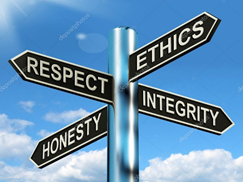
https://www.freepik.com/free-photo/rag-dolls- one-blue_948225.htm#page=1&query=individual&position=2 Back to the slide mentioned earlier at the start of this text; after reading many times the requirements of achieving a sustainable future, my attention went to “Compassion, Ethics and Hard Work”, where I found more clarity, and got the appropriate answers. These include:
https://depositphotos.com/stock-photos/ethical.html? qview=40855487 In my opinion, the answers above are what makes us READY for the challenges of realizing a sustainable future. As a project manager, how do you implement this your professional environment? How do we meet the standards that we set for ourselves? Is there any reference, in the project management profession to benchmark the decisions we make? YES, THERE ARE…. AND Only YOU Can Do This
Please find below some useful links: PMI’s Code of Ethics and Professional Conduct |


Vital Work Venture Varies with Vickie’s Values
| Vickie was on the horns of a serious dilemma. It had almost made her miss the brilliant orange and red colors of the setting sun. A chilly breeze and the aroma of freshly brewed coffee from the pantry prompted Vickie to take a break. As she sipped on the steaming brew, her mind rewound events of the past few hours. Vickie was a successful senior project manager with a mid-size marketing firm in Nevada. She had been asked to lead a marquee client’s high-priority multi-million-dollar new product promotion campaign across radio, television, and multiple social media platforms. On most days, she would have been delighted and immediately accepted this project for its high career prospects. However, today, she had asked her manager Dominic for some time. He was surprised and not too pleased, but had reluctantly given her a couple of days to decide.
Why? The new product was from a company which sought to seize the opportunity of recreational cannabis being recently made legal in Nevada. Right from childhood, her parents had taught her the dangers of drug abuse. At college, Vickie had volunteered to help students avoid and deal with drug addiction. She now volunteered with a local hospital which helped people recover from the effects of addiction. Leading the project to success would accelerate her career. However, a recreational marijuana marketing project went totally against her long-held values! Realizing she needed help, Vickie reached out to Rishi, a favorite professor from college. He had taught her several courses in her Ethics minor. The professor immediately responded to her request for a call in the evening.
Vickie replied that she felt very strongly against drug abuse and addiction. She wasn’t sure about the other questions and promised to get back to Rishi the next day. Soon after, she recalled that, as a PMI member, she needed to follow the Code of Ethics and Professional Conduct. She realized that she had a responsibility to her employer to perform assigned work provided it was legal. She had to honestly disclose her moral conflict. Vickie’s manager needed to respect her strongly held values. Was there a way she could work with Dominic to find a fair solution? Speaking to Rishi the next day, Vickie explained her thought process. Was she thinking on the right lines?
He suggested that she openly express the dilemma to her manager and explain the consequences to the project. She could request that the project be led by a peer. The best outcome would be if her manager agreed. If not, she would have to make a difficult decision. The professor also asked her to also consider other win-win options. That evening, Vickie explained to her manager how her strong beliefs about drug abuse could subconsciously affect the project. Dominic appreciated her honesty but said that she’d been specifically chosen for her project management skills. No one else in the firm had that level of expertise, and so the project would still suffer! Vickie suggested that instead of leading the project, she would be happy to contribute her technical expertise by actively assisting and mentoring another project manager. The win-win option was readily accepted. Vickie worked hard to support Ivonne, the new project manager. Fast-forwarding to eleven months ahead: The marketing project achieved all objectives, and was declared an unqualified success!
How did you handle it? Do you agree with Vickie’s strategy? Would you have done anything differently? Please share your experience and views in the comments section!
Note: You can find a a rich set of Ethics resources such as the PMI Code of Ethics and Professional Conduct, Ethical Decision Making Framework, Ethics-related Tools, etc., in many world languages at http://www.pmi.org/ethics |
 Thinking long and hard, she still couldn’t decide.
  Over Skype, Vickie explained her dilemma in detail. After patiently listening to her, Rishi asked:
 Rishi felt that if she agreed to lead the project, it would be virtually impossible to completely ignore her deep-rooted beliefs. As professional as she tried to be, her subconscious bias could certainly to affect her leadership. Her team would perceive this, and the project would suffer.
 Have you faced a similar dilemma?
 Are we paying attention to the dormant ethical fires?
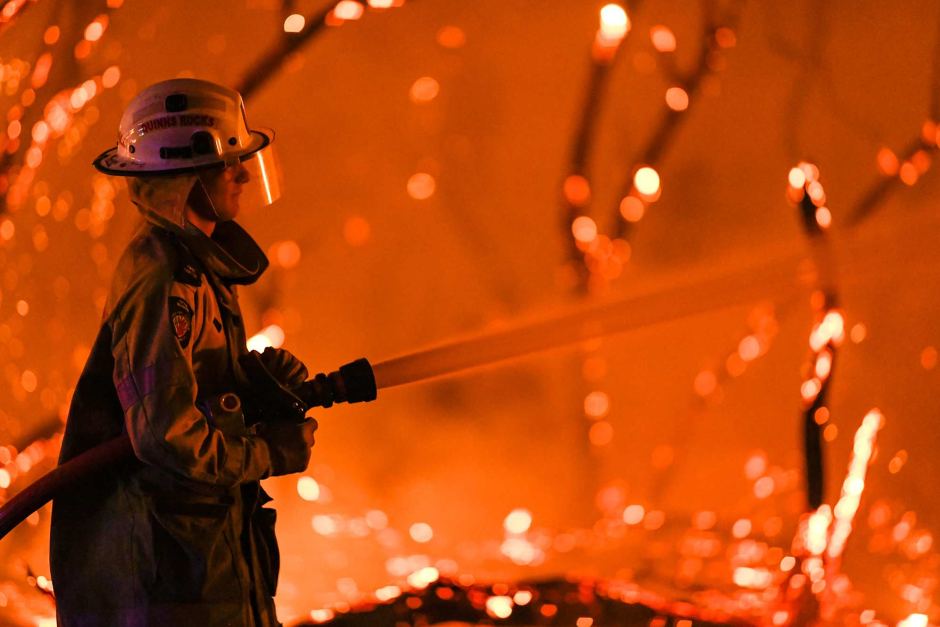
| As I am writing this blog, more than 80 fires are raging in New South Wales and Queensland - two states in Australia! Heavy smoke is blurring visibility at the airports, hiding Sydney Harbour Bridge and triggering fire alarms in buildings. It’s been quite a tough time, whether on Australian farmers or on those who live in or close to the bush! Lives were lost, homes, belongings and a large part of bush land along with native habitats and animals lost. And it’s more likely to get worst as the summer season has just started. It’s not the message anyone wants to hear nor the experience that anyone wants to go through. Especially during the festive season, we all want to rejoice, be happy, look optimistically as we turn the page on a year gone and open a new page on new beginnings. My mind starts drawing parallels between the bush fires and ethics in project management.
Photo from: https://www.abc.net.au/news/2019-12-12/gospers-mountain-fire/11790830 Our Ethics and Professional Conduct are at the core of what we do, whether it’s part of our daily behaviors, actions, sentiments or decisions. It is a critical component of our culture, as individuals, as teams and as organisations. Yet sometimes, we might dismiss an unethical behavior or be patient in tackling it until we see the “Fires”. Though we might be away from the fire, the smoke that engulfs a profession, an organisation or an industry, engulfs us all. This causes damage that we would never imagine to us as individuals, organizations and to project management as a profession. The fire of unethical conduct can rummage through smaller pockets of projects to large-scale industries thus causing impact that might no longer be controllable. Its impact could be detrimental to the survival and existence of an organisation – depending on its nature, it ranges from damaging the individual and organisation brand and reputation, destroying trust to putting its sustainability let alone its existence at risk. Similarly, Sydney was engulfed with hazardous smoke, you could smell it while inside the office, you could see it as it covers all the beautiful harbour city, its beaches and distinctive Sydney Harbour Bridge as well as its buildings. One cannot help but wonder - are we preserving the heritage that we are enjoying? The history of the land and its people, the environment and the resources that are entrusted to us? This is a hard project management lesson that include ethics. Are we listening to all our stakeholders? Are we really listening and respecting their advice by honoring their experiences and wisdom? Are we responsible enough to take actions in our projects that will mitigate and eliminate the ethical fires, ensuring awareness of our Code of Ethics and Professional Conduct, and providing the tools to our team members to equip them sufficiently to deal with dormant fires - be prepared for the fires once they come their way, or even better recognize what to and when to do it well ahead of the fire? Let us all refresh our memories as we embrace a new year wearing ethics as an armor that will protect us from the fires to come, putting them at bay, getting us to manage our projects ethically, sustainably and successfully. It’s our responsibility to ensure that our team members are aware and well equipped well ahead of the fires. Re-read and distribute our PMI Code of Ethics and Professional Conduct, have a look at the PMI Ethical Decision Framework and use the available Ethics toolkit – run a workshop, go through all resources on pmi.org/ethics. There’s a plethora of ethics related discussions, webinars and articles on projectmanagement.com. Let me take this opportunity to wish you all a Merry Christmas, a Happy Festive Season and a Prosperous, Peaceful and Ethical New Year.
Photo from https://pixabay.com/photos/poinsettia-adventsstern-4648025/ |

The Ethics of Harry Potter
| A few days ago I was with a friend from my University in a cafeteria in Milan, Italy. He was talking about his projects and his technical knowledge; he is indeed one of the smartest and brilliant minds I know. Then, he referred to a possible ethical dilemma he felt, and his ability to act right away.
Let me quote Albus Dumbledore in Harry Potter and the Chamber of Secrets: “It is our choices, Harry, that show what we truly are, far more than our abilities,” I told him. He laughed out loud: “Are you really quoting Harry Potter? And what’s that all about”?
I explained to him the personal meaning I give to this quote; one of the essential abilities a manager has is not only what he/she knows and does, but the choices made. A recent HBR study(1) showed that most of the people are quicker to judge than they think, and they use lesser information than needed. This can be especially critical when facing an ethical dilemma: you need to make sure to have all the facts and approach it in a structured way. The ethical decision-making process is a cognitive process where people consider ethical rules, principles, and guidelines when making decisions. PMI has developed a tool to support and guide all the project managers for critical thinking throughout the ethical decision-making process. You can find the process in the image below:
And the full tool with supporting questions (in 15 languages) is here: https://www.pmi.org/about/ethics/code As you can see, taking the right decision needs time: to collect all the fact, to consider the choices, to identify and test the candidate decision, to make a decision.
Even Harry Potter takes bad decisions when he doesn’t take time to think! In the Potter-world, it is often cited the fact that he could have saved himself a lot of dread if he had just taken a moment to think and asked Ginny for help. In the book “Harry Potter and Order of the Phoenix” he isolates from the one person nearby who knew what it was like to be possessed by Voldermort.
Ultimately, ethical choices diminish risk, advance positive results, increase trust, determine long term success and build reputations (2). Leadership is absolutely dependent on ethical choices.
“... and that’s why I quoted the book”. He smiled at me and said that two espressos were on him. That was the real magic because he is usually a bit stingy.
--- - --- DISCLAIMER: The photo was taken by myself to a toy I own SOURCES OF INFORMATION
|




