
Professionalism Under Pressure: Choosing Respect When Conflict Escalates
Categories:
Ethics as a competence,
Behavior,
courage honesty responsibility respect fairness,
code of ethics,
Ethical Leadership,
Decision-making,
Ethics Insight Team,
Ethics Bistro,
Business Ethics,
code of conduct,
Power Skills,
Decision-making,
Business Ethics,
Professionalization,
practitioner,
Ethical Dilemma,
respect,
Professional Responsibility,
Honesty,
Respect,
Responsibility,
Fairness,
Code of Ethics and Professional Conduct,
Human,
fairness,
communication,
honesty,
responsibility,
professonal conduct,
Conflict,
empathy,
EDMF,
Ethics in Communication,
Agile,
Decision Making,
Ethics,
Legal Project Management
Categories: Ethics as a competence, Behavior, courage honesty responsibility respect fairness, code of ethics, Ethical Leadership, Decision-making, Ethics Insight Team, Ethics Bistro, Business Ethics, code of conduct, Power Skills, Decision-making, Business Ethics, Professionalization, practitioner, Ethical Dilemma, respect, Professional Responsibility, Honesty, Respect, Responsibility, Fairness, Code of Ethics and Professional Conduct, Human, fairness, communication, honesty, responsibility, professonal conduct, Conflict, empathy, EDMF, Ethics in Communication, Agile, Decision Making, Ethics, Legal Project Management


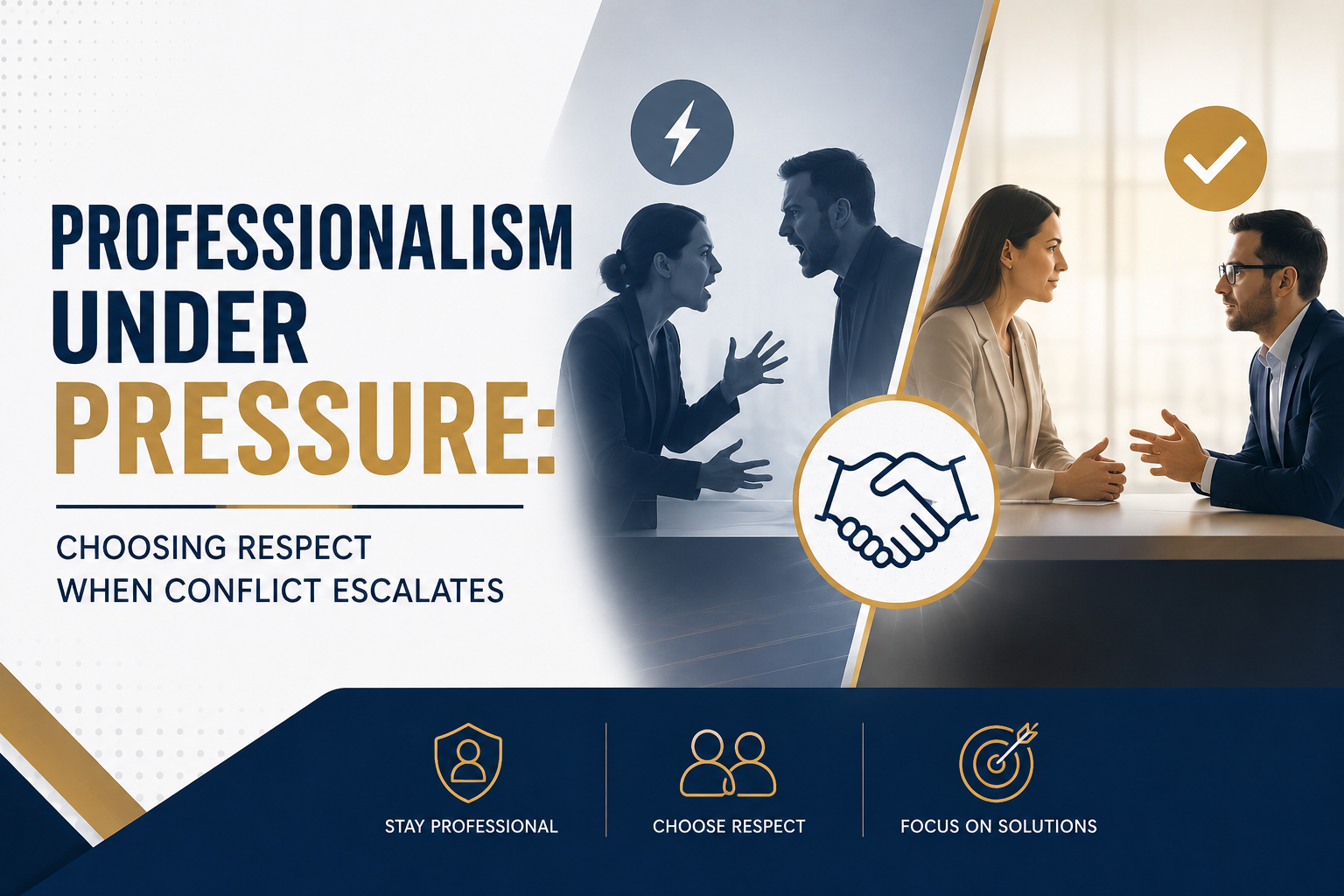 The message arrived at 11:47 p.m. It wasn't long. Just a few lines. But every sentence carried anger. A disagreement over a contract had been going on for weeks. There were questions about payment, responsibilities, and what each side believed had been promised. The conversation had already become uncomfortable. Now, the latest message crossed a different line. There were accusations. Personal insults. A veiled threat about “making sure people know” what had happened. And then came a remark about the other person's background. For a moment, the easiest response seemed obvious: Fight back. After all, they started it. But this is where professionalism is really tested not when everyone is calm and reasonable, but when someone gives us every reason to lose our composure. Conflict is part of professional life. Employment decisions can disappoint people. Contracts can fall apart. Candidates can feel unfairly treated. Managers can become frustrated. Clients and suppliers can disagree about commitments. Sometimes we are genuinely wronged. And sometimes we may be the ones who got something wrong. Either way, disagreement does not give us permission to abandon respect. The PMI Code of Ethics and Professional Conduct places Respect among its four core values. That sounds simple until we find ourselves staring at a message that feels deliberately insulting, threatening, or unfair. Respect is easy when it is reciprocated. It becomes meaningful when it isn't. The person receiving that late-night message eventually did something surprisingly difficult. They didn't respond. Not immediately. They saved the communication, stepped away from the computer, reviewed the facts, and went to bed. The next morning, they wrote back. The response acknowledged the disagreement. It clarified the contractual position. It proposed using the appropriate process to resolve the matter. There were no insults. No threats. No attempt to embarrass the other person. It wasn't weakness. It was professional self-control. Respect doesn't mean tolerating abuse. It doesn't mean remaining silent when discriminatory language is used. It doesn't mean accepting intimidation or allowing retaliation to go unchallenged. And it certainly doesn't mean avoiding difficult conversations. Sometimes respect means setting a boundary. Sometimes it means documenting what happened and involving Human Resources, legal counsel, procurement, recruitment leadership, or another appropriate authority. Sometimes it means saying: “I am willing to discuss the issue, but I will not continue the conversation in this manner.” That is respect too. Because respect isn't only about how we treat people when we agree with them. It is also about recognizing their dignity when we don't. And perhaps that's the uncomfortable part of professional ethics. We cannot control the tone of the message that arrives at 11:47 p.m. We cannot control whether someone tries to intimidate us, insults us, uses discriminatory language, or threatens retaliation. But we can control whether we respond in kind. We can choose to protect our boundaries without attacking someone else's dignity. We can choose accountability without humiliation. We can choose firmness without hostility. We can choose Respect. Not because the other person necessarily deserves our kindness in that moment, but because our professional values should not depend on someone else's behavior. The next time a difficult message lands in your inbox, ask yourself: When someone crosses the line with us, can we hold the line without crossing it ourselves? |
What is new in PMBOK 8 – An ethics perspective
Categories:
Ethics as a competence,
Values,
Behavior,
values,
code of ethics,
Ethical Leadership,
Decision-making,
Ethics Insight Team,
Ethics Bistro,
Business Ethics,
code of conduct,
PMI Talent Triangle,
Ways of Working,
Decision-making,
Values,
Business Ethics,
AI,
Project,
PMI Program Management,
Do the right thing,
Culture,
Ethical Dilemma,
respect,
Professional Responsibility,
Professional Conduct,
Honesty,
Respect,
Responsibility,
Project Management,
Code of Ethics and Professional Conduct,
honesty,
responsibility,
professonal conduct,
volunteers,
professional conduct,
Digital Transformation,
Ethics in Communication,
Agile,
Leadership,
Decision Making,
Ethics,
Diversity,
Organizational Project Management,
Information Technology,
Organizational Culture,
Governance,
Artificial Intelligence
Categories: Ethics as a competence, Values, Behavior, values, code of ethics, Ethical Leadership, Decision-making, Ethics Insight Team, Ethics Bistro, Business Ethics, code of conduct, PMI Talent Triangle, Ways of Working, Decision-making, Values, Business Ethics, AI, Project, PMI Program Management, Do the right thing, Culture, Ethical Dilemma, respect, Professional Responsibility, Professional Conduct, Honesty, Respect, Responsibility, Project Management, Code of Ethics and Professional Conduct, honesty, responsibility, professonal conduct, volunteers, professional conduct, Digital Transformation, Ethics in Communication, Agile, Leadership, Decision Making, Ethics, Diversity, Organizational Project Management, Information Technology, Organizational Culture, Governance, Artificial Intelligence
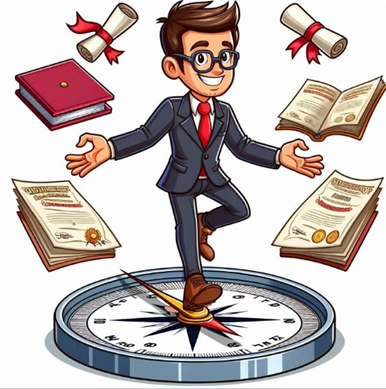 Imagine a team of explorers crossing a desert. No matter how skilled its members are or how modern their vehicles are, they may not succeed in reaching their destination without a compass. In project management, ethics serve as that compass, guiding decision-making, fostering trust, and ensuring accountability. For PMI Members, the compass is the Code of Ethics and Professional Conduct. Developed even before the first edition of the Project Management Book of Knowledge, the Code was and remains the holder of the guardrails of the project management profession. PMBOK 7 replaced knowledge areas with performance domains. The 8th is more aligned with the Agile delivery approach, whilst retaining the importance of good governance. Like the previous version, the PMBOK highlights alignment with both internal and external environments. It is important to note the focus on artificial intelligence and sustainability. Principles of project management PMBOK 8 simplified the 12 principles from the 7th edition to create a more focused and actionable foundation for modern project management. The principles of project management are aligned with the values of PMI’s Code of Ethics and Professional Conduct. They do not follow the same format, and they are not duplicative; rather, the principles and the Code of Ethics are complementary. ·Adopt a holistic view: Consider the project within its larger organizational and ecosystem context. ·Focus on value: Prioritize delivering tangible value and aligning project outcomes with strategic goals. ·Embed quality into processes and deliverables: Integrate quality throughout the project lifecycle, not just as a final check. ·Be an accountable leader: Take ownership and responsibility for the project's success and outcomes. ·Integrate sustainability within all project areas: Include environmental and social considerations in project work. ·Build an empowered culture: Foster a project environment that empowers team members. Enterprise environmental factors: Internal and external to the Organization ·The standard emphasises the impact of organizational culture, structure, and governance. Aspects like vision, mission, values, beliefs, cultural norms, leadership style, hierarchy and authority relationships, organizational style, ethics, and code of conduct remain critical success factors, as well as a framework for ethical decision making. Social and cultural influences and issues. External factors include political climate, regional customs and traditions, public holidays and events, codes of conduct, ethics, and perceptions. Artificial Intelligence (AI) AI ethical issues, especially the responsible use of AI tools and the negative impact on project team members, are an especially important aspect. Topics like data privacy and security can be addressed using technical controls. Issues like bias and fairness require special attention from project managers. Lack of clarity on who is responsible when AI-driven decisions go wrong can create confusion and an unending blame game. AI agents cannot be (yet) included in a Responsible, Accountable, Consulted, or Informed (RACI) matrix. Although their use is unavoidable, the responsibility and accountability remain with the human user. The use of AI is dependent on context, and it should be assessed for each project through a decision-making process to determine when AI can assist with tasks or provide more time for other valuable activities. The evaluation should be focused on the use of AI to produce project artifacts. Initiative-taking measures should be considered to identify and assess the risk of incorporating AI and determine if it is acceptable or it should be controlled. Below is a list of some ethical concerns related to the use of AI in projects
·Diversification of the data sets on which the AI system is trained; ·Periodic tests conducted on the AI system, with particular focus on bias; and ·Involvement of different teams in the development of the AI system. Procurement is another ethics area of focus that PMBOK 8 provides guidance on. In chapter X4.9.2, Sensitivity of Legal Actions and Upholding Ethics Codes, the standard provides considerations to avoid impact on project outcomes and stakeholder relationships: ·Nuanced communication. ·Escalation protocols. ·Confidentiality. ·Impartiality. PMBOK 7 explicitly references the PMI Code of Ethics as a complementary and essential guide for project professionals. This code provides the specific rules for ethical conduct, based on core values of honesty, responsibility, respect, and fairness.
|
Fields of Doubt: When AI Overshoots Human Intuition
|
“Fields of Doubt: When AI Overshoots Human Intuition” In a well-funded agritech pilot, an Africa-based firm rolled out an AI-powered irrigation system across multiple test farms in a rural region of an African country. Based on satellite weather data, historical yield trends, and soil sensors, the AI prescribed precision watering routines down to the hour. On paper, the system outperformed manual methods — until it did not. As seasonal rainfall became erratic due to shifting climate patterns, the AI began overwatering certain plots. Local farmers, relying on generational knowledge of cloud patterns and bird migration, flagged the error. But field technicians, trusting the algorithm’s diagnostics, dismissed their concerns. Days later, root rot set in. The damage was not just agricultural; it was fundamentally ethical. The core dilemma lay in a clash between algorithmic precision and ancestral wisdom. When field workers override the warnings of seasoned local farmers due to uncritical trust in AI, it raises a pivotal question: whose judgment should guide action when technology conflicts with lived human experience? The PMI Code of Ethics and Professional Conduct (CoE&PC) emphasizes our responsibility to honor diverse perspectives, especially cultural and contextual knowledge often marginalized by automated systems. It calls for fairness, respect, and accountability in all professional interactions—not just in what decisions are made, but in how and by whom they are made. The Ethical Decision-Making Framework (EDMF) asks project leaders to systematically examine every ripple of impact: Who might be affected? What competing rights or duties are in play? Ethics here is not abstract and theoretical but downright practical. The framework serves not as a checklist, but as a compass for inclusive, humane decision-making in an increasingly digital world. In this case, accountability was not simply about flipping a switch to deactivate a malfunctioning smart pump — it was about exercising discernment, fostering dialogue, and embracing ethical stewardship in its fullest sense. The true ethical challenge lies not in the hardware or software, but in the human response to it. Technological systems can process data at lightning speed, but they lack the moral compass and contextual sensitivity that only people can bring. Accountability meant actively listening to community voices, especially those rooted in local knowledge, and recognizing when to override automation with empathetic leadership. Staying context-aware required humility to question what seemed certain and to respect the wisdom that is not encoded in algorithms. Ethical stewardship, as guided by PMI’s values of responsibility and respect, demands that professionals treat AI not as an infallible oracle but as a support tool — powerful, but subordinate to human judgment, especially in high-stakes, culturally nuanced environments. How would you decide when human insight should override AI predictions? Have you encountered a project where cultural expertise clashed with data-driven advice? Let us know in the comments as we deliberate, learn, reflect, and keep ethics at the core of innovation. References: Project Management Institute. (n.d.). Code of Ethics and Professional Conduct. pmi.org. https://www.pmi.org/-/media/pmi/documents/public/pdf/ethics/code-values-card.pdf Project Management Institute. (2015). Ethics in Project Management. pmi.org. https://www.pmi.org/about/ethics Project Management Institute. (2011). PMI Ethical Decision-Making Framework (EDMF). pmi.org. https://www.pmi.org/-/media/pmi/documents/public/pdf/ethics/ethical-decision-making-framework.pdf
|

How should we protect the value and the reputation of PMI and PMP Certification?
| Hello Everyone! I wanted to share a LinkedIn post with you today. It is not my post, but I proudly reposted it for my LinkedIn connections. It affects every project management professional who holds or aspires to earn the PMP® certification. What happened to Samer can happen to any of us, and like him, we should follow PMI's Code of Ethics and Professional Conduct.. "A few days ago, I received a message via WhatsApp from an unauthorized provider in Saudi Arabia claiming they could give me a PMP® certificate without taking the official exam, for just $450 USD!"
https://www.linkedin.com/feed/update/urn:li:activity:7343683099454509056/
Well done. Samer Musallam Dahdal. PMP-PMI
|
A Story of Ethical Crossroads - Delayed Delivery
|
Situation: Anika (name changed to protect privacy), a project manager at a tech startup, was overseeing the launch of a new mobile app. The deadline loomed on her as they planned to showcase the app to potential investors at a tech conference. The pressure was immense. As the launch date approached, Anika discovered a critical bug in the app's user interface. The development team worked tirelessly to fix it, but time was running out. Fixing it properly would mean missing the conference deadline. A quicker but less elegant workaround was possible – it would mask the bug for the demo, but it wouldn’t be a long-term solution. Anika faced a difficult choice. Even with the workaround, presenting the app at the conference would generate much-needed buzz and attract potential investment. But it would also mean introducing a product that wasn’t fully functional. Disclosing the bug would likely dampen enthusiasm, but it would be the honest thing to do. She considered the implications. Deceiving potential investors, even with a temporary fix, felt fundamentally wrong. It could damage the company's reputation and erode trust. Behavior: Anika gathered her team and explained the situation. After a difficult discussion, they decided to be transparent. At the conference, Anika presented the app, highlighting its key features and acknowledging the minor UI issue. She explained that they were committed to delivering a polished final product and would have a fully functional version available soon. While some initial disappointment was palpable, the honesty and transparency resonated with many attendees. Several investors appreciated Anika’s candor, seeing it as a sign of integrity. In the long run, the company gained more respect and trust than it would have by concealing the bug. Impact: Anika’s decision demonstrates that ethical conduct is a moral imperative and a sound business strategy. By upholding the PMI's core values (Responsibility, Respect, Fairness, and Honesty), project managers build trust, foster strong relationships, and create a foundation for long-term project and organizational success. In the long run, honesty and transparency are far more valuable than any short-term gains achieved through unethical means. Have you experienced such scenarios in your professional life so far? How did you face them and manage them? Please share your experiences. PMI’s Ethical Decision Making Framework - https://www.pmi.org/-/media/pmi/documents/public/pdf/ethics/ethical-decision-making-framework.pdf?_gl=1*1bqx469*_gcl_au*OTkwMTE2OTYyLjE3MzM2MzkzNDM. |



