
Navigating AI in Project Management: A Comparison with Racing Co-Pilots and Driverless Cars
Categories:
Ethics as a competence,
Values,
values,
Ethical Leadership,
Decision-making,
Ethics Insight Team,
Ethics Bistro,
trust,
Ways of Working,
Decision-making,
Values,
AI,
Do the right thing,
Ethical Dilemma,
respect,
Professional Conduct,
Honesty,
Respect,
Responsibility,
Trust,
honesty,
responsibility,
professonal conduct,
empathy,
professional conduct,
Ethics in Communication,
Leadership,
Decision Making,
Ethics
Categories: Ethics as a competence, Values, values, Ethical Leadership, Decision-making, Ethics Insight Team, Ethics Bistro, trust, Ways of Working, Decision-making, Values, AI, Do the right thing, Ethical Dilemma, respect, Professional Conduct, Honesty, Respect, Responsibility, Trust, honesty, responsibility, professonal conduct, empathy, professional conduct, Ethics in Communication, Leadership, Decision Making, Ethics


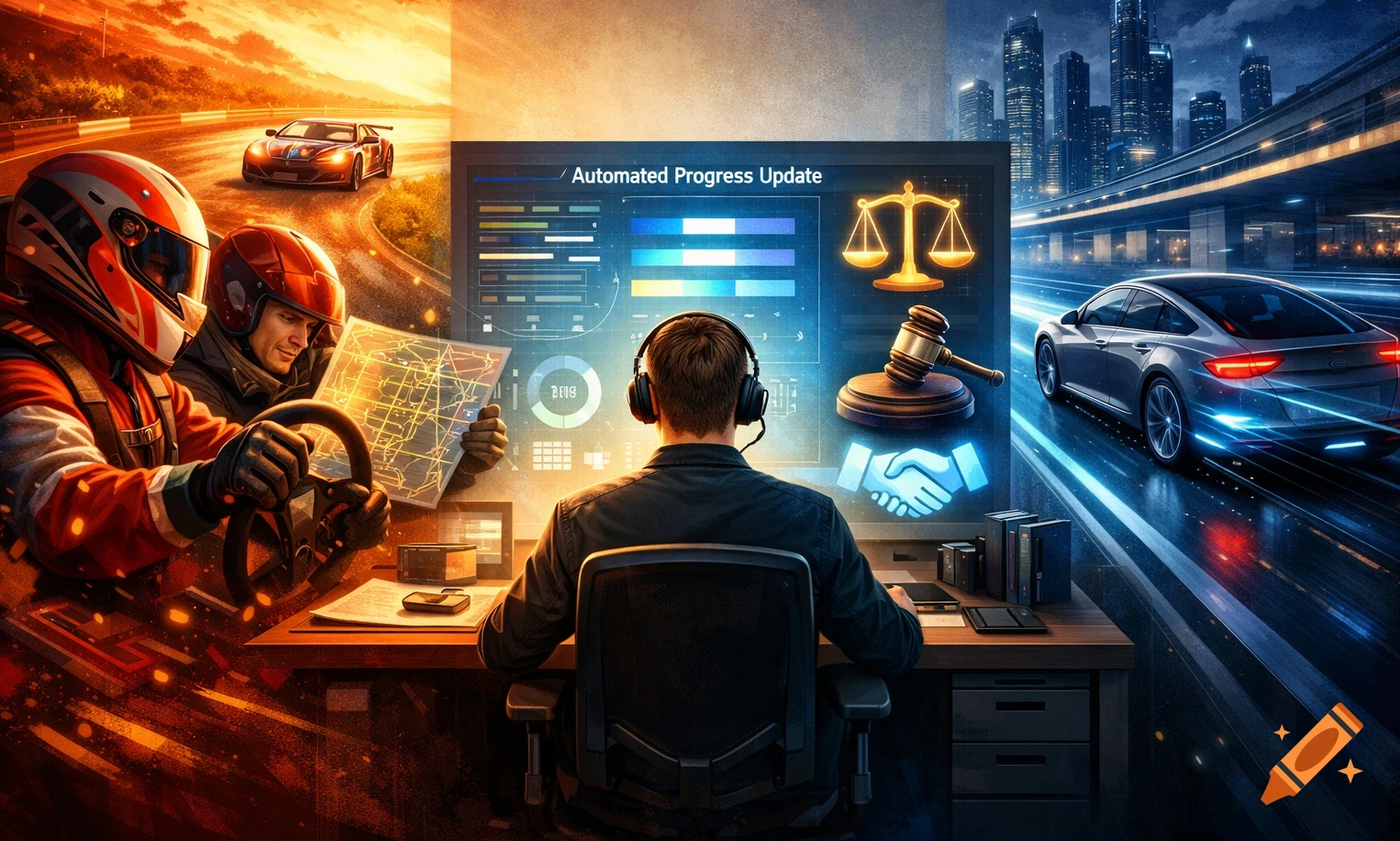 Artificial Intelligence (AI) is revolutionizing industries, and project management is no exception. With advanced tools supporting decision-making, risk mitigation, and efficiency, the project management landscape is increasingly intertwined with AI technologies. However, this evolution raises questions about human responsibility, autonomy, and ethics—questions like those faced in the realms of racing co-pilots and driverless cars. This blog explores the pros and cons of using AI in project management and compares these dynamics with racing environments and autonomous vehicle scenarios, focusing on the balance between human involvement and ethical considerations.  The Role of AI in Project Management AI-driven tools, such as virtual assistants and machine learning algorithms, are increasingly used to streamline project management processes. From schedule optimization and predictive analytics to stakeholder communication and resource allocation, AI empowers project managers to make well-informed and efficient decisions. The Racing Co-Pilot Analogy: Shared Responsibility, Enhanced Performance In professional racing environments, a co-pilot performs critical tasks: navigating the course, analysing conditions, and advising the driver. This relationship mirrors the human-machine collaboration often seen in project management. Here, AI acts as a "co-pilot," assisting project managers while leaving primary control in human hands. Let us examine this analogy: Pros of AI as a Co-Pilot in Project Management:
The Driverless Car Comparison: Autonomous AI in Project Management Shifting perspective, consider driverless cars: vehicles fully controlled by AI, requiring minimal human intervention. Some envision project management systems that resemble a driverless car—autonomous AI overseeing the project's execution from start to finish. While promising, this model has risks and challenges to consider. Pros of Autonomous AI in Project Management:
Ethical Considerations: Responsibility and Integrity Both racing co-pilots and driverless cars illustrate contrasting extremes in human-machine collaboration. A key differentiator in these scenarios is ethical responsibility:
Conclusion: The Road Ahead for AI in Project Management The racing co-pilot and driverless car analogies shed light on the pivotal balance required in leveraging AI for project management. While AI offers immense benefits—such as efficiency, precision, and scalability—it also raises concerns about accountability, ethical responsibility, and judgment. As the PMI Code of Ethics underscores values like fairness, honesty, and responsibility, project managers must ensure AI tools serve as partners rather than replacements, fostering trust and inclusivity. By choosing the right path—whether enhanced collaboration or selective autonomy—project managers can steer their projects responsibly toward success while maintaining the ethical values essential to effective leadership. Related discussion topic: Can project management run on AI autopilot?https://tinyurl.com/mr497je7 |
Cultural Shift: Artificial Intelligence, Machine Learning, and Project Practice
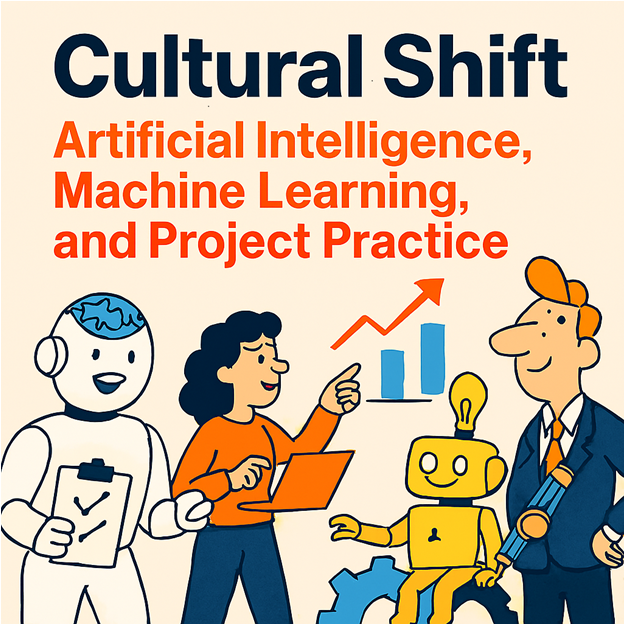 We are now facing a new wave of transformation like the “webification” era two decades ago. This time, it is artificial intelligence (AI) and machine learning (ML). As project practitioners, we must ask: how do these technologies reshape company culture, and how do we guide organizations through the turbulence? AI is not just another tool—it changes how decisions are made, how work is distributed, and how value is delivered. It can automate repetitive tasks, provide predictive insights, and even challenge traditional hierarchies by empowering data-driven decision-making. However, these benefits come with cultural challenges, including trust, transparency, and ethical responsibility. Cultural change is often the most challenging aspect. With AI, the stakes are higher because people fear being replaced. To make a seamless shift, secure senior management buy-in; without leadership commitment, AI initiatives stall. Start with a pilot project involving a small, willing team that can demonstrate clear benefits, such as faster reporting, reduced errors, or improved forecasting. Use advocates and let these satisfied users share their success stories, which build momentum and reduce resistance. AI adoption should feel like a snowball rolling downhill, gaining speed and enthusiasm as more people recognize its value. Benefits must be crystal clear, where “AI” alone does not mean business value. Identify specific improvements, such as automating workflows to reduce manual errors, enhancing project visibility with predictive analytics, optimizing resource allocation to lower costs, and freeing staff from repetitive tasks so they can focus on creative, strategic work. When AI is introduced only for marketing buzz or compliance optics, resistance will be stronger. On the other hand, the cultural shift becomes smoother as the first AI initiative demonstrates tangible benefits. Information must be meaningful. Too often, AI systems generate dashboards or reports that overwhelm rather than enlighten. If end users cannot quickly find actionable insights, they will revert to old habits. Communication is critical, as it explains what AI will deliver, when, and how it should be used. It also provides training to ensure staff understand the system’s strengths and limitations and utilizes pilots to refine usability before scaling. In short, AI should empower, not confuse. Cultural change is cultural change, whether it is the web or AI. Start with strategy: what outcomes does the company want? Then identify processes that are most critical to achieving those outcomes. Engage the knowledge workers who understand those processes best. Facilitate discussions on how AI can enhance their capabilities. This engagement ensures that AI adoption is not imposed but rather co-created. It keeps the focus on the value delivered, rather than technology for its own sake. Remember: technology is a means, not an end. Bring the human side of the story. Sometimes the simplest benefits win hearts. During the web shift, putting the phone directory online was a breakthrough. For AI, start with something equally obvious, such as AI-driven scheduling that saves hours of manual coordination, smart search that retrieves project documents instantly, and/or automated compliance checks that reduce audit stress. Do not sell paradigm shifts; just sneak them in through everyday wins. From these perspectives, several themes emerge:
As project leaders, we must not only deliver benefits but also safeguard ethical values, as prescribed in the PMI Code of Ethics and Professional Conduct and stipulated in PMI Ethical Decision Making Framework. Here are actionable steps:
In closing, AI and ML are reshaping it today, just as the web transformed project management two decades ago. The challenge is not only technical but cultural. By focusing on strategy, demonstrating clear benefits, and embedding ethics into every initiative, we can deliver projects that are both successful and responsible. Let us commit to being ethical while delivering benefits and consider these questions:
References: Project Management Institute. (2025 November). PMI Code of Ethics and Professional Conduct. pmi.org. https://www.pmi.org/-/media/pmi/documents/public/pdf/ethics/pmi-code-of-ethics.pdf Project Management Institute. (2025 November). PMI Ethical Decision Making Framework. pmi.org. https://www.pmi.org/-/media/pmi/documents/public/pdf/ethics/ethical-decision-making-framework.pdf ==== |
What is new in PMBOK 8 – An ethics perspective
Categories:
Ethics as a competence,
Values,
Behavior,
values,
code of ethics,
Ethical Leadership,
Decision-making,
Ethics Insight Team,
Ethics Bistro,
Business Ethics,
code of conduct,
PMI Talent Triangle,
Ways of Working,
Decision-making,
Values,
Business Ethics,
AI,
Project,
PMI Program Management,
Do the right thing,
Culture,
Ethical Dilemma,
respect,
Professional Responsibility,
Professional Conduct,
Honesty,
Respect,
Responsibility,
Project Management,
Code of Ethics and Professional Conduct,
honesty,
responsibility,
professonal conduct,
volunteers,
professional conduct,
Digital Transformation,
Ethics in Communication,
Agile,
Leadership,
Decision Making,
Ethics,
Diversity,
Organizational Project Management,
Information Technology,
Organizational Culture,
Governance,
Artificial Intelligence
Categories: Ethics as a competence, Values, Behavior, values, code of ethics, Ethical Leadership, Decision-making, Ethics Insight Team, Ethics Bistro, Business Ethics, code of conduct, PMI Talent Triangle, Ways of Working, Decision-making, Values, Business Ethics, AI, Project, PMI Program Management, Do the right thing, Culture, Ethical Dilemma, respect, Professional Responsibility, Professional Conduct, Honesty, Respect, Responsibility, Project Management, Code of Ethics and Professional Conduct, honesty, responsibility, professonal conduct, volunteers, professional conduct, Digital Transformation, Ethics in Communication, Agile, Leadership, Decision Making, Ethics, Diversity, Organizational Project Management, Information Technology, Organizational Culture, Governance, Artificial Intelligence
 Imagine a team of explorers crossing a desert. No matter how skilled its members are or how modern their vehicles are, they may not succeed in reaching their destination without a compass. In project management, ethics serve as that compass, guiding decision-making, fostering trust, and ensuring accountability. For PMI Members, the compass is the Code of Ethics and Professional Conduct. Developed even before the first edition of the Project Management Book of Knowledge, the Code was and remains the holder of the guardrails of the project management profession. PMBOK 7 replaced knowledge areas with performance domains. The 8th is more aligned with the Agile delivery approach, whilst retaining the importance of good governance. Like the previous version, the PMBOK highlights alignment with both internal and external environments. It is important to note the focus on artificial intelligence and sustainability. Principles of project management PMBOK 8 simplified the 12 principles from the 7th edition to create a more focused and actionable foundation for modern project management. The principles of project management are aligned with the values of PMI’s Code of Ethics and Professional Conduct. They do not follow the same format, and they are not duplicative; rather, the principles and the Code of Ethics are complementary. ·Adopt a holistic view: Consider the project within its larger organizational and ecosystem context. ·Focus on value: Prioritize delivering tangible value and aligning project outcomes with strategic goals. ·Embed quality into processes and deliverables: Integrate quality throughout the project lifecycle, not just as a final check. ·Be an accountable leader: Take ownership and responsibility for the project's success and outcomes. ·Integrate sustainability within all project areas: Include environmental and social considerations in project work. ·Build an empowered culture: Foster a project environment that empowers team members. Enterprise environmental factors: Internal and external to the Organization ·The standard emphasises the impact of organizational culture, structure, and governance. Aspects like vision, mission, values, beliefs, cultural norms, leadership style, hierarchy and authority relationships, organizational style, ethics, and code of conduct remain critical success factors, as well as a framework for ethical decision making. Social and cultural influences and issues. External factors include political climate, regional customs and traditions, public holidays and events, codes of conduct, ethics, and perceptions. Artificial Intelligence (AI) AI ethical issues, especially the responsible use of AI tools and the negative impact on project team members, are an especially important aspect. Topics like data privacy and security can be addressed using technical controls. Issues like bias and fairness require special attention from project managers. Lack of clarity on who is responsible when AI-driven decisions go wrong can create confusion and an unending blame game. AI agents cannot be (yet) included in a Responsible, Accountable, Consulted, or Informed (RACI) matrix. Although their use is unavoidable, the responsibility and accountability remain with the human user. The use of AI is dependent on context, and it should be assessed for each project through a decision-making process to determine when AI can assist with tasks or provide more time for other valuable activities. The evaluation should be focused on the use of AI to produce project artifacts. Initiative-taking measures should be considered to identify and assess the risk of incorporating AI and determine if it is acceptable or it should be controlled. Below is a list of some ethical concerns related to the use of AI in projects
·Diversification of the data sets on which the AI system is trained; ·Periodic tests conducted on the AI system, with particular focus on bias; and ·Involvement of different teams in the development of the AI system. Procurement is another ethics area of focus that PMBOK 8 provides guidance on. In chapter X4.9.2, Sensitivity of Legal Actions and Upholding Ethics Codes, the standard provides considerations to avoid impact on project outcomes and stakeholder relationships: ·Nuanced communication. ·Escalation protocols. ·Confidentiality. ·Impartiality. PMBOK 7 explicitly references the PMI Code of Ethics as a complementary and essential guide for project professionals. This code provides the specific rules for ethical conduct, based on core values of honesty, responsibility, respect, and fairness.
|
Trust the Data - but Not Blindly: An Ethics Bistro on AI
|
It was a rainy Tuesday when the red flag popped up. The AI tool, designed to optimize resource allocation across our project portfolio, had flagged three critical projects for delay. The model’s recommendation? Shift half the team from Project Titan to Project Eclipse to balance out workloads. At first glance, it seemed logical. The resource allocation maps, and velocity graphs supported the reallocation. But something did not sit right. I had collaborated closely with Titan’s team leads for months. They were on the verge of a breakthrough with a critical client deliverable. Moving people now, even with Eclipse falling behind, could cause a domino effect across our most valuable account. I called a huddle. “Why did the model deprioritize Titan?” I asked the AI SME. “It is based on risk scoring from delivery variance, budget utilization, and resource burn. Titan looked stable, so it pulled from there.” “But it does not know the client conversation we had last week. Titan’s ‘stability’ is built on momentum we cannot afford to interrupt.” That was it. The AI had the data but not the context. We chose not to follow the recommendation. Instead, we manually adjusted scope and brought in temporary support for Eclipse. It was a tough call, but three months later, Titan delivered on time and exceeded client expectations. Eclipse caught up too—without derailing the portfolio. That experience taught me something: AI is brilliant at pattern recognition, but it does not see what you know. It does not read nuance. And it does not carry responsibility. So, when should project managers trust AI—and when should we intervene? Trust AI when:
But intervene when:
AI is like a junior analyst with infinite memory and no emotional baggage. But it lacks judgment, and judgment is where leadership lives. As project managers, we are not just responsible for outcomes; we are stewards of values. According to the PMI Code of Ethics, we are bound to act with responsibility, respect, fairness, and honesty. Blindly following AI no matter how accurate without human oversight may compromise all four. Use AI like a compass not a map. Let it guide your thinking, but do not let it override your wisdom. Because when things go south, the algorithm will not be in the room explaining the outcome you will. So next time your AI flags a decision, pause. Ask: Does this align with what I know, what I have seen, and what matters most? If the answer is no, trust yourself and intervene. Reference: Webinar: Ethical Project Leadership in the digital age Webinar: When to Trust AI and When to Intervene
|

Why Every AI Project Now Needs an AI Management Plan?
| Sunday, 23rd of March 2025 – A recent segment on 60 Minutes Australia highlighted growing concerns around the ethical use of artificial intelligence (AI) in digital platforms. In the episode titled “Defiant: Former Executive Takes on Facebook” (Watch here), a former Facebook (Meta) executive raised questions about how AI systems influence content delivery and the potential consequences for individuals and society.
As AI becomes increasingly embedded in business solutions, it’s vital that organizations consider its ethical implications during project planning and delivery. To address this, the inclusion of an AI Management Plan in project management plan and governance should be adopted as best practice to ensure ethical alignment, regulatory compliance, and responsible innovation. AI systems are driven by algorithms and data both of which can reflect the limitations and biases of their sources. When ethical considerations are not built into the design and deployment of AI, the technology can inadvertently reinforce inequalities or deliver unintended outcomes. This risk is amplified in high-impact areas such as recruitment, finance, law enforcement, and content moderation. In recent years, several public examples have highlighted the complexities involved. For instance, facial recognition systems have led to wrongful arrests, particularly in the United States. One notable case involved Robert Williams ( https://www.abc.net.au/news/science/2023-11-01/ai-facial-recognition-robert-williams-crime-prison/103032148), who was wrongfully arrested in Detroit due to a false facial recognition match. In the hiring domain, Amazon discontinued an AI recruiting tool after it was found to show bias against female applicants (Reuters Article). These examples underline the importance of proactively managing AI-related risks within the project lifecycle. The broader public discussion around AI use highlighted by media programs and individual testimonies shows that innovation must be balanced with responsibility. AI has the potential to deliver significant benefits, but only when developed and deployed with care and Ethics at the forefront. This can be achieved by embedding an AI Management Plan into project delivery, then organizations can demonstrate a commitment to ethical practice and risk mitigation. This proactive approach not only ensures compliance but also enhances transparency and trust in the solutions being delivered. In an era where AI is rapidly evolving, taking a structured, ethical approach isn’t just good practice it’s becoming essential. Building trust in AI starts with responsible project delivery, and that starts with planning for ethics from day one. Question? What are your thoughts on including an AI Management Plan as part of project delivery? What key sections or considerations do you believe should be included to ensure ethical and responsible AI implementation? Follow our AI and Ethics articles below |



