Professionalism Under Pressure: Choosing Respect When Conflict Escalates
Categories:
Ethics as a competence,
Behavior,
courage honesty responsibility respect fairness,
code of ethics,
Ethical Leadership,
Decision-making,
Ethics Insight Team,
Ethics Bistro,
Business Ethics,
code of conduct,
Power Skills,
Decision-making,
Business Ethics,
Professionalization,
practitioner,
Ethical Dilemma,
respect,
Professional Responsibility,
Honesty,
Respect,
Responsibility,
Fairness,
Code of Ethics and Professional Conduct,
Human,
fairness,
communication,
honesty,
responsibility,
professonal conduct,
Conflict,
empathy,
EDMF,
Ethics in Communication,
Agile,
Decision Making,
Ethics,
Legal Project Management
Categories: Ethics as a competence, Behavior, courage honesty responsibility respect fairness, code of ethics, Ethical Leadership, Decision-making, Ethics Insight Team, Ethics Bistro, Business Ethics, code of conduct, Power Skills, Decision-making, Business Ethics, Professionalization, practitioner, Ethical Dilemma, respect, Professional Responsibility, Honesty, Respect, Responsibility, Fairness, Code of Ethics and Professional Conduct, Human, fairness, communication, honesty, responsibility, professonal conduct, Conflict, empathy, EDMF, Ethics in Communication, Agile, Decision Making, Ethics, Legal Project Management


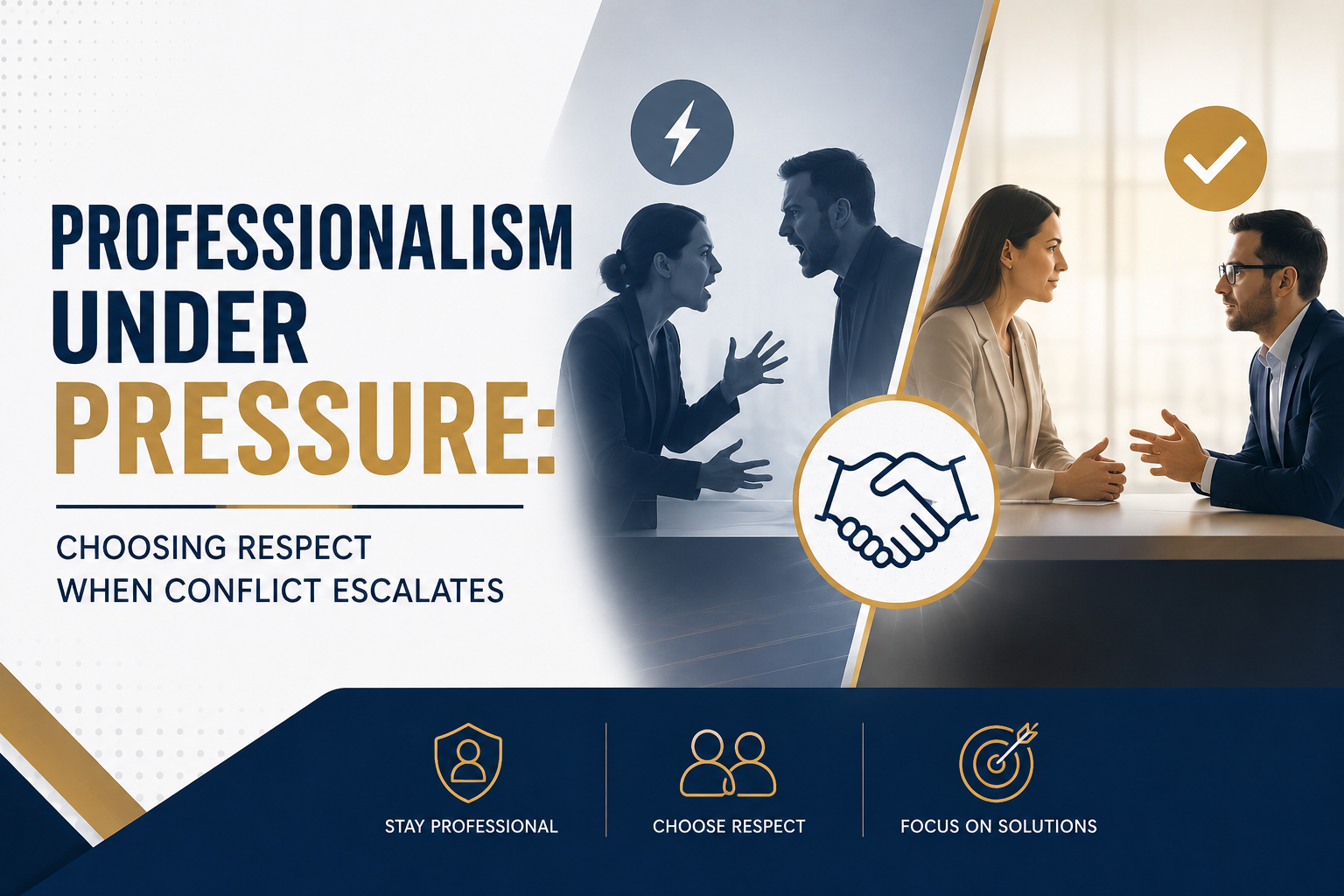 The message arrived at 11:47 p.m. It wasn't long. Just a few lines. But every sentence carried anger. A disagreement over a contract had been going on for weeks. There were questions about payment, responsibilities, and what each side believed had been promised. The conversation had already become uncomfortable. Now, the latest message crossed a different line. There were accusations. Personal insults. A veiled threat about “making sure people know” what had happened. And then came a remark about the other person's background. For a moment, the easiest response seemed obvious: Fight back. After all, they started it. But this is where professionalism is really tested not when everyone is calm and reasonable, but when someone gives us every reason to lose our composure. Conflict is part of professional life. Employment decisions can disappoint people. Contracts can fall apart. Candidates can feel unfairly treated. Managers can become frustrated. Clients and suppliers can disagree about commitments. Sometimes we are genuinely wronged. And sometimes we may be the ones who got something wrong. Either way, disagreement does not give us permission to abandon respect. The PMI Code of Ethics and Professional Conduct places Respect among its four core values. That sounds simple until we find ourselves staring at a message that feels deliberately insulting, threatening, or unfair. Respect is easy when it is reciprocated. It becomes meaningful when it isn't. The person receiving that late-night message eventually did something surprisingly difficult. They didn't respond. Not immediately. They saved the communication, stepped away from the computer, reviewed the facts, and went to bed. The next morning, they wrote back. The response acknowledged the disagreement. It clarified the contractual position. It proposed using the appropriate process to resolve the matter. There were no insults. No threats. No attempt to embarrass the other person. It wasn't weakness. It was professional self-control. Respect doesn't mean tolerating abuse. It doesn't mean remaining silent when discriminatory language is used. It doesn't mean accepting intimidation or allowing retaliation to go unchallenged. And it certainly doesn't mean avoiding difficult conversations. Sometimes respect means setting a boundary. Sometimes it means documenting what happened and involving Human Resources, legal counsel, procurement, recruitment leadership, or another appropriate authority. Sometimes it means saying: “I am willing to discuss the issue, but I will not continue the conversation in this manner.” That is respect too. Because respect isn't only about how we treat people when we agree with them. It is also about recognizing their dignity when we don't. And perhaps that's the uncomfortable part of professional ethics. We cannot control the tone of the message that arrives at 11:47 p.m. We cannot control whether someone tries to intimidate us, insults us, uses discriminatory language, or threatens retaliation. But we can control whether we respond in kind. We can choose to protect our boundaries without attacking someone else's dignity. We can choose accountability without humiliation. We can choose firmness without hostility. We can choose Respect. Not because the other person necessarily deserves our kindness in that moment, but because our professional values should not depend on someone else's behavior. The next time a difficult message lands in your inbox, ask yourself: When someone crosses the line with us, can we hold the line without crossing it ourselves? |
Cultural Shift: Artificial Intelligence, Machine Learning, and Project Practice
 We are now facing a new wave of transformation like the “webification” era two decades ago. This time, it is artificial intelligence (AI) and machine learning (ML). As project practitioners, we must ask: how do these technologies reshape company culture, and how do we guide organizations through the turbulence? AI is not just another tool—it changes how decisions are made, how work is distributed, and how value is delivered. It can automate repetitive tasks, provide predictive insights, and even challenge traditional hierarchies by empowering data-driven decision-making. However, these benefits come with cultural challenges, including trust, transparency, and ethical responsibility. Cultural change is often the most challenging aspect. With AI, the stakes are higher because people fear being replaced. To make a seamless shift, secure senior management buy-in; without leadership commitment, AI initiatives stall. Start with a pilot project involving a small, willing team that can demonstrate clear benefits, such as faster reporting, reduced errors, or improved forecasting. Use advocates and let these satisfied users share their success stories, which build momentum and reduce resistance. AI adoption should feel like a snowball rolling downhill, gaining speed and enthusiasm as more people recognize its value. Benefits must be crystal clear, where “AI” alone does not mean business value. Identify specific improvements, such as automating workflows to reduce manual errors, enhancing project visibility with predictive analytics, optimizing resource allocation to lower costs, and freeing staff from repetitive tasks so they can focus on creative, strategic work. When AI is introduced only for marketing buzz or compliance optics, resistance will be stronger. On the other hand, the cultural shift becomes smoother as the first AI initiative demonstrates tangible benefits. Information must be meaningful. Too often, AI systems generate dashboards or reports that overwhelm rather than enlighten. If end users cannot quickly find actionable insights, they will revert to old habits. Communication is critical, as it explains what AI will deliver, when, and how it should be used. It also provides training to ensure staff understand the system’s strengths and limitations and utilizes pilots to refine usability before scaling. In short, AI should empower, not confuse. Cultural change is cultural change, whether it is the web or AI. Start with strategy: what outcomes does the company want? Then identify processes that are most critical to achieving those outcomes. Engage the knowledge workers who understand those processes best. Facilitate discussions on how AI can enhance their capabilities. This engagement ensures that AI adoption is not imposed but rather co-created. It keeps the focus on the value delivered, rather than technology for its own sake. Remember: technology is a means, not an end. Bring the human side of the story. Sometimes the simplest benefits win hearts. During the web shift, putting the phone directory online was a breakthrough. For AI, start with something equally obvious, such as AI-driven scheduling that saves hours of manual coordination, smart search that retrieves project documents instantly, and/or automated compliance checks that reduce audit stress. Do not sell paradigm shifts; just sneak them in through everyday wins. From these perspectives, several themes emerge:
As project leaders, we must not only deliver benefits but also safeguard ethical values, as prescribed in the PMI Code of Ethics and Professional Conduct and stipulated in PMI Ethical Decision Making Framework. Here are actionable steps:
In closing, AI and ML are reshaping it today, just as the web transformed project management two decades ago. The challenge is not only technical but cultural. By focusing on strategy, demonstrating clear benefits, and embedding ethics into every initiative, we can deliver projects that are both successful and responsible. Let us commit to being ethical while delivering benefits and consider these questions:
References: Project Management Institute. (2025 November). PMI Code of Ethics and Professional Conduct. pmi.org. https://www.pmi.org/-/media/pmi/documents/public/pdf/ethics/pmi-code-of-ethics.pdf Project Management Institute. (2025 November). PMI Ethical Decision Making Framework. pmi.org. https://www.pmi.org/-/media/pmi/documents/public/pdf/ethics/ethical-decision-making-framework.pdf ==== |
Conflict Resolution: Leading with Ethics to Prevent Fractures from Becoming Irreparable and Transform Them into Growth
| This past week, I caught up with several former colleagues and friends from different organisations. A recurring theme emerged in our conversations: many of them are grappling with significant challenges, with much of their time and energy consumed in trying to resolve conflicts within their teams. In several cases, these conflicts are escalating and beginning to get out of hand. By the end of the week, these discussions prompted me to pause and reflect, analysing not only what I had heard, but also how it connects with lessons I’ve learned through teaching, leadership, and practice.
Why Do We End Up in Conflict? Across these reflections, one root cause stood out: misaligned expectations. When expectations are not met, trust begins to erode. But why are expectations so often out of alignment? Each person brings their own interpretation of what success will look like working in this team driven mostly by their own sense of purpose. Over time, when those expectations are not met for a variety of reasons. Without the right guardrails in place, signs of disengagement or frustration go unnoticed until conflict surfaces. How individuals react is strongly influenced by their values and coping mechanisms. For organisations, this can result in good employees quietly leaving disruptive arguments within teams, or prolonged disputes that drain productivity and morale. Drawing from My Teaching Experience When teaching the PMI Agile Certified Practitioner (PMI-ACP®) course under Domain IV: Team Performance, one of the models I referenced often was Speed B. Leas’ Model of Conflict. It outlines five escalating levels of conflict from manageable problem solving to entrenched, intractable disputes. The lesson is simple but powerful: leaders must recognise and address conflict early. In agile environments, where transparency and collaboration are vital, even small misunderstandings can snowball into major disputes if left unchecked. Another useful framework is the Thomas-Kilmann Conflict Mode Instrument (TKI), which identifies five approaches: competing, collaborating, compromising, avoiding, and accommodating. Effective leaders learn to adapt their approach to context, while prioritising collaboration for long term trust and cohesion. Together, these frameworks reinforce a core truth: effective conflict resolution requires awareness, adaptability, and timing. Preventing Conflict Before It Escalates The best approach to conflict is prevention. From my reflections, several practices stand out as essential:
When these practices are embedded in the way we work, conflict shifts from being destructive to becoming a constructive part of problem solving. The Role of PMI Ethics Conflict also brings us back to values and ethics. How we respond under pressure whether we lash out, withdraw, resign quietly, or seek constructive dialogue is guided by both personal values and professional standards. The PMI Code of Ethics and Professional Conduct provide a compass for leaders and teams alike:
Applied consistently, these principles not only help to prevent conflict but also shape how teams respond when disagreements inevitably arise. When Conflict Becomes Beyond Repair Despite best efforts, some conflicts move beyond repair. This typically happens when:
At this stage, leadership often shifts from resolution to containment, restructuring, or separation, to protect the wider team and organisation. These conversations reinforced my belief that conflict is not a sign of failure it is an inevitable part of human interaction. When addressed constructively, it can become a powerful driver of learning, innovation, and stronger collaboration. The true test of leadership lies in how early we recognise conflict, how openly we create space for resolution, and how firmly we anchor our actions in ethical principles. By leading with responsibility, respect, fairness, and honesty, we can transform conflict into an opportunity for trust and growth ultimately strengthening the very foundations of collaboration and leadership. |

Navigating Ethical Challenges in Project Management: Fairness, Favoritism, and Prejudice
Categories:
Ethics as a competence,
Behavior,
code of ethics,
Ethical Leadership,
Decision-making,
Ethics Insight Team,
Ethics Bistro,
Business Ethics,
code of conduct,
Ways of Working,
Decision-making,
Do the right thing,
project manager,
Ethical Dilemma,
Professional Responsibility,
Professional Conduct,
Fairness,
Project Management,
Code of Ethics and Professional Conduct,
fairness,
professonal conduct,
Conflict,
Cultural Diversity,
professional conduct,
Decision Making,
Ethics
Categories: Ethics as a competence, Behavior, code of ethics, Ethical Leadership, Decision-making, Ethics Insight Team, Ethics Bistro, Business Ethics, code of conduct, Ways of Working, Decision-making, Do the right thing, project manager, Ethical Dilemma, Professional Responsibility, Professional Conduct, Fairness, Project Management, Code of Ethics and Professional Conduct, fairness, professonal conduct, Conflict, Cultural Diversity, professional conduct, Decision Making, Ethics
| “Fairness is not an attitude. It's a professional skill that must be developed and exercised – Brit Hume”
In the dynamic world of project management, maintaining fairness and avoiding favoritism and prejudice are crucial for fostering a productive and harmonious work environment. These ethical challenges can significantly impact team morale, project outcomes, and the overall success of an organization. Let’s delve into how fairness, favoritism, and prejudice play out in project management and explore strategies to address these issues effectively.
1. The Importance of Fairness
2. The Detrimental Effects of Favoritism
3. Addressing Prejudice in the Workplace
4. Strategies for Promoting Fairness
5. Creating a Positive Work Environment
Conclusion Fairness, favoritism, and prejudice are critical issues in project management that can significantly impact team dynamics and project success. By promoting fairness, addressing favoritism, and mitigating prejudice, project managers can create a more inclusive, productive, and positive work environment. This not only enhances team morale but also drives better project outcomes. Question: What are your experiences with fairness, favoritism, and prejudice in project management? How have you addressed these challenges in your projects? Share your thoughts and insights! |

Caustic Comment Causes Cultural Crisis
Categories:
Professional Conduct,
Project Management,
Conflict,
Cultural Diversity,
Leadership,
Ethics
Categories: Professional Conduct, Project Management, Conflict, Cultural Diversity, Leadership, Ethics
| Guru was happy that the weekly project status call was conflict-free. His feel-good was shattered by a sudden jolt. Nathan, a system architect, seemed to be in a foul mood. He was almost screaming. “Ananya: This is the worst documentation I’ve ever seen. You also delivered this trash several days late. I don’t want to work with you anymore!”
Ananya, a fresh college graduate and new recruit to the team, was shell-shocked. Her silence further angered Nathan, who demanded, “Is there a reply coming?” Guru was also shocked by Nathan’s outburst. With Ananya staying silent, he moved through the remaining agenda items and ended the call. Still dazed, Ananya headed straight to the cafeteria. Feeling for her, Guru wanted to immediately tackle the issue with sensitivity. Reaching out to her, he said, “What Nathan did was inexcusable. I apologize on his behalf. Why was he so upset with your work?” She replied, “My colleague Jahangir was supposed to peer-review my manual on Wednesday. He fell sick. Since we were already late, I emailed it immediately. I agree that there were some quality issues. But that’s no reason for Nathan to humiliate me!” Guru soothed the youngster. “I agree. Nathan shouldn’t have been so harsh. Maybe he was just being brutally frank. I too have faced the music from several people who are brutally honest with their views. But that’s no excuse for disrespect. I’ll certainly talk to him.”
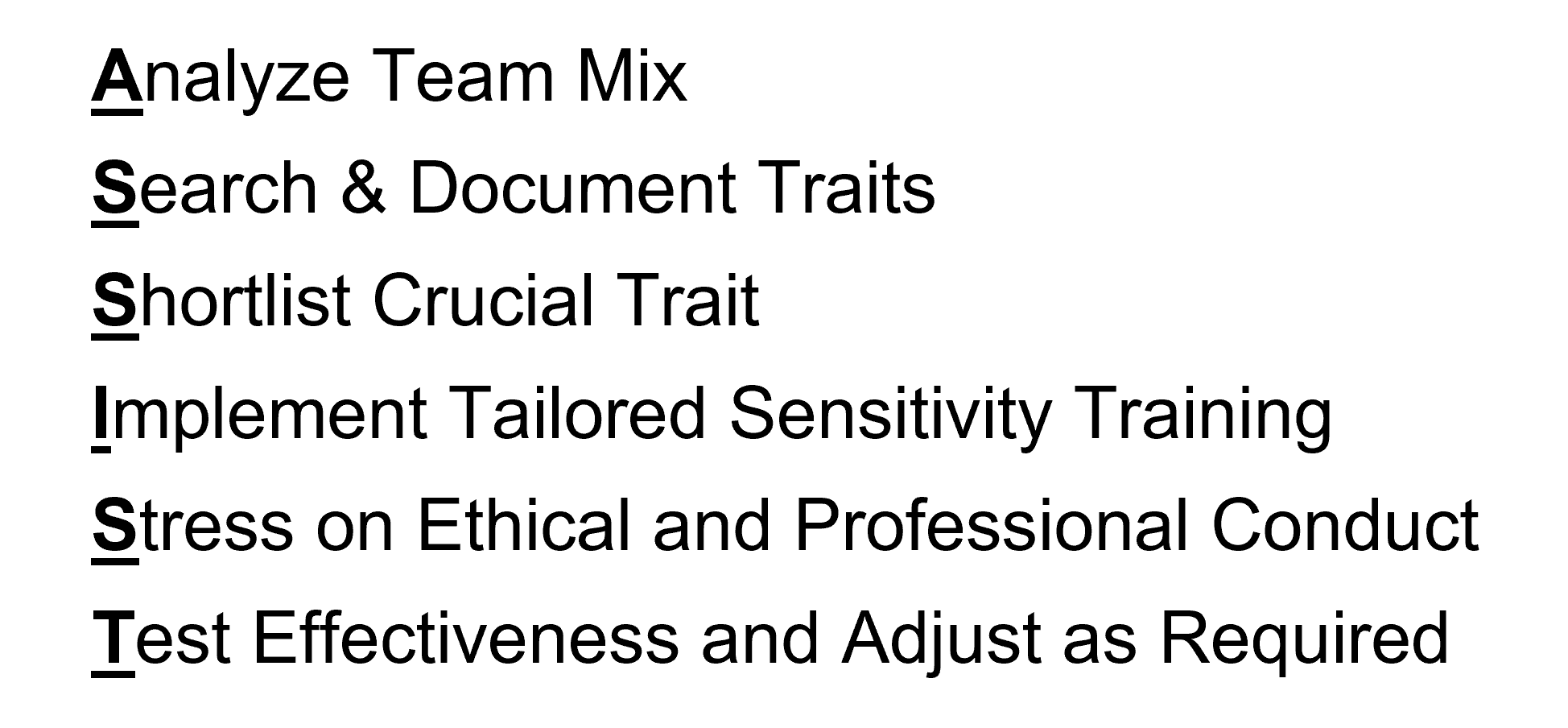
He connected with Nathan for a brief discussion explaining the serious impact of the harsh words and unwarranted outburst. Nathan understood. He promised to immediately call Ananya and apologize. Guru’s project was staffed by a virtual team with contributors from the US, UK, Brazil, India, and Japan. There had been several past conflicts based on cultural issues. However, severe time constraints had not allowed him to deal with these challenges. At the PMI EMEA Congress that weekend, Guru attended the session, “Respect Culture or Face Failure: Leadership Lessons from the world over.” Katherine, the speaker, started with the impactful words, “Does your project team gel well? If not, success will certainly elude you! If you, as PM, ignore this, you invite disaster.” The presenter listed many factors that could adversely impact virtual teams: Age, Geography, Language, Attitudes towards Ethics, Religion, etc. Quoting NASA’s Dr. Stephen Johnson, she said, “The root causes of project failure are often cultural, not technical.” She said that her experience as a global cultural consultant showed that such situations could be reversed. Proactive leaders could leverage positive cultural traits for the good of the project. Katherine proposed a six-step process named “ASSIST” to manage cultural differences effectively:
When Katherine asked attendees to share their experiences, Guru narrated the recent project issue and actions he had taken. He asked, “What would you recommend?” She replied that Guru’s actions were excellent responses. However, to prevent more such dangerous conflicts, the team would need to take a proactive stance on cultural differences. At the tea break, Guru requested Katherine’s professional assistance in turning around the difficult situation. She readily agreed to help. She began with an analysis of the team’s cultural mix and various traits that needed careful handling. Using customized team activities such as quizzes and role-plays, she sensitized the team on cultural differences.
Katherine’s interventions worked like a charm as conflicts significantly dropped. As he approved a final payment, Guru thanked the consultant for her inputs. He told her that she had made a huge difference to his team’s chemistry and resolved to apply the six-step ASSIST process on every project.
Please comment on these factors to benefit our dynamic community here on projectmanagement.com:
|