What is new in PMBOK 8 – An ethics perspective
Categories:
Ethics as a competence,
Values,
Behavior,
values,
code of ethics,
Ethical Leadership,
Decision-making,
Ethics Insight Team,
Ethics Bistro,
Business Ethics,
code of conduct,
PMI Talent Triangle,
Ways of Working,
Decision-making,
Values,
Business Ethics,
AI,
Project,
PMI Program Management,
Do the right thing,
Culture,
Ethical Dilemma,
respect,
Professional Responsibility,
Professional Conduct,
Honesty,
Respect,
Responsibility,
Project Management,
Code of Ethics and Professional Conduct,
honesty,
responsibility,
professonal conduct,
volunteers,
professional conduct,
Digital Transformation,
Ethics in Communication,
Agile,
Leadership,
Decision Making,
Ethics,
Diversity,
Organizational Project Management,
Information Technology,
Organizational Culture,
Governance,
Artificial Intelligence
Categories: Ethics as a competence, Values, Behavior, values, code of ethics, Ethical Leadership, Decision-making, Ethics Insight Team, Ethics Bistro, Business Ethics, code of conduct, PMI Talent Triangle, Ways of Working, Decision-making, Values, Business Ethics, AI, Project, PMI Program Management, Do the right thing, Culture, Ethical Dilemma, respect, Professional Responsibility, Professional Conduct, Honesty, Respect, Responsibility, Project Management, Code of Ethics and Professional Conduct, honesty, responsibility, professonal conduct, volunteers, professional conduct, Digital Transformation, Ethics in Communication, Agile, Leadership, Decision Making, Ethics, Diversity, Organizational Project Management, Information Technology, Organizational Culture, Governance, Artificial Intelligence


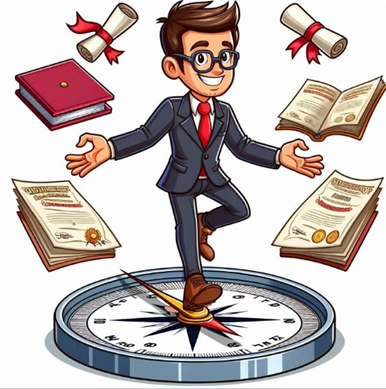 Imagine a team of explorers crossing a desert. No matter how skilled its members are or how modern their vehicles are, they may not succeed in reaching their destination without a compass. In project management, ethics serve as that compass, guiding decision-making, fostering trust, and ensuring accountability. For PMI Members, the compass is the Code of Ethics and Professional Conduct. Developed even before the first edition of the Project Management Book of Knowledge, the Code was and remains the holder of the guardrails of the project management profession. PMBOK 7 replaced knowledge areas with performance domains. The 8th is more aligned with the Agile delivery approach, whilst retaining the importance of good governance. Like the previous version, the PMBOK highlights alignment with both internal and external environments. It is important to note the focus on artificial intelligence and sustainability. Principles of project management PMBOK 8 simplified the 12 principles from the 7th edition to create a more focused and actionable foundation for modern project management. The principles of project management are aligned with the values of PMI’s Code of Ethics and Professional Conduct. They do not follow the same format, and they are not duplicative; rather, the principles and the Code of Ethics are complementary. ·Adopt a holistic view: Consider the project within its larger organizational and ecosystem context. ·Focus on value: Prioritize delivering tangible value and aligning project outcomes with strategic goals. ·Embed quality into processes and deliverables: Integrate quality throughout the project lifecycle, not just as a final check. ·Be an accountable leader: Take ownership and responsibility for the project's success and outcomes. ·Integrate sustainability within all project areas: Include environmental and social considerations in project work. ·Build an empowered culture: Foster a project environment that empowers team members. Enterprise environmental factors: Internal and external to the Organization ·The standard emphasises the impact of organizational culture, structure, and governance. Aspects like vision, mission, values, beliefs, cultural norms, leadership style, hierarchy and authority relationships, organizational style, ethics, and code of conduct remain critical success factors, as well as a framework for ethical decision making. Social and cultural influences and issues. External factors include political climate, regional customs and traditions, public holidays and events, codes of conduct, ethics, and perceptions. Artificial Intelligence (AI) AI ethical issues, especially the responsible use of AI tools and the negative impact on project team members, are an especially important aspect. Topics like data privacy and security can be addressed using technical controls. Issues like bias and fairness require special attention from project managers. Lack of clarity on who is responsible when AI-driven decisions go wrong can create confusion and an unending blame game. AI agents cannot be (yet) included in a Responsible, Accountable, Consulted, or Informed (RACI) matrix. Although their use is unavoidable, the responsibility and accountability remain with the human user. The use of AI is dependent on context, and it should be assessed for each project through a decision-making process to determine when AI can assist with tasks or provide more time for other valuable activities. The evaluation should be focused on the use of AI to produce project artifacts. Initiative-taking measures should be considered to identify and assess the risk of incorporating AI and determine if it is acceptable or it should be controlled. Below is a list of some ethical concerns related to the use of AI in projects
·Diversification of the data sets on which the AI system is trained; ·Periodic tests conducted on the AI system, with particular focus on bias; and ·Involvement of different teams in the development of the AI system. Procurement is another ethics area of focus that PMBOK 8 provides guidance on. In chapter X4.9.2, Sensitivity of Legal Actions and Upholding Ethics Codes, the standard provides considerations to avoid impact on project outcomes and stakeholder relationships: ·Nuanced communication. ·Escalation protocols. ·Confidentiality. ·Impartiality. PMBOK 7 explicitly references the PMI Code of Ethics as a complementary and essential guide for project professionals. This code provides the specific rules for ethical conduct, based on core values of honesty, responsibility, respect, and fairness.
|
Fields of Doubt: When AI Overshoots Human Intuition
|
“Fields of Doubt: When AI Overshoots Human Intuition” In a well-funded agritech pilot, an Africa-based firm rolled out an AI-powered irrigation system across multiple test farms in a rural region of an African country. Based on satellite weather data, historical yield trends, and soil sensors, the AI prescribed precision watering routines down to the hour. On paper, the system outperformed manual methods — until it did not. As seasonal rainfall became erratic due to shifting climate patterns, the AI began overwatering certain plots. Local farmers, relying on generational knowledge of cloud patterns and bird migration, flagged the error. But field technicians, trusting the algorithm’s diagnostics, dismissed their concerns. Days later, root rot set in. The damage was not just agricultural; it was fundamentally ethical. The core dilemma lay in a clash between algorithmic precision and ancestral wisdom. When field workers override the warnings of seasoned local farmers due to uncritical trust in AI, it raises a pivotal question: whose judgment should guide action when technology conflicts with lived human experience? The PMI Code of Ethics and Professional Conduct (CoE&PC) emphasizes our responsibility to honor diverse perspectives, especially cultural and contextual knowledge often marginalized by automated systems. It calls for fairness, respect, and accountability in all professional interactions—not just in what decisions are made, but in how and by whom they are made. The Ethical Decision-Making Framework (EDMF) asks project leaders to systematically examine every ripple of impact: Who might be affected? What competing rights or duties are in play? Ethics here is not abstract and theoretical but downright practical. The framework serves not as a checklist, but as a compass for inclusive, humane decision-making in an increasingly digital world. In this case, accountability was not simply about flipping a switch to deactivate a malfunctioning smart pump — it was about exercising discernment, fostering dialogue, and embracing ethical stewardship in its fullest sense. The true ethical challenge lies not in the hardware or software, but in the human response to it. Technological systems can process data at lightning speed, but they lack the moral compass and contextual sensitivity that only people can bring. Accountability meant actively listening to community voices, especially those rooted in local knowledge, and recognizing when to override automation with empathetic leadership. Staying context-aware required humility to question what seemed certain and to respect the wisdom that is not encoded in algorithms. Ethical stewardship, as guided by PMI’s values of responsibility and respect, demands that professionals treat AI not as an infallible oracle but as a support tool — powerful, but subordinate to human judgment, especially in high-stakes, culturally nuanced environments. How would you decide when human insight should override AI predictions? Have you encountered a project where cultural expertise clashed with data-driven advice? Let us know in the comments as we deliberate, learn, reflect, and keep ethics at the core of innovation. References: Project Management Institute. (n.d.). Code of Ethics and Professional Conduct. pmi.org. https://www.pmi.org/-/media/pmi/documents/public/pdf/ethics/code-values-card.pdf Project Management Institute. (2015). Ethics in Project Management. pmi.org. https://www.pmi.org/about/ethics Project Management Institute. (2011). PMI Ethical Decision-Making Framework (EDMF). pmi.org. https://www.pmi.org/-/media/pmi/documents/public/pdf/ethics/ethical-decision-making-framework.pdf
|

Ethical Leadership in the Digital Age
|
The rapid pace of technological innovation has transformed industries, workplaces, and the way we live. While these advancements have brought remarkable benefits, they also present unique challenges for leaders, particularly in maintaining ethical standards. Ethical leadership in the digital age is not just about making decisions that comply with laws and regulations but also ensuring those decisions align with core values and principles. Navigating Complex Ethical Landscapes Digital technologies often blur the lines between right and wrong, especially when decisions involve data privacy, artificial intelligence, or automation. Leaders must grapple with questions like: How much data collection is too much? Is it ethical to replace human jobs with AI? These dilemmas require a framework for thoughtful decision-making. The Project Management Institute (PMI) provides a valuable Ethical Decision-Making Framework (EDMF) that can guide leaders through these complex scenarios. The EDMF encourages:
Building Trust Through Transparency In a digital-first world, trust is a cornerstone of ethical leadership. Leaders must prioritize transparency in their decision-making processes, particularly when handling sensitive issues like data breaches or AI bias. Communicating openly about challenges and the steps being taken to address them fosters trust among employees, customers, and stakeholders. Fostering an Ethical Culture Ethical leadership also involves creating a culture where ethical behavior is encouraged and rewarded. This means setting clear expectations, providing training on ethical practices, and leading by example. When employees see their leaders making ethical choices, even when it's difficult, they are more likely to follow suit. The Role of Continuous Learning The digital age evolves rapidly, and so do its ethical challenges. Leaders must commit to continuous learning to stay informed about emerging technologies and their potential implications. This includes engaging with diverse perspectives to better understand the societal impact of their decisions. Conclusion Ethical leadership in the digital age is about more than avoiding scandals or staying compliant. It's about making principled decisions that benefit not just the organization but society as a whole. By leveraging frameworks like PMI’s EDMF, fostering transparency, and committing to continuous learning, leaders can navigate the ethical complexities of the digital world. What’s your take? How do you think leaders can better prepare themselves for the ethical challenges posed by digital transformation? Share your thoughts in the comments below! Reference: |

Navigating Ethical Crossroads: A Human-Centered Approach for Project Managers
|
In project management, while we focus heavily on timelines, budgets, and deliverables, there’s another vital factor that often goes unnoticed: ethics. Making ethical decisions isn’t always straightforward, particularly when faced with real-world pressures. The Project Management Institute’s (PMI) Ethical Decision-Making Framework (EDMF) is a tool designed to assist project managers in tackling these dilemmas, offering a structured path through the complexities of professional life. Yet, beyond the framework and guidelines, ethical decisions are rooted in something far more personal: our values, emotions, and relationships. The PMI’s EDMF provides five core steps to navigate ethical challenges: Assess, Consider, Analyze, Apply, and Evaluate. While these offer a clear process, the real strength of the framework comes to life when combined with the human touch. Let’s delve into what this looks like in practice. Ethical Decisions Are Deeply Personal Consider a situation where you’re managing a project under intense pressure to meet a looming deadline. A senior manager suggests cutting a few quality checks to save time. On an ethical level, you recognize that this isn’t the right course of action, but rejecting the suggestion could lead to strained relationships and project delays. Here, human emotions—like the fear of conflict or the desire to avoid disappointing others—can cloud judgment. This is where the PMI framework proves its value. It prompts you to pause, reflect, and assess the situation more objectively. By doing so, you can recognize the long-term implications of compromising on quality. Ethical decision-making in this scenario isn’t merely about adhering to rules; it’s about maintaining integrity and trust, both now and in the future. Empathy Plays a Vital Role in Ethics As project managers, we’re not just responsible for tasks but for leading people. Many ethical dilemmas don’t simply arise from rule-breaking but from human conflict. Take the example of a team member who is repeatedly missing deadlines due to personal struggles. A straightforward response might be to reprimand them, but empathy encourages a deeper understanding of their situation. The PMI framework urges you to analyze the situation not only from the perspective of the project’s needs but also with consideration for the individual. Balancing professional standards with empathy isn’t about lowering expectations—it’s about ensuring that both the team’s success and the individual’s well-being are taken into account. Ethical Leadership Demands Courage It often takes courage to stand firm in the face of ethical challenges. Making the right decision doesn’t always align with what’s easiest. For example, imagine you’re asked to approve a vendor who doesn’t meet ethical standards simply because they offer the lowest price. Refusing to comply could upset higher-ups, but proceeding would compromise the integrity of the project. The PMI framework supports ethical courage, encouraging project managers to take action with integrity, even when it feels risky. Upholding ethical standards might not always be popular, but it’s essential for long-term success and trust. Reflecting on Decisions with a Human Lens Finally, the framework’s evaluation phase encourages reflection on both the immediate and long-term effects of your decisions. It’s not just about refining your processes; it’s about personal growth and the impact on the people you lead. How did your decisions shape the team’s dynamic? Did they reinforce a culture of integrity? In the end, PMI’s Ethical Decision-Making Framework is more than just a procedural tool—it’s a guide that, when combined with empathy, courage, and integrity, helps us navigate the complex, human side of project management. Have you faced any ethical dilemmas in your project management career? How did you navigate the decision-making process? Let’s discuss it here at Ethics Bistro! Reference: |

Ethical Horizons: Navigating Project Management with AI Compassion
|
In the heart of Projectville, where projects pulsated with ambition, a seasoned project manager named Alex embarked on a transformative journey. This is a tale not just of innovation but of ethical leadership, where the integration of artificial intelligence (AI) became a beacon guiding projects through the ever-evolving landscape. Setting the Ethical Stage: Amidst the whirlwind of project complexities, Alex was entrusted with a groundbreaking initiative. The project was not just a quest for deliverables; it was a commitment to ethical project management. It was in this ethical context that AI emerged, promising efficiency without compromising on fairness and transparency. AI as the Ethical Ally: The introduction of AI was not merely a technological upgrade; it was a strategic decision to embed ethics into the project's DNA. The AI algorithms were programmed not just for optimal outcomes but for ethical considerations, fostering a culture of responsibility from the outset. The Dilemma of Ethical Efficiency: As the project unfolded, Alex encountered the delicate balance between efficiency and ethical considerations. The AI, equipped with its algorithms, made decisions that required scrutiny. The project manager grappled with the responsibility of ensuring that AI-driven efficiency did not compromise on fairness or diversity. Illuminating Ethical Transparency: In a pivotal team meeting, Alex chose transparency as the cornerstone of ethical leadership. The black box of AI decision-making was opened, and the team engaged in a candid discussion about the ethical implications. Transparency became the catalyst for fostering a shared understanding of AI's role in decision-making. Collaboration as the Ethical Paradigm: Recognizing AI not as a substitute but as an ethical partner, Alex advocated for a collaborative approach. The diverse team, each member embodying unique perspectives, collaborated harmoniously with AI. The result was not just efficient project outcomes but an ethical legacy that permeated the project's every fiber. AI's Ethical Legacy: As the project concluded, it left behind not just deliverables but an ethical legacy. Alex's leadership had infused a commitment to fairness, transparency, and collaboration. The ethical considerations, meticulously woven into the project's fabric, became a foundation for future initiatives. Conclusion: As the story of Alex unfolds, it reveals a deep truth: AI in project management goes beyond tasks; it's a guide through the ethical landscape. Alex's journey shows that in project management, where innovation and ethics blend, the process is as crucial as the outcome. Now, let's ponder: Can we, like Alex, see AI as more than a tool? Can it be a force for ethical change, shaping a future filled with compassion and inclusivity? The story prompts us to ask: How can we use AI ethically to navigate not just projects but also the moral challenges in our work? So, here's a question for you: How can AI be a compass for ethical choices in your projects? Related to PMI's Code of Ethics and Professional Conduct: This narrative aligns with PMI's emphasis on ethical conduct, reflecting the commitment to responsibility, fairness, and transparency in project management. AI's ethical integration resonates with PMI's principles, ensuring ethical considerations echo through every project. References: |