Digital Transformation & Ethical Decisions
Categories:
Ethics
Categories: Ethics


|
Through this post, I want to pick your brain regarding some of the less rosy consequences of rapid DX. According to World Economic Forum (WEF), current estimates of global job losses due to digitalization range from 2 million to 2 billion by 2030. Also, for every 1% increase in global GDP, CO2e emissions have risen by approximately 0.5% and resource intensity by 0.4%. The trend will contribute to a global gap of 8 billion tonnes between the supply and demand of natural resources by 2030, translating to $4.5 trillion of lost economic growth by 2030. According to the Edelman Trust Barometer, trust in all technology-based sectors is declining with concerns over data privacy and security being key factors. Broader ethical questions about the way organizations use digital technology also threaten to erode trust in DX. Few organizations and their leaders develop an overall approach to the ethical impacts of technology use—at least not at the start of a digital transformation. In a recent study, only 35 percent of respondents said their organization’s leaders spend enough time thinking about and communicating the impact of digital initiatives on society.
In order to be truly savvy in the age of advanced, connected, and autonomous technologies, leaders must think beyond designing and implementing technologically driven capabilities. They should consider how to do so responsibly from the start. In order to be ethically driven from the start, business leaders need to be proactive and stay ahead of potential ethical challenges and consider designing new technology-driven products and services with ethical principles in mind from the start. This can help organizations anticipate and avoid problems, rather than having to react after a situation arises. PMI’s Code of Ethics and Professional Conduct provides guidelines which can help in addressing many ethical concerns related to fast paced DX. Responsibility entails that organizations own the decisions they make or fail to make, the actions they take or fail to take, and the resulting consequences. In exhibiting Respect, an organization must show high regard for themselves, others, and the resources entrusted to their management. Resources may include people, money, reputation, the safety of others, and natural or environmental resources. Fairness requires that humans and machines trained by them take decisions and act impartially and objectively. Algorithms running the technologies must be free from competing self-interest, prejudice, and favoritism. Honesty requires that facts are interpreted in a manner which is truthful and not misleading. I strongly believe that DX is a great trend, and it may not be an option. To leverage it properly, decision makers must keep ethical values as the base of their decisions to guarantee sustainable success. Please share your perspective and experience with the rest of us so we can also learn from your insights.
|
 Digital Transformation (DX) provides the critical response needed by organizations to meet rising customer expectations, deliver scalable, individualized experiences, and respond to market forces with ever increasing levels of business agility. Technologies like cloud computing, robotics, AI and big data combined with optimized operating models enable organizations to drive innovation and respond to internal and external events quicker and cheaper than ever before. All of these seem to be steps in the right direction and while they can definitely get characterized as being so, one cannot overlook the challenges posed by DX. Ethical concerns like individual privacy rights, potential job losses, implicit consent, digital trust, unanticipated consequences of innovations and decision making by machines must be carefully evaluated and addressed.
What’s Your Ethical Score?
| As I am writing this blog, Australia confronts the findings of an investigation that our special forces allegedly committed war crimes in Afghanistan, our New South Wales Premier is perceived to have broken her own health advice rules – not self-isolating after a Covid-19 Test; and our previous Federal Finance Minister; is jetting Europe at the expense of tax payers to lobby for an OECD role while at the same time, Australians overseas are waiting for repatriation flights to bring them home. Australia is facing national and global challenges[i]: Covid-19 pandemic, the future of work resulting from the introduction new technologies; AI, Robotics, Cyber Security; climate change and the impact on our environment with the diversity and uniqueness of our rare species be it in the bush or in the oceans. The fires followed by floods that we faced last year are still vivid in our memories as we are experiencing a heat wave this weekend with well above average temperatures. In addition to that our journey of reconciliation with Indigenous Australians has yet a long way to go. One cannot help but wonder: How ethical is Australia? And what difference would that make? And why would I care as a leader whose field is Project Management about how ethical the country is?
Image by Mary Pahlke from Pixabay[ii] Despite the challenges, and the current political climate, the findings of a recent study commissioned by the Ethics Centre in Australia and conducted by Deloitte Access Economics[i] draw a more positive picture, stating that:
So what are the benefits of a more ethical Australia, or any country for that matter, and where do we start? The study affirms that ethical infrastructure is to be built at the society and organisational level in both formal and informal ways;
So how ethical are we as leaders? What’s our ethical score? And, do we have any PMI Ethics tools that will enable us as individuals to be more aware of our ethical values and behaviors?
How about taking the Ethics Self-Assessment questionnaire as a self-reflection tool? How ethical is each and every one of us? What is the gap and how can we address it? Share your thoughts - What other activities do we undertake as individuals and professionals to build ethics and professional conduct awareness in our teams, organizations, and communities? __________________________ References: [i] https://ethics.org.au/wp-content/uploads/2018/05/The-Ethical-Advantage-4.pdf [ii] https://pixabay.com/illustrations/business-idea-style-concept-goals-1753098/
|
How to talk Ethics with our teams
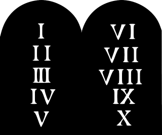
| When I recommend ethics related discussions, I often hear the comment: “Why should we bring up this topic? People understand ethics, they know what the requirements are, they do not need such reminders”. I usually read under lines “let’s not bore them with something like this”. Nevertheless, these discussions have a purpose and a tangible result. In order to prove this, let me challenge you with a question I’ve found in Dan Ariely’s Irrational Game. He describes an experiment in which the researchers asked the participants to list ten books they read in high school and others to list the Ten Commandments (to the best of their memory). Afterward, the participants were asked to perform a simple math problem, being paid based on their number of correct answers. The trick here was that participants self-reported the number of questions they answered correctly, meaning that they could lie about their scores and get more money. And now comes the question: How did writing down the Ten Commandments instead of writing down ten books from high school affect people’s cheating habits? What do you think: did the participants who first wrote down the Ten Commandments cheat more, less or to the same degree? Dan Ariely disclose the results of the experiment: those participants who were asked to write down the Ten Commandments cheated less. Kind of interesting, don’t you think? The simple refresher of the values we were thought (probably) during childhood makes us more willing to respect them. Or, as the researchers state: “When we are exposed to external triggers that remind us of the importance of honesty, we became more aware of our own morality. As a result, we act more in line with how we would like to behave.” (Mazar, Amir, Ariely, 2008). And what is the relevance of this experiment to us, project managers, you might (rightfully) ask: well, we are responsible for creating and maintaining an environment in which the values we believe in as project managers (Responsibility, Respect, Honesty and Fairness, the four values listed in our Code of Ethics and Professional Conduct) are respected. As project managers, we are responsible to set and agree on the norms that are expected to be followed by our team members. I know many colleagues who are doing this (some of them by developing those norms with their teams, others by referring to the company’s rules and regulations that should be accepted). But I don’t know anyone who – in the whirl of the project – takes the time to remind those things to their team. I’m sure that you know already that simply asking them to read the norms is far from being enough. They won’t, humans we are! So what can we do? As we have seen that even just a reminder can help. Can we have an interesting discussion with our team regarding ethics? The answer is simple: yes, we can! as we have a great tool. One that relies on the team’s answers (the beauty here is that they cannot argue against their own statements). The tool: Project Team Ethics Assessment is available to all of us (please download it from the PMI website: www.shorturl.at/bprAT) and it comes with detailed, step by step instruction on how to use it, how to facilitate the discussion and how to develop a plan to proactively address the team’s challenges. Project teams are frequently confronted with potential ethical issues. Especially in today’s challenging times when we must cope with remote work, changing composition of teams, uncertainty regarding availability of resources, pressure of high expectations, and often blurred boundaries between the organization’s and the project’s authority. Let’s support our team members and create an environment where ethical issues are openly discussed and stopped to become an additional burden. Maybe people won’t speak up, but how can you argue with their anonymous feedback addressing what no one will talk about unless you have identified the need and created the environment where you can respectfully, honestly and candidly have those discussions. Give a chance to this tool: www.shorturl.at/bprAT. Mazar, N., Amir, O., & Ariely, D. (2008). The dishonesty of honest people: A theory of self-concept maintenance. Journal of marketing research, 45(6), 533-644. |
The A, B, C’s of Ethics
| What words do you associate with A, B and C? Alpha, Bravo, and Charlie? Or Apple, Ball, and Cat? As students return to the physical and virtual classrooms, let’s have some fun with some concepts of Ethics…
Let’s say you are faced with an ethical dilemma: multiple stakeholders telling you how to proceed and the directions conflict with each other. You Vice President says “Don’t tell the customer about the test failure until we have it fixed.” The customer demands “timeliness and transparency at all times.” Using the PMI Ethical Decision Making Framework (EDMF), you would use the five-step process. Using these steps, the letter A can also stand for ASSESSMENT, ALTERNATIVES, ANALYSIS, and APPLICATION.
I am not talking about just a simply competitive, ill-mannered, or challenging personality. While there isn’t a single definition, a bully is someone who exhibits a persistent pattern of mistreatment. This may be verbal, nonverbal, psychological, physical. Often, this includes a degree of humiliation. What can you do? How about using the PMI Project Bully Tool? This tool encourages you to assess bullying behaviors in the workplace context and helps you recognize if you are properly interpreting the behaviors.
One of my favorite descriptions of the difference between compliance and ethics is from a 2019 Forbes editorial by Bruce Weinstein. Compliance is adhering to the rules and regulations, or as he puts it, “what is required of me?” Ethical leaders ask, “How would an honorable person behave in this situation?” To me, this is closely related to having a conscience. What is your internal compass tell you when faced with a dilemma? As I’m running out of space, let me finish with ethical culture. Is it simply an environment that makes it easy to do the right thing and difficult to do the wrong thing? This seems too simplistic. To me, an ethical culture is one in which there is a collective belief in the values of the organization and one in which individuals are empowered to speak up and take ACTION. That brings us back to the letter A! I could spend days just talking about the A, B, Cs of ethics! What do you think? What other words, phrases, or concepts come to mind? I’d love to hear from you. In the future, I hope to address the D, E, Fs (and more) of ethics. For more information on the above, see https://www.pmi.org/about/ethics/code for the EDMF
For information about Project Bully see https://www.pmi.org/about/ethics/resources/bully
|
 What begins with A? How about ACTION? I start with action not only because it is the beginning of the alphabet, but in dealing with an ethical dilemma: Don’t act before you have the facts.
 What begins with B? How about BULLY?
 What begins with C? There are so many words that come to mind: Compliance, Conscience, and Culture.
The Traps of a Conflict of Interest
Categories:
courage honesty responsibility respect fairness
Categories: courage honesty responsibility respect fairness
| Catherine lives in a small city, where everyone knows everyone, they are childhood friend, school mates, sports mates, colleagues who worked together at one point in time in their careers, neighbors, relatives, or connected with almost no degrees of separation! Simon, one of Catherine’s direct reports has been extremely busy; running an operational arm, establishing a new line of business, while at the same time driving the establishment of new service centers to expand the business and extend the reach to other geographical areas. Catherine could easily see that Simon needs support in establishing these new centers. The level of complexity and engagement with internal and external stakeholders require a dedicated Project Manager, rather than an Operational Manager whose time is split in between running the business and driving the establishment of new centers. Each center is a project on its own right that has a complex of level of consultation, communication, compliance, and a focus on driving a large number of interdependent activities and tasks. Catherine suggested that Simon creates the new project manager role and advertises it as soon as possible.
Photo by Gustavo Fring from Pexels The role drew a lot of interest, as it offers a sense of purpose - serving the community, a rich experience in driving a set of projects end to end, including engagement with a variety of stakeholders. The candidate list contained a large number of people, most of which would have crossed paths with both Catherine and Simon at one stage in their lives. However, the candidate’s name that raised red flags was Emma, a well-known close relative of Catherine. Catherine was planning to take part in the interview panel. However, seeing Emma’s name not only as an applicant, but also as a strong candidate, she opted out, demonstrating honesty and citing her conflict of interest. She asked Simon to formulate an interview panel. Simon, being aware of the situation, formulates the interview panel asking each to declare any conflicts of interest. The interviews proceed, with mixed feelings. Every member of the interview panel is aware of the relationship between Catherine and Emma. While each doesn’t have the conflict of interest that Catherine has, Catherine is ultimately their boss.
Image by Wokandapix from Pixabay The panel discussed openly how they do feel a little bit of pressure, as they understand the relationship between Catherine and Emma. They are also aware of how they are going to be judged by their recommendation. They also understand the need for the new role and how critical it is to select the most suitable candidate. Taking their responsibility seriously, they go about interviewing, giving each candidate their fair share of time, the opportunity to respond to interview questions as well as ask their own. Following a marathon of interviews, they pick the top two most suitable candidates to be lined up for a second interview. All agreed that while Emma was a good candidate, she is not one of the top two – as a matter of fact she comes third. The inner thoughts of the panel were:
The panel asks Simon as he conveys the shortlist to Catherine, to give Catherine the context and the reasoning that supports the top two shortlisted candidates. The panel members await the results of Simon’s conversation with Catherine. Their anxiety and worries turn into delight, they are relieved to hear that Catherine not only accepted their recommendation of the top two, but also was happy to offer the job to the top candidate waiving the need for second interview. How wonderful it is to see Catherine’s words reinforced by actions, distancing herself from the situation, declaring her conflict of interest and trusting her team’s judgement and recommendations! Reflecting on your own experience, if you were in Catherine’s shoes, what would you have done? |
.jpg)