

Navigating AI in Project Management: A Comparison with Racing Co-Pilots and Driverless Cars
Categories:
Ethics as a competence,
Values,
values,
Ethical Leadership,
Decision-making,
Ethics Insight Team,
Ethics Bistro,
trust,
Ways of Working,
Decision-making,
Values,
AI,
Do the right thing,
Ethical Dilemma,
respect,
Professional Conduct,
Honesty,
Respect,
Responsibility,
Trust,
honesty,
responsibility,
professonal conduct,
empathy,
professional conduct,
Ethics in Communication,
Leadership,
Decision Making,
Ethics
Categories: Ethics as a competence, Values, values, Ethical Leadership, Decision-making, Ethics Insight Team, Ethics Bistro, trust, Ways of Working, Decision-making, Values, AI, Do the right thing, Ethical Dilemma, respect, Professional Conduct, Honesty, Respect, Responsibility, Trust, honesty, responsibility, professonal conduct, empathy, professional conduct, Ethics in Communication, Leadership, Decision Making, Ethics


 Artificial Intelligence (AI) is revolutionizing industries, and project management is no exception. With advanced tools supporting decision-making, risk mitigation, and efficiency, the project management landscape is increasingly intertwined with AI technologies. However, this evolution raises questions about human responsibility, autonomy, and ethics—questions like those faced in the realms of racing co-pilots and driverless cars. This blog explores the pros and cons of using AI in project management and compares these dynamics with racing environments and autonomous vehicle scenarios, focusing on the balance between human involvement and ethical considerations.  The Role of AI in Project Management AI-driven tools, such as virtual assistants and machine learning algorithms, are increasingly used to streamline project management processes. From schedule optimization and predictive analytics to stakeholder communication and resource allocation, AI empowers project managers to make well-informed and efficient decisions. The Racing Co-Pilot Analogy: Shared Responsibility, Enhanced Performance In professional racing environments, a co-pilot performs critical tasks: navigating the course, analysing conditions, and advising the driver. This relationship mirrors the human-machine collaboration often seen in project management. Here, AI acts as a "co-pilot," assisting project managers while leaving primary control in human hands. Let us examine this analogy: Pros of AI as a Co-Pilot in Project Management:
The Driverless Car Comparison: Autonomous AI in Project Management Shifting perspective, consider driverless cars: vehicles fully controlled by AI, requiring minimal human intervention. Some envision project management systems that resemble a driverless car—autonomous AI overseeing the project's execution from start to finish. While promising, this model has risks and challenges to consider. Pros of Autonomous AI in Project Management:
Ethical Considerations: Responsibility and Integrity Both racing co-pilots and driverless cars illustrate contrasting extremes in human-machine collaboration. A key differentiator in these scenarios is ethical responsibility:
Conclusion: The Road Ahead for AI in Project Management The racing co-pilot and driverless car analogies shed light on the pivotal balance required in leveraging AI for project management. While AI offers immense benefits—such as efficiency, precision, and scalability—it also raises concerns about accountability, ethical responsibility, and judgment. As the PMI Code of Ethics underscores values like fairness, honesty, and responsibility, project managers must ensure AI tools serve as partners rather than replacements, fostering trust and inclusivity. By choosing the right path—whether enhanced collaboration or selective autonomy—project managers can steer their projects responsibly toward success while maintaining the ethical values essential to effective leadership. Related discussion topic: Can project management run on AI autopilot?https://tinyurl.com/mr497je7 |
What is new in PMBOK 8 – An ethics perspective
Categories:
Ethics as a competence,
Values,
Behavior,
values,
code of ethics,
Ethical Leadership,
Decision-making,
Ethics Insight Team,
Ethics Bistro,
Business Ethics,
code of conduct,
PMI Talent Triangle,
Ways of Working,
Decision-making,
Values,
Business Ethics,
AI,
Project,
PMI Program Management,
Do the right thing,
Culture,
Ethical Dilemma,
respect,
Professional Responsibility,
Professional Conduct,
Honesty,
Respect,
Responsibility,
Project Management,
Code of Ethics and Professional Conduct,
honesty,
responsibility,
professonal conduct,
volunteers,
professional conduct,
Digital Transformation,
Ethics in Communication,
Agile,
Leadership,
Decision Making,
Ethics,
Diversity,
Organizational Project Management,
Information Technology,
Organizational Culture,
Governance,
Artificial Intelligence
Categories: Ethics as a competence, Values, Behavior, values, code of ethics, Ethical Leadership, Decision-making, Ethics Insight Team, Ethics Bistro, Business Ethics, code of conduct, PMI Talent Triangle, Ways of Working, Decision-making, Values, Business Ethics, AI, Project, PMI Program Management, Do the right thing, Culture, Ethical Dilemma, respect, Professional Responsibility, Professional Conduct, Honesty, Respect, Responsibility, Project Management, Code of Ethics and Professional Conduct, honesty, responsibility, professonal conduct, volunteers, professional conduct, Digital Transformation, Ethics in Communication, Agile, Leadership, Decision Making, Ethics, Diversity, Organizational Project Management, Information Technology, Organizational Culture, Governance, Artificial Intelligence
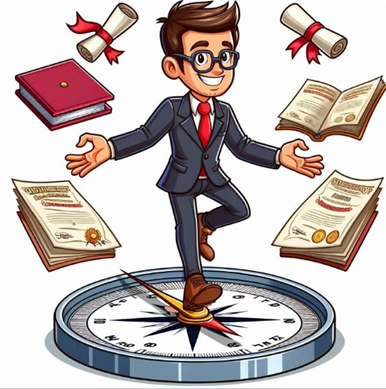 Imagine a team of explorers crossing a desert. No matter how skilled its members are or how modern their vehicles are, they may not succeed in reaching their destination without a compass. In project management, ethics serve as that compass, guiding decision-making, fostering trust, and ensuring accountability. For PMI Members, the compass is the Code of Ethics and Professional Conduct. Developed even before the first edition of the Project Management Book of Knowledge, the Code was and remains the holder of the guardrails of the project management profession. PMBOK 7 replaced knowledge areas with performance domains. The 8th is more aligned with the Agile delivery approach, whilst retaining the importance of good governance. Like the previous version, the PMBOK highlights alignment with both internal and external environments. It is important to note the focus on artificial intelligence and sustainability. Principles of project management PMBOK 8 simplified the 12 principles from the 7th edition to create a more focused and actionable foundation for modern project management. The principles of project management are aligned with the values of PMI’s Code of Ethics and Professional Conduct. They do not follow the same format, and they are not duplicative; rather, the principles and the Code of Ethics are complementary. ·Adopt a holistic view: Consider the project within its larger organizational and ecosystem context. ·Focus on value: Prioritize delivering tangible value and aligning project outcomes with strategic goals. ·Embed quality into processes and deliverables: Integrate quality throughout the project lifecycle, not just as a final check. ·Be an accountable leader: Take ownership and responsibility for the project's success and outcomes. ·Integrate sustainability within all project areas: Include environmental and social considerations in project work. ·Build an empowered culture: Foster a project environment that empowers team members. Enterprise environmental factors: Internal and external to the Organization ·The standard emphasises the impact of organizational culture, structure, and governance. Aspects like vision, mission, values, beliefs, cultural norms, leadership style, hierarchy and authority relationships, organizational style, ethics, and code of conduct remain critical success factors, as well as a framework for ethical decision making. Social and cultural influences and issues. External factors include political climate, regional customs and traditions, public holidays and events, codes of conduct, ethics, and perceptions. Artificial Intelligence (AI) AI ethical issues, especially the responsible use of AI tools and the negative impact on project team members, are an especially important aspect. Topics like data privacy and security can be addressed using technical controls. Issues like bias and fairness require special attention from project managers. Lack of clarity on who is responsible when AI-driven decisions go wrong can create confusion and an unending blame game. AI agents cannot be (yet) included in a Responsible, Accountable, Consulted, or Informed (RACI) matrix. Although their use is unavoidable, the responsibility and accountability remain with the human user. The use of AI is dependent on context, and it should be assessed for each project through a decision-making process to determine when AI can assist with tasks or provide more time for other valuable activities. The evaluation should be focused on the use of AI to produce project artifacts. Initiative-taking measures should be considered to identify and assess the risk of incorporating AI and determine if it is acceptable or it should be controlled. Below is a list of some ethical concerns related to the use of AI in projects
·Diversification of the data sets on which the AI system is trained; ·Periodic tests conducted on the AI system, with particular focus on bias; and ·Involvement of different teams in the development of the AI system. Procurement is another ethics area of focus that PMBOK 8 provides guidance on. In chapter X4.9.2, Sensitivity of Legal Actions and Upholding Ethics Codes, the standard provides considerations to avoid impact on project outcomes and stakeholder relationships: ·Nuanced communication. ·Escalation protocols. ·Confidentiality. ·Impartiality. PMBOK 7 explicitly references the PMI Code of Ethics as a complementary and essential guide for project professionals. This code provides the specific rules for ethical conduct, based on core values of honesty, responsibility, respect, and fairness.
|
Ethical Dilemmas in the PMP Application & Exam Process: A Candid Conversation
|
Alexia: "That is a red flag, Jordan. Project Management Institute (PMI®) does not just expect honesty, they require it. Falsifying dates violate the PMI Code of Ethics and Professional Conduct (CoEPC) and could lead to your application being rejected. Or worse, revocation of your certification if discovered later. Instead, consider waiting until you have gained the necessary experience. Integrity matters more than rushing the process." Jordan: "What about asking someone who recently took the exam for details on specific questions? Would that not help me prepare better?" Alexia: "No, it would undermine the entire certification’s value. The PMP is not a trivia quiz, it is a validation of your competence. Memorizing leaked questions does not make you a better project manager. PMI’s confidentiality agreement exists for a reason. If you want to pass, put in the work: study the PMBOK® and additional resources, review the Exam Content Online, use legitimate practice exams, and earn your success. Remember, the goal is not just to pass, it is to truly understand and apply project management." Jordan: "I have seen online vendors offering guaranteed passes or even proxy test-taking services. Are those legitimate?" Alexia: "Legitimate? No. Ethical? Absolutely not. Any vendor promising a guaranteed pass or offering to take the exam for you is engaging in fraud. PMI actively investigates such scams, and if caught, you will face permanent disqualification. Stick to PMI-authorized training providers (ATPs) and avoid any shortcuts that compromise ethics." Jordan: "What if I see a colleague cheating or misrepresenting their experience? Should I say something?" Alexia: "Yes! You have a professional obligation to speak up. Silence enables misconduct. If you witness unethical behavior, whether in applications, exam prep, or the testing center, you have a responsibility to address it. Start with a direct but respectful conversation by advising your colleague because their actions harm the profession. Explain the risks and encourage them to follow the right path. If they dismiss you, then yes, you escalate. This is not about being a ‘snitch,’ it is about protecting the credibility of the PMP for everyone who earned it honestly."
Link to PMI’s Code of Ethics and Professional Conduct: https://www.pmi.org/about/ethics/guidelines |

The Ethical Compass of Project Management: Doing What is Right Beyond What is Legal
| "Legality draws the line we must not cross; ethics raises the bar we strive to reach."
In project management, success hinges on timelines, budgets, and deliverables. Yet, beneath these metrics lies a deeper principle: ethics. As practitioners, we are trained not just to follow the law but to do "what is right." This distinction—between legality and morality—shapes our decisions, builds trust, and defines our legacy. Legal vs. Ethical Standards Legality sets the baseline: contracts met, regulations followed. It is the minimum standard. Ethics, however, pushes us further. A project might be legally sound yet ethically flawed—say, exploiting a contract loophole to cut safety costs. The law might permit it, but "what is right" demands we reject it. This mindset is not optional; it is ingrained through certifications like PMI’s Code of Ethics and Professional Conduct (CoEPC), which emphasizes Responsibility, Respect, Fairness and Honesty. The Ethical Foundation Our training instils a moral compass. It is the instinct to challenge a decision that harms stakeholders or the courage to prioritize sustainability over profit, even when laws do not require it. This is not about rule-following—it is about anticipating consequences and acting with integrity. A project manager who opts for greener practices beyond legal mandates is not just ethical; they are visionary, fostering innovation and goodwill. Why Ethics Trumps Legality Focusing on "what is right" is not altruism—it is practical. Projects are ecosystems of people and relationships. A legally compliant but ethically weak project might succeed short-term but falter in trust or reputation. Conversely, ethical choices—like fair labour practices or transparency—build loyalty and resilience. Clients remember integrity; teams thrive under it. Ethics does not just elevate outcomes; it sustains them. The Real-World Balancing Act Reality complicates this ideal. Tight deadlines and budgets test our resolve. Do you delay a project to fix an ethical issue, risking stakeholder ire? Do you push a team harder to meet a moral goal, risking burnout? These trade-offs demand balance. Ethical project managers lean on transparency—engaging stakeholders, explaining dilemmas, and finding collaborative fixes. This keeps projects on track without compromising principles. The Ripple Effect Ethical decisions ripple outward. Rejecting a bribe sets a standard. Prioritizing community impact over profit inspires trust. These choices, often subtle, shape cultures and industries. They prove project managers are not just taskmasters—we are stewards of progress. PMI’s Ethical Decision-Making Framework (EDMF) is a great tool to refer. Conclusion: Ethics as Our Guide Our indoctrination to "do what is right" elevates project management from execution to purpose. Legality is the guardrail; ethics is the compass. It ensures our work does not just meet deadlines but leaves a positive mark. In a field of constant change, this commitment to integrity anchors us, turning projects into legacies worth building. Question Have you come across projects that have proved to be more Ethical beyond Legal? Please share your thoughts and insights! |

Upholding Ethics in Professional Development: A Second Look on the Lessons from EY
| A recent Ethics Bistro blog (Yeung, 2024) titled “Upholding Ethics in Professional Development: Lessons from EY and Meta” raises fresh perspectives in the realm of professional development and continuing education (for project practitioners and other professionals) and the associated ethical issues in two named organizations, as elaborated in the Inc. magazine (Lynch, 2024). A follow-up article by Benjamin Broomfield (2024) provided an alternate perspective from several EY employees, who were not involved in the cheating incident, on the alleged unethical behaviours with additional context and background. Several former EY employees fired for completing multiple online training courses simultaneously during the "Ignite Learning Week" in May 2024 have criticized the company's decision, arguing that their behavior was not unethical. EY terminated dozens of employees after an investigation revealed they had attended different training sessions at the same time, which EY deemed as cheating the system. The employees contended that they were encouraged to attend as many sessions as possible and were not informed that multitasking was against company policy. The training programs, which required employees to achieve 40 professional education credits annually, included sessions like 'Conversing with AI, one prompt at a time' and 'How strong is your digital brand in the marketplace?' EY's decision to fire the employees was based on a perceived violation of its code of conduct, emphasizing integrity and ethics. EY has a history of educational cheating scandals, with a significant incident in 2022 where the company paid over $100 million to the US Securities and Exchange Commission for sharing answers during professional tests. This led to a pledge to enforce stricter disciplinary measures and emphasize compliance and integrity. In response to the backlash, EY has revised its communication around future training sessions, clearly stating that employees are expected to complete their training with integrity and not multitask. The controversy also highlighted a broader issue within EY's work culture, characterized by high workloads and internal competition, which some employees claim encouraged multitasking. The company's approach to handling the disciplinary actions has faced criticism from current and former employees, who suggested alternative sanctions like reducing bonuses or delaying promotions. In summary, this incident has brought renewed scrutiny to EY's intense work culture and raised questions about the effectiveness of its training and ethical standards already in place. In closing, what is your view on the employees’ positions? And on the employer’s updated policies and procedures to remedy the unethical behaviours? What would you do to act ethically? I love to hear your perspective and exchange lessons learnt. Sources: PMI. (2024). PMI Code of Ethics and Professional Conduct. pmi.org. https://www.pmi.org/-/media/pmi/documents/public/pdf/ethics/pmi-code-of-ethics.pdf Yeung, M. (2024, November 1). Upholding Ethics in Professional Development: Lessons from EY and Meta. Projectmanagement.com. https://www.projectmanagement.com/blog-post/77594/upholding-ethics-in-professional-development--lessons-from-ey-and-meta Lynch, S. (2024, October 23). EY and Meta Fired Workers for Stretching the Rules: What Would You Do? Inc.com. https://www.inc.com/sarahlynch/ey-and-meta-fired-workers-for-stretching-the-rules-what-would-you-do/90993704 Benjamin, B. (2024, October 23). 'Just cruel' | Fired EY employees hit back after losing jobs for watching multiple training videos at once. Hrgrapevine.com. https://www.hrgrapevine.com/us/content/article/2024-10-23-fired-ey-employees-hit-back-after-losing-jobs-for-watching-multiple-training-videos-at-once. |


