A PATH to more equitable health - via AI project leadership
From the People, Planet, Profits & Projects Blog
by Richard Maltzman,
Dave Shirley

View Posts By:
Richard Maltzman
Dave Shirley
Recent Posts
What is AI doing to the sustainability of our profession???
Stepwells – Insight from a Particularly Valid Angle
Climb-it Change: Pre-Interview Connector
Climb-it Change: New Relevance for the Stepwells of India
A PATH to more equitable health - via AI project leadership
Categories
6th,
6th Edfition,
6th Edition PMBOK,
7th Edition,
7th Edition PMBOK,
8th Edition PMBOK,
8th Edition PMBOK Guide,
Activism,
actuarial,
actuary,
adapt,
addition by subtraction,
Africa,
africa,
agriculture,
airforce,
ajaita,
Alaska,
amazon,
analogous,
analytics,
ancient,
and more power,
antarctica,
anti-science,
apple,
apps,
architecture,
arctic,
arrakis,
Artificial Intelligence,
asch paradigm,
Assistant,
asthma,
astronomy,
automobile,
automotive,
autonomous cars,
b,
bankhar,
Banksy Crypto,
basalt,
baseball,
bats,
batter,
beauty products,
benefit,
benefits,
Benefits Realization,
beyond epica,
biases,
bicycle,
big data,
big dfata,
big dig,
bike,
biodiversity,
biomedicine,
birdhouse,
blockchain,
blood,
blue blood,
blue trees,
bluefin,
bluefin tuna,
book review,
boston,
boston university,
Boyce,
Brazil,
brazil,
Breakdown Structures,
BS,
building,
buildings,
built environment,
built environment,
bumblebee,
cake,
capacitor,
car,
Carbon,
carbon,
carbon capture,
carbon negative,
carbon neutral,
carbon pool,
carbon sequestration,
carbonate,
careers,
CEO,
ChatGPT,
chatGPT,
chatgpt,
chatgpt,
chess,
China,
china,
chopsticks,
citrus,
cli-fi,
climate,
climate change,
climate resilience,
climeworks,
Clumsy,
CO2,
co2,
CO2 Utilization,
coalition,
cobalt,
coffee pods,
cognition,
cognitive,
Collabortion,
colombia,
concrete,
Conflict,
construction 5.0,
cool projects xyloscope,
cooling,
coral,
corn,
cost of good quality,
cost of poor quality,
cost of quality,
crazy,
criticism of project management,
cryptocurrency,
CSR,
csr,
data,
data analytics,
data privacy,
datacenter,
dataset,
death spiral,
Decision Making,
decomposition,
Defense and Climate,
definition of a project,
deforestation,
dependencies,
dependency,
desert,
DIKW,
dikw,
dimopoulos,
disposal,
dna,
DOD,
dogs,
dolphins,
dream,
drilling,
drink,
dune,
dune,
dutch,
early start,
earth,
eatlocal,
eco-tourism,
ecological,
economic,
economics,
EKC,
electric grid,
electricity,
electronics,
elysis,
embodied carbon,
emerging technologies,
empower,
Energy,
energy efficiency,
environmental degradation,
escalate,
escalation,
ESG,
extreme weather,
fallacy,
FARC,
farming,
finance,
fish,
fish brains,
fishing,
fix,
fixing the earth,
flint water,
Flint Water Supply,
flood,
flooding,
Food supply chain,
food waste,
forest,
forest for the trees,
forestation,
forrestgump,
frank herbert,
Fruitcake,
fungus,
fusion,
Galvao,
garage,
gas,
gasoline,
geese,
gender equality,
gender partnerships,
generational differences,
Generative AI,
gladwell,
gold,
Goodness,
google,
Government,
GPT,
great pacific garbage patch,
green,
green building,
green buildings,
green energy,
green iguana,
green project,
green project management,
greening,
guest post,
gyre,
harkonnen,
Harvesting Benefits,
hawasina,
hedgehogs,
heursitics,
historical data,
hlb,
holitsic,
holland,
horseshoe crab,
human-caused climate change,
hydrogen,
hydrology,
ice,
iceland,
ignition,
iguana,
imagery,
impact,
india,
inequality,
information,
initiatives,
injection,
insurance,
intelligence,
interacting risk,
internal combustion engine,
invasive species,
investment,
isomer,
issue escalation,
issues,
ITER,
jobs,
Jupiter,
justification,
kids,
kill point,
knowledge,
koch brothers,
Kuznets,
laboratory,
LAL,
landscape mode,
lapampa,
launch,
LCA,
Leadership,
Leadership,
life cycle analyses,
life cycle analysis,
lifecycle,
Linkedin,
liquid,
lizard,
local,
long term,
long-term,
long-term thinking,
look up,
loud,
maintenance,
maker,
makermovement,
malcolm gladwell,
management,
marathon,
marine biology,
market,
mars,
Martin Luther King,
mean,
megawatt,
MeHg,
melting,
mercury,
metal,
Microgrid,
microplastics,
migration,
military,
millennial,
mindset,
minerals,
mission,
mitigate,
MLK,
mongolia,
museum,
museum of london,
nature,
nematodes,
net gain,
Net Project Success Score,
net zero,
netherlands,
network,
New book,
New Jersey,
New Practitioners,
new york,
NFT,
nitrogen,
noise,
noreaster,
norway,
nova,
NPSS,
NREL,
ocean,
ocean cleanup,
ocean life,
oil rig,
oil rigs,
oklahoma,
oman,
only murders in the building,
opportunity,
overall risk,
oxygen,
packaging,
pareto,
PBS,
permafrost,
persistence,
peru,
Pharmaceutical,
planet,
planet.com,
planning,
plant,
plasma,
plastic,
playground,
pm,
pm education,
pmbok,
pmbok guide,
pmnetwork,
PMXPO-2018,
podcast,
pollutants,
pollution,
poop,
poor,
portfolio,
power,
power skills,
privacy,
privacy concerns,
professors,
program,
Program Management,
project,
project leader,
project leadership,
project management,
project management 3.0,
project on fire,
project progress,
Project Success,
project success,
projecticity,
projectleadership,
projectmanagement,
projects,
psychology,
pulse of the profession,
purple bacteria,
purpose,
quiet,
rainforest,
rationale,
reef,
refugees,
renewable,
renewables,
Repair,
repair,
repeatable process,
repeatable processes,
repurpose,
research,
resource breakdown strucuture,
Resource Management,
reversing climate change,
revisionist history,
rich,
rigs2reefs,
ripe,
risk,
risk avoidance,
Risk Management,
risk mitigation,
risk response,
risk responses,
river,
robots,
rocks,
rules of thumb,
rural,
rural India,
russia,
Sarcasm/Irony,
satellite,
saudi,
schedule,
sci-fi,
Science,
science,
science-fiction,
scientific american,
screaming monkeys,
sea,
sea life,
Sea-Level Rise,
sea-level rise,
seagreens,
seawall,
seawater,
seawater temperature,
seaweed. beat;es. farming,
secondary risk,
selena gomez,
sequestration,
shipping,
skyscraper,
SLR,
smart cities,
smart city,
smelting,
social,
social pressure,
soil,
solar,
solar panels,
solar perovkites,
solar saheli,
sonic,
sponge cities,
SRI,
stage-gate,
stagegate,
stakeholder,
stakeholder management,
steward,
stewardship,
storage,
strategy,
stupid,
success,
suffer,
sulphur,
sunk cost,
supercapacitor,
supply chain,
survey,
Sustainability,
sustainability,
Sustainable Investing,
Sustainable Tourism,
sybiosis,
symbiosis,
system 03,
TBL,
temperature,
terraform,
terraforming,
test,
threat,
threats,
totem,
touchscreen,
tour,
tower,
Trains,
transparency,
transportation,
trash,
tree,
tree species,
trees,
trillion,
triple bottom line,
triple constraint,
truth to power,
UMass,
us army corps of engineers,
USDA,
vacuum,
value,
venus,
vision,
voice,
voltage optimization,
vw scandal,
washing machine,
waste,
wastewater,
water,
we mean business,
whales,
Whirlpool,
wind,
wisdom,
women,
Women in Project Management,
wood wide web,
woonerf,
Work Breakdown Structures (WBS),
world breakdown structure,
worms,
xian,
xylotron,
Yale
Date
Today’s post is about the
People - and of course, the
Project - portions of People, Planet, Profits, and Projects.
My attention was drawn by this article:
https://www.npr.org/2026/07/23/g-s1-134929/this-ai-tool-promises-a-second-sight-of-eyes-to-clinicians-did-patients-benefit which looked at a project in Kenya to determine whether an AI ‘medical consultant’ made a difference in diagnosis and treatment. I expanded my search to look for other initiatives in medically-underserved areas of the world.
The article starts with a dramatic story (side note: this is how I coach my students to begin a presentation if appropriate).
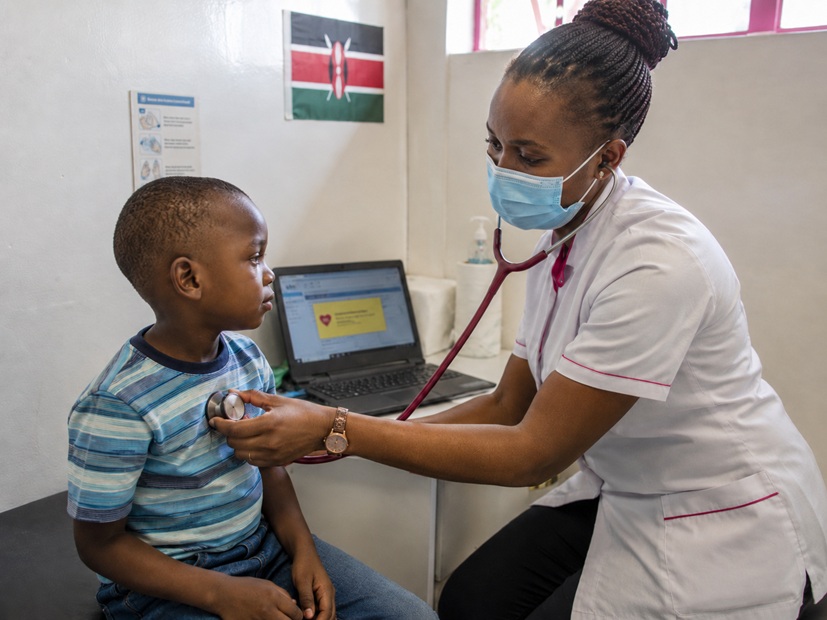
A 4-month-old boy comes into the clinic with a fever and a stuffy nose. (Medic) Vyonne Njeri thinks it's just a cold. Then a yellow box pops up on her computer telling her to check his heart — because his heart rate is elevated. Njeri is a registered clinical officer in Nairobi, Kenya; she sees patients on her own like a nurse practitioner. When she listens with a stethoscope she hears a whoosh — a sign that the infant could have a congenital heart defect.
"That's something I would have missed on any other day," Njeri says of the visit a few months ago. "That child would have just gone home." She credits an AI tool that double checks her work for helping her.
I don’t know about you – but that caught my attention. With the (justified) negative attention AI has been getting, it’s good to see that it has tangible benefits. But just how tangible and widespread is this benefit? Can it cause NEW problems with underserved populations?What can be done to increase the opportunities and reduce the threats?
The NPR story describes AI Consult, a GPT-4o-based clinical decision-support tool tested at 16 primary-care clinics in Kenya. You saw the extract above about the child with a congenital heart defect which would’ve been missed without AI Consult.
The underlying randomized trial involved 9,691 patients and 103 clinical officers. The AI system was found to be safe, but it did not produce a statistically significant reduction in treatment failure within 14 days. The researchers concluded that any patient-level benefit was probably modest, at least as measured in this trial. However, if you were the parents of that child, you care less about how modest was the improvement and more about the fact that there WAS an improvement.The study (done by PATH, see below, and funded by the Gates Foundation) also showed (as most do) that to be statistically significant, more study is needed. The cost for the system was about 4 cents per patient.
From an OOBV (output, outcome, benefit, value) perspective – the style of value-based project leadership that I preach:
- The output was better clinical decision support.
- The expected outcome was better diagnosis and treatment.
- The desired benefit was healthier patients.
- The larger value proposition was more equitable access to quality healthcare.
That is the sort of
progression project leaders should be measuring in any project.
Broader StudyPATH is evaluating LLM-assisted clinical support not only in Kenya but also in Nigeria and Rwanda. Its work explicitly addresses the limited evidence available concerning the safety, appropriateness, and effectiveness of these tools in African primary healthcare.
A pilot
project like the one in Kenya proves that a technology can operate. A
program of coordinated trials such as PATH is initiating, is needed to establish whether it can create sustainable value.
The ThreatsMy research showed that unfortunately, there are areas in which AI can be a
negative in terms of underserved populations in two ways.
1. Performance inequality: the tool works less accurately for certain populations.
2. Access inequality: the communities that could benefit most receive the technology last—or not at all.
These are repairable problems solved by reducing bias and providing better, more representative data to AI systems and assuring that there is equity in deploying AI systems worldwide – both initiatives in which (in my opinion) project leaders should play key roles.
Additional research and cases:Autonomous AI for diabetic-eye screening“Autonomous artificial intelligence for diabetic eye disease increases access and health equity in underserved populations”
The study specifically examined how autonomous AI screening for diabetic eye disease could increase access and improve equity in underserved populations.
This supports an important sustainability principle:
The value of AI may be greatest not where doctors are plentiful, but where expertise is scarce, distant, or unaffordable. Source:
Autonomous artificial intelligence for diabetic eye disease increases access and health equity in underserved populationsAI and unexplained pain disparitiesResearchers used deep learning to analyze knee X-rays and better account for pain experienced by underserved patients. Conventional radiographic measures did not fully explain the greater pain reported by some disadvantaged populations; the AI-derived measure accounted for more of that disparity.
This example broadens the story beyond access. AI may also challenge clinical measures that have historically failed to represent certain patients’ lived experiences.
That provides a powerful “People” question:
What if the problem is not that patients’ symptoms are inexplicable, but that the measurement system was never designed to see them? Source:
An algorithmic approach to reducing unexplained pain disparities in underserved populations | Nature MedicineMulti-disease screening through an eye scanA recently reported AI system analyzes retinal images to screen for conditions including diabetes, hypertension, high cholesterol, osteoporosis, gout, and thyroid disease. Because it requires a relatively basic fundus camera, researchers see potential applications in primary-care offices, pharmacies, mobile clinics, and remote communities.
This is a good example of healthcare infrastructure being redesigned around accessible technology. Source:
AI analyses of eye scans can detect diseases like diabetes, osteoporosis and thyroid disease in secondsFrom a project perspective,
the innovation is not merely the algorithm. It only comes to life with project leadership, which includes:
- Being the project advocate and attaining funding and sponsorship
- Locating affordable scanning equipment;
- Training local operators;
- Providing reliable referral pathways;
- Assuring patient follow-up;
- Applying data governance;
Without those elements, a highly accurate screening model produces interesting information but not sustainable healthcare value.
PATH (originally Program for Appropriate Technology in Health) is a global nonprofit public-health organization, started in 1977 that works to make healthcare more accessible, particularly in low-resource and underserved communities. It operates in more than 70 countries and partners with governments, healthcare providers, researchers, businesses, and community organizations.
Its work includes:
- developing affordable vaccines, diagnostic tools, and medical devices;
- strengthening healthcare systems and frontline services;
- supporting maternal and child health, malaria, tuberculosis, HIV, and other disease programs;
- using digital health, data, and AI to expand access to care;
- helping governments turn promising innovations into scalable, sustainable health programs.
Learn more – and support PATH at https://path.org
Posted
by
Richard Maltzman
on: July 23, 2026 11:14 AM |
Permalink
Comments (1)
Please login or join to subscribe to this item
This is an exceptional example of value-based project leadership. As project managers, we often get caught up in tracking 'outputs' (deploying the AI tool), but this case study perfectly demonstrates why we must focus on 'value' (equitable, sustainable health outcomes).
The real project management lesson here is that an algorithm is only as good as the infrastructure around it. True success requires managing the change, mitigating data biases, training local users, and ensuring reliable referral pathways-proving once again that project leadership is what turns technological potential into real-world benefits.
Please Login/Register to leave a comment.
|
Vote early and vote often.
- Al Capone
|




