DunEcology - Principle 1


|
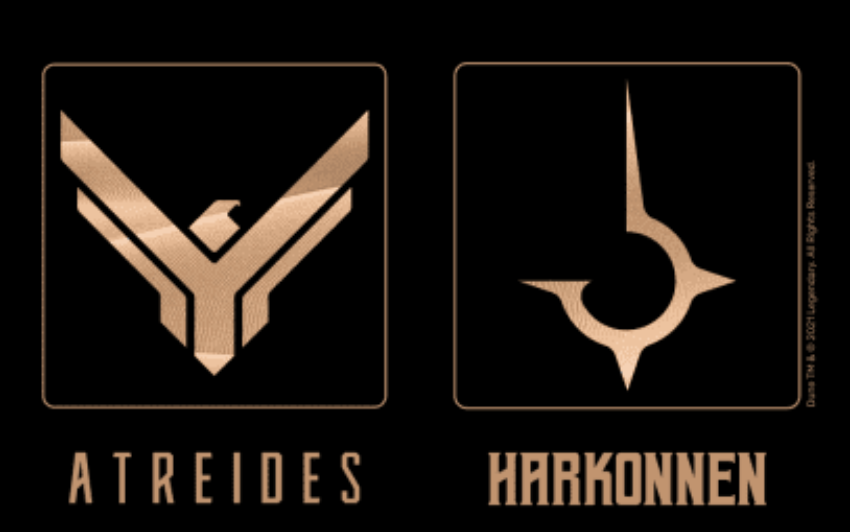
Photo Credit: Warner Bros. In the previously referenced story from Fast Company, we know that “Frank Herbert’s masterpiece also helped Afrofuturist novelist Octavia Butler imagine a future of conflict amid environmental catastrophe; it inspired Elon Musk to build SpaceX and Tesla and push humanity toward the stars and a greener future; and it’s hard not to see parallels in George Lucas’s Star Wars franchise, especially their fascination with desert planets and giant worms. And yet when Herbert sat down in 1963 to start writing Dune, he wasn’t thinking about how to leave Earth behind; he was thinking about how to save it.” This blog series now shifts to discuss how project managers can learn from some of the basic principles from Dune and strives to connect what we do as project managers that can make us project leaders if we apply these principles. Since this blog posting is a series, I am going to hold off on the many ecological aspects and how they connect with project sustainability thinking, and instead focus on a Dune Principle of project leadership. Don’t worry: the environmental themes are too important to leave out – they will be covered! Dune Principle 1: Servant Leadership and Empathy One of the most important themes of the book (and the series, and the movies) is the way that the House Harkonnen rule Dune (the planet Arrakis, where most of the story takes place), compared with the way that the House Atreides operates. For those unfamiliar with Dune, a House is “a dynastic seat of power, sometimes limited to a world and sometimes spanning several worlds. Numerous Houses existed within the imperial hierarchy, and collectively they formed the Landsraad” What’s a Landsraad? It’s basically a council of landowners, except that ‘land” could mean one or more entire planets. The symbols (thanks to Dream Artworks) of the two Houses are shown below.
So how did the two Houses’ leadership styles differ? Ask the Fremen. Or, note the way that the Harkonnens are portrayed in the film. Well, in short, one could say that House Harkonnen used Command and Control, and House Atreides embraced Engage and and Empower – at least in general. Things do change in battle. This whole dynamic is actually the subtitle of good friend Gordon Mackay’s excellent book which I use in my course, Project Communications and Leadership at Boston University. You can find the book here, and as you read it, think of those two Houses. I’ll summarize a little bit below. In his book, Gordon says: “…‘project management’ is, increasingly, a contradiction in terms. Managerial ‘command and control’ does not inspire or, engage, nor does it foster the synergy of collaborative working. The function of delivery to cost, time, quality and scope remains. But, the function in delivery is to adopt a form fit for purpose in increasingly VUCA external and internal delivery environments. This chapter expands on the new function of project leadership – what it seeks to achieve as underpinned by relevant contemporary theory. It is followed by a structured approach for the aspirant and unctiong project leader to apply, in order to establish effective project leadership. The function of project leadership is to empower and facilitate the realisation of individual and team potential, and the emergence of collaborative team synergy. Just as the function and form of ‘stakeholder management’ shifts towards ‘stakeholder engagement’ , so too, now, successful project delivery requires a move from ‘project management ’ to a function and congruent form resulting in a fully ‘engaged’, collaborative team. What ‘engages’ the team, and all project stakeholders? Gordon has been a guest in my courses several times. A further example of his wisdom can be found in this one-hour video: This applies, of course, to project leadership, and it has not gone unnoticed in the world of overall HR and leadership. In fact, I found an excellent blog post which covers the Houses as well as the Bene Gesserit by Luis Querido, right here. Here’s Luis’ summary of the two Houses: “House Atreides exemplifies ethical leadership, characterized by integrity, honor, and a profound sense of justice. Duke Leto Atreides, the patriarch, is revered not only for his strategic acumen but also for his compassionate and principled approach to governance. He places a high value on loyalty, trust, and the well-being of his people, which in turn inspires deep loyalty from his subjects and followers. This leadership style underlines the importance of ethical considerations in decision-making and the long-term benefits of fostering a positive organizational culture.” House Harkonnen represents authoritarian leadership, marked by power, manipulation, and greed. Baron Vladimir Harkonnen’s rule is defined by fear, exploitation, and treachery, focusing on the accumulation of power and wealth at the expense of others. This approach highlights the dangers of leadership that prioritizes personal gain over the collective good, often leading to resentment, rebellion, and eventual downfall. The main character of Dune’s initial trilogy, Paul Atreides, spends much of his time building trust with the Fremen, through logic, authenticity, and empathy. NOTE: those very specific words come from this foundational article on trust-building, team-building, and communications-strengthening from the Harvard Business Review. It is in this way that he is able to build an alliance that will enable House Harkonnen to generate (spoiler alert!) an unlikely victory over House Harkonnen. Can your leadership style evolve from Command and Control to Engage and Empower? Watch the movie (or read the books) and consider if there is some learning there. I assert that there is. |

DunEcology - Part 0
Categories:
dune,
arrakis,
desert,
planet,
terraform,
construction 5.0,
frank herbert,
science-fiction,
sci-fi,
cli-fi
Categories: dune, arrakis, desert, planet, terraform, construction 5.0, frank herbert, science-fiction, sci-fi, cli-fi
|
In this first “teaser” post, I want to address and explore the connections between sustainability (or at least the environmental pillar of the Triple Bottom Line) and the wildly popular movie franchise Dune. Or, more accurately, I want to make readers aware of the connection between Frank Herbert’s novel from the novel first serialized in 1963 – before many of you were born, and perhaps before many of your parents were born! At that time, ecology was not really a ‘thing’. Gas (petrol) cost US$0.30 per gallon. The PMBOK(R) Guide didn't mention sustainability. I can guarantee that - because there was no PMBOK(R) Guide yet. Indeed, it would be 6 years until the Project Management Institute was founded. I would like to give you the background of the novel (and now the latest rendition of the film) so that you can better appreciate the story and better connect it to projects, programs, and portfolios, and better connect your project work to the realm of sustainability. By the way, for those of you who think it's silly to take a science fiction book and apply it to real-world project management on Earth, have a look at this extract from Science News. Herbert's imagination is scientifically plausible: "Not only did Herbert create a rich fantasy world, he also built a plausible planet, says Alexander Farnsworth, a climate modeler at the University of Bristol in England. A few years ago, Farnsworth and colleagues made a computer simulation of the climate on Arrakis. People could live on the desert planet, the team concluded, but Herbert probably should have relocated his cities closer to the equator than the poles." So, what could ornithopters, and the behaviors, beliefs, and technologies of a people called the Fremen have to do with projects – or sustainability? Quite a bit. Rather than provide a synopsis here, I advise you read this very short summary of the book from Brittanica (WARNING: there are some spoilers here!). Next, consider some of the concepts conveyed by Herbert: planetology, the idea of a Butlerian Jihad, to expunge humanity of Artificial Intelligence (AI), and the resulting creation of human computers (Mentats) who replace all computing devices, the development of clever technologies such as the stillsuit to preserve water in desert conditions, the creation of a body shield impervious to any (fast) motions, even the concept of ‘terraforming’ which could be considered an extreme application of Construction 5.0… all of these could be considered portfolios of projects and programs – and most of them were triggered by ecological changes on the planets in Herbert’s universe. For now, have a look at this extract from an excellent article from Salon which precedes the release of the latest movie series by about 10 years: Gerry Canavan, assistant professor of English at Marquette University and co-author of "Green Planets: Science Fiction and Ecology," sums up the novel's legacy well when he writes in an email interview, "'Dune' is really a turning point for science fiction that takes ecology seriously as a concept." Frank Herbert's son would be among the first to agree with that assessment. In "Dreamer of Dune," his 2003 biography of his father, Brian Herbert recounted many instances that demonstrated his father's interest in environmental issues, including his backyard experiments with solar and wind power. In a telephone interview from his home near Seattle, the younger Herbert said, "In 1970, on the First Earth Day, Frank Herbert spoke to 30,000 people in Philadelphia and he told them, 'I don't want to be in the position of telling my grandchildren, 'I'm sorry, there's no more Earth left for you. We've used it all up.'" As I mentioned, this is only a ‘teaser’ post. I haven’t even mentioned Dune’s giant Sandworms and the economic impact of Spice yet. But that’s coming, and there are some elements of that that fall directly into that intersection between project leadership and sustainability. So have your crysknife ready as we’ll soon slice and dice these concepts together!
|