Trouble in Tin City


|
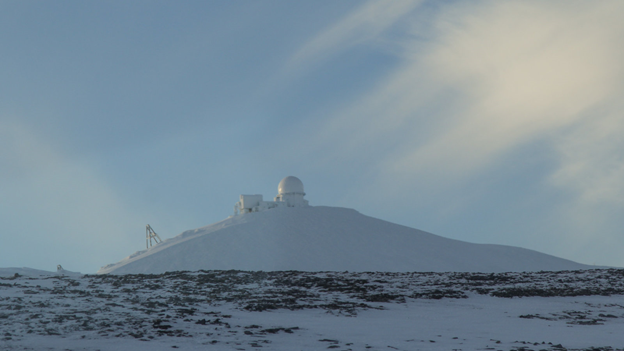
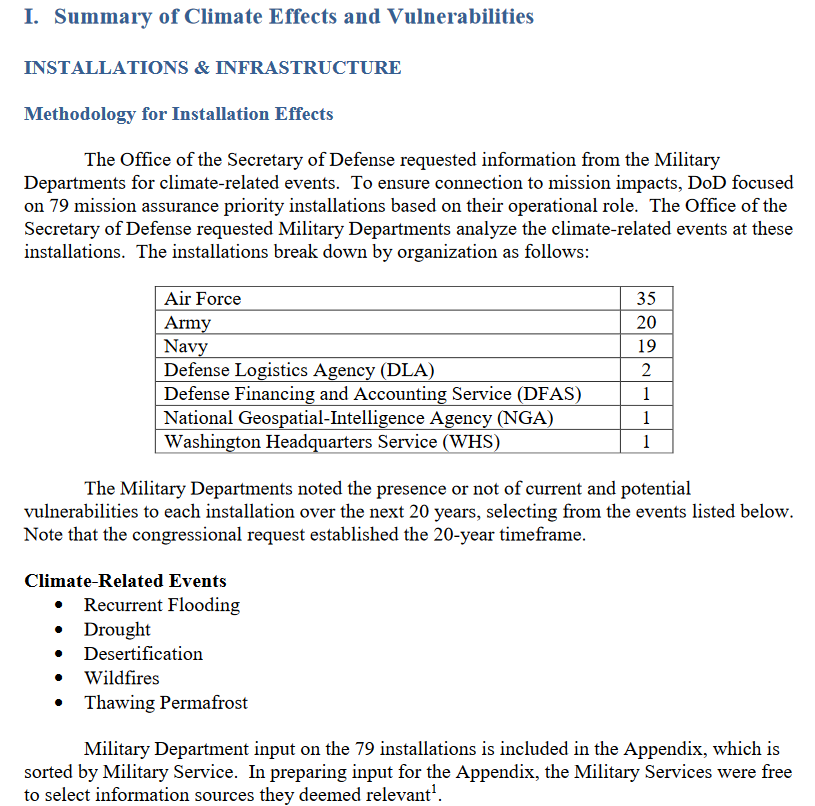
This is the first of what will be at least two posts on the effects of climate change on US Department of Defense installations, based on publicly-released documents from the present administration’s own departments. The focus will be on projects launched because of climate change, recognition of climate change as a driver of projects, and the need for project managers to be well-informed of the facts related to climate change and the facts related to how governments react to the effects of climate change. One point of this series is that regardless of your view of climate change – whether you believe it is happening or not, and if so, what is causing it – is actually much less important than understanding what governments are doing about it regardless, and what that may mean for projects and project managers. In this first part, I’ll cover the issue in general and illustrate this with one example of a these effects, and the possibilities for project managers – the example being in Tin City Alaska. I’ll follow up with a story about a wall, but not one on the border with Mexico, one pretty much on the border with Russia. The story that caught my attention was a very short podcast from NPR entitled “How Climate Change Is Affecting Alaska's Military Radar Stations” which you can listen to right here: The story is that the changing climate poses a threat to the radar installations. 3 out of 15 are facing situations in which shifting ice, based on more-rapidly-than-expected changes in ocean temperatures and sea-level rise, as well as shifts in the way sea ice blocks (or does not block) the approaches of storms, are debilitating those stations, with the other 12 possibly next (excuse this pun) on the radar. You can read more about the Tin City story in this article: Here’s a sample extract from the story if you don’t care to listen to the podcast: Running these radar stations has never been easy, but now, it’s getting even less manageable, as coastal erosion nibbles away the land around vital infrastructure supporting the sites. Col. Lemon is the Air Force commander in charge of remote radar sites stretching from the Pacific to the high Arctic. “I’m a military officer, so global warming, I dunno,” Col. Lemon said with a shrug during a briefing about the sites. The admission aimed at humility, denying that in his position he had the authority to offer grand scientific explanations. But for almost a decade, the Defense Department has acknowledged that a rapidly warming climate poses a threat to the military’s installations and operations around the globe, and they’ve initiated plans to cope with it. “Climate change is happening and there is erosion going on on the North Slope of Alaska. That’s a fact,” Lemon said. “I don’t know what’s causing it, but we have to do something about it, because it’s impacting our mission.” So far, three radar stations, all of them in the North Slope, are grappling with climate-driven threats to infrastructure. The installation at Tin City is not immediately imperiled by this issue. However, during our visit in mid-November, the Bering Strait, easily visible from throughout the lower camp, was an uninterrupted dark blue, the water completely free of sea ice. Much of the motivation for the new projects to be discussed in this series comes from a newly-released 2019 report from the US Department of Defense. Below is the cover, the Background, and a paragraph that shows the main areas of climate-change-related concern from this report from the Trump Administration’s own Department of Defense.
In the next post, I’ll discuss the US$47M seawall project under construction at Cape Lisburne, Alaska. |