
Can we reverse climate change? Should we?


|
Image credit A. Goodson https://www.agoodson.com/andy-potts-illustrating-complex-scientific-concepts-for-bbc-focus/ In the past few posts (four of them in the series Forest for the Trees), I discussed low-tech ways that we can assist nature in fixing climate change. Most of these posts dealt with ways to prevent the loss of trees – for example, doing a better job of policing illegal logging - as well as an a better understanding of – and use of – symbiosis between tree roots and mycorrhiza. In this brief post, I go to the other extreme and discuss much higher-tech, proactive steps that some scientists are considering to take action on climate change. Some of this may be of higher urgency based on a recent report. https://docs.wixstatic.com/ugd/148cb0_a1406e0143ac4c469196d3003bc1e687.pdf
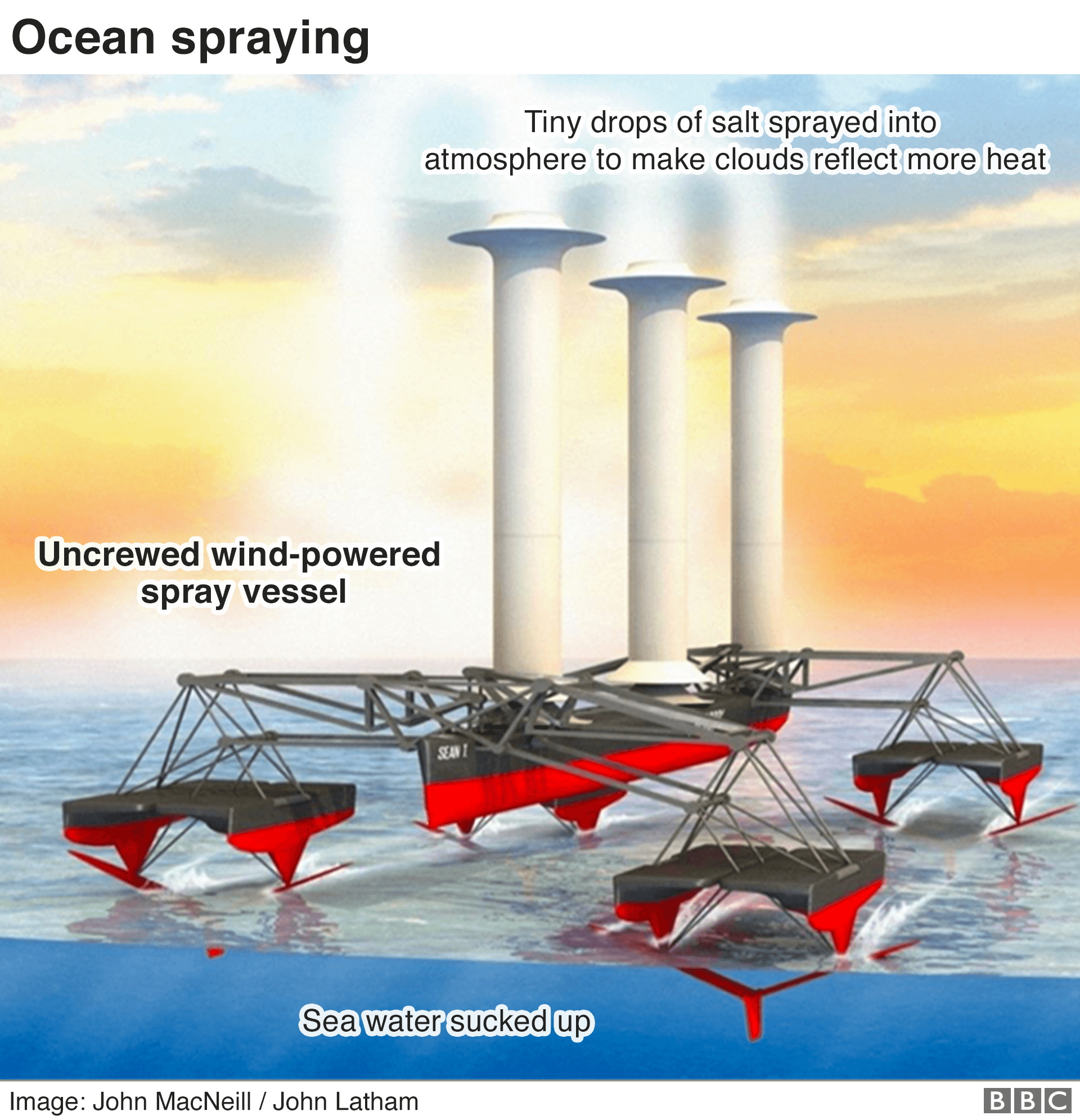
If you are thinking this is from a radical organization such as Greenpeace, you’re quite wrong. One of the authors, Ian Dunlop, was senior Executive of Royal Dutch Shell for many years and chaired the Australian Coal Associations (1987-88). See his profile here: https://www.clubofrome.org/member/ian-t-dunlop/ I’ll likely blog about this report – and the reaction to it - in June so stay tuned. But now, back to the idea of fixing climate change. This article on the BBC News homepage, and this one from TechCrunch also caught my attention. Below is a good abstract from the BBC News story: Scientists in Cambridge plan to set up a research centre to develop new ways to repair the Earth's climate. It will investigate radical approaches such as refreezing the Earth's poles and removing CO2 from the atmosphere. The centre is being created because of fears that current approaches will not on their own stop dangerous and irreversible damage to the planet. The initiative is the first of its kind in the world and could lead to dramatic reductions in carbon emissions. The to-be-established “Centre for Climate Repair” – the establishment of which certainly constitutes a project, one which immediately drew detractors. BusinessGreen magazine says: “some environmental campaigners remain fiercely opposed to the concept and today attacked the new centre's focus on unproven geoengineering fixes, arguing they distract from the urgent necessity to enact the social, technological, and political change necessary to cut carbon emissions.” Greenpeace is indeed one of those voices. To read their objections to the ideas (and even the rationale), go here. That said, let’s have a look at what this new Centre would be researching as programs and projects. I’m going to mainly do this with pictures (credit to the BBC News site referenced above, of course), because, as you know, a picture is worth a whole bunch of words. Refreezing the poles The idea is to pump seawater up to tall masts through very fine nozzles (creating a mist) using purpose-built ‘drone’ ships This misting action produces tiny particles of salt which, when they reach the clouds, ‘strengthens’ the cloud cover, making it more reflective, and increasing its ability to cool the areas below them.
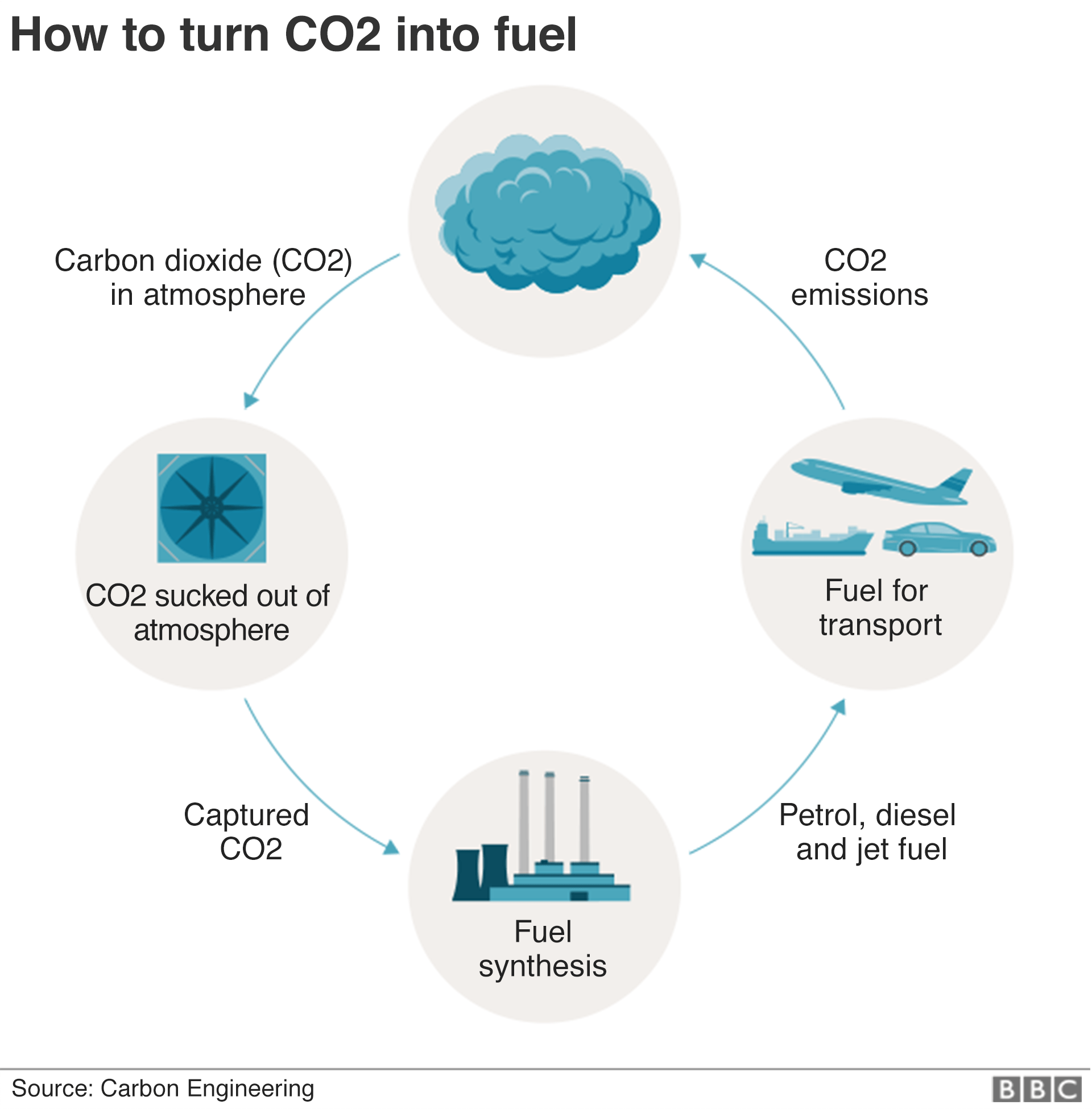
Recycling CO2 This is mainly about CCS (Carbon Capture and Storage), a topic on which I’ve blogged previously.
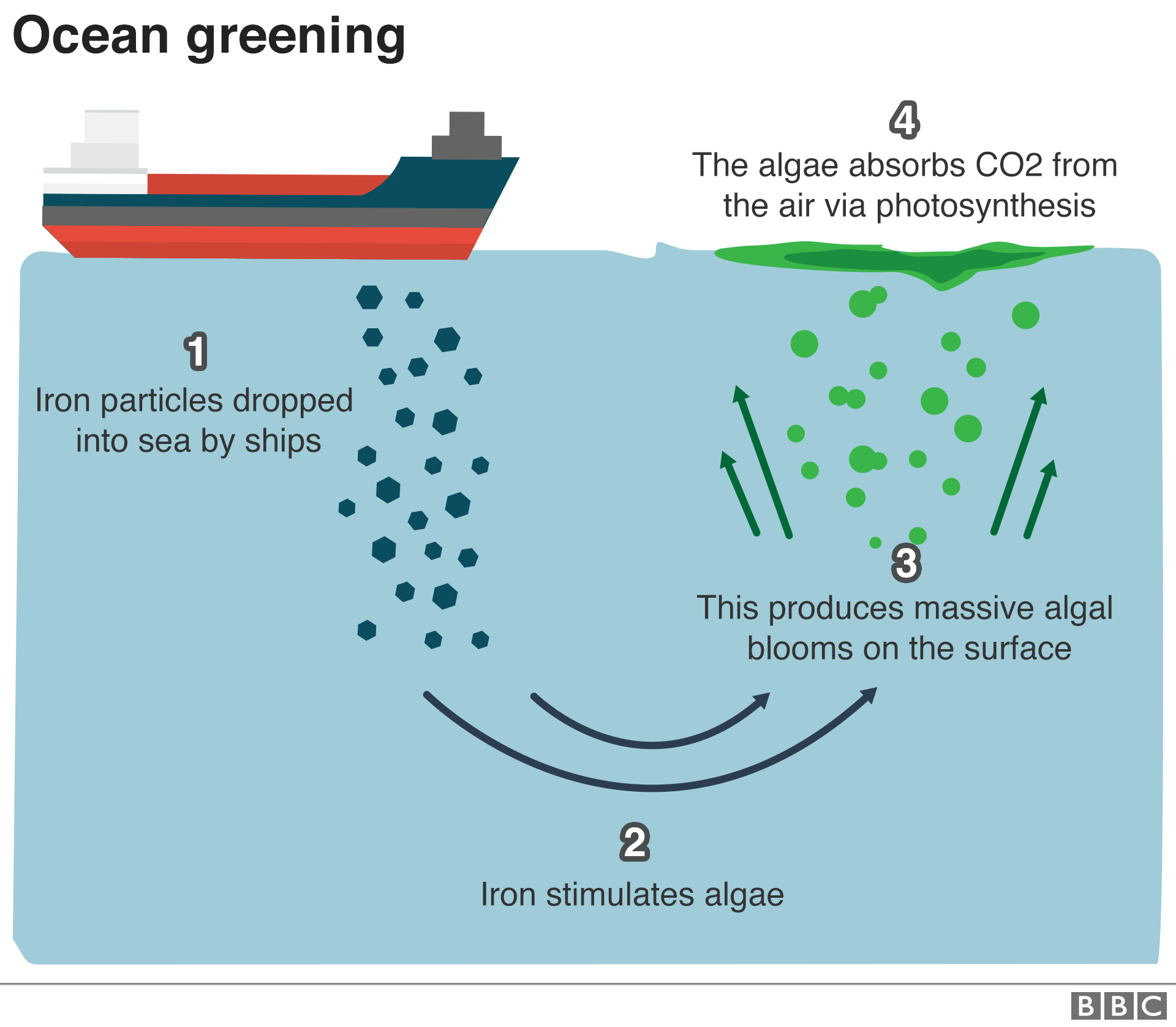
Ocean Greening This is mainly about fertilizing the sea with iron salts (rusts) which promote the growth of plankton.
Your thoughts? If you put your project management hat on, and think about secondary risk. Do these activities pose a threat, in terms of what they may do to the environment beyond the intended result? I personally think there is nothing wrong with researching these ideas (with secondary risk in mind) and in parallel looking at ways to reduce the production of greenhouse gasses and pollutants. What do you think? |


Sea-condary Risks
|
Photo from Del Mar Times This is a story about risk response, secondary risk, and stakeholder management. These are topics covered in the PMBOK® Guide, 6th Edition. As project managers we know (from that very same PMBOK® Guide) that there are positive risks (opportunities) and negative risks (threats). This is very much about a threat – the very real threat of sea-level rise. This is a big deal for our planet mainly because of the percentage of large cities and populations in general that live near coastlines. But one of the places where this is a noticeable big deal because of the value of the properties is Del Mar, California. Here, a duplex (a half of a house) goes for an average of $1.7 million. One of the possible responses to the threat is something called “managed retreat”. The people of Del Mar, however, thought there was a significant secondary risk if that risk response was put in place. Why the secondary risk? The moment the concept of leaving homes is even brought up, the prices of homes will drop, because that is seen as an admission that this land is simply not as valuable – in fact, may not even be land by the end of the century. Current predictions are for a 1-2 foot rise by 2050 and a 5+ foot rise by the end of the century, which would inundate the Del Mar area with sea water, , according to a recent climate report by the U.S. government. Yes, the government overseen by Donald Trump. That US government. Of course, the Trump administration has chosen to tout that the report is exaggerated. But that’s not the issue here. Whatever your thoughts on that or on climate change in general, the project planning that comes up involves thinking about risk response and secondary risks. As for that multi-million dollar duplex I mentioned earlier? If indeed the forecasts are true, you’d end up with a $1.7Million dollar deep-sea-plex, not a duplex. There is an excellent NPR (US National Public Radio) story on this - listen to the NPR (National Public Radio) story here: Here is a link to the page with the NPR story:
Let’s look a little more into the risk response… How did the people of Del Mar react? Retreat, was at least at first proposed… and look at the reaction: The blow-back, though, was almost immediate. Realtors' groups spoke out against the plan. Homeowners were hysterical. "What we learned from our community is that even the mere discussion of managed retreat, in the minds of some, completely devalues their property," says Amanda Lee, Del Mar's senior city planner. The concern was that if the city formalized a plan that included retreat, it would be harder for property-owners to get loans or sell their land. Hearing those concerns, "we started crossing out managed retreat and replacing it with other words like 'not feasible here in Del Mar'," says Terry Gaasterland, who chaired the city's Sea Level Rise Committee.
The city council even went as far as to pass a resolution banning future city councils from planning for retreat. The town was reacting to the California Coastal Sea Level Rise Policy Guidance of November 2018, see this link: California Coastal Commission Sea Level Rise Policy Guidance Final Adopted Science Update | November 7, 2018 https://documents.coastal.ca.gov/assets/slr/guidance/2018/7_Ch7_2018AdoptedSLRGuidanceUpdate.pdf
See City of Del Mar’s report: http://www.delmar.ca.us/DocumentCenter/View/3321/Chapter-1-2017-11-21-CLEAN?bidId= The Adaptation Plan includes the following components and adaptation measures to reduce risks associated with future sea-level rise. Public Facilities, Infrastructure and Beaches: high priority sea-level rise adaptation measures for the City to begin planning for now include: ○ Relocating the City of Del Mar Fire Station ○ Relocating the City of Del Mar Public Works Yard ○ Flood-proofing the sewer lift station along San Dieguito Drive ○ Beach sand retention, replenishment, and management San Dieguito Lagoon wetland adaptation: ○ Conversion of vegetated wetland to mudflat and open water habitats with sea-level rise could be partially accommodated and offset by allowing and facilitating the conversion of higher elevation area to tidal wetland habitat, such as the tern nesting island, adjacent upland habitats, and upstream riparian habitats. ○ Placement of sediment to raise the elevation of the wetlands (e.g., “spraying” material dredged from the River channel as a thin layer of sediment across the vegetated marshplain) has the potential to reduce or slow wetland habitat conversion. ○ Wetland expansion/restoration can create new wetlands with higher elevation areas that are more resilient to sea-level rise; wetland restoration is compatible with partial retreat and construction of “living” levees to reduce flood risks along the River. San Dieguito River flooding adaptation: ○ San Dieguito River channel dredging and Lake Hodges reservoir management have potential to reduce river flood risks in the near- to mid-term. ○ A hybrid approach with restoration of developed area adjacent to the River to expand the San Dieguito Lagoon wetland floodplain and construction of new levees between the wetlands and development can provide longer-term flood risk reduction; “living” levees can be designed to incorporate restored wetland transition and upland habitats that improve wetland resiliency to sea-level rise. ○ If Lake Hodges reservoir management is not possible, the timeframe for other measures may be sooner. Bluff/beach erosion adaptation: ○ Beach nourishment and sand retention strategies as well as installation of access paths down the bluffs (e.g., stairways) in conjunction with authorized pedestrian crossings at railroad under- or over-passes may provide some near-term reduction in bluff erosion; investigating whether landscape irrigation in City neighborhoods east of the bluffs is contributing increased groundwater flow and associated erosion and the potential to reduce irrigation affects may also be beneficial. ○ Relocating the LOSSAN railroad will allow for continued landward bluff erosion, and thereby maintain a beach below the bluff and provide access along the bluff top. ○ Removal of bluff top sewer lines, drainage ditches, and fiber optic cables will eventually be required as the bluff continues to recede inland. Beach coastal (ocean) flooding and beach erosion adaptation: ○ Beach and dune nourishment and sand retention strategies may provide near-term protection, but their effectiveness is likely to decrease over time with higher amounts and rates of sea-level rise. ○ Redevelopment policies and regulations can be developed for the LCP Amendment to make feasible the option of elevating structures. ○ Sand retention measures such as groins or artificial reef may help maintain the beach, but would likely introduce need for additional mitigation. ○ Raising/improving the existing sea wall and revetments (i.e., “holding the line”) would reduce flood risks with sea-level rise, but without accompanying beach nourishment may lead to beach loss over time. Beach loss adjacent to sea walls and revetments could lead to conflicts with Coastal Act prohibitions against protection in perpetuity. ○ Raising City infrastructure including buildings, utilities, and roads will likely be required to accommodate the increase in flood risk with sea-level rise.
The California Coastal Commission, for its part, isn't requiring cities to plan for managed retreat. Madeline Cavalieri, the coastal planner for the commission, says there's no one-size-fits-all solution for dealing with sea-level rise; different cities need to consider a combination of different strategies.
As you can see, this is all very relevant to project management. Being familiar with the stakeholders, their reaction to risk response, and the new risks introduced by risk response – these are all fundamental to doing a great job as a project leader. |

Secondary Risk in the Playground
| Photo Credit: Hanna Rosin Legal disclaimer: In this post it may seem like some of the stakeholders, perhaps even your humble author, have a nonchalant attitude towards children’s injuries. No children were hurt in the writing of this blog post, and as it happens, the author has a very non-nonchalant attitude to such injuries. Blog disclaimer: This post is a little less about sustainability than usual but it’s still very much about long-term thinking and it’s definitely related to major project management topics. Disclaimer disclaimer: There are no further disclaimers. Those of you who have been to a playground, lately, at least in the USA, have most likely noticed that everything is super-safe. Rounded corners, padded flooring, not a 90-degree angle in sight. As a parent, this makes you feel proud, good, calm, and less worried. Right? Things like putting down layers of rubberized mulch, super bouncy floors, and round, smooth edges -these are all example of a risk response we call mitigation – reducing the likelihood of a threat (in this case injury to a child). However, as good PMs we also recognize that there is something called secondary risk – new risk introduced by a risk response. But is there a secondary risk HERE? That is, do these risk responses to protect our kids from any possible threat, trigger any new risks? And what in the world would those risks be? Well, think a bit about it. Think of the threat of lost learning opportunities. Think of the way this may be insulating kids from the way the world really works. Is it possible that all of these safety measures are preventing kids from learning (albeit the ‘hard way’) about the world around them, the way things really work? There’s some very prevalent thinking that says something to the effect of: “Beware The Padded Floor”. For example, have a look at this extract from an article called The Overprotected Kid in The Atlantic magazine, discussing an adventure playground in North Wales called “The Land” at which from time to time there are fires: If a 10-year-old lit a fire at an American playground, someone would call the police and the kid would be taken for counseling. At the Land, spontaneous fires are a frequent occurrence. The park is staffed by professionally trained “playworkers,” who keep a close eye on the kids but don’t intervene all that much. Claire Griffiths, the manager of the Land, describes her job as “loitering with intent.” Although the playworkers almost never stop the kids from what they’re doing, before the playground had even opened they’d filled binders with “risk benefits assessments” for nearly every activity. (In the two years since it opened, no one has been injured outside of the occasional scraped knee.) Here’s the list of benefits for fire: “It can be a social experience to sit around with friends, make friends, to sing songs to dance around, to stare at, it can be a co-operative experience where everyone has jobs. It can be something to experiment with, to take risks, to test its properties, its heat, its power, to re-live our evolutionary past.” The risks? “Burns from fire or fire pit” and “children accidentally burning each other with flaming cardboard or wood.” In this case, the benefits win, because a playworker is always nearby, watching for impending accidents but otherwise letting the children figure out lessons about fire on their own. A more recent article in The New York Times delves into this even further, featuring a playground in a town in England with the very interesting name Shoeburyness. It describes playgrounds in this town as having removed the plastic playhouses with soft edges and introducing a mud pit, tire swings, logs and branches, and a workbench with hammers and saws (see photo).
Photo Credit: Andrew Testa, New York Times
And in London, says the article, Outside the Princess Diana Playground in Kensington Gardens in London, which attracts more than a million visitors a year, a placard informs parents that risks have been “intentionally provided, so that your child can develop an appreciation of risk in a controlled play environment rather than taking similar risks in an uncontrolled and unregulated wider world.” Amanda Spielman is the head of the UK Office for Standards in Education, Children's Services and Skills (Ofsted). Late last year, she announced that her agency’s inspectors would undergo training that will encompass the positive, as well as the negative, side of risk. She said the Ofsted agency plans to re-train its inspectors to recognize the “positive” side of risk. Humph. You could have just sent them to the PMBOK® Guide, Ms. Spielman! Finally, the article references a study (see cover below, linked to the PDF) that compared playgrounds in London to those in the US and reached these conclusions (pay attention in particular to #5): The U.S. seems to have reached ‘peak safety’. We have created a nation of overly expensive, homogeneously safe, and insidiously boring play spaces. Our injury rates demonstrate that these spaces have unintended consequences. In pursuit of fun, children are using play structures in unintended ways, falling on surfaces too expensive to maintain, and are not moving enough, becoming too weak to play without injuring themselves. To turn the tide, the solution is to follow London’s lead: 1. DESIGN FOR ALL AGES Both passive and active spaces are important, blur the lines between play and park. And don’t forget cafes and bathrooms! 2. PLAY EVERYWHERE Provide ‘play affordances’, such as boulders, logs, plants, and topography for inexpensive, but effective fun. 3. THINK OUTSIDE THE CATALOG All playgrounds should have the top five: grass, sand, climbing, swinging, and sliding. Water and loose parts are another plus. 4. PLAYGROUNDS ARE FOR PLAY Everything on a playground should be playable, including surfaces. Fun should be prioritized over safety and maintenance. 5. RISK IS A GOOD THING The best playgrounds look dangerous but are completely safe, offering ways to play based on skill level, strength, and bravery
Click on image for full "London Study of Playgrounds" report. I cannot leave you without at least one sustainability element here, and I found one, at least according to one commenter in a discussion about this topic. “Emily” says: “does anyone else think that ripping out the current playground equipment, because it’s “too safe,” after ripping out the previous generation of playground equipment, because it was “too dangerous,” is massively wasteful? Why not start with keeping the existing equipment (and bringing in some boards, hammers, nails, ropes, tires, et cetera, for “loose parts” play if desired), and just, giving kids more freedom in how they play? For example, right now, a lot of schools have rules against climbing up slides, hanging upside down from the monkey bars, sitting on top of the monkey bars, running on the playground equipment and/or in certain areas, doing cartwheels and handstands on the grass, et cetera. If those rules were reversed, even that would be a start.” Go Emily – think long-term!
|


Made in the Shade - Part II of II
Categories:
secondary risk
Categories: secondary risk
|
In part I we talked about lizards and their need for shade. In part II of Shady Deals, we will discuss an effort to provide shade for evaporating reservoirs by using (this is real) plastic balls partially filled with potable water. The other part of this shady article is also about shade, but rather than a desert environment, this is quite the opposite – it’s about shade and reservoirs and evaporation. The idea of this project is to prevent evaporation of water from reservoirs by using polyethylene balls. You can start this portion of the story by just watching this short video about the solution. If you want a little more on the Shade Balls, check out this video from CBS TV. And you can supplement it with this article from Bloomberg: (and this extract) These are not your average Chuck E. Cheese’s ball-pit numbers. They’re hermetically sealed, with water inside them as ballast, lest when the wind picks up “they’ll blow out, and you’ll be chasing them down the road,” says Sydney Chase, president of XavierC. You could drink the ballast—don’t want nonpotable water leaking into the reservoirs. Chase is a 30-year veteran of manufacturing who left a $300,000 job to start XavierC. She sold her house to raise the capital to seed the company. “Either I’m going to end up under an overpass, or this is going to take off,” she recalls thinking. And as much fun as there is to have with “shade balls,” the company was founded for two serious reasons. Learn more about the shade balls directly from the company’s web site: http://www.xavierc.net/ But as project managers we’re very aware – or should be – of secondary risk. That’s new risk (usually threat) that is added to the project’s objectives from a risk response. If we think of the shade balls as a risk response (which it is), there are a bunch of secondary risks to be considered with the shade balls, including leaching of the plastics into the water, and the acceleration of the growth of bacteria. For the first issue – plastics leaching into the water, we suggest you read this story from Grist, from which we provide a key extract below: The black additive [in the balls] is carbon black, which isn’t supposed to be harmful when it leaches, which is great. Yet even with this precaution, most plastics leach endocrine disrupting chemicals that interfere with animal and human hormone systems (Yang 2011). Some endocrine disruptors, like bisphenol A (BPA), break down in water after a few weeks or months. Some don’t. We don’t know what chemicals are in the Shade Balls, but they will leach, especially because the balls are in the hot sun and are meant to be left in the water over a long period (reports say 10 years). Most water treatment systems don’t take these kinds of chemicals out of the water. And with regards to the bacteria, this extract from the Daily Mail is informative: It was billed as an innovative solution to four years of record-breaking drought. But it seems the 96 million 'shade balls' that California officials released on to the Los Angeles Reservoir to stop evaporation may cause even more problems. According to hydrologists, the black plastic spheres could simply fuel the amount of bacteria in the water, ultimately heading to taps and showers in people's homes. 'The black spheres form a thermal blanket which provides new surface area to breed bacteria,' Soni Pradhanang, a professor of Water Quality at the University of Rhode Island told Daily Mail Online. These two stories are worth reading if you want to build your skills in thinking fairly, even-handedly, and importantly about secondary risk. The plastic secondary risk: http://grist.org/article/why-shade-balls-arent-such-a-great-idea-after-all/ The bacterial secondary risk: We are certainly not dismissing the idea of the shade balls and applaud the innovative solution they bring. We need to see how this story plays out. But in the meantime, there’s a real learning opportunity for project managers in the concept of secondary risk. |



