That old report card of yours...


|
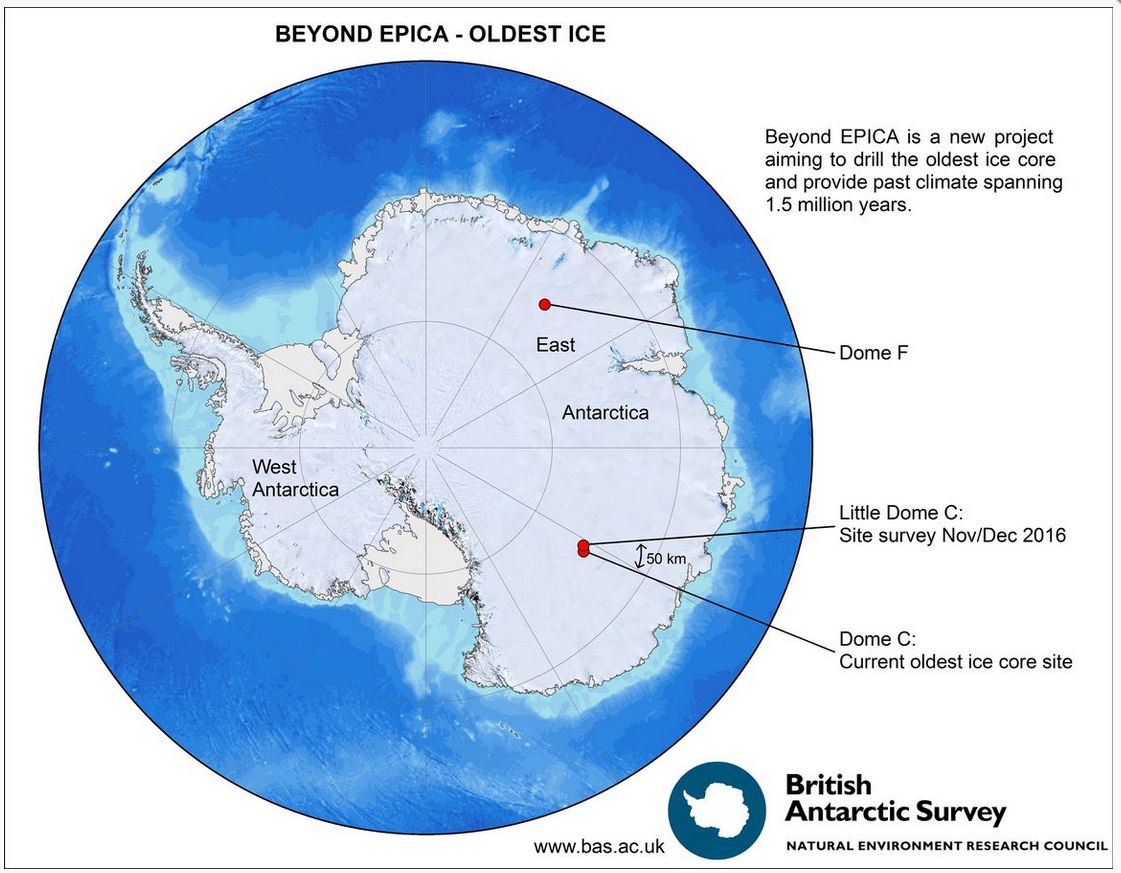
Remember that report card you didn’t want your parents to see? And by “too see” I mean that your best grades were “two Cs”? Well, forget about that – this post will make your old report card pale in comparison. As reported in Nature’s 28-March-2019 issue, a project called “Beyond EPICA” is slated to start in June of this year and it is going to extract a 1.5-million-year-old report card from the ice below a section of Antarctica called Dome C (see map below in case you want to visit).
EPICA stands for European Project for Ice Coring in Antarctica. This is a perfect example of a ‘green-by-definition’ project as we describe in our book Green Project Management.
The idea here is to vastly improve our understanding of our climate by getting an undisturbed record (report card!) of our Earth’s ancient atmosphere. The ice that has accumulated over millennia contains samples of the world’s atmosphere at known dates. This will help us get a more accurate picture of how climate has changed in the past, allowing us to make scientifically accurate predictions of how climate changes match up with atmospheric levels of greenhouse gasses.
From the Beyond EPICA website: The Beyond EPICA – Oldest Ice (BE-OI) consortium and its international partners unite a globally unique concentration of scientific expertise and infrastructure for ice-core investigations. BE-OI is an EU Coordination and Support Action (CSA). It delivers the technical, scientific and financial basis for a comprehensive plan to retrieve an ice core up to 1.5 million years old in a future project during the Beyond EPICA – Drilling Phase. This would be an important contribution for the future exploration of Antarctica and promises unique insights about climate and the global carbon fluxes. This knowledge will improve future prognoses of climate development with solid quantitative data and will allow establishing more targeted strategies, to cope with the societal challenges of global change. This project is following the discipline of project management quite strikingly well (excuse the pun). They have set clear objectives:
They have broken the project in to work packages (in other words they have created a WBS) as follows. The workpackages of BE-OI combine the different methodological aspects and the consecutive implementation based on the two key regions of interest. The first three workpackages Logistic support and coordination Fast drilling tools to qualify sites, age validation cover the objective to "Prepare for site selection". They will consider the acquisition, analysis and evaluation of new data to create the pre-conditions for site selection. The worckpages Site selection, and science and management plans Cost forecasting and financial frameworks The international and cross-disciplinary context are directed towards the planning and implementation of the BE-Drilling Phase.
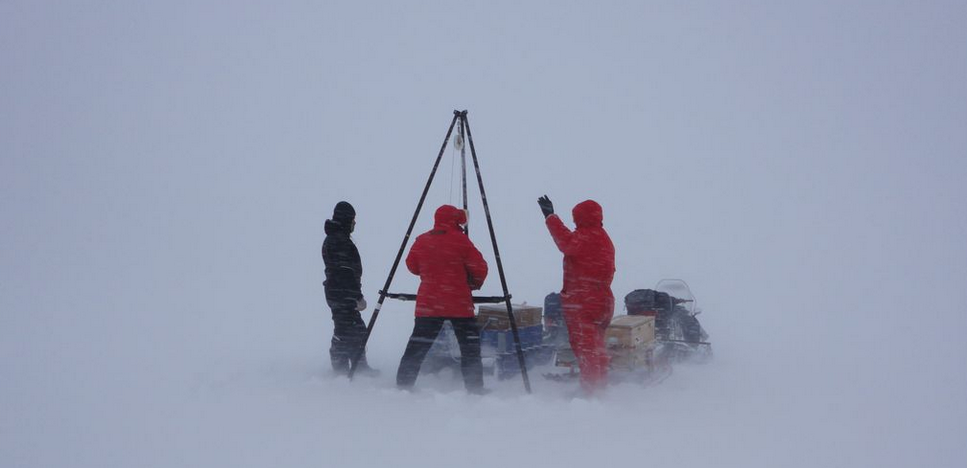
Here's a video that shows the sort of project environment in which EPICA is taking place: This project team will have a press conference on 9-April (the day after this post), so you can get the latest directly from the source! Beyond EPICA will present the decision where to drill for 1.5 million year old ice at: EGU Press Conference https://www.egu.eu/gamedia/2019/press-conferences/#98 I’m going to tune in. Maybe it will help me forget about that bad, bad report card from long, long ago.
|


Trouble in Tin City
|
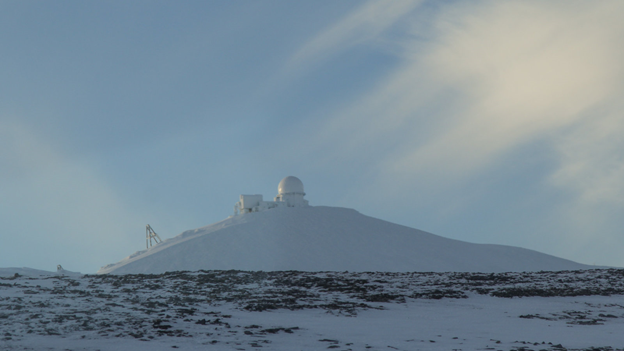
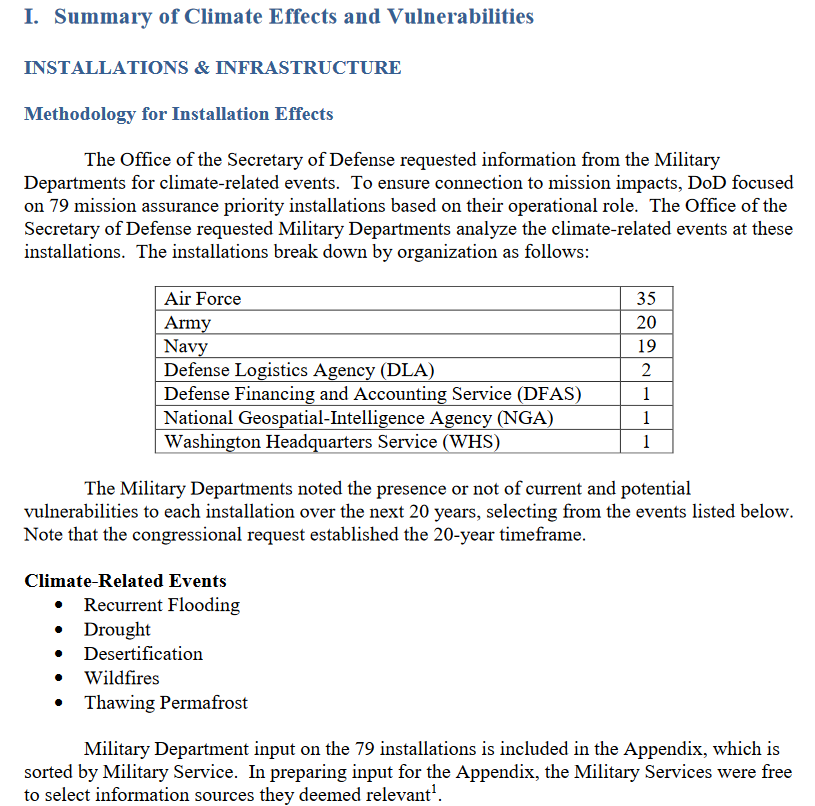
This is the first of what will be at least two posts on the effects of climate change on US Department of Defense installations, based on publicly-released documents from the present administration’s own departments. The focus will be on projects launched because of climate change, recognition of climate change as a driver of projects, and the need for project managers to be well-informed of the facts related to climate change and the facts related to how governments react to the effects of climate change. One point of this series is that regardless of your view of climate change – whether you believe it is happening or not, and if so, what is causing it – is actually much less important than understanding what governments are doing about it regardless, and what that may mean for projects and project managers. In this first part, I’ll cover the issue in general and illustrate this with one example of a these effects, and the possibilities for project managers – the example being in Tin City Alaska. I’ll follow up with a story about a wall, but not one on the border with Mexico, one pretty much on the border with Russia. The story that caught my attention was a very short podcast from NPR entitled “How Climate Change Is Affecting Alaska's Military Radar Stations” which you can listen to right here: The story is that the changing climate poses a threat to the radar installations. 3 out of 15 are facing situations in which shifting ice, based on more-rapidly-than-expected changes in ocean temperatures and sea-level rise, as well as shifts in the way sea ice blocks (or does not block) the approaches of storms, are debilitating those stations, with the other 12 possibly next (excuse this pun) on the radar. You can read more about the Tin City story in this article: Here’s a sample extract from the story if you don’t care to listen to the podcast: Running these radar stations has never been easy, but now, it’s getting even less manageable, as coastal erosion nibbles away the land around vital infrastructure supporting the sites. Col. Lemon is the Air Force commander in charge of remote radar sites stretching from the Pacific to the high Arctic. “I’m a military officer, so global warming, I dunno,” Col. Lemon said with a shrug during a briefing about the sites. The admission aimed at humility, denying that in his position he had the authority to offer grand scientific explanations. But for almost a decade, the Defense Department has acknowledged that a rapidly warming climate poses a threat to the military’s installations and operations around the globe, and they’ve initiated plans to cope with it. “Climate change is happening and there is erosion going on on the North Slope of Alaska. That’s a fact,” Lemon said. “I don’t know what’s causing it, but we have to do something about it, because it’s impacting our mission.” So far, three radar stations, all of them in the North Slope, are grappling with climate-driven threats to infrastructure. The installation at Tin City is not immediately imperiled by this issue. However, during our visit in mid-November, the Bering Strait, easily visible from throughout the lower camp, was an uninterrupted dark blue, the water completely free of sea ice. Much of the motivation for the new projects to be discussed in this series comes from a newly-released 2019 report from the US Department of Defense. Below is the cover, the Background, and a paragraph that shows the main areas of climate-change-related concern from this report from the Trump Administration’s own Department of Defense.
In the next post, I’ll discuss the US$47M seawall project under construction at Cape Lisburne, Alaska. |