Risk Response to Greening


|
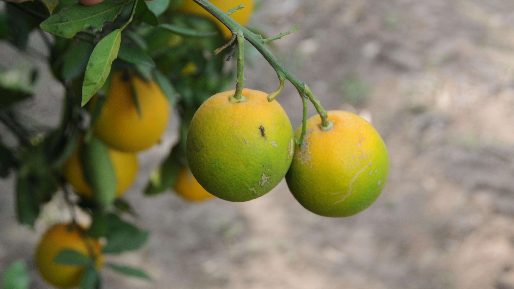
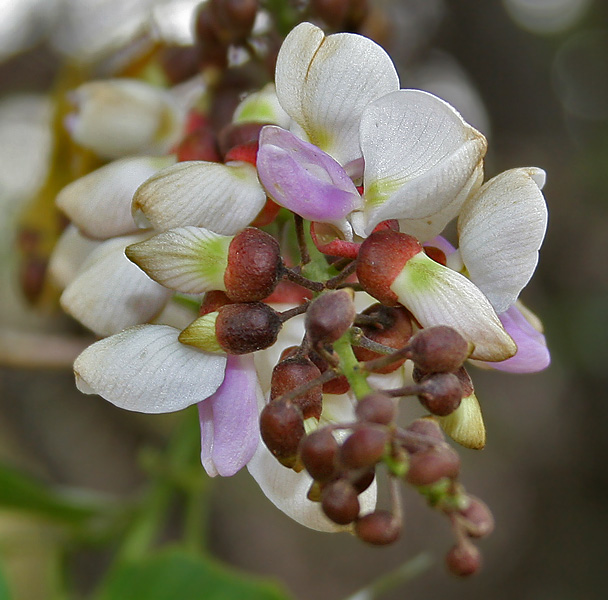
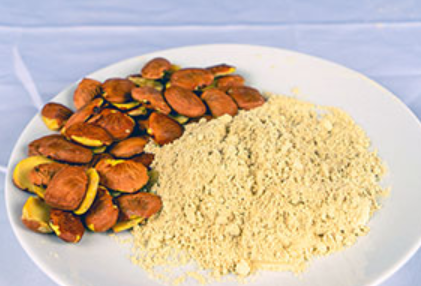
In this post, I discuss two very different risk responses to a devastating threat that has an oh-so-friendly name. The threat is “Greening”, and if you have anything to do with the farming of citrus, you are very familiar with this threat. From this US Department of Agriculture site: “ Citrus greening, also called Huanglongbing (HLB), is a bacterial infection of citrus plants, caused by the bacterial pathogen, Candidatus Liberibacter asiaticus (CLas). It is one of the most serious citrus diseases in the world. Once infected, most trees die within a few years. There is no cure.” The effects of this threat are stunning. Since 2005, HLB, first detected in the USA in Florida, has spread throughout that state, killing countless trees and devastating orchards, reducing citrus production by 75%, and more than doubling production costs. Unfortunately, it was not contained, and the disease has now progressed westward to Louisiana, Texas, and even California. Here’s a video describing the insect vector for the bacterial infection (the Asian citrus psyllid): One risk response: Avoid The Avoid threat response means NOT doing whatever it was that admitted the threat into the picture. So in this case, that means not planting citrus. Instead, farmers have used their fields to plant the Pongamia tree, an ancient Indian tree (Hindi name ???? karanj). This is a fascinating tree with uses as far-flung as using its twigs as a toothbrush to curing scorpion bites. But in this case, the tree provides a boost to the farmers affected by Greening by giving them a profitable crop that is healthy, durable and – ironically helps with the other sort of “greening” – because its pressed berries/seeds produce an oil that can be used (for example) as jet fuel, with the remaining product can be used as flour and other plant-based proteins. Vendors also sell the oil as cures for… well, you name it. Below are images of the tree, its flowers, berries, and examples of products made from it:
This video from the Associated Press sums up the Avoid response:
The other risk response: Mitigate Remember (my students will tell you that this is a grade-crushing pet peeve of mine) that Mitigate is not a synonym for Response. Many textbooks and papers on project management talk about risk response as mitigation. Sure, mitigation is a common response – it involves reducing the likelihood and/or probability of a threat; but it is NOT by any means the only way to respond to risk. You just saw, above how Avoid is another risk response strategy, as is Transfer, and Escalate, for example. So, in this case the mitigation is to reduce the probability of the infection and the impact if infected. To that end, (from this USDA site) “researchers at the ARS Crop Improvement and Genetics Research (CIGR) unit in Albany, CA, have discovered a way to augment the tree’s natural immune response to pathogens so that it recognizes HLB. According to James Thomson, a geneticist at CIGR, transgenic plants that produce receptor proteins that can recognize pathogens are able to activate a plant’s own immune response when exposed to Clas. Previously, the best ways to deal with HLB were to remove affected trees from orchards and kill the ACPs that were spreading HLB. Those efforts ranged from spraying pesticides to cloaking trees in tents. Transgenic trees with a boosted immune system that responds to Clas could potentially help citrus growers fight citrus greening.” Takeaways for project managers:
|


S'not your granparents' corn
|
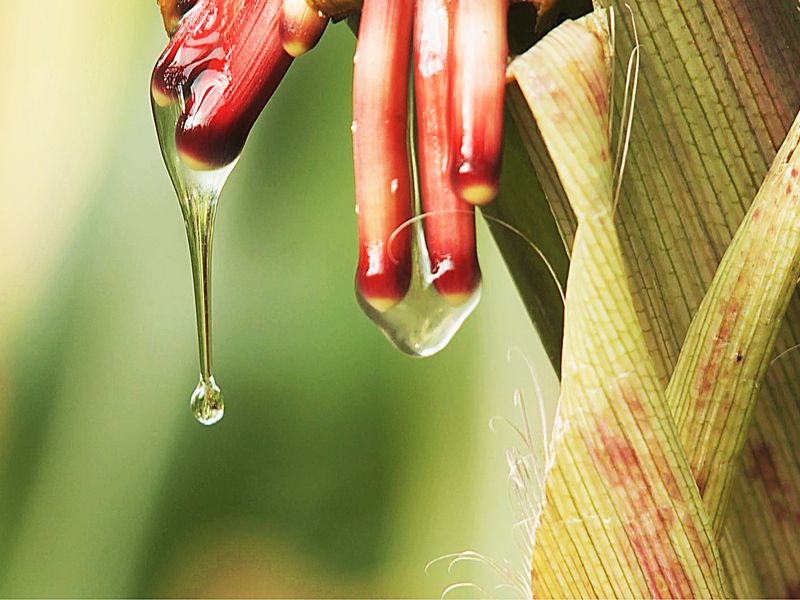
Do you eat food? If so, this article may be of interest to you. As a food eater, you may have some exquisite recipes and know some great gourmet restaurants. But I’m guessing that unless you are also a chemist or a fan of science, you probably do not know about the Haber-Bosch process. However, this process has been a huge boost for the production of food. Its importance is summarized in this Smithsonian article –the one which triggered this blog post: The discovery of the Haber-Bosch process and its refinements, in which nitrogen is stripped out of the air under high heat and pressure in the presence of a catalyst, has led to three separate Nobel prizes. And they are well deserved. It’s estimated that crop yields more than doubled between 1908 and 2008, with synthetic nitrogen fertilizer responsible for up to half that growth. Some researchers have tied the massive growth in human population in the last seventy years to the increased use of nitrogen fertilizer. Without it, we’d have to farm almost four times as much land or have billions of fewer people in the world. Have a look at this TED video that explains the process. As you can see that's a tremendous achievement. And it has won its inventors Nobel prizes. However, like many outcomes that seem 100% positive, they may have a long-term negative outcome. In this case, the negative outcome is almost as strikingly negative as the above makes it seem seems strikingly positive. …making fertilizer via the Haber-Bosch process uses between 1 and 2 percent of the world’s energy, emitting lots of greenhouse gases. And synthetic nitrogen routinely washes off fields into waterways, leading to massive algae blooms that suck up all the oxygen, killing fish and other organisms. So much nitrogen goes into rivers and streams that large dead zones have developed at the mouths of the world’s rivers, including one in the Gulf of Mexico that last year was the size of New Jersey. In fact, this blog recently covered this issue with a post about algae blooms on Cape Cod. So what’s the connection to corn? Well, of course, corn is a food – a major grain. According to the US Department of Agriculture (USDA), Corn is the primary U.S. feed grain, accounting for more than 95 percent of total feed grain production and use. More than 90 million acres of land are planted to corn, with the majority of the crop grown in the Heartland region. Most of the crop is used as the main energy ingredient in livestock feed Wouldn’t it be nice if crops (in this case, corn) could produce its OWN nitrogen? It turns out that there is a type of corn – a very unique type – that does this. The corn variety Sierra Mixe extends aerial roots (see photo from Howard-Yana Shapiro above). These roots produce a sweet mucus that nurtures a type of bacteria resident in the mucus. (And thus the "S'not" in our title). The bacteria, in turn, extracts nitrogen from the air. This nitrogen serves as fertilizer for the corn. It’s ingenious! This breed of corn is grown in the Sierra Mixe region of Oaxaca in southern Mexico, part of the region where corn was first domesticated by Native Americans thousands of years ago. Now, if this capability can be added to conventional corn – it could reduce the need for nitrogen fertilizer and would make a huge difference in the problems caused by the Haber process reviewed above. But how? What are the projects that will get us there? From the article, Alan B. Bennett of the University of California, Davis—along with Shapiro and other researchers—began using cutting-edge technology to look into the nitrogen-fixing properties of the phlegmy corn, finding that indeed, bacteria living in the mucus were pulling nitrogen from the air, transmuting it into a form the corn could absorb.
To learn more about the advantages of getting nitrogen out of this food cycle, have a look at this interview with scientist Dr. Mark Sutton. In it, he has a very interesting analogy of nitrogen as “The Godfather:: Just like climate change, when we talk about the increase of CO2 for nitrogen we are talking about major changes over the last century. With the mass production of nitrogen fertilizers following the 1950s, we have doubled the amount of nitrogen compounds in the world. I would say that climate change is an easy issue. Maybe somebody else will not agree, but I say so because it is a single focal thing: burning things produces carbon dioxide, which leads to climate change. It is complicated to fix, but easy to explain. As for nitrogen, the problem is that it is everywhere and it is doing all sorts of things. It's like the godfather of pollution: you see the results but you don't see the godfather. In part 2 of this corny series I will provide more detail on the Sierra Mixe corn, and the project to embed this trait in our domestic corn. I plan to also include an interview with one of the principals involved in the research! Keep you “ears” tuned to this channel. |