
NiFTy or Nasty?


|
In this post, we explore the NFT: The Non-Fungible Token. I am only going to give ‘token’ time to defining this, partially because I am still learning about it. But I think you should know about this technology because (1) like it or not, it appears to be “a thing”, and (2) there is a reinforcement of a project management concept on which I blogged about already this month – that of secondary risk. Some of you may recognize the “Charlie Bit My Finger” image I put in the header of this postYou’re seeing a screen capture of a viral YouTube video. I did a Google search of that phrase as I’m writing this and it yielded about 2.3 million results. You may also have read articles, like this one from the BBC, which describes how this video is now being removed from YouTube because it has become an NFT. An NFT video of a kid biting another kid’s finger - that just sold for more than three-quarters of a million dollars. Say WHAT? So we start with, what is an NFT? It’s one of those acronyms for which spelling it out helps make as much sense as a FoaB (Fish on a Bicycle). But here goes: NFT stands for Non-Fungible Token. Right. So now we have to break that down. Fungible is not a word we use every day. If you asked me what it meant yesterday, I would have said fungible was an edible mushroom. But no – it has nothing to do with fungi. I actually have a go-to source for terms like this: Investopedia. Here’s their definition: Fungibility is the ability of a good or asset to be interchanged with other individual goods or assets of the same type. Fungible assets simplify the exchange and trade processes, as fungibility implies equal value between the assets. So what’s fungible? Cash money is an example. I can find an equal exchange for a US$1 bill – twenty nickels, or four quarters or ten dimes are equal exchanges. What’s non-fungible? Again, from Investopedia: If Person A lends Person B his car, it is not acceptable for Person B to return a different car, even if it is the same make and model as the original car lent by Person A. Cars are not fungible with respect to ownership, but the gasoline that powers the cars is fungible. And finally, the last letter of the acronym - token. Remember, we are still just spelling out the acronym here. I hope you now “get” the Non-Fungible part, so let’s move on to TOKEN. Think of tokens as a ‘unit of value’. This applies to cryptocurrency as well as a token like the old-timey ones we used to use to allow admission to the subway. Crypto tokens are cryptocurrency tokens. Cryptocurrencies or virtual currencies are denominated into these tokens – units of value, which reside on their own blockchains. Blockchains are special databases that store information in blocks that are then chained or linked together. This means that crypto tokens, which are also called crypto assets, represent a certain unit of value. So why is this so hot now, literally on fire? Yes, literally, ON FIRE. Have a look at this video. A group of crypto-enthusiasts called Injective Protocol bought a Banksy painting for about $100,000 and then burned it, to make their point about NFTs. The point they were trying to make is about trust. By destroying the original they are trying to build trust in blockchain technology. Whether or not you get this (I’m still wrapping my head around it) there is, as I said above, the aspect I’d like to tackle here is regarding secondary risk. The secondary risk, believe it or not, is the carbon footprint of NFTs. According to a recent article, the positives of NFTs for artists are abundant: Artists around the world were thrilled: NFTs provide the opportunity for them to make significant money on their work, reach a broader audience all over the world and link a digital file to a creator, ensuring authenticity. And with the value of cryptocurrency skyrocketing, some think there's never been a better time to get in on it. We could look at NFTs as a way to respond to the risk of theft of art. That’s nifty. However, that same article goes on to talk about the downside – a nasty side - of NFTs. It turns out that blockchain technology is very energy-intensive. Blockchain incorporates a "proof of work" (PoW) method to create digital assets and it is – by design – highly inefficient and thus uses significant computing power, translating into large amounts of actual energy usage. In fact, the computers are, in effect, trying to solve a complicated mathematical puzzle, something like trying to open a safe by trying every combination. They make millions of attempts every second to solve the puzzle so that they can (on behalf of the ‘miner’) get ‘added to the blockchain’. The higher the value the token, the more difficult these puzzles are to solve, and that makes them increase in value, creating a spiraling need for greater computer power and larger data warehouses and stronger cooling units just to keep up. As you can imagine, this causes an exponential increase in actual power consumption. The NFT open-source network, Ethereum, according to the article, is “currently estimated to (annually) consume roughly 44.94 terawatt-hours of electrical energy, which is comparable to the yearly power consumption of countries like Qatar and Hungary.” So while NFT is ‘nifty’ for artists, it contains a secondary risk. How do we respond to the secondary risk? First: be aware of it – and articles and blog posts like this, I hope, help in that area. Next: make the network less energy-hungry. Efforts such as Greentouch from the past have been successful at reducing the energy consumption of IT networks. This secondary risk provides a tertiary risk – an opportunity – for network engineers to focus on algorithms and technologies to keep the PoW vibrant and focused on security while still being less energy-hungry. This has been done in the past. I have blogged about GreenTouch, a consortium of IT and telecom companies who are fierce competitors but who collaborated on algorithms to reduce the energy use of the technology simply by using clever algorithms to reduce the number of times optical amplifiers transition from a zero to a one. This collaboration resulted in a new optical transceiver which was expected to reduce the overall power consumption of the entire metro access network by 27 percent; this translates to about 4 terawatt hours of electricity saved on an annual basis, equivalent in terms of annual greenhouse gas emissions to taking nearly 600,000 cars off the road. If competitor telecom companies can do that in 2014, think of what an open-source collaboration could do with 7 years of increased knowledge under their belts! In addition to working on better networks, this provides opportunities for computer and data storage companies to improve the physical need for energy of their systems, something they are doing already, but this should motivate them to ‘up their game’ in this area. It also should be a motivator for these companies to source their energy supply on renewables like solar and wind. So while some technical enthusiasts are “burning up” art, they should also be “burning down” work products to reduce the hunger of NFTs and cryptocurrencies in general for carbon-intensive energy.
|

A Half-Sextillion Nematodes (Part 1 of 2)
Categories:
science,
carbon,
analytics,
big dfata,
data analytics,
nematodes,
worms,
soil,
earth,
laboratory,
data,
Artificial Intelligence
Categories: science, carbon, analytics, big dfata, data analytics, nematodes, worms, soil, earth, laboratory, data, Artificial Intelligence
|
Big Data. Analytics. It’s hot now, and for good reason. The ability to apply machine learning and Artificial Intelligence (AI) to vast amounts of data to, for example, decide to put up an advert of a certain athletic shoe on your desktop, to decide whether a competitor may be worth acquiring, or to choose between investments. And although money is important, AI can be applied to much, much more than money. Think about the data of the Earth. Well, yes, the planet Earth, but also literally, the earth - the soil - on which you are standing (or the building on which you are standing … is standing). What’s under you? Soil, roots, worms. There is a laboratory in the Swiss Federal Institute of Technology, led by a man named Thomas Crowther. That laboratory has embarked on a project, which, in a way, is an accounting project. The thing for which it is doing the accounting is, well, it’s the Earth. Crowther’s lab is funded for 10+ years to collect individual observations (many, MANY of them) and use AI to reach conclusions about the count of trees, fungi, and, for example, nematode worms. So far, his lab has concluded that there are 3 trillion trees and 0.4 sextillion nematode worms. We'll come back to these little wigglers later. Why do this? Well, as project managers we know about baselines. If we are to make improvements and/or to understand the changes taking place so that we can make corrections or note the effect of attempted corrections, we need that baseline. All of this comes mainly from a cover story in the most recent edition of Nature magazine, in an article called, “The Everything Mapper”, by Aisling Irwin. It’s a fascinating story – partially because it’s a fascinating project. The project has already realized benefits, and has some lessons learned for project managers. For starters, when Crowther was getting started, he was at Yale and proposed the idea of using ground data from actual tree counts (satellite data can’t peer below the canopy). To do this, he needed to get scientists from different institutions to collaborate and share their data. He had to build a team from disparate organizations. Sound familiar? The professors around him though it was a ridiculous idea but he managed to do it, to the point where he had data representing an area the size of a US state. Granted, the state was Rhode Island, but still – quite an accomplishment. He then worked with data scientist Henry Glick to compare the ground-level counts with the satellite imagery to make informed decisions about how many trees there really were. The benefit realized was that the mapping done by Crowther and Glick (and others) was used to build the first global model of tree density – and the figure of “3 Trillion Trees”, which in turn changed the name of the UN’s “Billion Tree Campaign” to the “Trillion Tree Campaign”. Their database continues to serve the Forest Biodiversity Initiative, which studies and manages the world's largest tree-level forest inventory database. A snapshot of the status of the Trillion Tree Campaign is shown below.
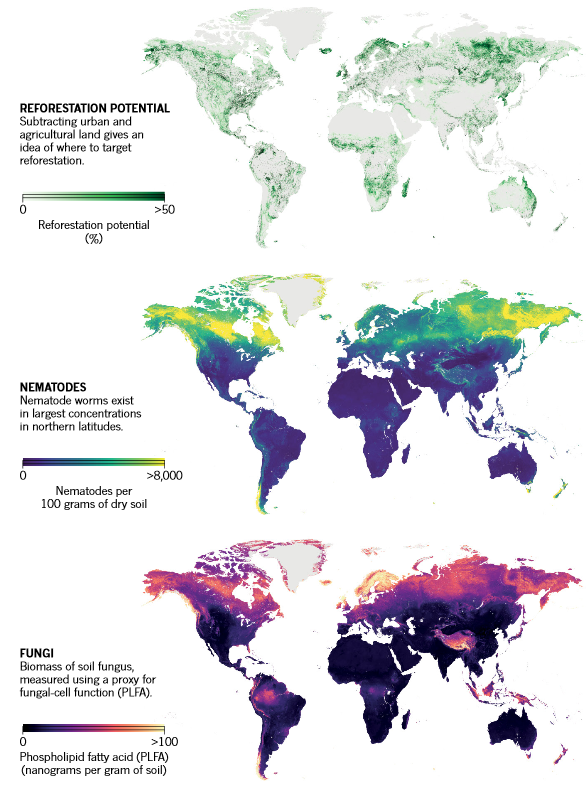
Another outcome – an important one – is a conclusion that “tree planting is easily the best way to remove carbon from the atmosphere, and could be the key to slowing global warming”. This is a conclusion that obviously spawns many new projects, but that’s another story. Let’s get back to nematodes for a bit. They're usually tiny, around 50 micrometers thick and 1 millimeter long - but the nasty parasitic kinds (this is sort of sickening) can be up to 3 feet long. They actually play an interesting role in solving climate change. This recent article from Brigham Young University covers that aspect. One thing of interest to note is that the biomass of the nematodes of the planet is almost equal to our weight. That is, add up the weight of all the nematodes and you have 80% of the weight of the entire human population! The relationship to carbon is summed up here: “Knowing where these tiny worms live matters because nematodes play a critical role in the cycling of carbon and nutrients and heavily influence CO2 emissions. An important finding of the paper is that nematode abundance is strongly correlated with soil carbon (more carbon = more worms). Understanding the little organisms at a global level is critical if humans are going to understand and address climate change.” Below is a figure from the Nature article summarizing the data from Crowther's research for trees, nematodes and fungi.
In Part 2, I will talk about more lessons learned for project management and more about the connection between AI and Earth. |


April Fuel!
|
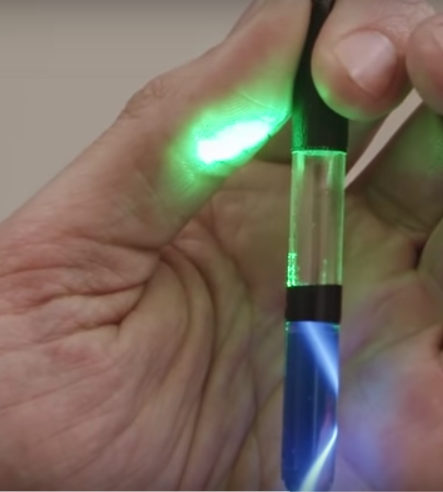
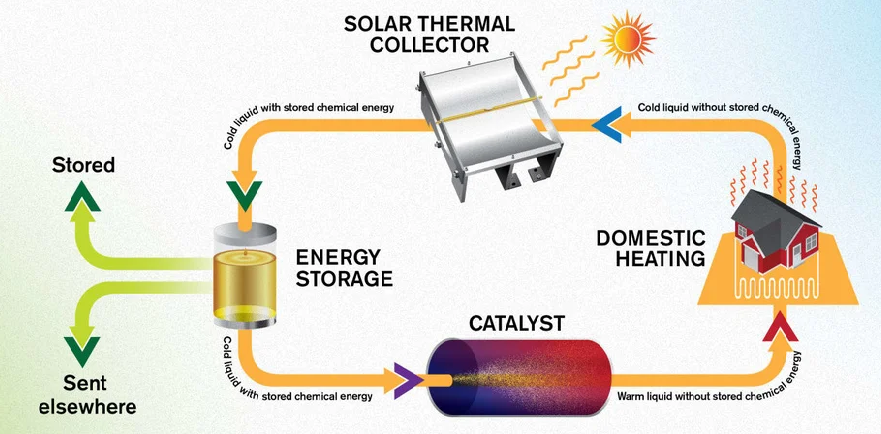
I avoid posting on April 1, since it’s likely that all-y’all may not take the posting seriously. So this is posted on April 2. Because it's good news - serious good news. My last post was about ammonia as potential ‘liquid battery’, a means to store renewable energy in liquid form. It turns out that this is not the only liquid under investigation with this potential. Let’s back up a moment and review why we’re even talking about this here on People, Planet, Profits & Projects. First of all, any of these efforts to do apply research to reality is, by definition, a project. Then, implementing the result into (in this case) using the ‘liquid storage’ will be a project. The focus here is the intersection of sustainability in PM, which sometimes is directly dealing with ‘green’ topics, environmental protection or renewable energy or reducing carbon, or saving species, but sometimes is the integration of sustainable thinking – long-term thinking – into project planning. This post is more on the former. An article from MNN caught my attention. It opens as follows: It's hard to believe that we still use climate change-inducing fossil fuels when we have a sun that's bombarding our planet with plentiful, clean renewable energy on a daily basis. But fossil fuels do have one oft-overlooked advantage over solar power that has long prevented solar from truly emerging: they're a fuel. That’s right. As a fuel, fossil fuels (think gasoline) are easy to transport, deliver, and store. Not so with energy from a wind farm. We need a huge leap forward in battery technology (there will be posts on this as well here on this blog) and/or another method to store, transport, and deliver that renewable energy to users of energy. This post, like the one before it, is about a means to do just that. Again, from the article: Researchers in Sweden have discovered a specialized fluid that works like a rechargeable battery. Shine sunlight on it, and the fluid traps it. Then, at a later date, that energy can be released as heat just by adding a catalyst. It's quite remarkable, and it could be how we power our homes by 2030. Made up of molecules of carbon, hydrogen and nitrogen, this liquid reacts to sunlight by reconfiguring atomic bonds, transforming the structure of the molecules into a sort of container that holds energy from the sunlight within itself. And here’s the part that I thought you’d see as an April Fuel’s joke: even when the liquid cools back down to room temperature, the energy remains stored within the liquid. A cobalt-based catalyst (cobalt phthalocyanine) is used to release the energy when it is wanted. Does it work? Early results have demonstrated that once the fluid is passed through the catalyst, it warms up by 113 degrees Fahrenheit. But researchers believe that with the right manipulations, they can increase that output to 230 degrees Fahrenheit or more. Already, the system can double the the energy capacity of Tesla's reputed Powerwall batteries. Needless to say, this has drawn the interest of numerous investors. Even better, researchers have tested the fluid through as many as 125 cycles, and the molecule has shown almost no degradation. In other words, it's a rechargeable battery that continues to take a charge without losing much capacity over many uses. The technology seems to allow the storage of energy in such a liquid for up to 18 years. The image below is courtesy of Chalmers University of Technology (Sweden).
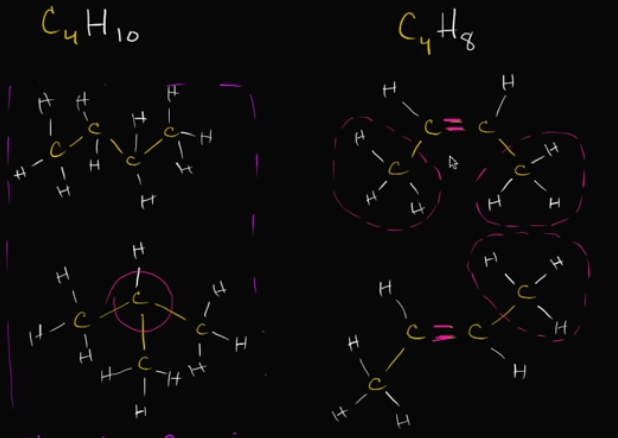
I felt this needed validation and further research so I dug in and found this article which indicates that the researches have published their results in four respected journals. The name for the molecule that stores the energy is an isomer - a molecule made of the same atoms, but bound together differently. If you want a quick review of isomers (like I did) click here.
The storage capability is called (by the researchers) MOST (Molecular Solar Thermal Energy Storage). For those of you who are scientifically inclined, here’s the abstract from the paper published in the highly-ranked journal, Energy and Environmental Science, published by the UK’s Royal Society of Chemistry. The entire article is available as a PDF here. The development of solar energy can potentially meet the growing requirements for a global energy system beyond fossil fuels, but necessitates new scalable technologies for solar energy storage. One approach is the development of energy storage systems based on molecular photoswitches, so-called molecular solar thermal energy storage (MOST). Here we present a novel norbornadiene derivative for this purpose, with a good solar spectral match, high robustness and an energy density of 0.4 MJ kg−1. By the use of heterogeneous catalyst cobalt phthalocyanine on a carbon support, we demonstrate a record high macroscopic heat release in a flow system using a fixed bed catalytic reactor, leading to a temperature increase of up to 63.4 °C (83.2 °C measured temperature). Successful outdoor testing shows proof of concept and illustrates that future implementation is feasible. The mechanism of the catalytic back reaction is modelled using density functional theory (DFT) calculations rationalizing the experimental observations. So: No April Fool situation but rather a very promising technology to further enable renewable energy and to reduce our dependence on problematic and limited fossil fuels. And project managers like you and I may be the ones making this a reality within the decade! |
They Smelt Opportunity
|
Last month, Apple made a rather startling announcement. Its global operations were now (and will be henceforth) run 100% on renewable energy sources. What’s behind this? Apple decided, under Steve Jobs’ “Green Apple” initiative, to consciously focus on its environmental impact. This story, called “Why Apple was bad for the environment (and why that's changing)” from Macworld provides excellent background on the ‘sustainability evolution’ of Apple. It’s worth a read as context for this post, but you can read on if you wish. As part of its evolution, Apple hired Lisa Jackson, the former EPA administrator in the Obama Administration, as its vice president for sustainability and government affairs, and early last year and issued a $1 billion bond to finance green energy products. So what’s all this about ‘smelting’? It has to do with aluminum – a big part of Apple (and many other!) products. Have a look at the old (130-year-old) process and a new process for smelting aluminum, using these ridiculously short videos: The Old Way (since 1886) The New Way < How are they different? Let us count the ways. From a very recent story in the Washington Post: … the classical process (of smelting aluminum) is viewed with some disdain by environmentalists, because it takes about half a pound of carbon to make a pound of aluminum, and half a pound of carbon converts to about a pound and a half of carbon dioxide,” explained Donald Sadoway, a materials scientist at the Massachusetts Institute of Technology who has worked on aluminum. “Even though Alcoa evidently had this technology for making aluminum without the greenhouse gas emissions, they were in such a situation with respect to profitability that they couldn’t afford to make the transition to the CO2-free process,” Sadoway said. “Because you know, nobody pays a premium for green aluminum.” Until now, that is. “Apple swoops down and says, we are prepared to buy aluminum made here in Canada to build our phones and our computers and whatever … if that aluminum is made in a sustainable manner,” he said. “So these two competitors sit down and say, let’s make a deal. It was fantastic.” It’s a great example of how the mission and vision of a company – actually several companies - can drive project initiation decisions. This is at a large, sweeping level. However, I’m willing to bet that you can find microcosms of this scenario in your projects. A lot of it has to do with connecting statements at the top level of the company – public statements, such as those found on the “About Us” sections of the organization’s web page or in their shareholder reports, and weaving a ‘golden thread’ through the organization so that everyone understands the priorities at that mission/vision level. Here is one such statement from Apple: "We strive to create products that are the best in the world and the best for the world. And we continue to make progress toward our environmental priorities. Like powering all Apple facilities worldwide with 100% renewable energy. Creating the next innovation in recycling with Daisy, our newest disassembly robot. And leading the industry in making our materials safer for people and for the earth. In every product we make, in every innovation we create, our goal is to leave the planet better than we found it." I also suggest you take a look at Apple’s 2018 Environmental Responsibility Report. For some of you, this may seem like fluffy stuff about saving the planet, subtracting from a for-profit’s goal to just go out and make stuff, sell stuff (and services) and generate cash for shareholders. But is it really only about Planet? Nope. There’s a (valid!) profit motive here as well: From an article on this topic from Metal Bulletin magazine: “The aluminum industry currently generates 12 tons of carbon dioxide (CO2) emissions per ton of aluminum at the smelter, analysts estimate. Environmental benefits aside, it will boost the anode life by 30 times plus cut operating costs by 15% and increase productivity by the same amount, something that no smelter is likely to turn its nose up at either.” So this makes economic sense! The article goes on to say: Changes in aluminum production and suppliers transitioning to renewable energy have meanwhile already cut Apple’s greenhouse gas emissions by 2.6 million tons. Similarly, it has already prioritized aluminum smelted using hydroelectricity rather than fossil fuels, re-engineering its manufacturing process to reincorporate the scrap aluminum.
From a People, Planet, Profit, and Projects perspective, this news cross-cuts all of those aspects, from the people brought into Apple to help guide it along its environmental mission, to the reduction in environmental (planetary) impact brought about by this investment, to the profit it will generate for those who are investing in the initiative, and of course to the initiatives – the projects – themselves. How about you - and your organization? I realize you may not be involved in the smelting of metals. But as a project leader you can facilitate this connection between organizational aspirations (and public statements!) and how - and sometimes even :::if::: your project is connected to those aspirations. If you have done so or see some ideas as to how to do this - share those ideas and/or accomplishments here! |

Addition by Subtraction
|
You think it’s important to reduce carbon emissions? Think again. Sure, it is important, and whatever you believe about climate change and its causes, you hopefully agree that IF the global temperatures are rising, we want to understand it. So, here’s a little-known fact. The pledge at the Paris Climate Agreement to limit global temperature rise to no more than 2 degrees C above pre-industrial levels, is going to require not only emission reduction, it’s going to require removing carbon from the atmosphere. In fact, 87% of the UN’s International Panel on Climate Change models make assumptions that include ‘negative emissions’. Wise project managers know that assumptions are the ‘seeds’ of threats and opportunities. And that project management truth holds true here as well. That’s right: the agreements reached in Paris, and somewhat reaffirmed in Bonn last week include assumptions. They assume that the portfolio of programs and projects to bring down the rising global temperature includes not only initiatives which aim at emitting fewer tons of greenhouse gasses, but importantly, also projects to significantly remove vast amounts of greenhouse gasses already present. Otherwise stated, it means we need to undo what’s been done. And that means we’ll need to create carbon sinks. That’s where science – and project management – will need to come to the rescue. Take Sweden for example. In a recent article (“Sucking up carbon”) from The Economist, Sweden’s lawmakers have passed legislation which requires no net emissions of greenhouse gasses into the atmosphere by 2045. Even if everyone in Sweden went to fully-renewable sources of power and drove electric vehicles, they would still be emitting (adding) greenhouse gasses by virtue of (for example) use of fertilizer and from use of airplanes. This ‘net zero’ will therefore call for the removal (subtracting) of greenhouse gasses with emergent and not-yet-invented technology. What really makes a difference with respect to climate change is the total amount of greenhouse gas in the atmosphere. If we need to keep the temperature stable it means staying inside a certain budget of greenhouse gasses in the atmosphere. If we go over our budget, even with strict “spending controls”, we will need to balance that budget via extraction. So let’s talk extraction for a moment. As any good project manager should, let’s begin with the end in mind and understand our project objective. In the long term, this is a gigantic impending aspiration. The numbers are actually mind-boggling. To take into account the aforementioned assumptions – the median IPCC model – assumes the extraction of 810 billion tons of carbon dioxide by 2100. Stated in different terms this means “undoing” 20 years of our global emissions (taken at the current rate) by that year. The Economist article discusses NETS (negative-emissions technologies), the generic term for techniques which serve as carbon sinks. One family of NETS is BioEnergy with Carbon Capture and Storage (BECCS), which involves power stations fueled by crops that can be burned generate energy while injecting the carbon into the ground rather than into the air. The problem with this technology is that it is at least twice as expensive as standard power generation and it cannot produce the size of sink necessary for the large numbers in the objective. Another technique is afforestation – the regrowth of deforested logging areas – very large areas. It has been estimated that the area of afforestation would have to be somewhere in the range of sizes between India and Canada – up to 68% of the world’s arable land. Clearly, this technique alone will not suffice. The other technologies don’t yet exist, meaning the projects are in the research and development stage. Machines designed to capture carbon dioxide from the air are problematic. If you try to extract CO2 from a smokestack of a power plant – no problem; the concentration, there is 10%. Try the same in the atmosphere, and although levels are indeed historically high, the concentration is only 0.04%. Still, companies like Global Thermostat in the US, Carbon Engineering in Canada, and Climeworks of Switzerland are working on such contraptions. Here is a video explaining what Global Thermostat is up to: And here is one from Climeworks: Other thinking in this area includes techniques to accelerate how the soil and natural weathering processes remove CO2 from the air. But here’s the thing: mechanical techniques at the moment show only 40 million tons of CO2 per year. Remember our project objective? It was 810 billion tons by 2100. That’s 10 billion per year. 40 million, as they say, ain’t going to cut it. So there will need to be a wave of innovation over the next decades which focus on adding value by subtracting carbon (and other greenhouse gasses). This will spell opportunity for large R&D as well as deployment projects, which in turn will require informed, inspired, capable project managers. Are you ready for a challenge? Get informed, stay informed, and get ever more curious about greenhouse gas extraction. We’re hoping that this story provided you with a good (excuse the pun) takeaway. For more information about the technologies involved, try these sources: Knowledge@Wharton – Can carbon extraction solve the climate crisis? TED Talk - This country isn't just carbon neutral — it's carbon negative Science Magazine – In Switzerland, a giant machine is sucking carbon directly from the air |



