

Watt is Success?


|
A short but 'power'-ful post. Say watt? No: Watt. As in James Watt. As in the guy for whom the unit of power was named. His LinkedIn profile photo is shown above. As I have pointed out in many prior posts and in my talks to PMI National Conferences with titles like “Giving You The Green Light to Think Past The End of Your Project”, project success is an elusive, hard-to-define, holistic, not-at-the-ribbon-cutting-ceremony measurement. I want to practice what I preach. So I didn’t want to declare our project to add 24 solar panels to our home’s roof a success when the nice folks from Vivint told me that we were generating power. But today, 17 months in, as we cross well over the 10 Megawatt level, and I continue to see the electric meter run backwards, and as we continue to have the electric company pay us each month, I declare project success. It seems appropriate to make this statement in May, which last year (and probably this year) seems to be our best month (see figure below).
I will continue to update you from time to time on this blog about the ups and downs, but I feel confident that we can now say we have delivered value to the key stakeholders – ourselves as well as the environment. According to my solar calculator provided by Vivint, it looks like we’ve saved about 9 acres of forest in carbon offset equivalency, and according to the EPA (United States Environmental Protection Agency) calculator (try it for yourself!): https://www.epa.gov/energy/greenhouse-gas-equivalencies-calculator It appears that we have taken the equivalent of 1.5 cars of the road for a year. Not bad. So here’s to you, James Watt! More power to you!
|


Project Manager Power!
|
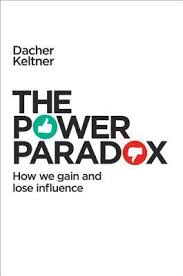
I had promised to give you an update on our solar power installation and I will shortly. In fact, here’s a tidbit: we have produced 700KwH of power in just our first 2.5 months. We're on our way to our first megawatt hour of power! But I want to wait until I start seeing the economic benefit. As soon as I see what this does to our electric bill, I’ll be back to you with more. For now, I want to talk about power but of a very different kind: the power we use to run our PROJECTS. Human power. Project management power! So this is a bit of a departure from the sustainability subject. Or is it? Don’t we want to make a difference? Don’t we want that ability to make a difference to be long-lasting? So, I could easily make an argument that this IS a posting about sustainability in perhaps an even more meaningful sense. Much of this post originates in – or at least the thinking behind it was stimulated by an article https://www.brainpickings.org/2016/09/28/power-paradox-dachter-keltner/ which in turn comes from a book called, “The Power Paradox” by Dacher Keltner.
What is "power" in the world of humans, and therefore in the world of project management? From the book: Power defines the waking life of every human being. It is found not only in extraordinary acts but also in quotidian (blogger’s confession: I had to look this word up – it means ‘everyday’) acts, indeed in every interaction and every relationship, be it an attempt to get a two-year-old to eat green vegetables or to inspire a stubborn colleague to do her best work. It lies in providing an opportunity to someone, or asking a friend the right question to stir creative thought, or calming a colleague’s rattled nerves, or directing resources to a young person trying to make it in society. Power dynamics, patterns of mutual influence, define the ongoing interactions between fetus and mother, infant and parent, between romantic partners, childhood friends, teens, people at work, and groups in conflict. Power is the medium through which we relate to one another. Power is about making a difference in the world by influencing others.
So that actually should make sense to you – it did to me. But there is a problem, and thus the ‘power paradox’. The power paradox is this: we rise in power and make a difference in the world due to what is best about human nature, but we fall from power due to what is worst. We gain a capacity to make a difference in the world by enhancing the lives of others, but the very experience of having power and privilege leads us to behave, in our worst moments, like impulsive, out-of-control sociopaths. How we handle the power paradox guides our personal and work lives and determines, ultimately, how happy we and the people we care about will be. It determines our empathy, generosity, civility, innovation, intellectual rigor, and the collaborative strength of our communities (Blogger’s note: also our PROJECTS) and social networks. Its ripple effects shape the patterns that make up our families, neighborhoods, and workplaces, as well as the broader patterns of social organization that define societies and our current political struggles As project managers, I think this next quote will ‘move’ you a bit. Read it carefully, perhaps even read it twice, slowly: Our influence, the lasting difference that we make in the world, is ultimately only as good as what others think of us. Having enduring power is a privilege that depends on other people continuing to give it to us. WOW. We gain power (and the ability to influence) by improving how others think about us, whether it’s good-natured-ness, or competence, or expertise. But watch out, project managers, we can lose this power easily, because… …another paradox lives inside the power paradox — the more powerful a person becomes, the busier and more rushed she is, which cuts her off from the very qualities that define the truly powerful. What would the studies Keltner cites look like if we controlled not only for power, but for time — for the perception of being rushed and demand-strained beyond capacity? Does that sound familiar, busy project managers? I plan on covering this a bit more in Part 2, including any feedback from all of you all, and some definitions of Power, Status, Control, and even Social Class. That means I would like to influence you to respond to this post with your observations and reflections on how you have successfully made a difference in your projects by using your personal project management power. Will you help? Sure, you will! Do it now while you are thinking about it! Your comments may appear powerfully in powerful part 2! |

Project Manager Power!
|
I had promised to give you an update on our solar power installation and I will shortly. In fact, here’s a tidbit: we have produced 700KwH of power in just our first 2.5 months. We're on our way to our first megawatt hour of power! But I want to wait until I start seeing the economic benefit. As soon as I see what this does to our electric bill, I’ll be back to you with more. For now, I want to talk about power but of a very different kind: the power we use to run our PROJECTS. Human power. Project management power! So this is a bit of a departure from the sustainability subject. Or is it? Don’t we want to make a difference? Don’t we want that ability to make a difference to be long-lasting? So, I could easily make an argument that this IS a posting about sustainability in perhaps an even more meaningful sense. Much of this post originates in – or at least the thinking behind it was stimulated by an article https://www.brainpickings.org/2016/09/28/power-paradox-dachter-keltner/ which in turn comes from a book called, “The Power Paradox” by Dacher Keltner.
What is "power" in the world of humans, and therefore in the world of project management? From the book: Power defines the waking life of every human being. It is found not only in extraordinary acts but also in quotidian (blogger’s confession: I had to look this word up – it means ‘everyday’) acts, indeed in every interaction and every relationship, be it an attempt to get a two-year-old to eat green vegetables or to inspire a stubborn colleague to do her best work. It lies in providing an opportunity to someone, or asking a friend the right question to stir creative thought, or calming a colleague’s rattled nerves, or directing resources to a young person trying to make it in society. Power dynamics, patterns of mutual influence, define the ongoing interactions between fetus and mother, infant and parent, between romantic partners, childhood friends, teens, people at work, and groups in conflict. Power is the medium through which we relate to one another. Power is about making a difference in the world by influencing others.
So that actually should make sense to you – it did to me. But there is a problem, and thus the ‘power paradox’. The power paradox is this: we rise in power and make a difference in the world due to what is best about human nature, but we fall from power due to what is worst. We gain a capacity to make a difference in the world by enhancing the lives of others, but the very experience of having power and privilege leads us to behave, in our worst moments, like impulsive, out-of-control sociopaths. How we handle the power paradox guides our personal and work lives and determines, ultimately, how happy we and the people we care about will be. It determines our empathy, generosity, civility, innovation, intellectual rigor, and the collaborative strength of our communities (Blogger’s note: also our PROJECTS) and social networks. Its ripple effects shape the patterns that make up our families, neighborhoods, and workplaces, as well as the broader patterns of social organization that define societies and our current political struggles As project managers, I think this next quote will ‘move’ you a bit. Read it carefully, perhaps even read it twice, slowly: Our influence, the lasting difference that we make in the world, is ultimately only as good as what others think of us. Having enduring power is a privilege that depends on other people continuing to give it to us. WOW. We gain power (and the ability to influence) by improving how others think about us, whether it’s good-natured-ness, or competence, or expertise. But watch out, project managers, we can lose this power easily, because… …another paradox lives inside the power paradox — the more powerful a person becomes, the busier and more rushed she is, which cuts her off from the very qualities that define the truly powerful. What would the studies Keltner cites look like if we controlled not only for power, but for time — for the perception of being rushed and demand-strained beyond capacity? Does that sound familiar, busy project managers? I plan on covering this a bit more in Part 2, including any feedback from all of you all, and some definitions of Power, Status, Control, and even Social Class. That means I would like to influence you to respond to this post with your observations and reflections on how you have successfully made a difference in your projects by using your personal project management power. Will you help? Sure, you will! Do it now while you are thinking about it! Your comments may appear powerfully in powerful part 2! |
Solar Empowerer - Interview - Part 1 of 2
|
As promised in a prior blog post (which also contains the background), here is Part 1 of 2 of my interview with Ajaita Shah (thanks to Amrit Mohan of Frontier Markets for providing some of the answers as well). Have a look at this brand-new video from CNN featuring Ajaita. Q1: Let’s start with your company’s Mission Statement and then we’ll get to the good stuff – the projects. According to Wikipedia, your mission is to provide over 10 million products to 30 million households in India and become a global leader in rural distribution and products for low-income households. FM (Frontier Markets) also trains women (known as "Solar Sahelis") to market, sell, and service renewable energy products in rural Rajasthan. FM has sold 703,000 products, and trained over 5000 entrepreneurs (50% women)
PMI says a project is: ‘a temporary endeavor undertaken to create a unique product, service or result’. A project is temporary in that it has a defined beginning and end in time, and therefore defined scope and resources. Given that,
How do you see the mission in terms of projects (or do you)? Or is this more of an ongoing operation? Do you launch projects? If so, how do you define them in terms of scope, schedule, and time? Frontier Markets (FM) is a rural distribution company that markets high-impact consumer durables in India through a network of digitised local entrepreneurs with women at the centre of the value chain. FM helps rural communities achieve “Saral Jeevan,” or “Easy Life” by providing targeted, customised product solutions designed with direct input from rural communities. FM developed innovations like a solar torch and home lighting system, solar-powered television with built-in access to a wide range of channels that retails for less than $200, solar-powered poultry farming devices, and induction stoves. At the core of FM’s model are women leaders and entrepreneurs, called Solar Sahelis. FM’s network of Sahelis is FM’s direct link to remote households. They bring products to customers, relay insights back into FM, and create an ecosystem of shared value and trust between FM and rural communities. By investing in Solar Sahelis’ long-term professional growth, FM helps her develop the skills she needs to understand her customers and meet their needs. FM offers a range of income-generating opportunities and helps her develop the skills she needs to fill these roles. FM’s model is built around women leaders because we believe that they are a bankable investment with the potential to drive deep social change. To date, FM’s network of 2,500 Solar Sahelis have contributed to 703,000 clean energy solutions sold to 600,000 households, impacting 3.5 MN lives, preventing the release of over 950,000 tonnes of carbon. FM believes that rural households are the future economy of the world and need their voices to be heard; that providing them access to quality products and services that address their safety, productivity, and aspiration will drive a systemic change to the world. FM believes that investing in women is “Smart Business,” and the KEY to poverty alleviation at scale.
Q2: Who are your stakeholders? Clearly the Solar Sahelis are, but who else? And for our audience, could you tell us about the profile of a Solar Saheli, what they do for you, and what you’ve done for them?
I think it’s best to reply with our Unified Partnership Model: Operating Together for Shared-Value Impact Government: FM is leveraging the Rajasthan government’s E-Mitra network to digitize orders, build local stock points, and rapidly scale operations in new areas. FM partnered with the government’s National Rural Livelihood Mission (NRLM) initiative to develop a network of women’s livelihood enhancement groups. FM is involved with Niti Aayog to convert Solar Sahelis into recognized business owners. Civil society organizations (CSOs): FM contributes to CSOs’ financial sustainability by hiring experienced CSOs to train Solar Sahelis. FM recruits Solar Sahelis through the CSOs’ networks, linking the skills acquired through the training to financial opportunities. Through successful partnerships with Barefoot College, Ibtada, Grameen Evam Samajik Vikas Sanstha (GSVS), Manjari Foundation, and Spectra, FM can rapidly expand into new areas and reach more villages. Companies: FM provides market insights to manufacturers and businesses planning to enter rural markets. After partnering with FM, one manufacturer reported a 15 to 30% decrease in total costs across the value chain and a 2 to 5% increase in net income. Financial institutions: Through partnerships with financial institutions, FM has co-designed several financial products to test in rural markets, including a model for rural women to access working capital. This model has been net income positive for the last two years, demonstrating opportunities for strong return on equity to investors. Ecosystem Enablers: Industry platforms like GOGLA gives FM the access to new future partners which include manufacturers. IFC gives FM strategic guidance, access to new partners as well as penetration inside rural villages through its Consumer Awareness Campaign for Lighting India. FM has been engaging with UNSe4All for leadership structures and participating in pushing gender energy access on global platforms. Ashden has helped FM showcase its story. FM believes innovation lies in the core of its philosophy; deep and targeted linkages between wealth creation and social impact. Empowerment is linked to financial gain. Therefore, FM’s lens is market based to drive value and wealth throughout the value chain; for rural consumers, women leaders, innovative product and service solutions, partners, and employees. The business model is a “bottoms-up” approach with women at the center of design. FM uses an investment lens that is long-term equity vs. short term gains believing this eventually leads to exponential profit with exponential impact. FM invests in a leadership network, and village consumer as an asset class. Women Leaders: Investment Strategy: FM invests in women with a belief that she is necessary to drive systemic change. This is because of FM’s understanding of the village ecosystem; in order to introduce high impact high, quality products that are costly, there is a behaviour change that women can drive because women are emotionally connected and build trust in communities. Enabling them to drive behavioural change faster. FM recognized that:
We invest in women leaders, not sales agents. Therefore, we invest heavily in her capacity, support her in marketing, and do it in incremental ways to ensure it’s effective giving her the time to become confident in what she is doing and investing the next. Skill-development training: FM collaborates with CSOs that specialize in rural livelihood education to provide appropriate and targeted training to develop Solar Sahelis’ digital, financial, and marketing skills. Continued support: After training, FM provides continuous operational, marketing, and coordination support for Solar Sahelis. Tools for success: FM invests in Solar Sahelis by providing demo kits, stock, and helps her access capital to grow her business faster. The long-term investment strategy is to develop her resume, to build her ability to access capital on her own, to build her credit history and justify returns through outcomes. Take a long-term approach to investment: FM’s interventions generate life-time value for customers in the form of durable, high-quality, and context-specific products with reliable after-sale service plans. FM provides Solar Sahelis with skills and opportunities to sustainably generate income. Diversify income sources for the rural workforce: FM involves Solar Sahelis in a wide range of wealth-creation opportunities, which has created a 400% increase in her income level over the past 4 years. She can also leverage the skills she acquires with FM to gain employment with firms. Leverage data: FM’s evidence-based approach contributes to better decision making, faster response to market changes, and deeper insight into rural communities. FM reduces the costs of working in remote villages by collecting data through its call center and is currently developing a mobile app to improve connectivity. Take a bottom-up approach: FM listens to rural customers because they are experts on their own needs and aspirations. By collecting feedback and insights from customers, FM created a product basket that is tailored to meet the needs of rural customers and designed an effective after-sale service plan. Create a customer-centric model: FM selects products based on the needs of the rural customers. If the product doesn’t exist, FM works with product manufacturers to find a solution. For example, FM’s Solar Rakshak Plus, a long-range solar torch, was designed based on inputs from rural women. Capacity optimization: By investing in Solar Sahelis’ long-term professional growth, FM helps her develop the skills she needs to understand her customers and meet their needs. FM offers a range of income-generating opportunities and helps her develop the skills she needs to fill these roles. Collecting data to inform the decisions of product manufacturers, for example, is one source of income she can access through FM. FM’s Returns on Innovations
In Part 2, coming later this week or early next, Ajaita will discuss aspects of project risk management, her views on corporate social responsibility, and give some advice for female project managers.
|
Microbursts and Mircrogrids
|
In a way, what they did (besides demonstrating outstanding neighborly behavior) was to establish a microgrid – a small, independent area capable of providing its own power without the existing electric infrastructure. We lost power for a week and this was a problem for us - but it's nothing compared to what many in the world live every day. This post is about the ways in which microgrid projects may make a difference in the struggle to increase the use of renewable energy, and to “power up” parts of the world (such as in Africa or currently in Puerto Rico) where not having power is not a mere inconvenience, but a matter of moment-to-moment life and death, as well as allowing economic development to advance. From the US Department of Energy, a microgrid is a local energy grid with control capability, which means it can disconnect from the traditional grid and operate autonomously. To understand how a microgrid works, first understand the grid. The grid connects homes, businesses and other buildings to central power sources, which allow us to use appliances, heating/cooling systems and electronics. But this interconnectedness means that when part of the grid needs to be repaired, everyone is affected. This is where a microgrid can help. A microgrid generally operates while connected to the grid, but importantly, it can break off and operate on its own using local energy generation in times of crisis like storms or power outages, or for other reasons. A microgrid can be powered by distributed generators, batteries, and/or renewable resources like solar panels. Depending on how it’s fueled and how its requirements are managed, a microgrid might run indefinitely. A recent article on this topic intrigued me, and then (perhaps because I was super-attentive to the topic) I found a flurry of recent stories about the increasing applicability of microgrids, for a wide variety of deployments and reasons. This one caught my attention because it centers on Pittsburgh – the city singled out by US President Trump when he announced that he was exiting the Paris Climate Agreement (and is now the leader of the only country not in that agreement). 'I was elected to represent the citizens of Pittsburgh, not Paris', said President Trump. The mayor of Pittsburgh, Bill Peduto, said in return, ‘We stand with the world, and will follow the agreement’. That little interchange already had me focused on Pittsburgh just a little more than other cities. From the article: Usually, power grids rely on a far-flung network. For example, a person making toast might be drawing electricity from miles away. A microgrid is a local, independent power grid that can run without electricity from the main network. A pilot site for microgrids is at the Pitt Ohio trucking company in nearby Harmar, Pa. Jim Maug, director of building maintenance, eagerly showed a reporter the building's green credentials last month. A wind turbine twisted near the parking lot. Solar panels tiled the roof. And in the truck bay, electric forklifts ran on batteries fueled by the renewable power. "We're anticipating about a seven to eight-year return on investment," said Maug. The project cost about $325,000, he added. Of course it’s not just the clearly tangible ROI that Pitt Ohio gets as a benefit. They also have the ability to continue operations during outages, independent of the main grid. That’s a nice-to-have. For parts of the world, this is a must-have. In a recent Economist magazine Special Report on Africa, there’s a segment called “Good night, gloom” which is quite eye-opening. It starts with (excuse the pun) a jolt. Of all the measures of (Africa’s) poverty, few are starker than that about two-thirds of its people have no access to reliable electricity. That’s 620 million people with no access to electricity, most of them in villages and on farms. This is not a convenience issue. This costs lives. In Nigeria each year an estimated 36,000 women die during pregnancy or childbirth, many because they deliver their babies in the dark in clinics such as the one in Makoko, a slum perched on stilts above a lagoon in Lagos, Nigeria’s biggest commercial city. The article goes on to more optimistic news, luckily. Africa has been adding renewable power via thousands of projects, at an amazing rate. The problem (just look at a map of Africa) is geography (see map below). …generating power is useful only if it can be sent to where it is needed, and in many parts of Africa electricity grids seldom stretch beyond big cities. Adding a house to the grid even in a compact country such as Rwanda typically costs about $2,000, which is more than the country’s average annual income per person. The APP reckons that expanding grid power across Africa to reach almost everyone would cost $63bn a year until 2030, compared with the $8bn a year that is being spent now.
So the answer, much like in Pittsburgh, is microgrids (called minigrids in the article). Increasingly, projects are being launched to power these remote villages and farm areas with microgrids. According to the article, a study by the Rockefeller Foundation in India found that when minigrids were installed in villages, small businesses increased their sales by 13% and incomes rose across the area. “If you want to drive the productive use of electricity and move people up the economic ladder, then you need a minigrid,” says Deepali Khanna of the Rockefeller Foundation. The Smart Villages Initiative, which has brought together scientists from Cambridge and Oxford Universities to get minigrids adopted more widely in poor countries, found that once smallholder farmers have electricity, they quickly adopt a range of other technologies such as irrigation pumps and smartphones to get long-term weather forecasts. “You then soon find support industries springing up to feed this higher level of economic activity in the villages, together with a general increase in well-being,” says John Holmes, a co-leader of the initiative. However, to get this done, it’s going to take projects, project management capability, and project managers. Have a look through this document (Click on the image below – or here to download it for free). In it you see the need for projects of which I speak: To achieve universal electricity access by 2030, the current pace of expansion will have to double. It is estimated that off-grid solutions will supply 50-60% of the additional generation needed to achieve universal electricity access by 2030.
It’s important work and project managers will play a key role. I provide the following links if I have piqued your interest even a micro-amount. https://microgridknowledge.com/microgrids-businesses-institutions/ https://www.eiuperspectives.economist.com/sites/default/files/Power%20Up.pdf |
 Your blog author was recently involved in a power outage. An overnight



