
April Fuel!


|
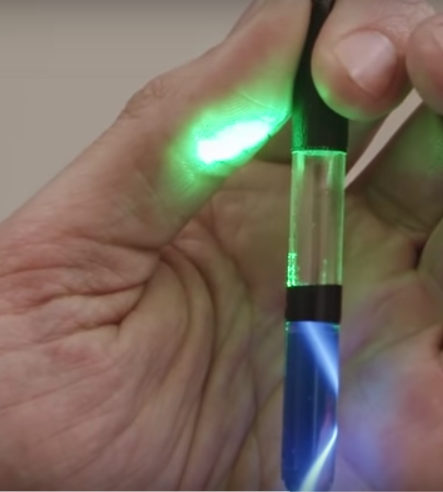
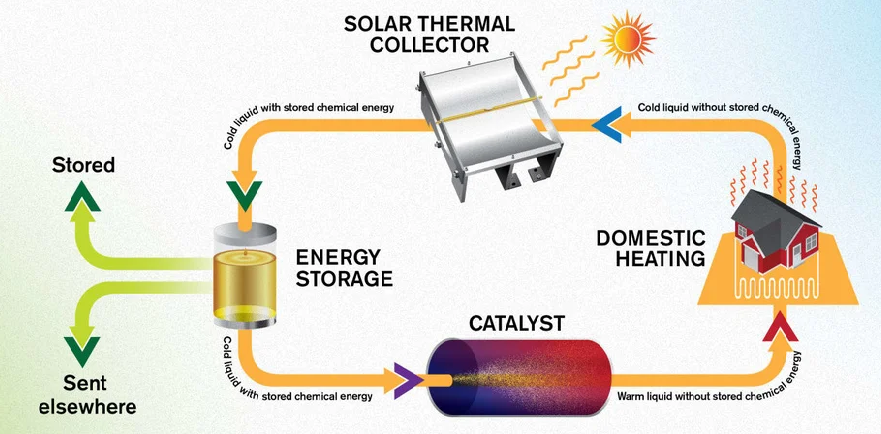
I avoid posting on April 1, since it’s likely that all-y’all may not take the posting seriously. So this is posted on April 2. Because it's good news - serious good news. My last post was about ammonia as potential ‘liquid battery’, a means to store renewable energy in liquid form. It turns out that this is not the only liquid under investigation with this potential. Let’s back up a moment and review why we’re even talking about this here on People, Planet, Profits & Projects. First of all, any of these efforts to do apply research to reality is, by definition, a project. Then, implementing the result into (in this case) using the ‘liquid storage’ will be a project. The focus here is the intersection of sustainability in PM, which sometimes is directly dealing with ‘green’ topics, environmental protection or renewable energy or reducing carbon, or saving species, but sometimes is the integration of sustainable thinking – long-term thinking – into project planning. This post is more on the former. An article from MNN caught my attention. It opens as follows: It's hard to believe that we still use climate change-inducing fossil fuels when we have a sun that's bombarding our planet with plentiful, clean renewable energy on a daily basis. But fossil fuels do have one oft-overlooked advantage over solar power that has long prevented solar from truly emerging: they're a fuel. That’s right. As a fuel, fossil fuels (think gasoline) are easy to transport, deliver, and store. Not so with energy from a wind farm. We need a huge leap forward in battery technology (there will be posts on this as well here on this blog) and/or another method to store, transport, and deliver that renewable energy to users of energy. This post, like the one before it, is about a means to do just that. Again, from the article: Researchers in Sweden have discovered a specialized fluid that works like a rechargeable battery. Shine sunlight on it, and the fluid traps it. Then, at a later date, that energy can be released as heat just by adding a catalyst. It's quite remarkable, and it could be how we power our homes by 2030. Made up of molecules of carbon, hydrogen and nitrogen, this liquid reacts to sunlight by reconfiguring atomic bonds, transforming the structure of the molecules into a sort of container that holds energy from the sunlight within itself. And here’s the part that I thought you’d see as an April Fuel’s joke: even when the liquid cools back down to room temperature, the energy remains stored within the liquid. A cobalt-based catalyst (cobalt phthalocyanine) is used to release the energy when it is wanted. Does it work? Early results have demonstrated that once the fluid is passed through the catalyst, it warms up by 113 degrees Fahrenheit. But researchers believe that with the right manipulations, they can increase that output to 230 degrees Fahrenheit or more. Already, the system can double the the energy capacity of Tesla's reputed Powerwall batteries. Needless to say, this has drawn the interest of numerous investors. Even better, researchers have tested the fluid through as many as 125 cycles, and the molecule has shown almost no degradation. In other words, it's a rechargeable battery that continues to take a charge without losing much capacity over many uses. The technology seems to allow the storage of energy in such a liquid for up to 18 years. The image below is courtesy of Chalmers University of Technology (Sweden).
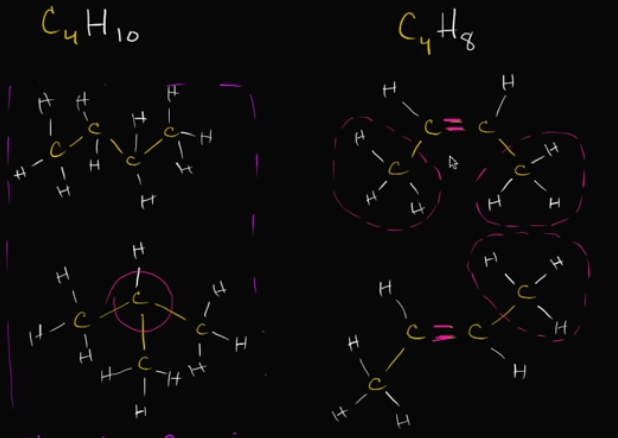
I felt this needed validation and further research so I dug in and found this article which indicates that the researches have published their results in four respected journals. The name for the molecule that stores the energy is an isomer - a molecule made of the same atoms, but bound together differently. If you want a quick review of isomers (like I did) click here.
The storage capability is called (by the researchers) MOST (Molecular Solar Thermal Energy Storage). For those of you who are scientifically inclined, here’s the abstract from the paper published in the highly-ranked journal, Energy and Environmental Science, published by the UK’s Royal Society of Chemistry. The entire article is available as a PDF here. The development of solar energy can potentially meet the growing requirements for a global energy system beyond fossil fuels, but necessitates new scalable technologies for solar energy storage. One approach is the development of energy storage systems based on molecular photoswitches, so-called molecular solar thermal energy storage (MOST). Here we present a novel norbornadiene derivative for this purpose, with a good solar spectral match, high robustness and an energy density of 0.4 MJ kg−1. By the use of heterogeneous catalyst cobalt phthalocyanine on a carbon support, we demonstrate a record high macroscopic heat release in a flow system using a fixed bed catalytic reactor, leading to a temperature increase of up to 63.4 °C (83.2 °C measured temperature). Successful outdoor testing shows proof of concept and illustrates that future implementation is feasible. The mechanism of the catalytic back reaction is modelled using density functional theory (DFT) calculations rationalizing the experimental observations. So: No April Fool situation but rather a very promising technology to further enable renewable energy and to reduce our dependence on problematic and limited fossil fuels. And project managers like you and I may be the ones making this a reality within the decade! |
Mean Business
|
Nope. Not that kind of mean. Mean as in "we mean business". My last blog post (“Think Globally, Launch Locally?) was about Planet Labs and their partnership with the state of California, to launch microsatellites to track the earth’s climate. I left off in that post discussing the general trend towards businesses and states or provinces taking action when government fails to do so. The organization mentioned at the end of the post was the “We Mean Business” Coalition. This is the statement regarding “what we do” on their site: We Mean Business is a global nonprofit coalition working with the world’s most influential businesses to take action on climate change. Together we catalyze business leadership to drive policy ambition and accelerate the transition to a low-carbon economy. “Coalition” sounds a bit too small. The numbers give away its size: 822 companies with almost $17 Trillion (with a T) in market cap are participants. What’s motivating them to join and take action? Of course altruism – doing the right thing – is one of the motivational factors. However, on their web site, they say that they “recognize the transition to a low-carbon economy is the only way to secure sustainable economic growth and prosperity for all”. Note the stress on economic growth. These companies are basically – on a large scale – investing in the “Cost of Good Quality”, something we as project managers know about. If you need a refresher, this is the concept from quality guru Philip Crosby that says money and effort invested up front in things like training, incoming inspection, better planning, thoughtfulness is worth it because the “Cost of Poor Quality” – in this case, a failing planet, is so much higher. Here’s Jesper Brodin of IKEA discussing how climate change is affecting his company right now and why IKEA is in the We Mean Business Coalition. That’s just a brief sample of what you will find at the Coalition’s website. How about something more significant? Here’s a case study from Google regarding their move to full 100% renewable energy: https://www.wemeanbusinesscoalition.org/blog/google-carbon-neutrality-100-renewable-energy-beyond/
If you are studying sustainability in project management, what a rich source of research you have on this site. Case study after case study are available showing the economic justification for investing in climate action. Click here and research away! Just in the past few months, case studies have been posted from Danone, Tesco, Google, and Coca-Cola. The organization also sponsors conferences, both face-to-face, and webinars, for example this one: https://www.wemeanbusinesscoalition.org/event/practice-guide-develop-green-energy-procurement-plan/ See if your company is one of the participants by clicking here. https://www.wemeanbusinesscoalition.org/companies/ If not, perhaps you can be a change agent and get them to join, by clicking here. Don't be mean! Mean business instead. And it turns out that planning for a better future for earth is good business. |


Zeroing In on Better PM
|
What triggers a project? A need or requirement for something that’s never been done before, at least not in the same way. As a project manager, we also are triggered to change the project plan based on particular requirements. Some governments are mandating that buildings are “net-zero energy”. This means that – without any carbon offsets – just through ‘physics’, all of the energy that the building consumes must be produced on-site via renewable means. Learn more about net-zero here: http://www.worldgbc.org/advancing-net-zero/what-net-zero, and/or have a look at the graphic at the end of this post.
And where is the trigger for this blog post? An article in a political magazine? A science magazine? Greenpeace? No. In fact, the trigger for this post is from PM Network Magazine – in fact, the cover story from August, 2018. In it, there is a striking statistic: the number of projects seeking net-zero status (in the US and Canada) increased nearly 50% between 2016 and 2017. That’s a vector that points towards a possible standard practice for construction. Also, a graphic in the article shows that by 2020 all new residential building construction projects in the US state of California must be net-zero. It’ll affect the way the building project is directed. Literally. For example, it may change which way the building faces, or the size, shape, and makeup of the windows. Besides the technical aspects, what special needs does a project like this have? I suggest that you read the entire article but here is my summary of what you should be doing as projects like this become more common:
Let me end on a very upbeat note.Some construction project managers are aiming for a net-positive (surplus) of energy.The example given is Arctic Adventures’ Svart Hotel.
Watch this video and get inspired: Here's that graphic referred to earlier in the post:
|


Microbursts and Mircrogrids
|
In a way, what they did (besides demonstrating outstanding neighborly behavior) was to establish a microgrid – a small, independent area capable of providing its own power without the existing electric infrastructure. We lost power for a week and this was a problem for us - but it's nothing compared to what many in the world live every day. This post is about the ways in which microgrid projects may make a difference in the struggle to increase the use of renewable energy, and to “power up” parts of the world (such as in Africa or currently in Puerto Rico) where not having power is not a mere inconvenience, but a matter of moment-to-moment life and death, as well as allowing economic development to advance. From the US Department of Energy, a microgrid is a local energy grid with control capability, which means it can disconnect from the traditional grid and operate autonomously. To understand how a microgrid works, first understand the grid. The grid connects homes, businesses and other buildings to central power sources, which allow us to use appliances, heating/cooling systems and electronics. But this interconnectedness means that when part of the grid needs to be repaired, everyone is affected. This is where a microgrid can help. A microgrid generally operates while connected to the grid, but importantly, it can break off and operate on its own using local energy generation in times of crisis like storms or power outages, or for other reasons. A microgrid can be powered by distributed generators, batteries, and/or renewable resources like solar panels. Depending on how it’s fueled and how its requirements are managed, a microgrid might run indefinitely. A recent article on this topic intrigued me, and then (perhaps because I was super-attentive to the topic) I found a flurry of recent stories about the increasing applicability of microgrids, for a wide variety of deployments and reasons. This one caught my attention because it centers on Pittsburgh – the city singled out by US President Trump when he announced that he was exiting the Paris Climate Agreement (and is now the leader of the only country not in that agreement). 'I was elected to represent the citizens of Pittsburgh, not Paris', said President Trump. The mayor of Pittsburgh, Bill Peduto, said in return, ‘We stand with the world, and will follow the agreement’. That little interchange already had me focused on Pittsburgh just a little more than other cities. From the article: Usually, power grids rely on a far-flung network. For example, a person making toast might be drawing electricity from miles away. A microgrid is a local, independent power grid that can run without electricity from the main network. A pilot site for microgrids is at the Pitt Ohio trucking company in nearby Harmar, Pa. Jim Maug, director of building maintenance, eagerly showed a reporter the building's green credentials last month. A wind turbine twisted near the parking lot. Solar panels tiled the roof. And in the truck bay, electric forklifts ran on batteries fueled by the renewable power. "We're anticipating about a seven to eight-year return on investment," said Maug. The project cost about $325,000, he added. Of course it’s not just the clearly tangible ROI that Pitt Ohio gets as a benefit. They also have the ability to continue operations during outages, independent of the main grid. That’s a nice-to-have. For parts of the world, this is a must-have. In a recent Economist magazine Special Report on Africa, there’s a segment called “Good night, gloom” which is quite eye-opening. It starts with (excuse the pun) a jolt. Of all the measures of (Africa’s) poverty, few are starker than that about two-thirds of its people have no access to reliable electricity. That’s 620 million people with no access to electricity, most of them in villages and on farms. This is not a convenience issue. This costs lives. In Nigeria each year an estimated 36,000 women die during pregnancy or childbirth, many because they deliver their babies in the dark in clinics such as the one in Makoko, a slum perched on stilts above a lagoon in Lagos, Nigeria’s biggest commercial city. The article goes on to more optimistic news, luckily. Africa has been adding renewable power via thousands of projects, at an amazing rate. The problem (just look at a map of Africa) is geography (see map below). …generating power is useful only if it can be sent to where it is needed, and in many parts of Africa electricity grids seldom stretch beyond big cities. Adding a house to the grid even in a compact country such as Rwanda typically costs about $2,000, which is more than the country’s average annual income per person. The APP reckons that expanding grid power across Africa to reach almost everyone would cost $63bn a year until 2030, compared with the $8bn a year that is being spent now.
So the answer, much like in Pittsburgh, is microgrids (called minigrids in the article). Increasingly, projects are being launched to power these remote villages and farm areas with microgrids. According to the article, a study by the Rockefeller Foundation in India found that when minigrids were installed in villages, small businesses increased their sales by 13% and incomes rose across the area. “If you want to drive the productive use of electricity and move people up the economic ladder, then you need a minigrid,” says Deepali Khanna of the Rockefeller Foundation. The Smart Villages Initiative, which has brought together scientists from Cambridge and Oxford Universities to get minigrids adopted more widely in poor countries, found that once smallholder farmers have electricity, they quickly adopt a range of other technologies such as irrigation pumps and smartphones to get long-term weather forecasts. “You then soon find support industries springing up to feed this higher level of economic activity in the villages, together with a general increase in well-being,” says John Holmes, a co-leader of the initiative. However, to get this done, it’s going to take projects, project management capability, and project managers. Have a look through this document (Click on the image below – or here to download it for free). In it you see the need for projects of which I speak: To achieve universal electricity access by 2030, the current pace of expansion will have to double. It is estimated that off-grid solutions will supply 50-60% of the additional generation needed to achieve universal electricity access by 2030.
It’s important work and project managers will play a key role. I provide the following links if I have piqued your interest even a micro-amount. https://microgridknowledge.com/microgrids-businesses-institutions/ https://www.eiuperspectives.economist.com/sites/default/files/Power%20Up.pdf |
 Your blog author was recently involved in a power outage. An overnight



